

A 2026 Guide by Sellingantiques
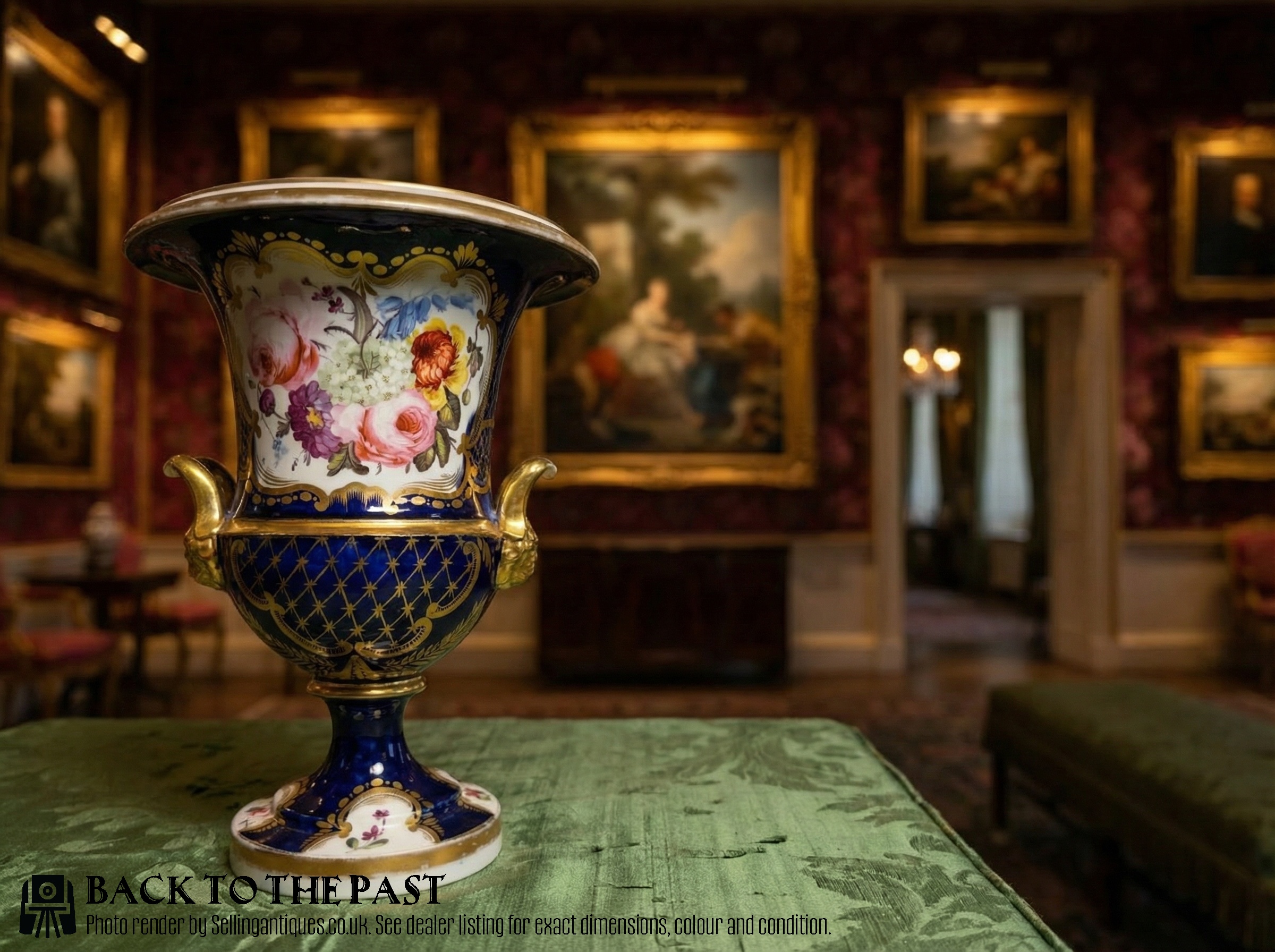
19th Century Coalport 'Campagna' Urn, 19th Century
Priced at £960 from Treaders Collectables
John Rose founded the factory in Shropshire near the end of the eighteenth century. He trained under Thomas Turner at Caughley before setting up on his own.
Production of antique Coalport shifted across different local sites early on. They absorbed the Caughley works and moved everything to the canal site by 1814.
Look at the early nineteenth-century output. The factory gained renown for developing leadless glazes and expanding the range of domestic wares.
Many classical shapes emerged during the Regency period. They adapted French styles for the domestic market.
John Rose drove the early success. His leadership from the late eighteenth century until 1841 shaped the core factory style.
William Billingsley brought his noted floral painting techniques to the works in 1820. His soft-focus roses appear on some premium antique Coalport pieces.
You will sometimes see the influence of Thomas Bott. He introduced fine enamel work imitating Limoges during the mid-Victorian era.
The 2026 retail price guide for Antique Coalport is drawn from a proprietary archive of over 1.1 million retail prices indexed by Sellingantiques since 2003. This guide relies exclusively on their own internal data; no external sources or auction records are used.
Analysing nearly 25 years of UK antique market history alongside current retail values, the data indicates that typical UK retail prices for Antique Coalport range between £100 and £1,200. Entry-level prices generally fall under £100 and premium examples upwards of £1,200.
Elaborate floral encrustation features heavily on the ornamental wares. You often find applied porcelain flowers known in the trade as coalbrookdale style.
Gilding is thick and complex. Craftsmen used tooled and burnished gold to frame painted cartouches.
Turn a teacup over to check the handle shape. Many early designs use distinctive ring or crabstock handles.
Throwing and turning created the basic circular shapes. Craftsmen then applied handles and spouts using slip before the first firing.
Complex ornamental vases required press-moulding in sections. The workers joined these parts with wet clay before adding the decorative components.
Decorators applied colours in a strict sequence based on firing temperatures. The high-temperature cobalt went on first, followed by softer enamels and finally the gold.
"The factory won a major prize in 1820. The Society of Arts awarded them a gold medal for their lead-free felspathic glaze."
"They produced blanks for other decorators. Independent London studios bought undecorated wares to paint and sell under their own retail names."
"Many early pieces lack factory marks. The quality of the potting and painting alone identified the work to contemporary buyers."
Based on almost 25 years of Sellingantiques UK antique market data, Antique Coalport appeared 577 times (out of 1,100,000 antiques) which gives it a rarity score of 89/100.
This score measures scarcity within the Sellingantiques archive only and is not a survey of the entire antiques market, so these statistics may not be indicative of the general availability of Antique Coalport elsewhere.
Wash these pieces by hand using lukewarm water and a mild detergent. Avoid sudden temperature changes to prevent the glaze from cracking.
Place a folded towel in the bottom of the sink before washing. This cushions the antique Coalport against accidental taps against the hard basin. Dry immediately with a soft cloth.
You can drink from them occasionally without worry. The glaze on early English bone china is stable enough for hot liquids, provided the piece has no hairline cracks.
Tannins in tea will stain crazed areas if left sitting. Pour the tea, enjoy it, and rinse the cups promptly. Never put them in a dishwasher.
It is a popular nineteenth-century design featuring a crooked, blossom-heavy branch. Despite the name, the aesthetic leans heavily on traditional Chinese export patterns.
The factory produced variations of this design for decades. It became a staple of Victorian dining.
Early nineteenth-century factories rarely marked their output. Dealers identify them by matching the handle shapes, paste characteristics and specific gilding patterns to known pattern books.
Certain plate shapes and border mouldings belong uniquely to the John Rose era. Experienced handlers recognise the physical weight and glaze texture of antique Coalport long before looking for a stamp.
Please note: This Antique Coalport guide and its associated pricing data are provided for general informational purposes only. It does not constitute formal financial, investment, or appraisal advice and should not be relied upon as the sole basis for any commercial activity, purchasing, or sales decisions. Sellingantiques.co.uk accepts no liability for any actions taken in reliance on this information. Always consult with a qualified professional or independent appraiser.
