Gillers Antiques Ltd has dated this piece to the 18th Century.
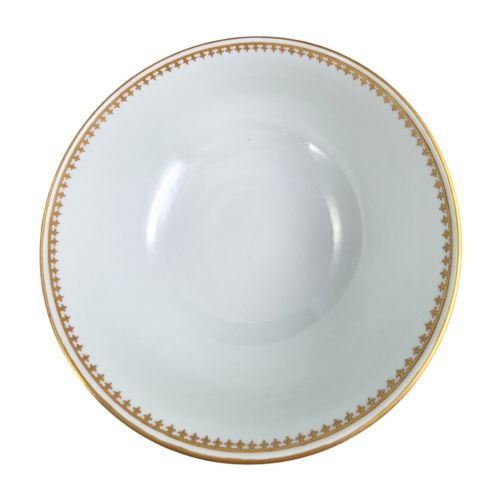
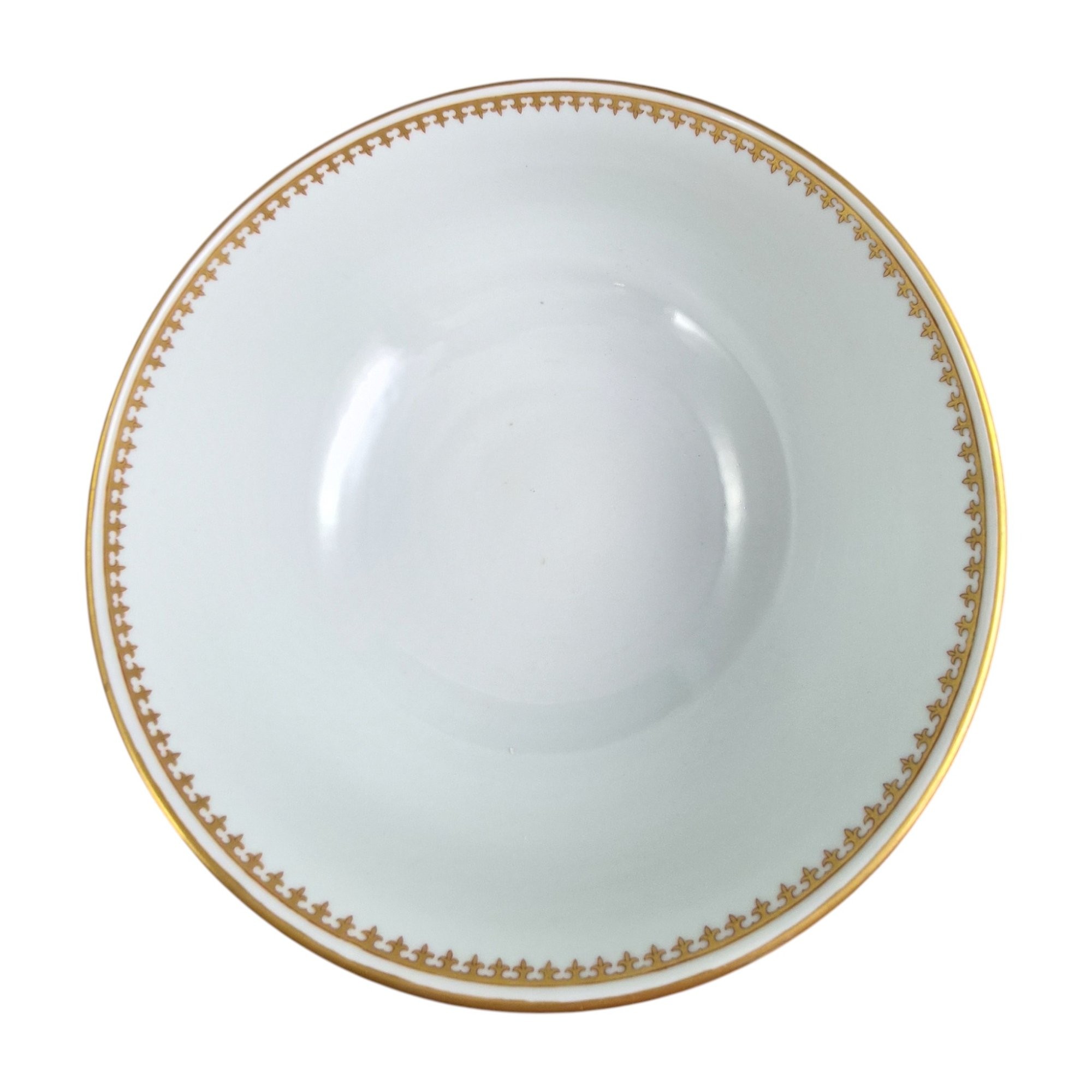
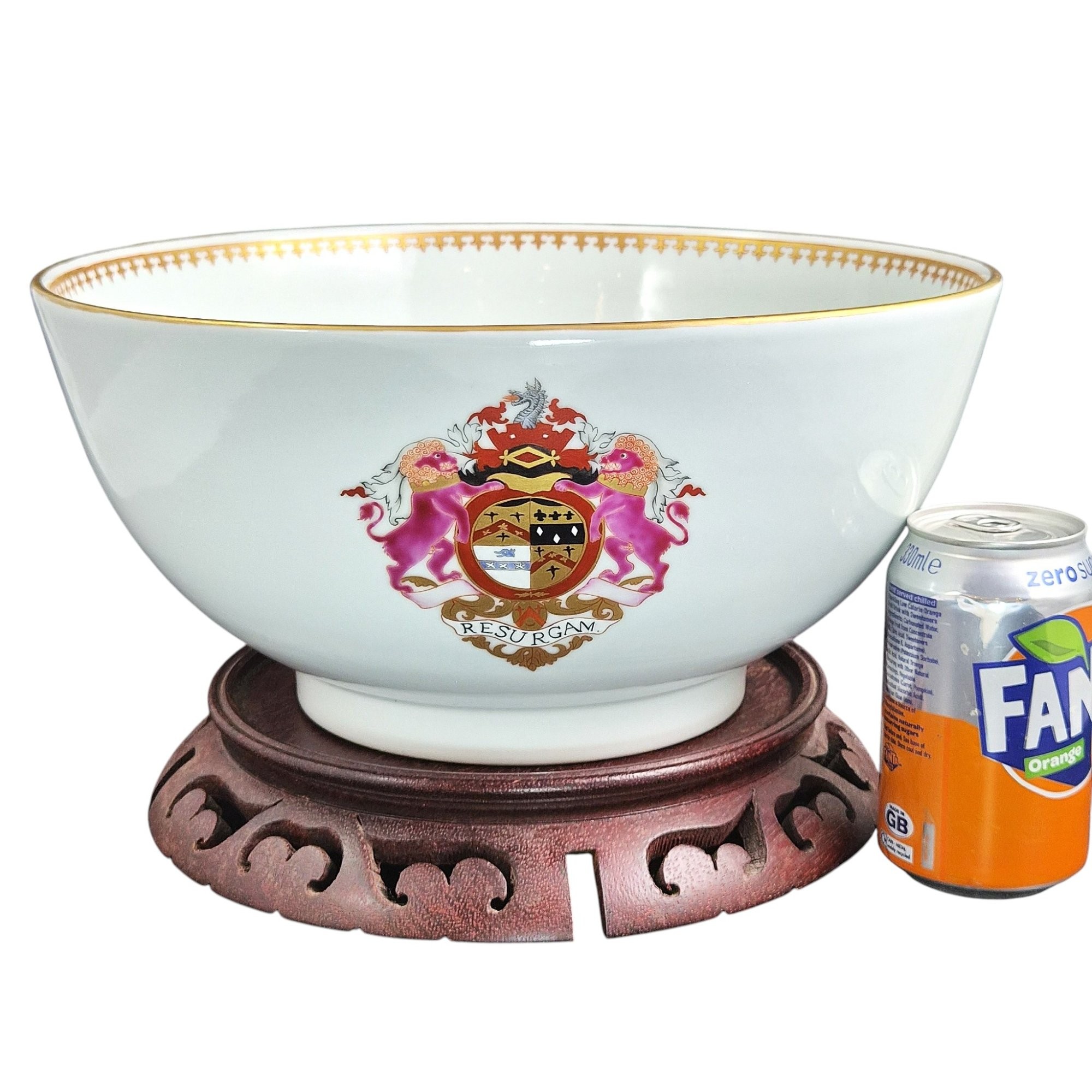
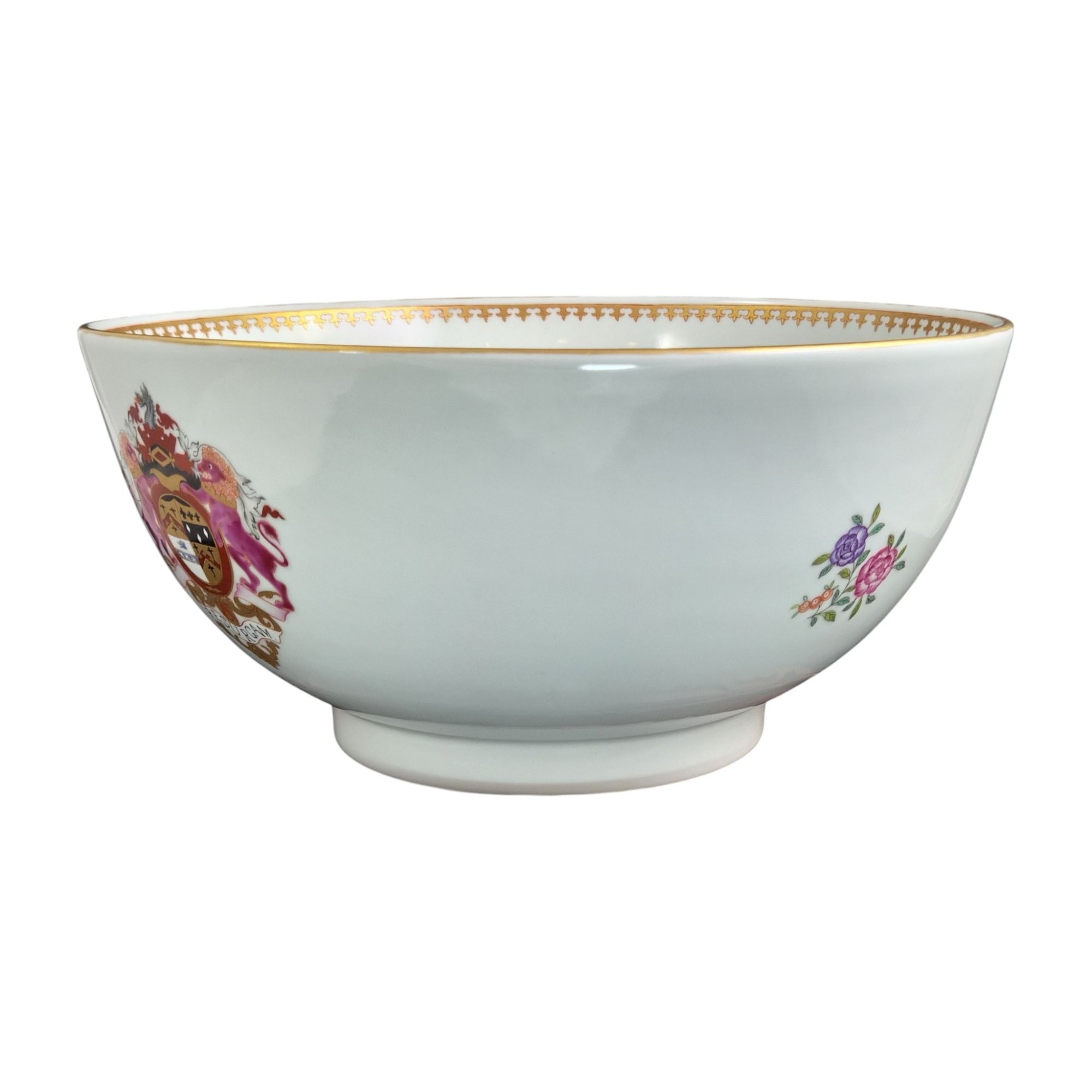
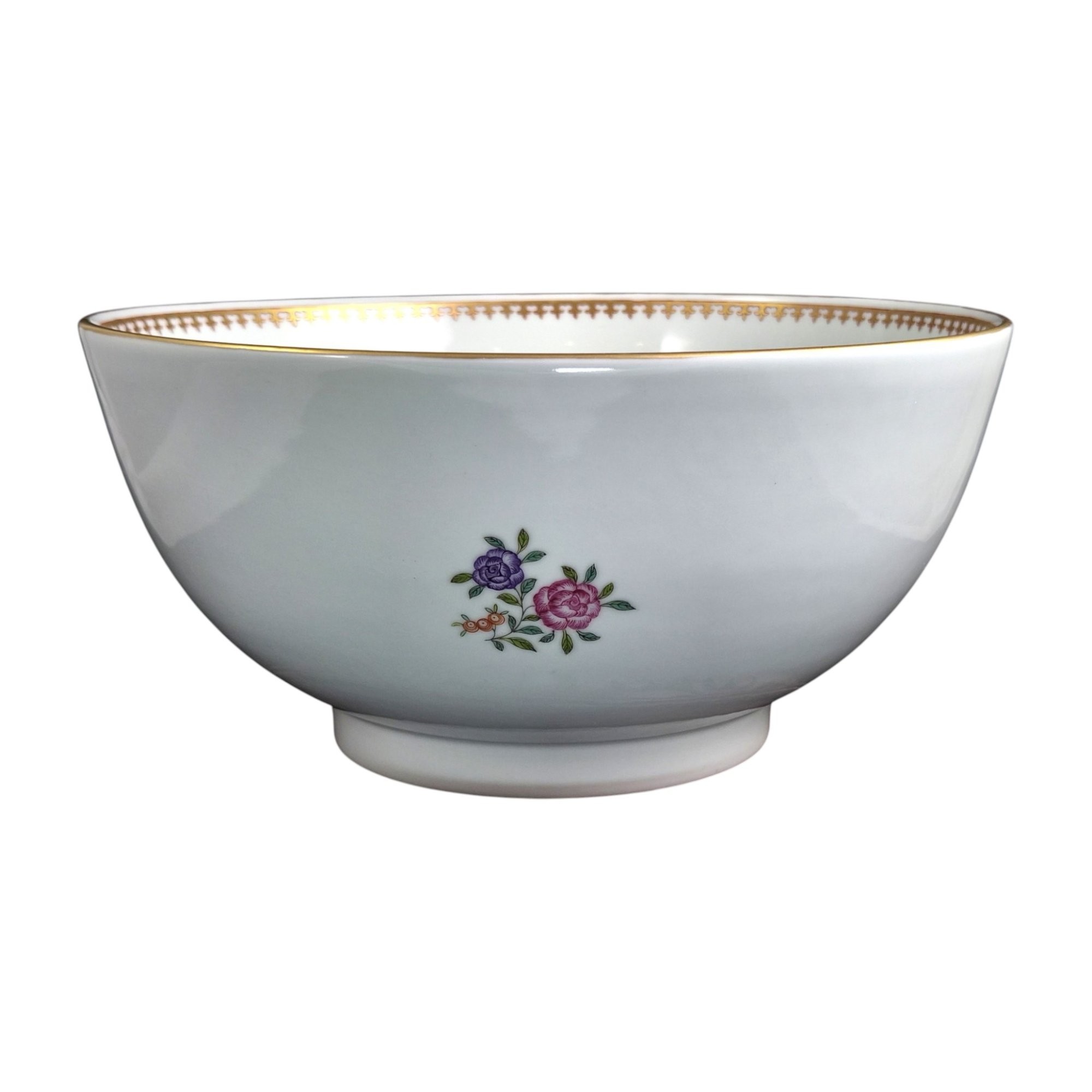
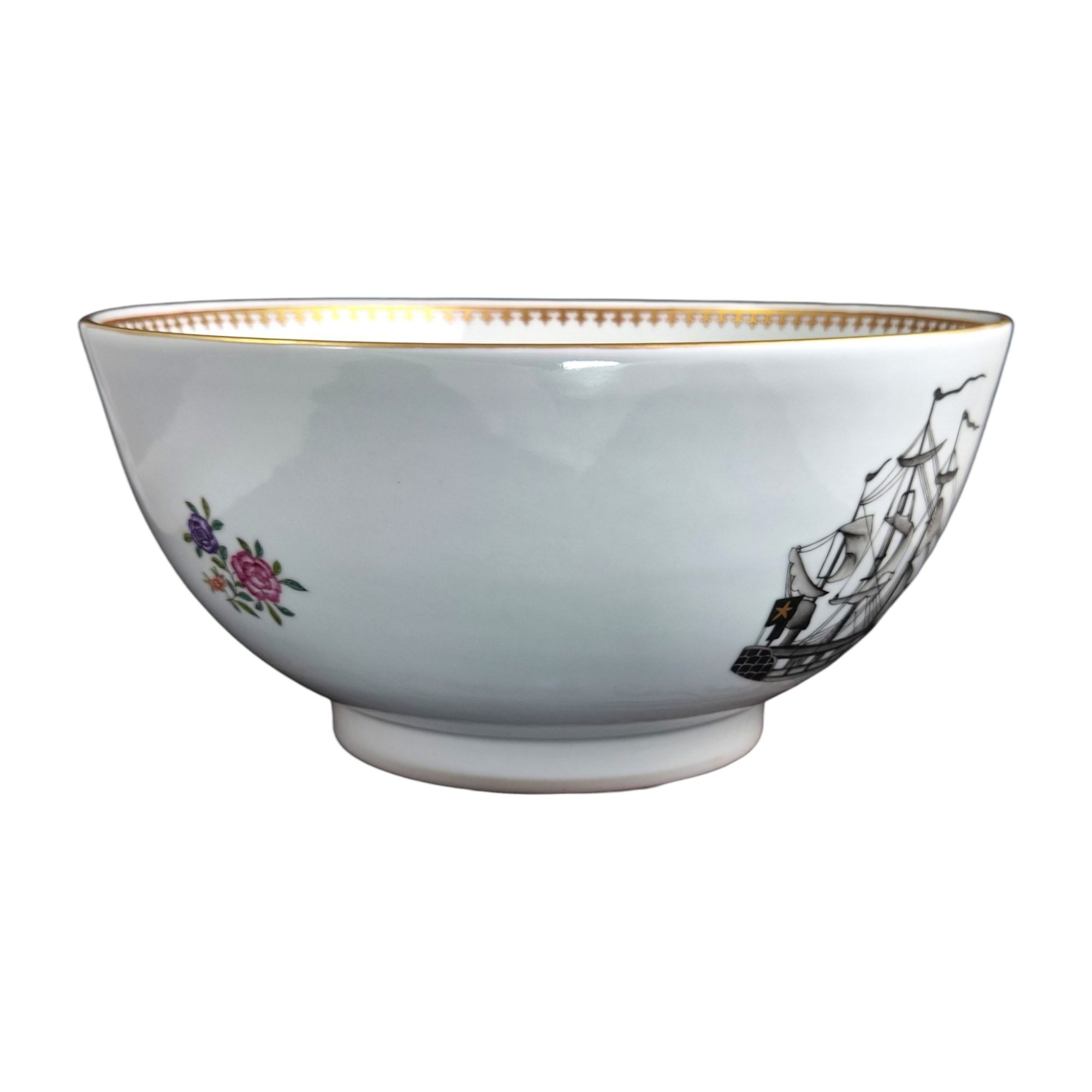
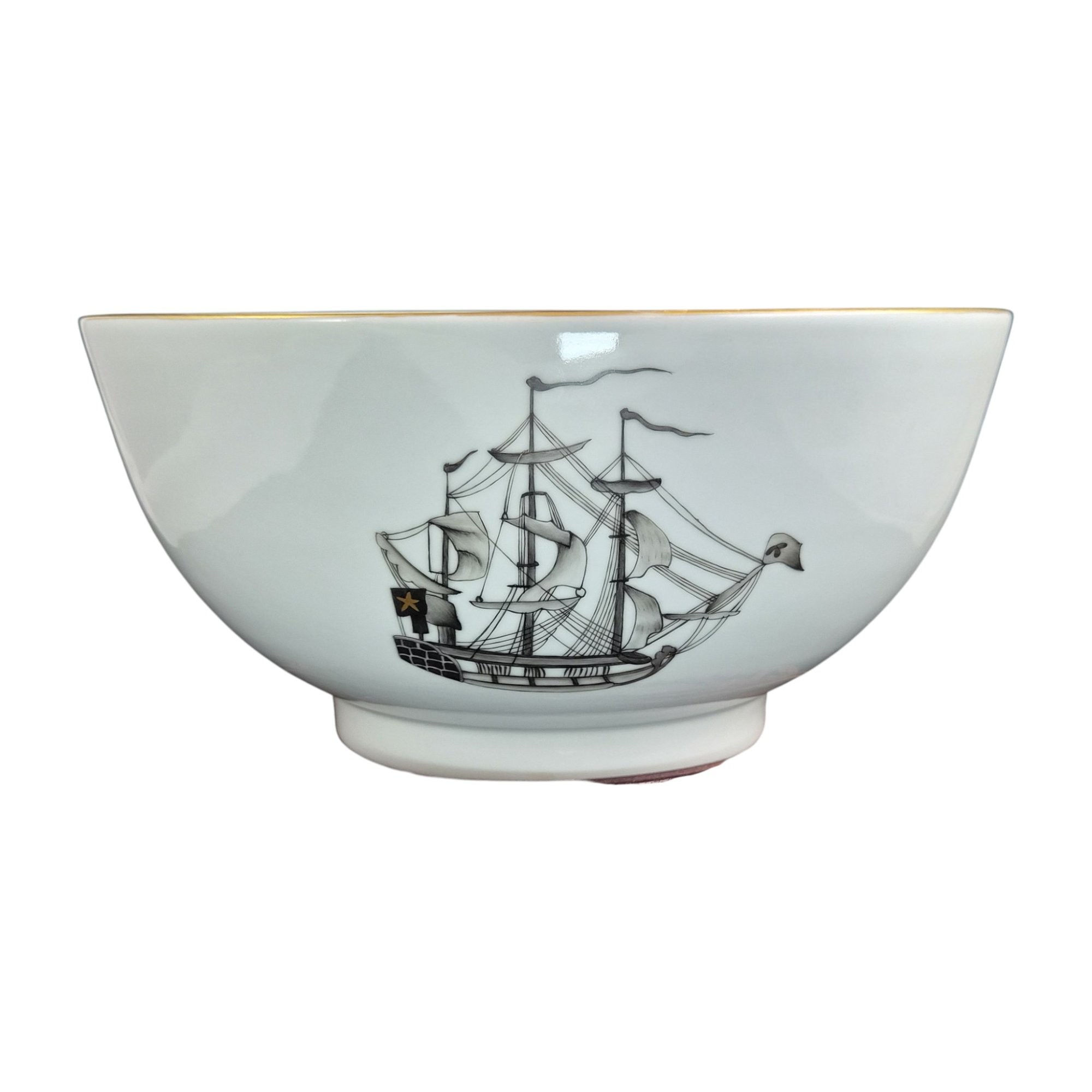
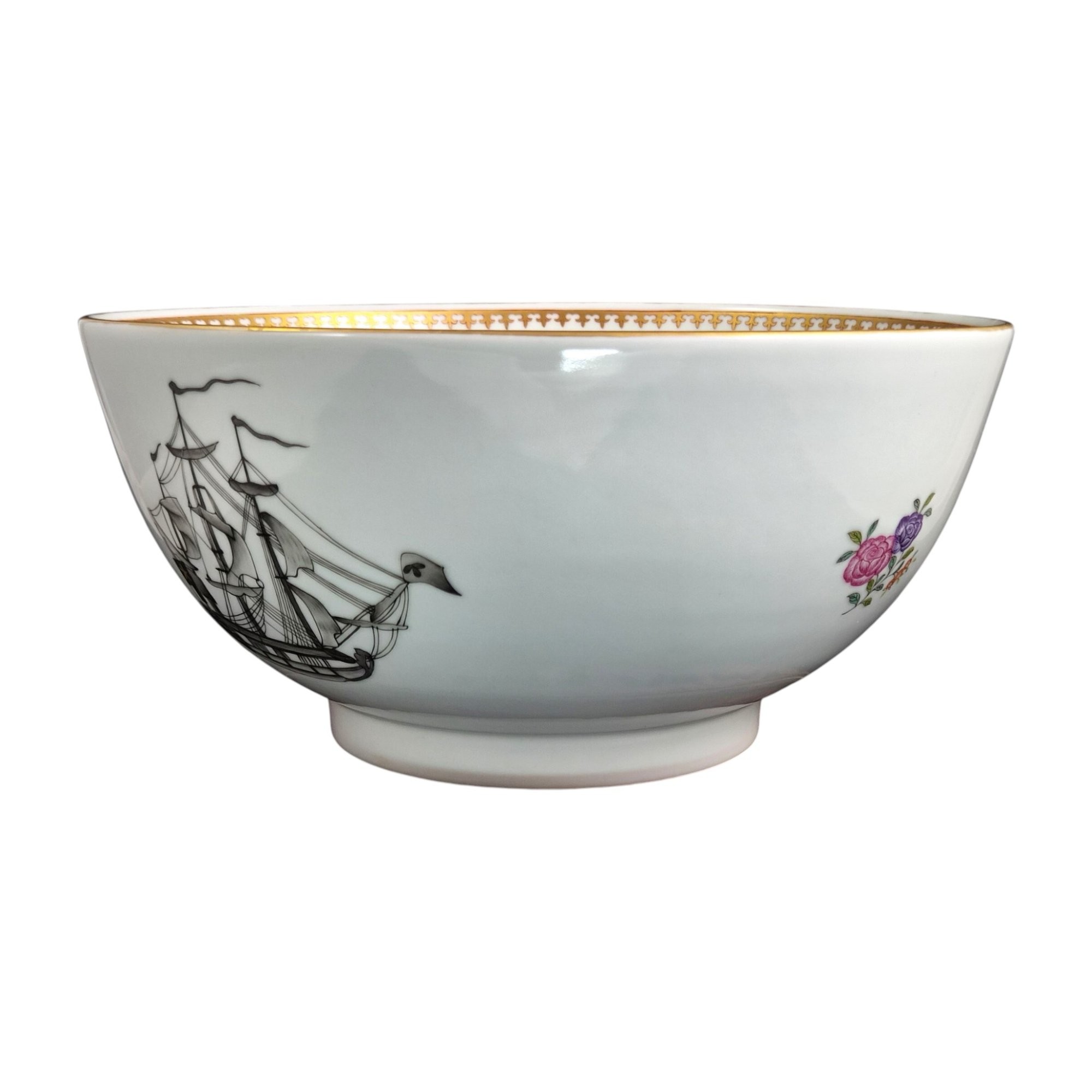
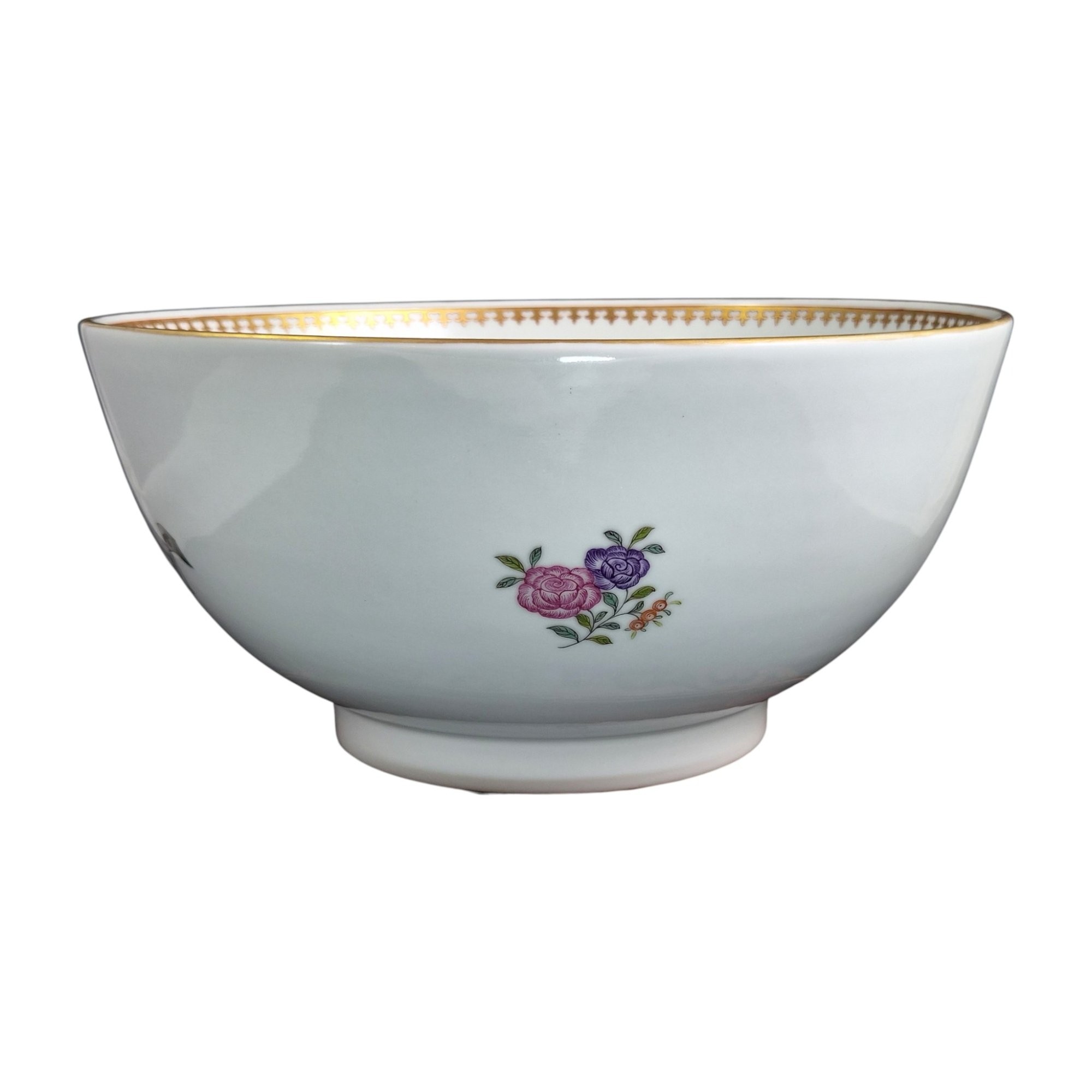
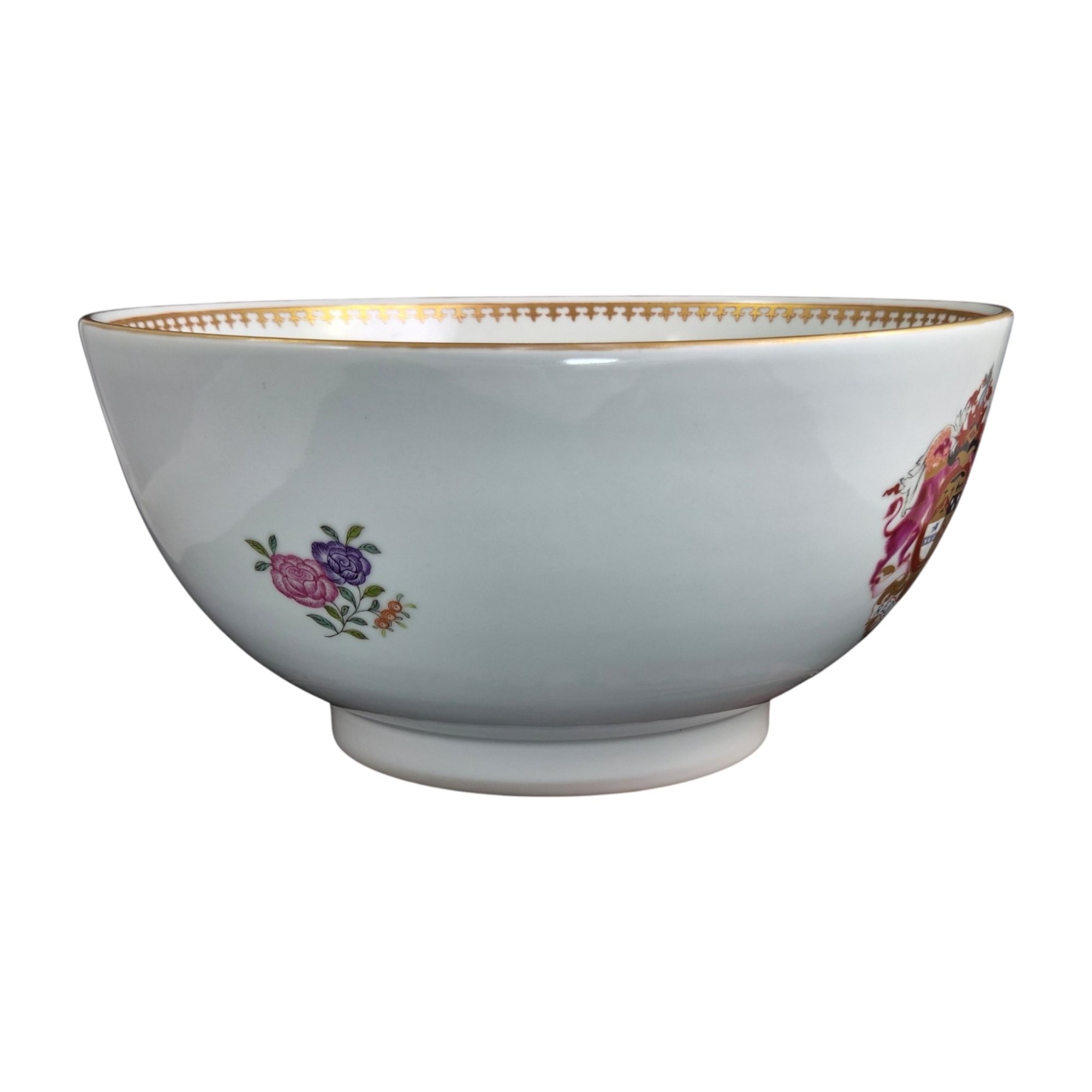
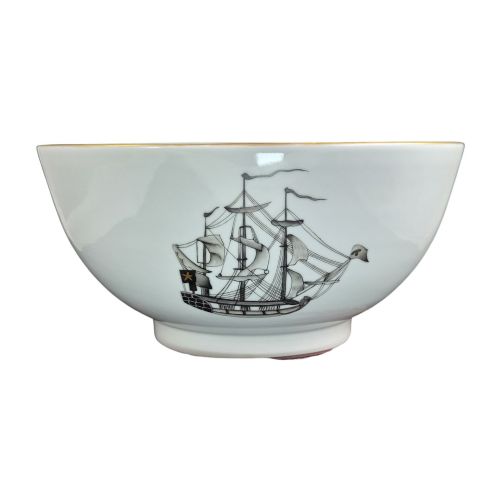
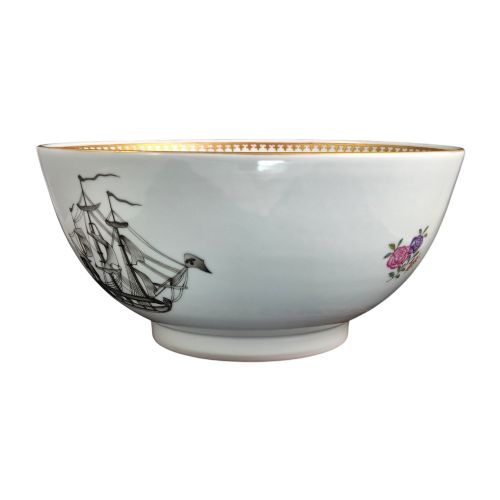
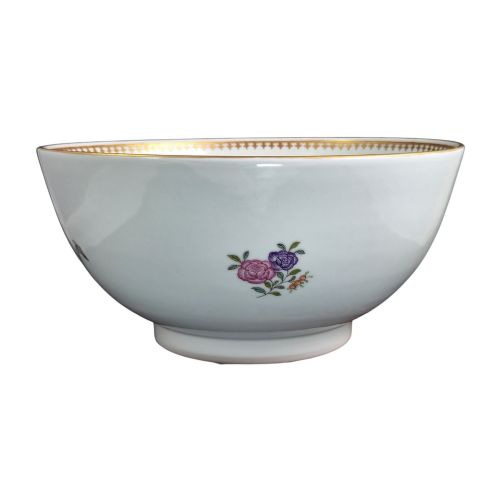
Of particular interest is the rare combination of armorial and maritime decor. A complex quartered shield is supported by two bright purple lions. Above it rises a fire-breathing dragon's head emerging from a red mural crown. On the opposite side, a European sailing ship is depicted. Delicate floral motifs and a fine gilt ornament along the rim complete the composition, preserving the beauty of the open white porcelain.
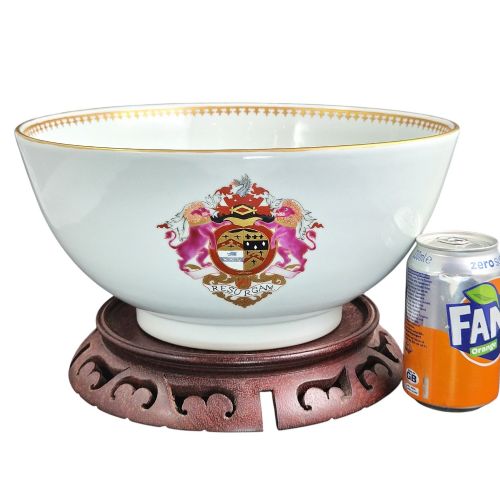
The painting was executed by hand. The detailing of the small heraldic figures, the dragon's head, the ship's rigging, and ornamental elements required skill, patience, and significant time. The successive application of enamel colors and gilding with additional firings made the creation of such pieces complex and labor-intensive work.
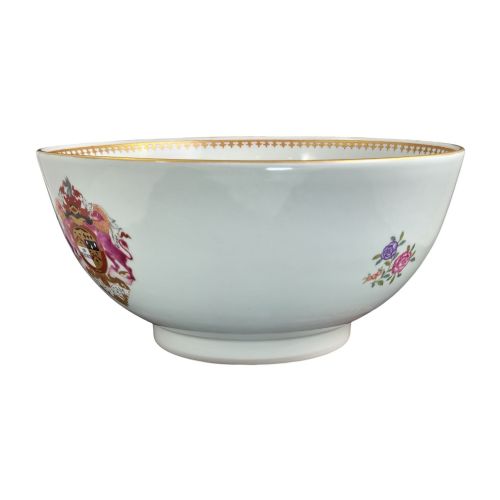
Armorial porcelain emerged at the intersection of Chinese ceramic art and the European tradition of decorating personal belongings with family crests. As maritime trade developed, European clients sent drawings of their coats of arms to China to be reproduced on porcelain services. Initially, Chinese porcelain was a rare and expensive luxury in Europe. An individual armorial order demanded even greater expenses: the cost of special painting, order arrangement, and lengthy sea delivery was added to the price of the porcelain itself. Such items were ordered by wealthy representatives of the European aristocracy and rich merchant families. An armorial service demonstrated the owner's status, wealth, and family pride.
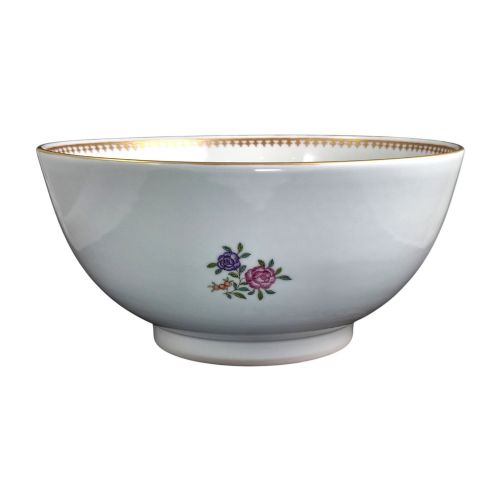
Under the crest is the Latin motto RESURGAM - I shall rise again. In Fairbairn's Book of Crests, it is attributed to the Crosbie, Crosby, and Stewart families. The exact family ownership of the coat of arms on this bowl has not yet been established.
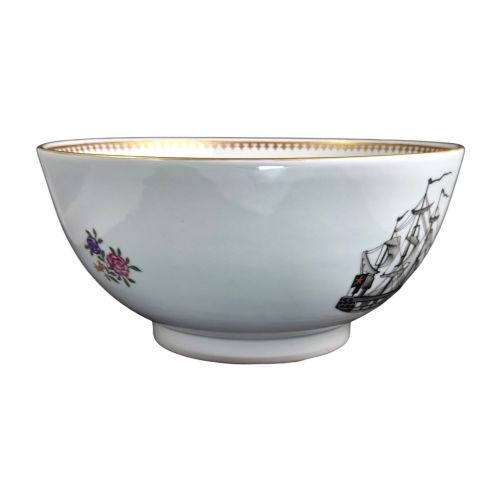
The exceptional condition of a bowl of this impressive size deserves special attention. Large porcelain is particularly vulnerable during use, storage, and transport, so the preservation of the painting, gilding, and the item itself is of great importance to collectors. The combination of age, scale, unusual decor, and condition gives the bowl pronounced collectible and potential investment interest. A similar level of historical significance and market interest can be seen in analogies such as the Masonic/Scottish Parliament armorial punch bowl from the Qianlong period sold recently at Sotheby's in London.
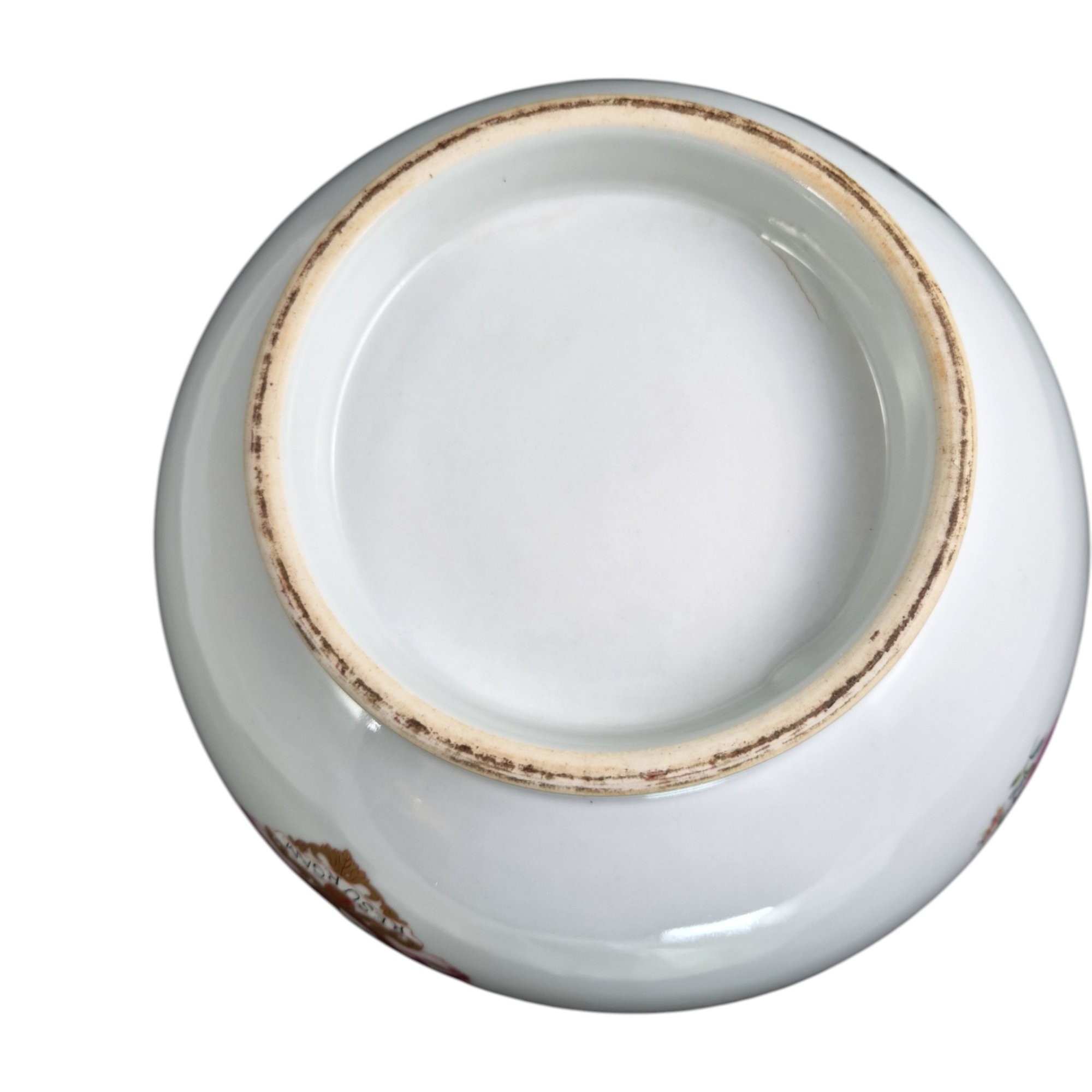
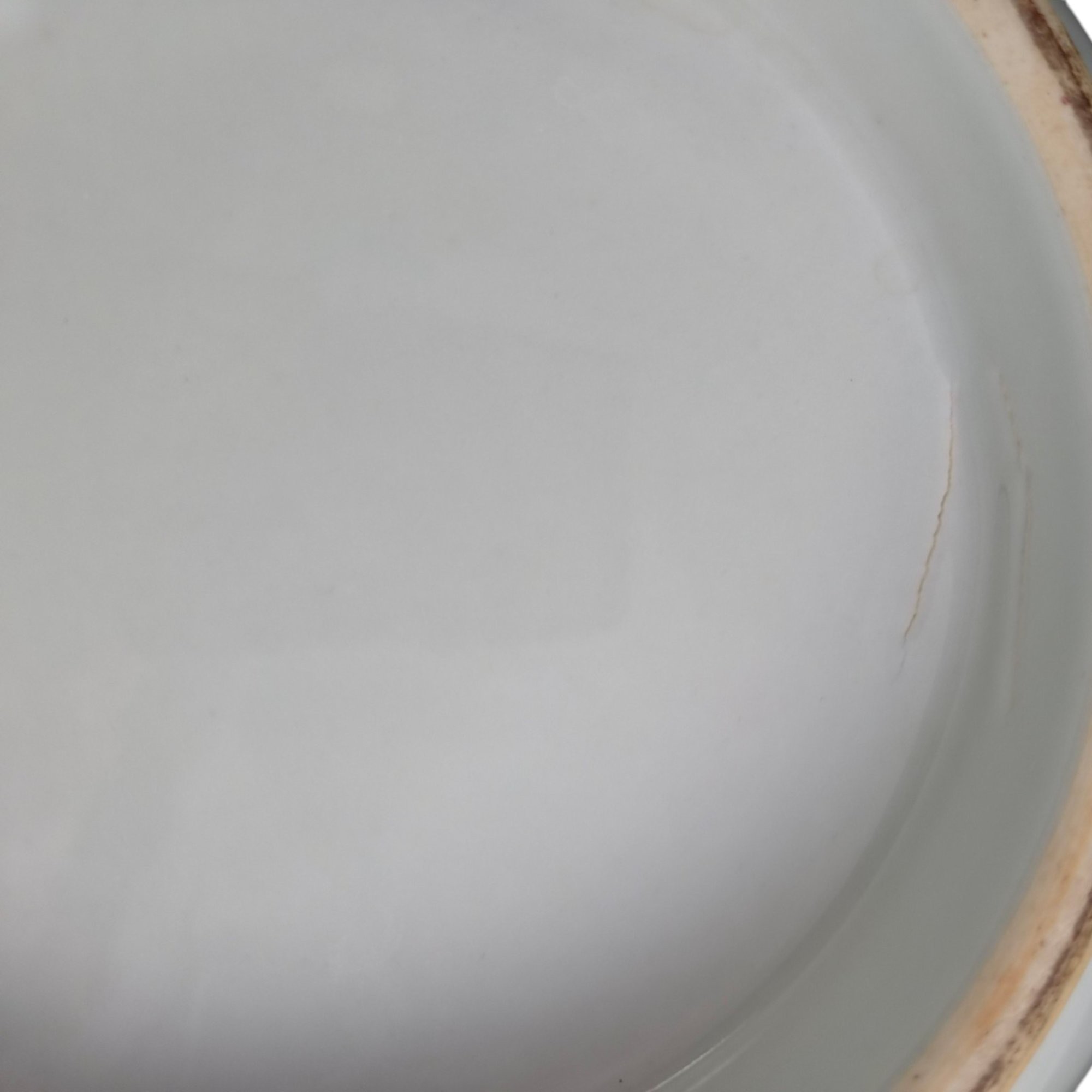
Condition: Excellent. The item has been checked under ultraviolet light; no signs of restoration were found during the examination. There is a small firing crack on the underside that occurred during manufacturing.
Technique: Hand-painted Chinese export porcelain, polychrome enamels, gilding.
Rarity: Highly rare combination of heraldic and marine ship motifs on a large scale.
Height without stand: 15.3 cm.
Diameter: 31.2 cm.
Weight of the bowl: 2793 g.
Total weight with stand: 3456 g.
A modern wooden stand is included in the set and serves for convenient placement and display of the bowl.
Please study the accompanying photographs carefully as they form an integral part of this description. If you have any questions, we will be happy to answer them. The item will be shipped with full tracking and insurance. It is important to note that shipping costs include labour, packaging and postage.
Gillers Antiques Ltd has dated this piece to the 18th Century.

You can view the stock and full dealer information on the Gillers Antiques Ltd Profile Page
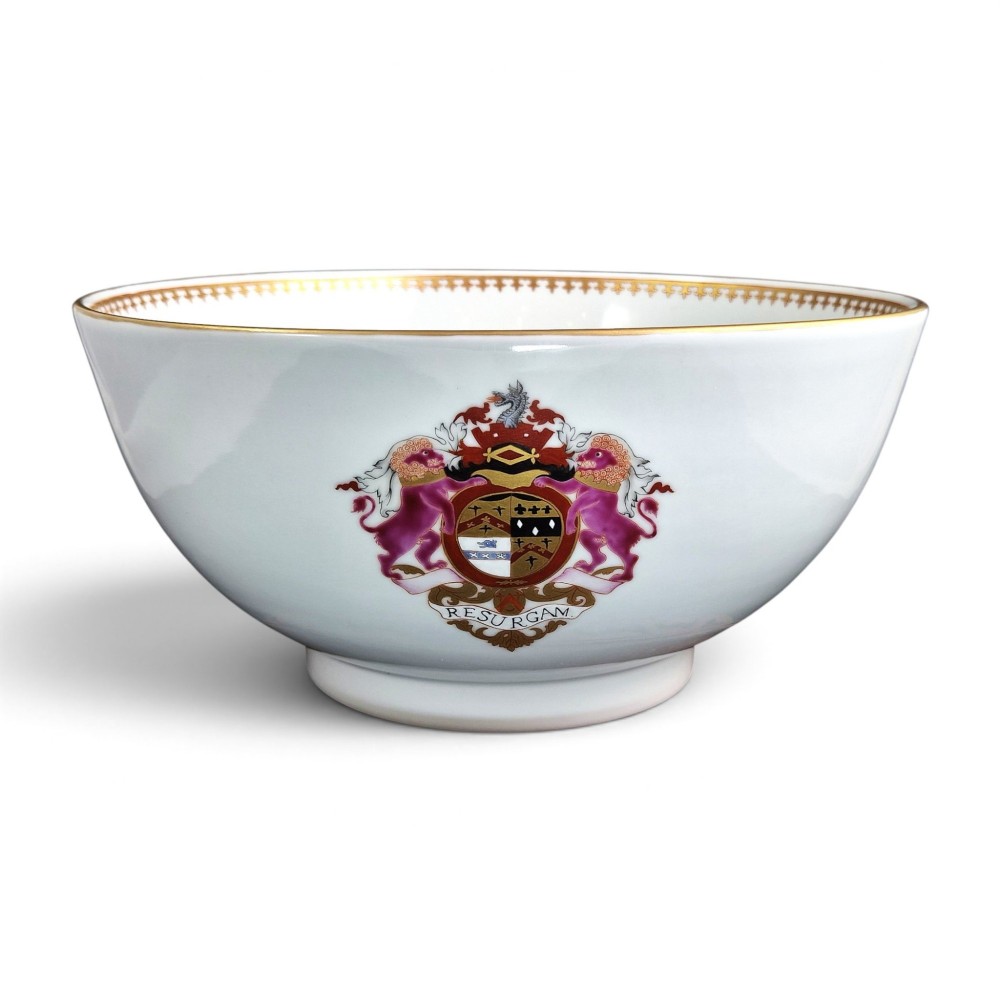
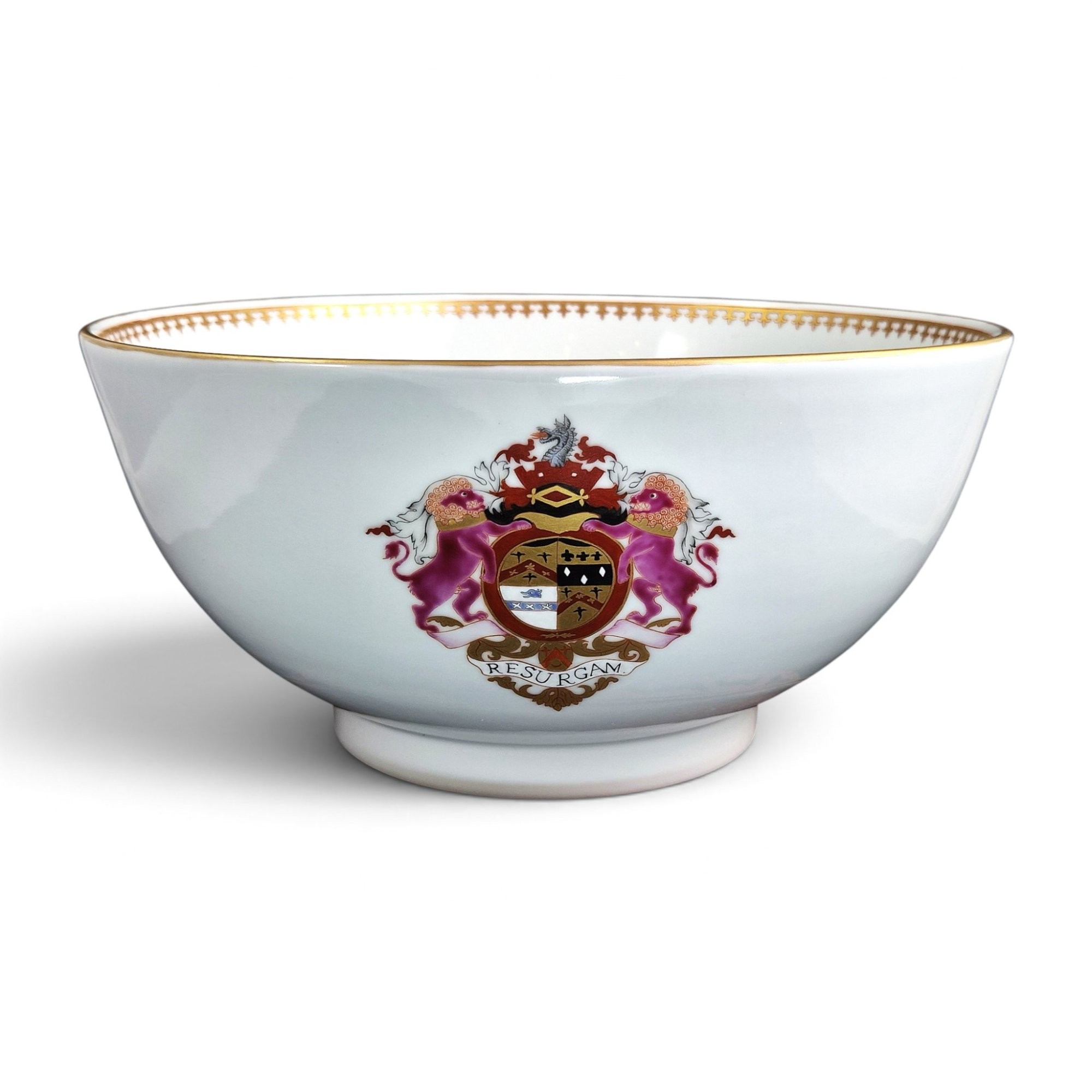
Large Chinese Export Armorial Porcelain Punch Bowl, Late 18th Century