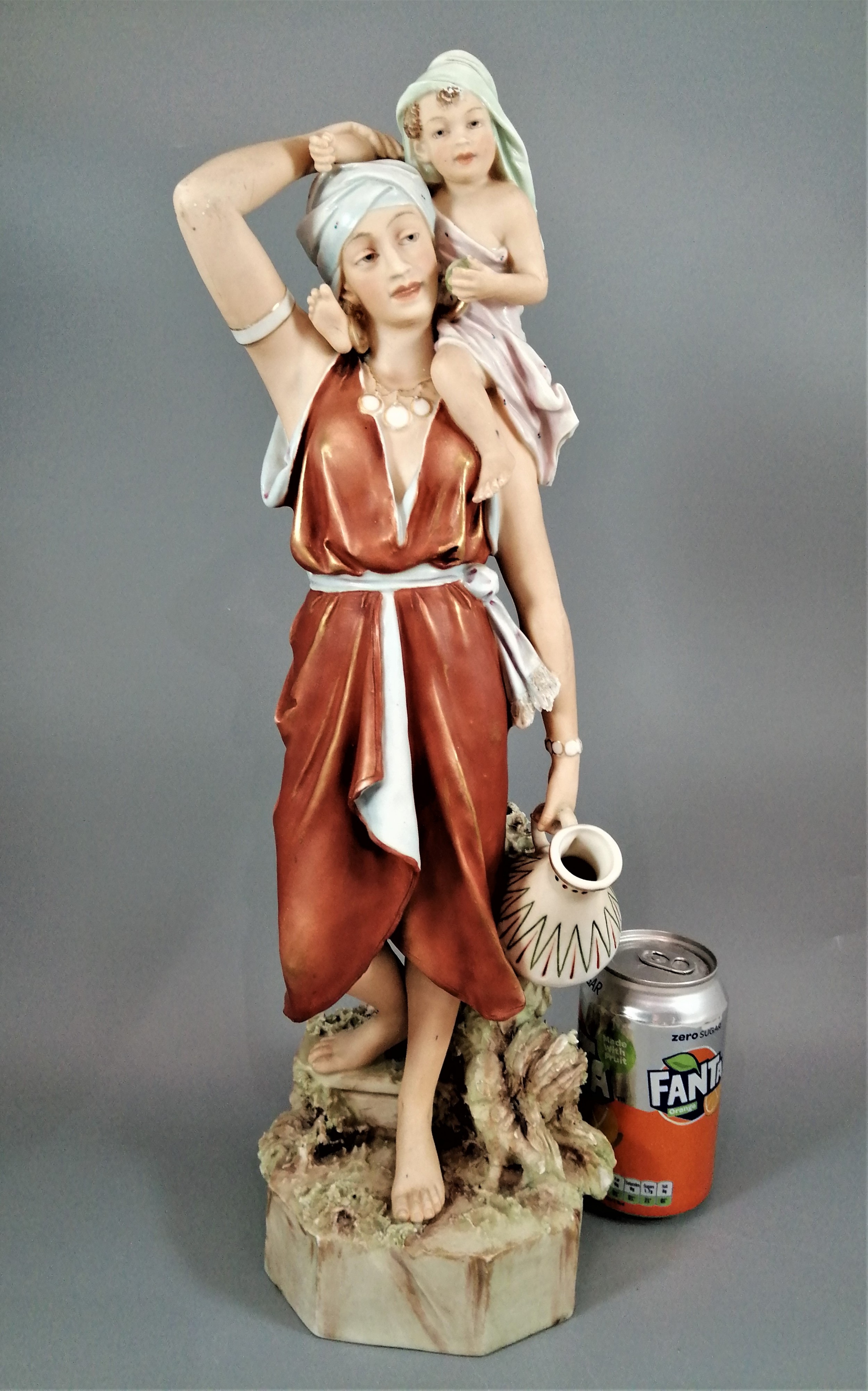
Gillers Antiques Ltd has dated this piece to the 19th Century.
The company was founded in 1853 by Eduard Eichler, a skilled potter and entrepreneur. In 1860 the company began producing fine porcelain wares, and in 1896 the Emperor of Austria Franz Joseph I granted it the status of "supplier to the imperial and royal court". In the late 19th and early 20th centuries, Royal Dux became known for its innovative designs and high quality workmanship. The company became particularly famous for its statuettes, which depicted a variety of subjects: animals, children, historical figures. One of the most characteristic features of Royal Dux porcelain is its trademark white matte glaze, which gives the products a soft, velvety texture. The company also produced pieces with glossy glazes and a variety of decorative techniques, including hand-painting, gilding and relief. During the 20th century, Royal Dux continued to produce high quality porcelain wares, but the company faced many challenges, including economic recession, two world wars, and changing consumer tastes. At the end of the 20th century, the company faced financial difficulties and was eventually nationalised by the communist government of Czechoslovakia. After the fall of the communist regime in 1989, Royal Dux was privatised and returned to private ownership. Today, the company continues to produce fine porcelain items including figurines, vases and other decorative objects. Royal Dux porcelain continues to be highly prized by collectors and enthusiasts around the world for its beauty, craftsmanship and historical significance.
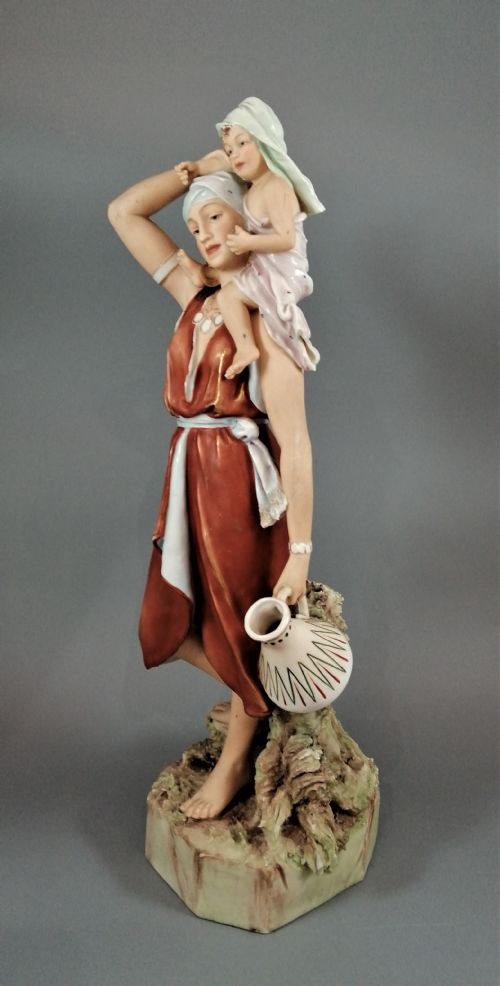
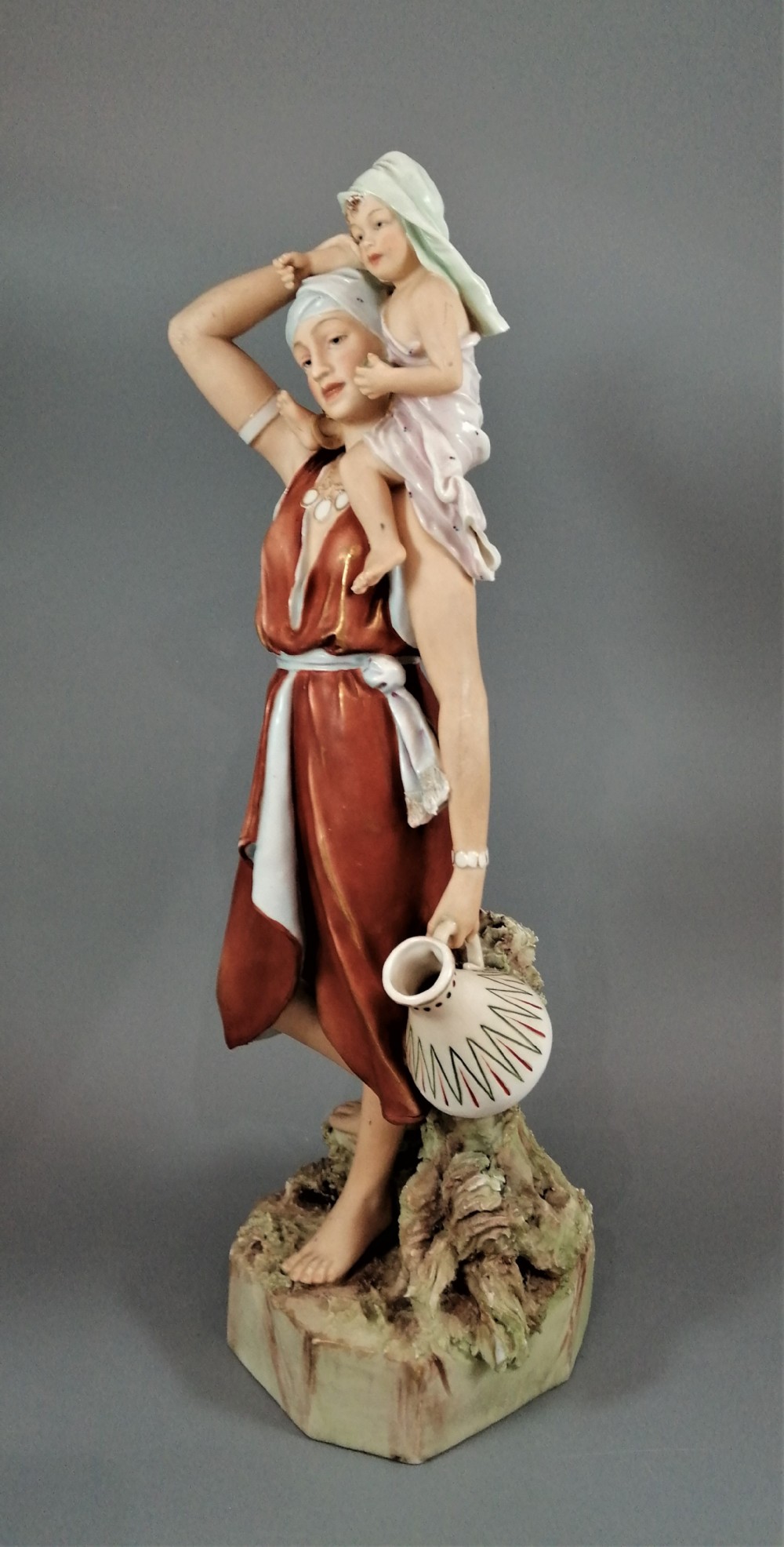
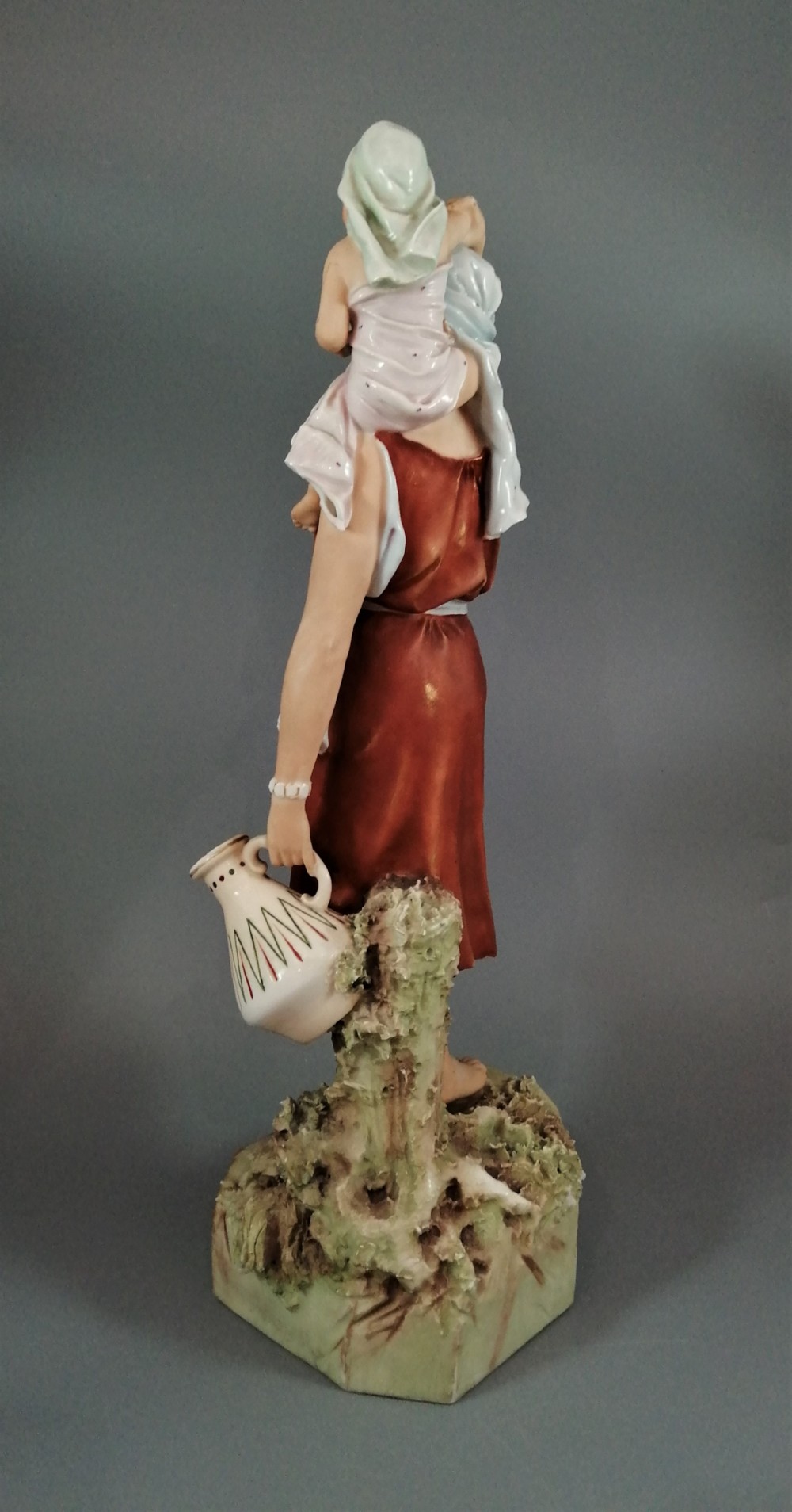
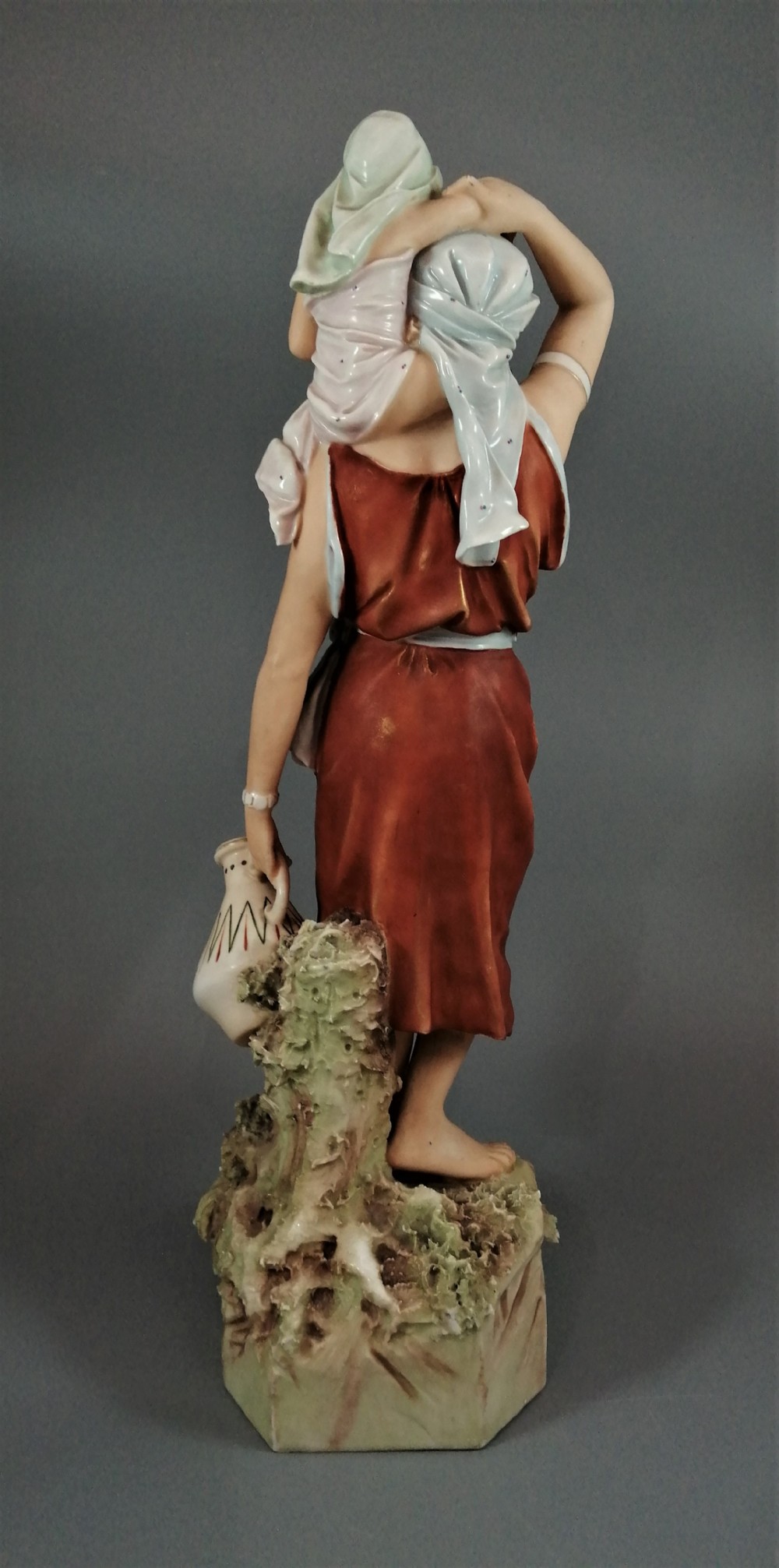
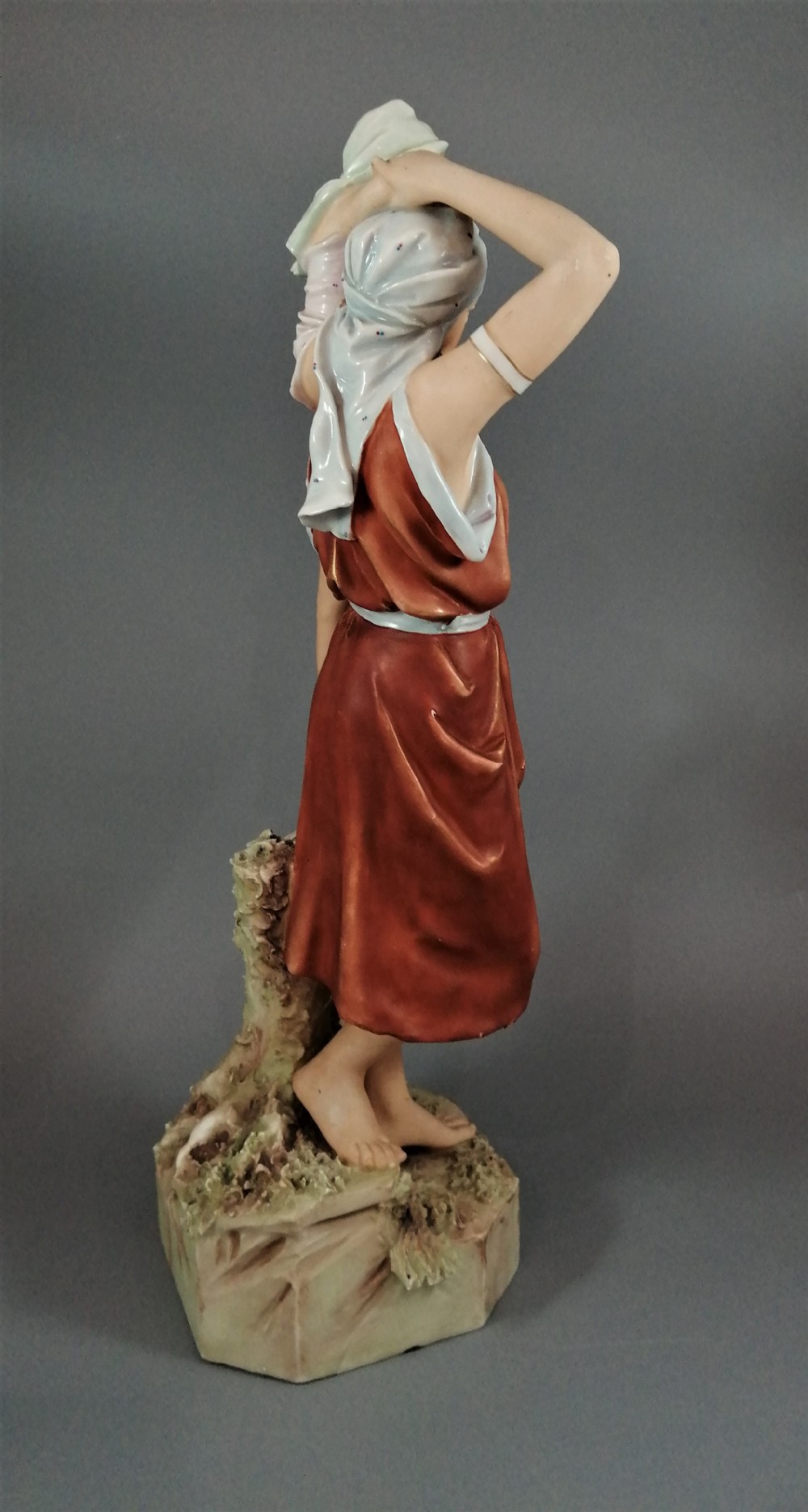
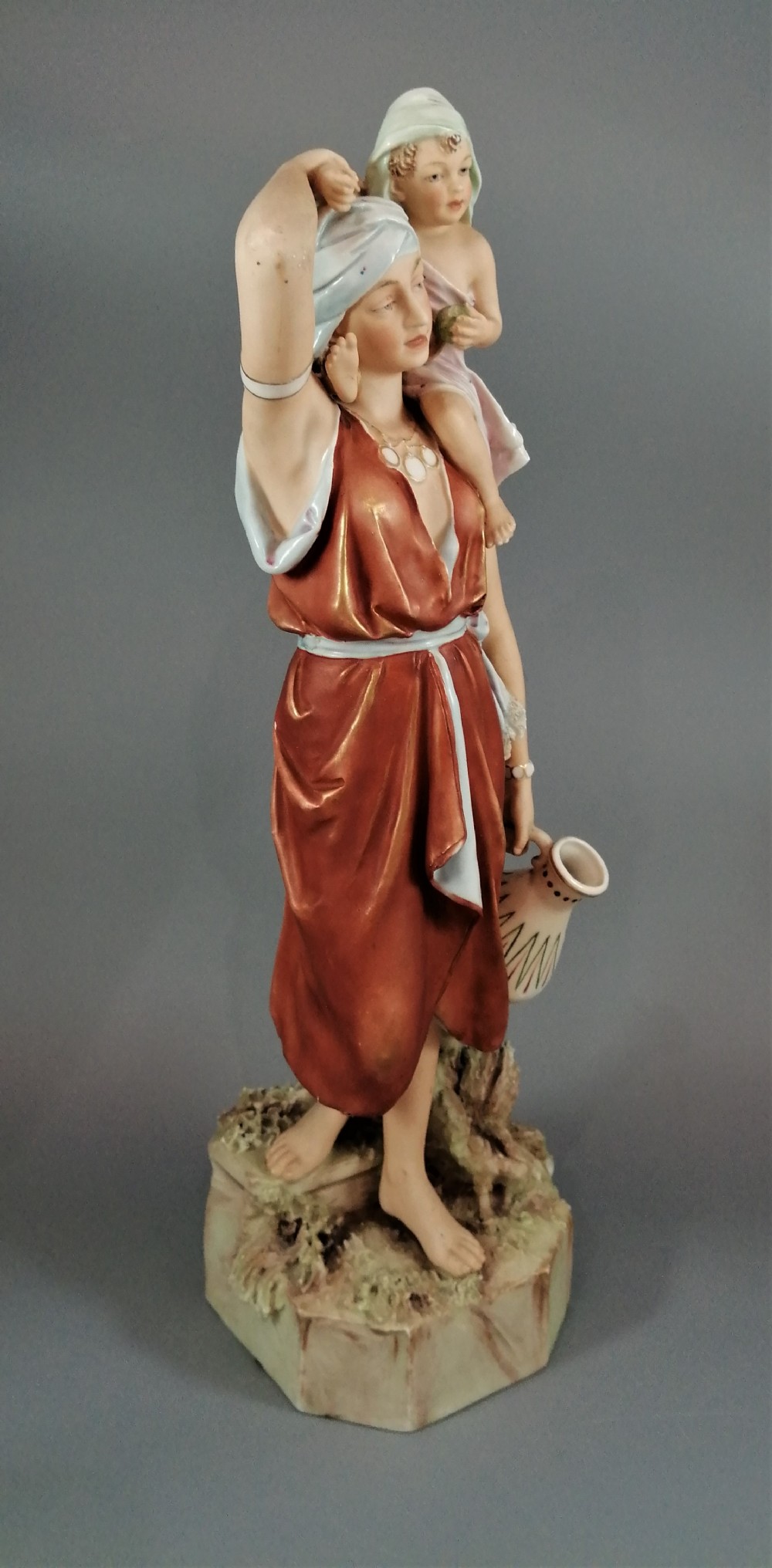
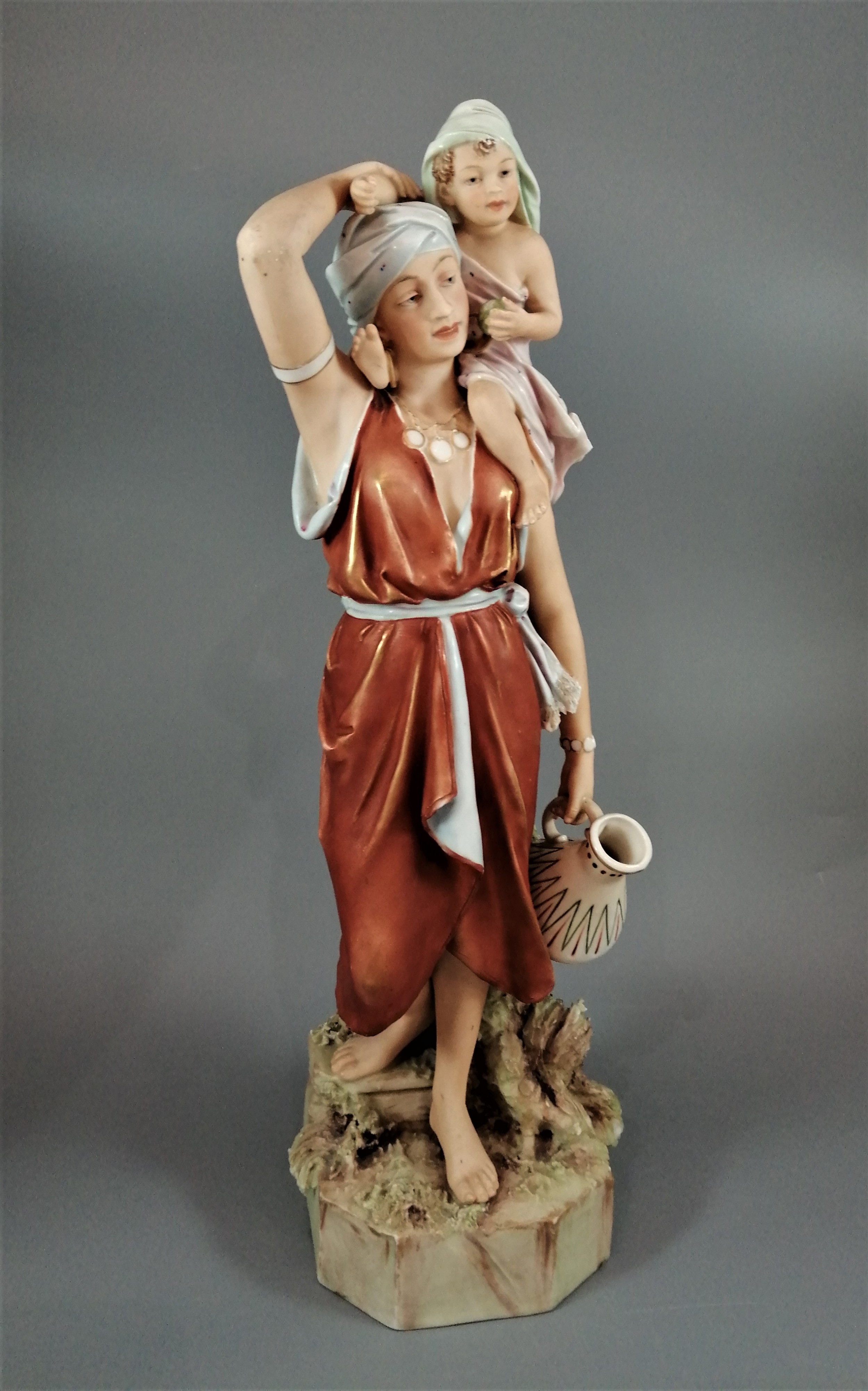
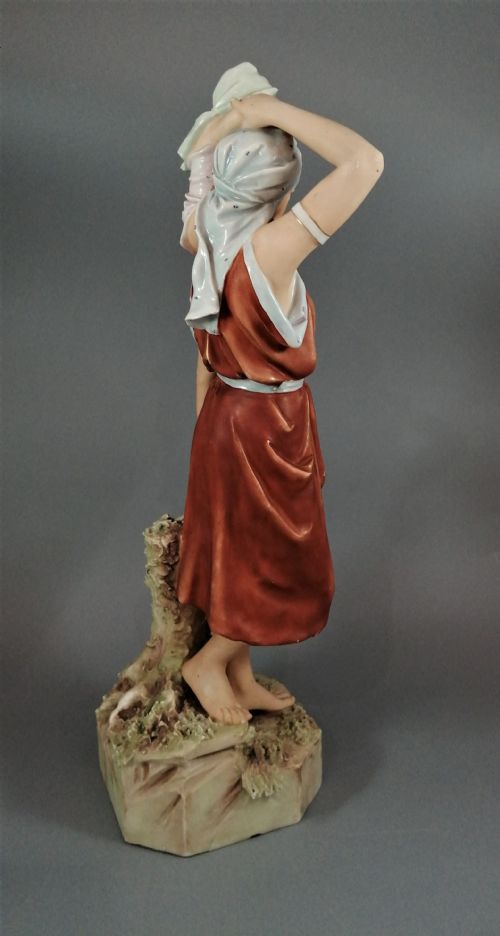
The sculpture depicts an oriental woman holding a pitcher in one hand and a child sitting on her shoulder with the other.
As is often the case with porcelain figurines made by true craftsmen, the accuracy of the details - face, jewellery and clothing - is remarkable.
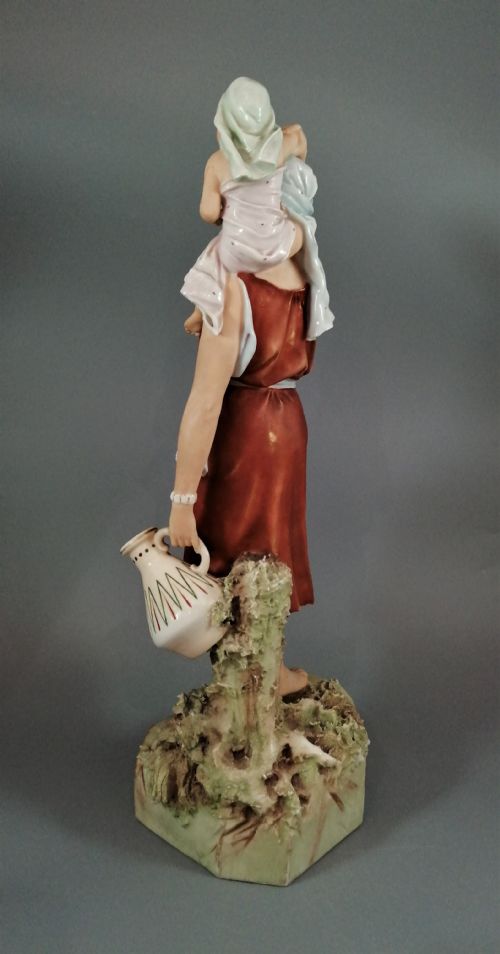
This is clearly a small edition and the artist spent more than a day painting this figurine.
Note the colours - completely uncharacteristic of the early Royal Dux - apparently this figure was somewhat experimental. Turquoise, pink, brown with gilding - these are not the colours used by Royal Dux in the late 19th, early 20th century.
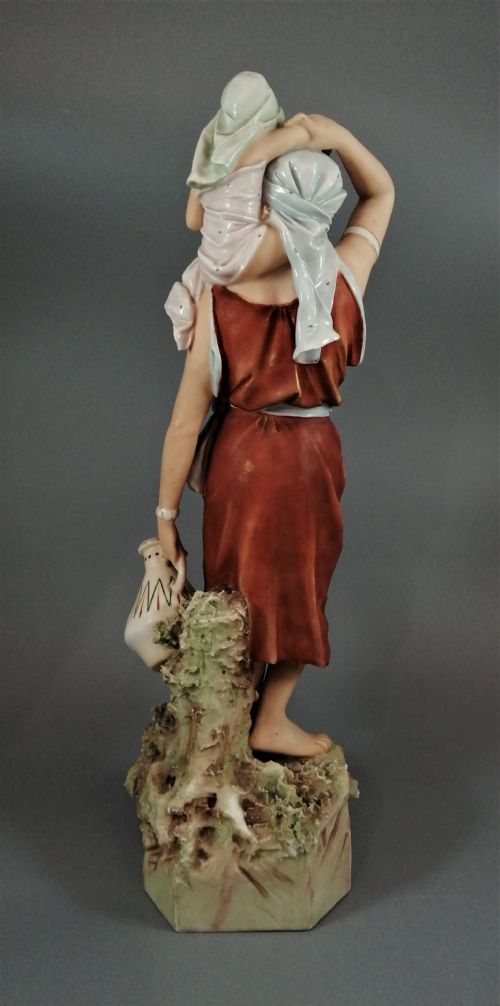
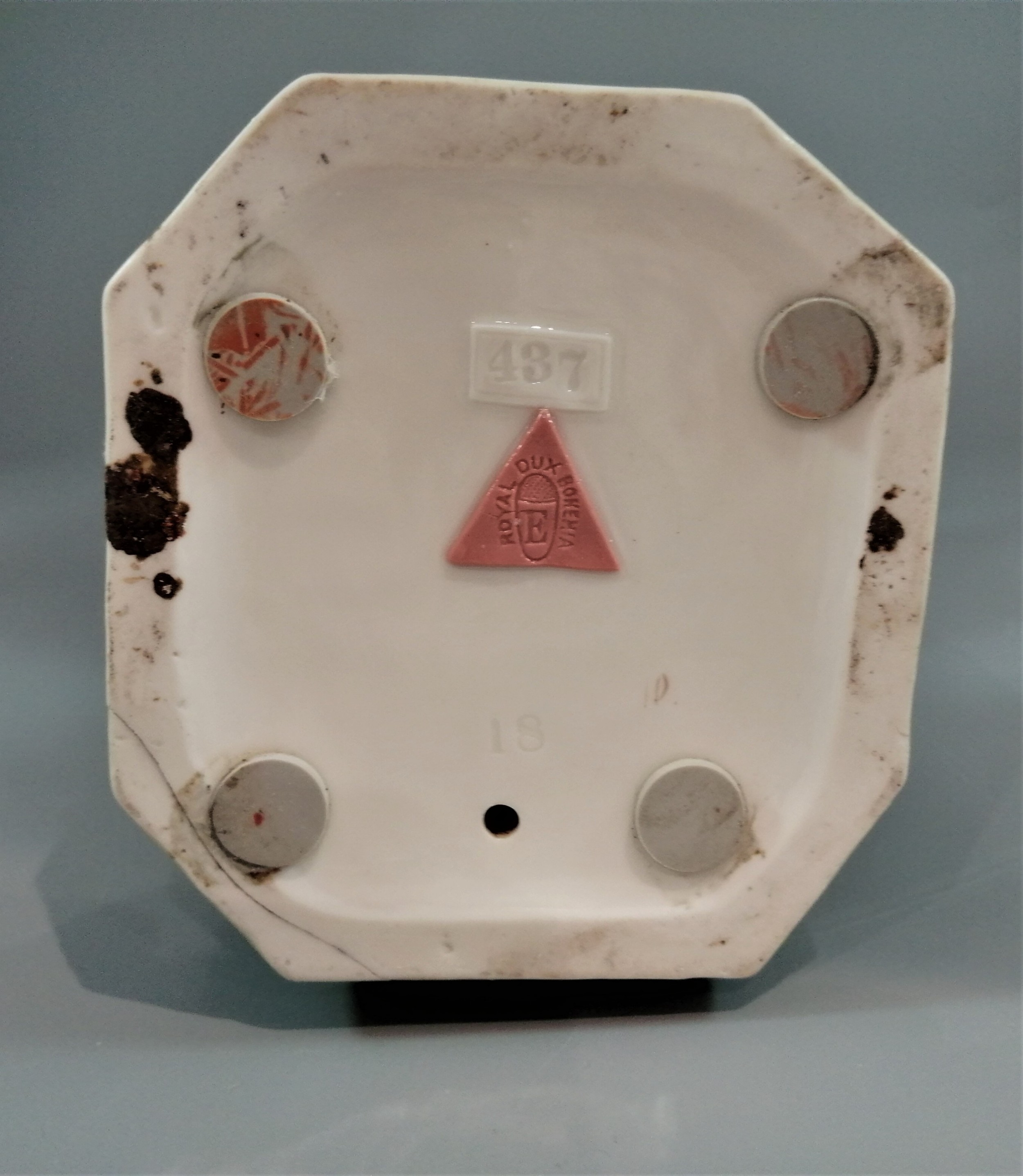
The number "437" stamped on the base suggests that the figure was made no later than 1912.
On the base is the characteristic Royal Dax triangle in pink clay with the letter "E".
Height 47cm
Width 14cm
Depth 14cm
Weight 1934 g
Condition:
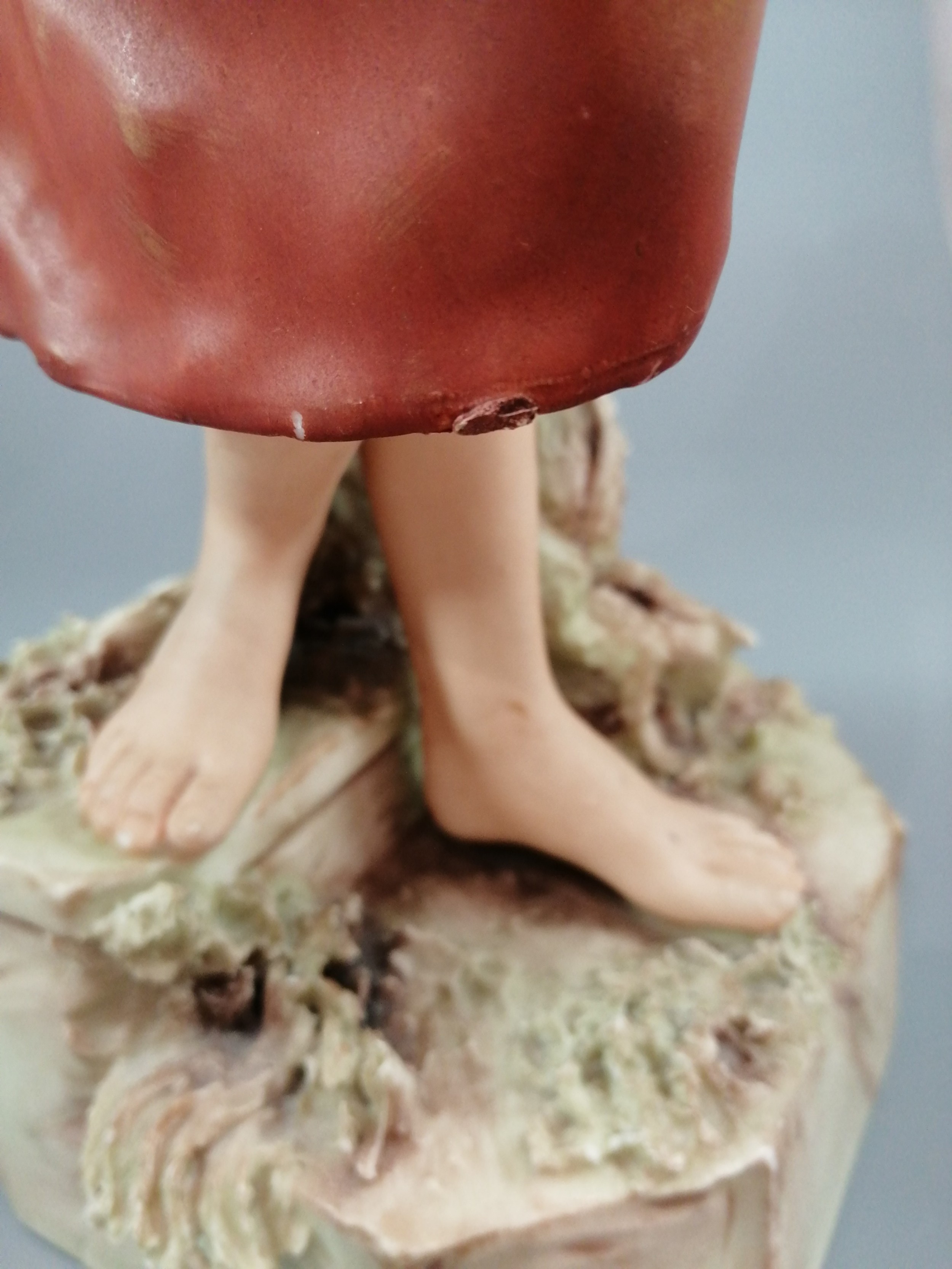
Small chip to the hem of the dress. Small hairline crack to the base, only clearly visible when the statuette is turned upside down.
Otherwise in excellent antique condition with no visible signs of damage or restoration. Excellent condition of the paintwork, minor scuffing to the gilding.
Please thoroughly examine the attached photos, as they form an integral part of this description. The item will be dispatched with comprehensive tracking and insurance.
Gillers Antiques Ltd has dated this piece to the 19th Century.
You can view the stock and full dealer information on the Gillers Antiques Ltd Profile Page
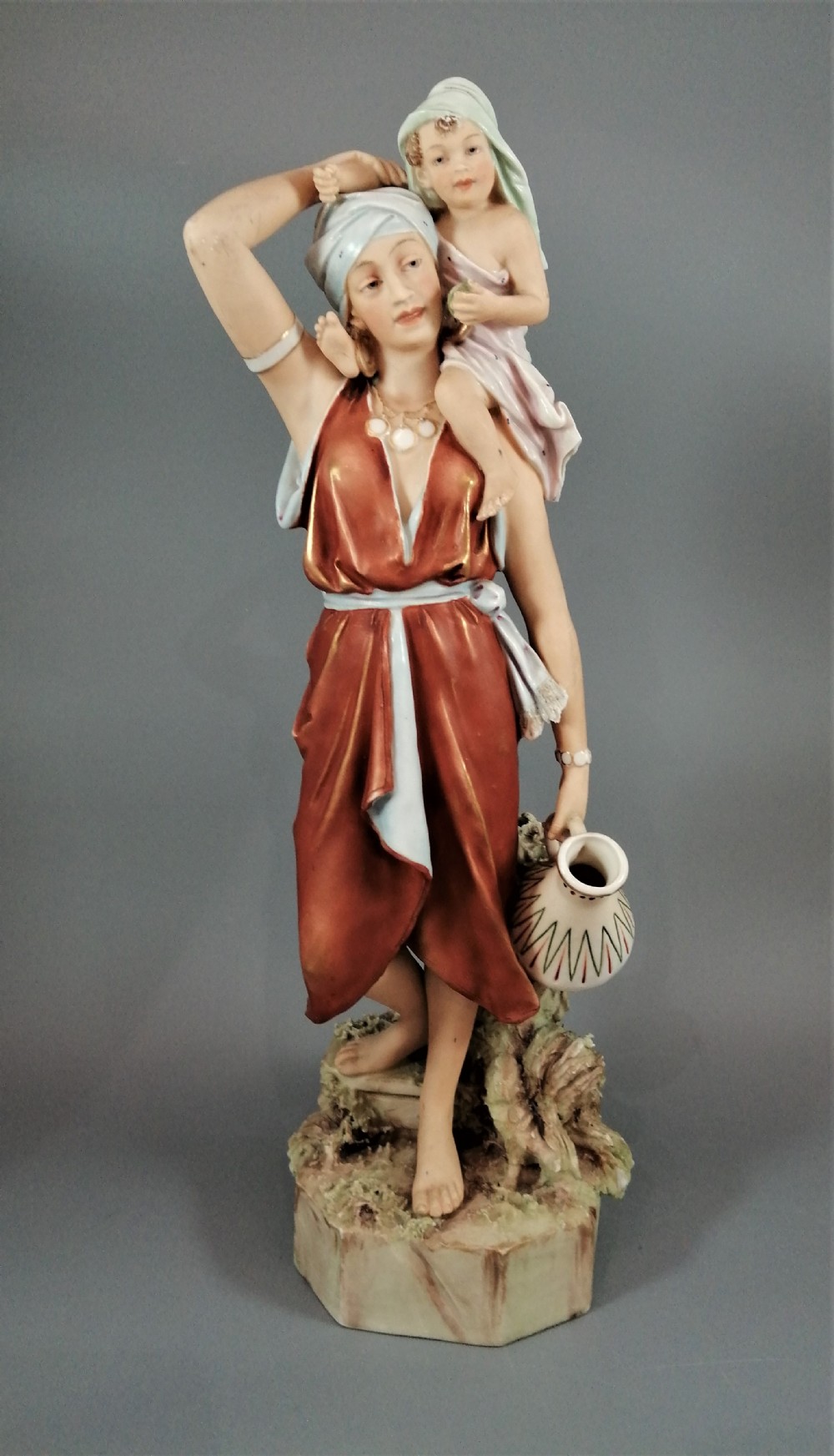
Antique Porcelain Royal Dux Figurine - Oriental Woman with Child, ?. 19th .