
A 2026 Guide by Sellingantiques

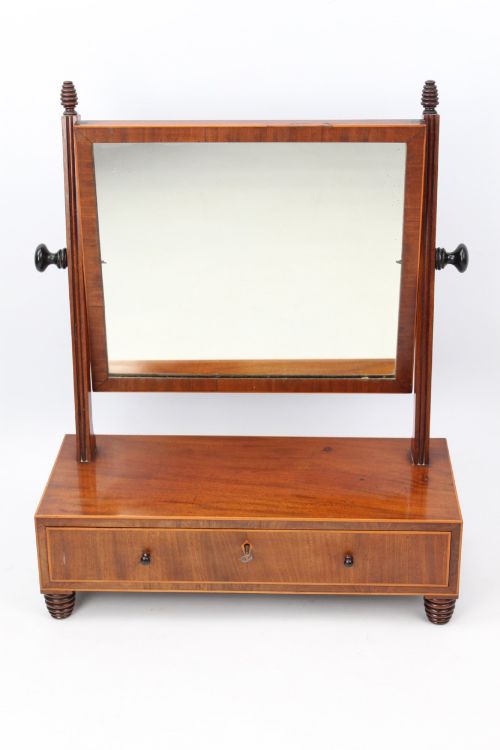
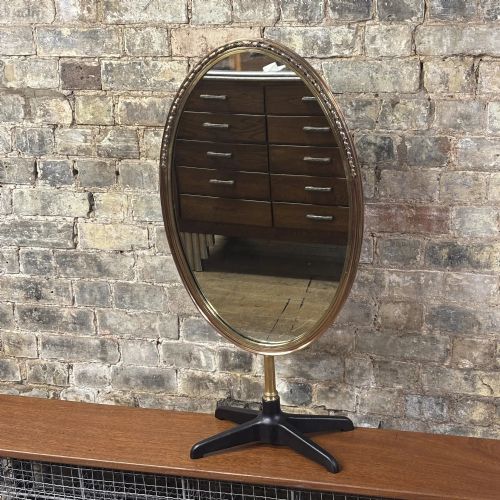
Fine Satinwood Inlaid Dressing Table Mirror, 1900
Priced at £895 from Shackladys Antiques
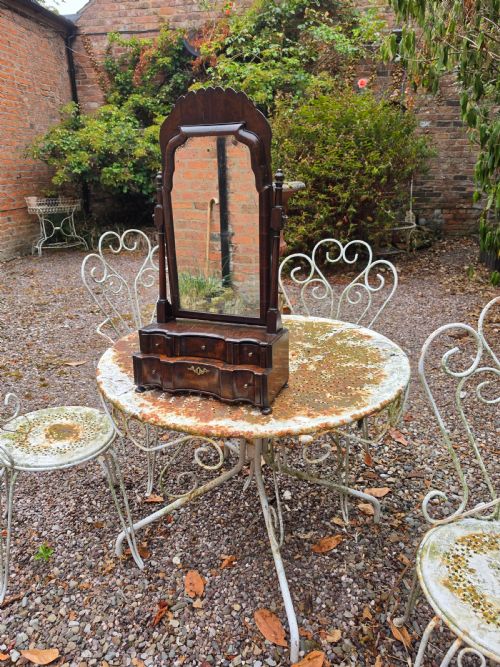
Early forms of the antique table mirror emerged in the late seventeenth century when silvered glass became more accessible for domestic use.
Stand alone examples gradually replaced hand-held metal plates. This shift in domestic habits allowed people to keep both hands free while applying cosmetics or arranging complex wigs.
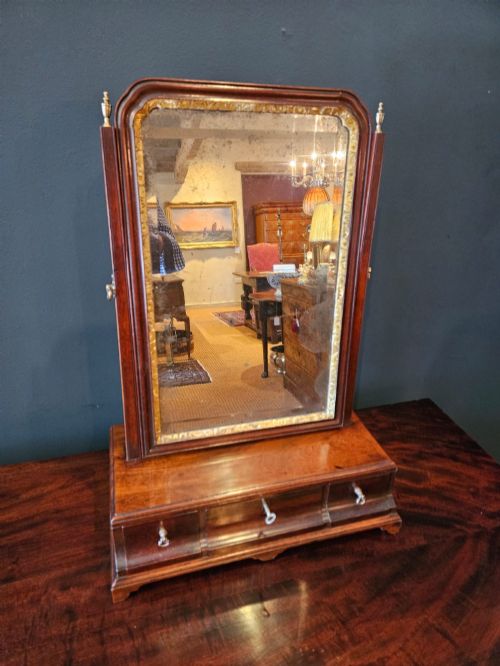
Check eighteenth-century bases for tiny fitted compartments. These small drawers held daily grooming supplies like powders and patches.
Box bases grew significantly larger during the Georgian period. They provided much needed structural stability to offset the weight of increasingly heavy glass plates.
Thomas Chippendale supplied dressing glasses to his prominent clients. Surviving invoices from the 1750s document these deliveries to large country estates.
George Seddon ran a massive London workshop late in the eighteenth century. His craftsmen produced hundreds of mahogany toilet mirrors alongside larger case furniture.
Most antique table mirrors lack a maker stamp. The trade relied on anonymous journeymen working in regional hubs.
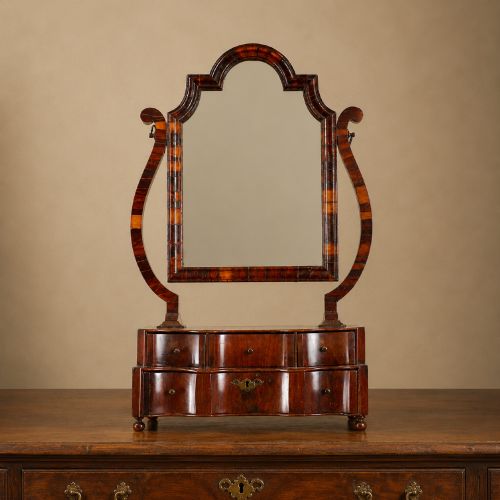
An Art Deco Walnut Dressing Table Mirror by Whytock & Reid., 1930
Priced at £1,350 from Drennan & Sturrock Ltd
The 2026 retail price guide for Antique Table Mirrors is drawn from a proprietary archive of over 1.1 million retail prices indexed by Sellingantiques since 2003. This guide relies exclusively on their own internal data; no external sources or auction records are used.
Analysing nearly 25 years of UK antique market history alongside current retail values, the data indicates that typical UK retail prices for Antique Table Mirrors range between £300 and £2,300. Entry-level prices generally fall under £300 and premium examples upwards of £2,300.
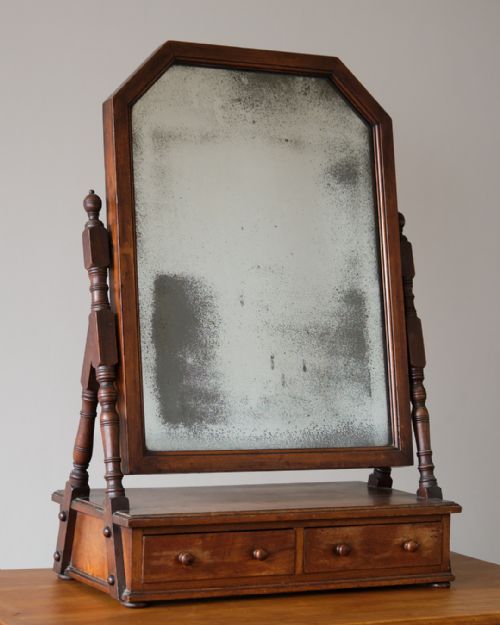
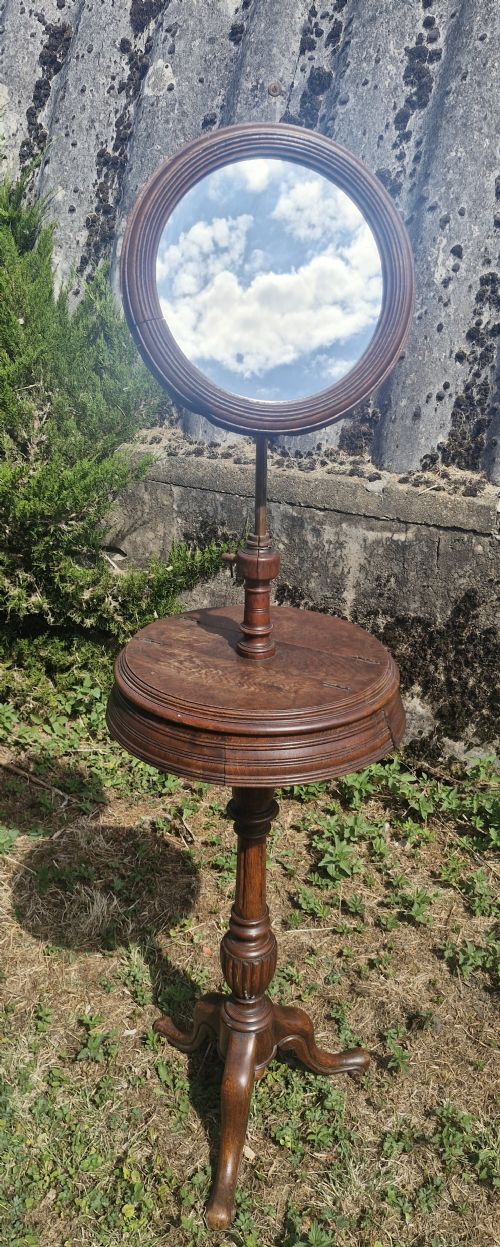
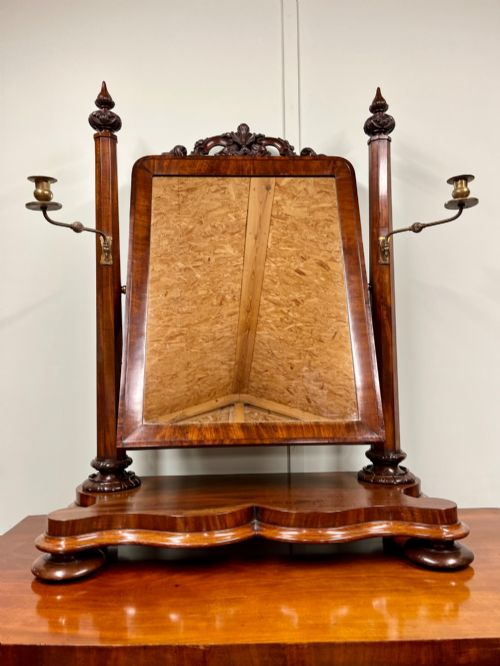
Friction hinges attach the frame to the uprights, allowing the glass to tilt backward and hold a specific angle for the user.
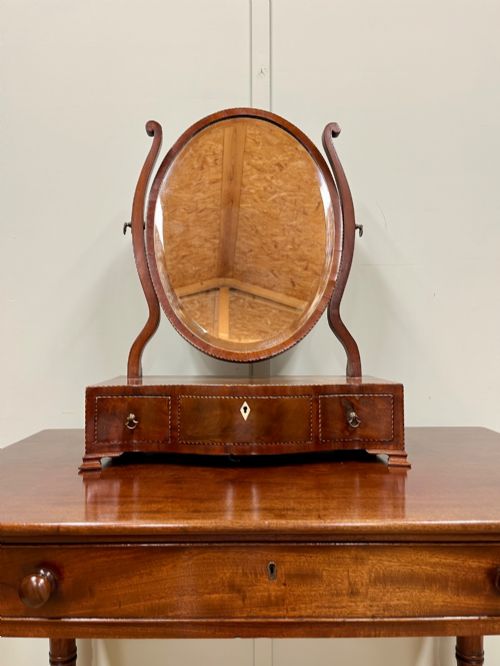
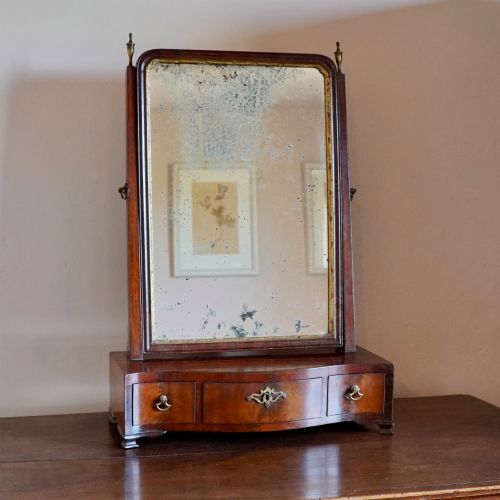
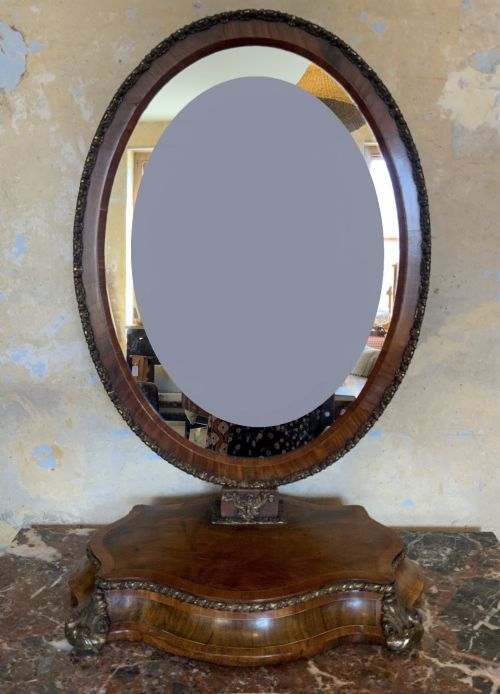
Serpentine fronts distinguish many mid-Georgian bases. These undulating curves required cabinet makers to shape thick timber blocks before applying the outer decorative veneers.
Look for original bevelled glass edges. Early plates were ground by hand at a shallow angle.
Hand-cut dovetails secure the corners of the base drawers. Craftsmen marked and sawn these joints individually for every piece.
Thin sheets of burr walnut were glued onto cheaper pine substrates using hide glue. This technique maximised the yield of decorative timbers.
Examine the back of the mirror frame. Traditional makers used rough-sawn pine boards held by small sprigs to protect the fragile silvering from behind.
"Many antique table mirrors were designed to be portable. Owners could easily carry them between bedchambers or place them near a window to catch the morning light."
"The shallow drawers comfortably hold contemporary jewellery and cosmetics just as well as historic grooming tools."
"Surviving eighteenth-century glass adds a warm tint to reflections. The manufacturing methods left slight impurities that soften the reflected image."
Based on almost 25 years of Sellingantiques UK antique market data, Antique Table Mirrors appeared 3057 times (out of 1,100,000 antiques) which gives it a rarity score of 54/100.
This score measures scarcity within the Sellingantiques archive only and is not a survey of the entire antiques market, so these statistics may not be indicative of the general availability of Antique Table Mirrors elsewhere.
Most antique table mirrors use softwoods for the backboard. Pine or deal are the most common choices.
These boards were cut thin and left relatively rough on the inward-facing side. They simply slide into grooves or sit against rebates to protect the fragile silvered glass from behind.
The problem is usually worn friction hinges. Over decades of daily use, the wooden posts and metal pivots wear down against each other.
Sometimes tightening the small brass knobs on the side of the uprights will solve the issue. If the threads are stripped, a restorer can pack the joint or fit new wooden washers to restore the tension.
Use a dry microfibre cloth for regular dusting. Avoid spraying liquids directly onto the plate.
Any moisture that drips down into the frame can seep into the backboard. This degrades the historic silvering.
Bevelled edges on early glass were ground by hand. Craftsmen achieved this profile using abrasive sand and water across a flat grinding stone.
These hand-ground bevels are usually shallow and slightly irregular, following the shape of the wooden frame. The angle is rarely uniform if you run your finger along the transition line.
This manual technique naturally produces a softer, undulating appearance. You will feel slight variations in the depth of the cut.
Please note: This Antique Table Mirrors guide and its associated pricing data are provided for general informational purposes only. It does not constitute formal financial, investment, or appraisal advice and should not be relied upon as the sole basis for any commercial activity, purchasing, or sales decisions. Sellingantiques.co.uk accepts no liability for any actions taken in reliance on this information. Always consult with a qualified professional or independent appraiser.
