



A 2026 Guide by Sellingantiques
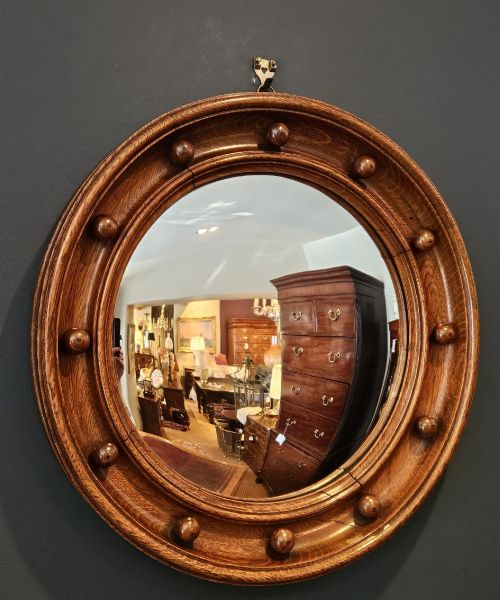
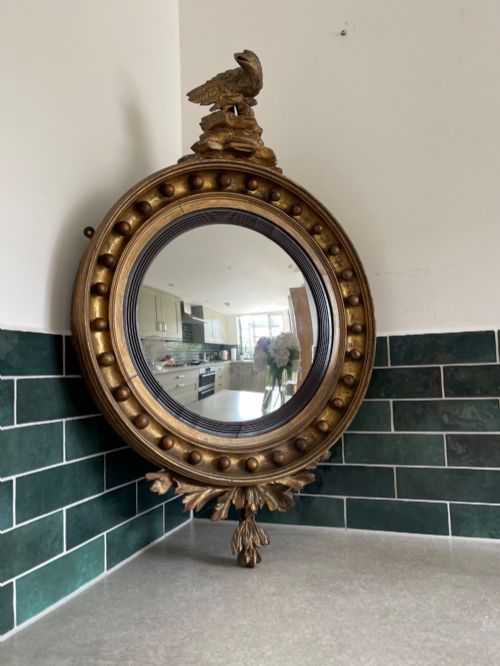
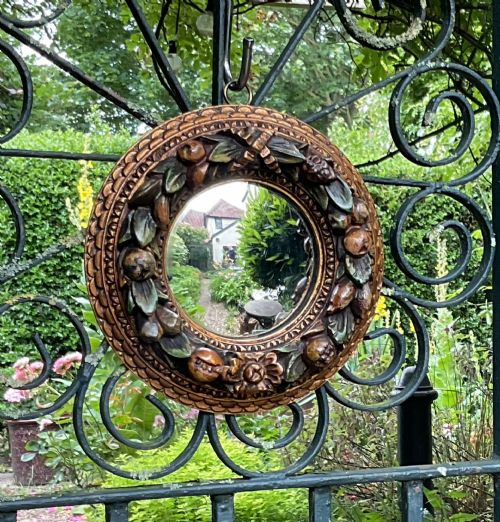
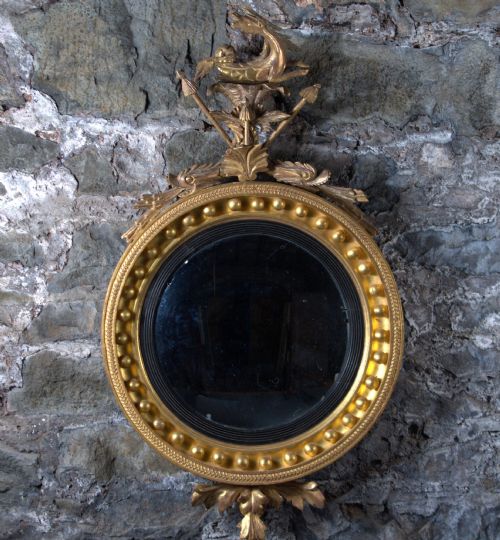
Victorian Carved Giltwood Mirror, Victorian
Priced at £850 from The Old Yard
Early Northern European painters used them in the fifteenth century.
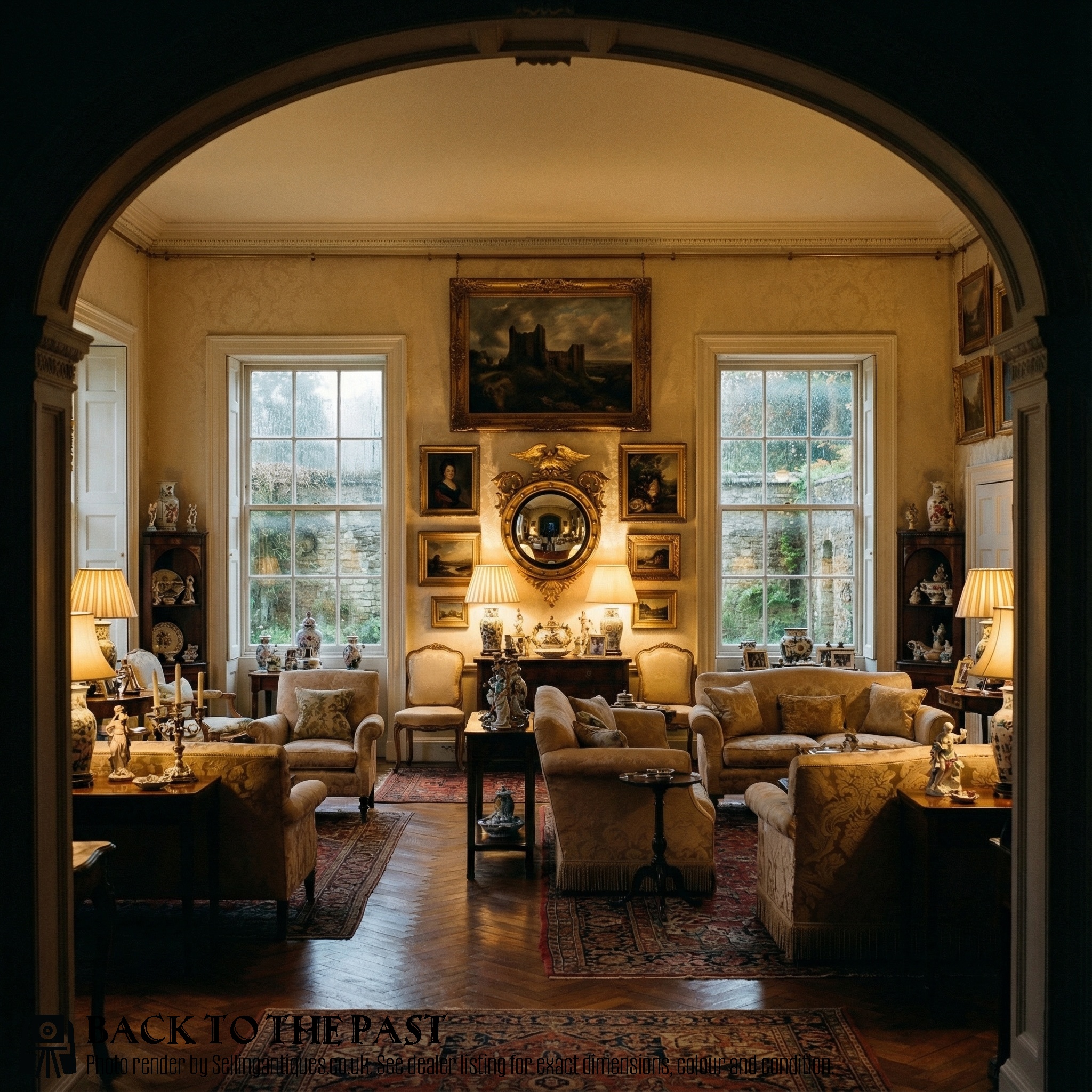
Regency dining rooms relied on antique convex mirrors to bounce candlelight. The curved surface scatters illumination wider than a flat glass could manage.
Bankers called them banker's eyes. Staff monitored the counting house floor through one placed glass without turning their heads.
Look at Georgian dining spaces to understand their domestic purpose. Placed high on the wall, they gathered light from central chandeliers and pushed it into the dark corners of the room.
Thomas Fentham ran a busy workshop on the Strand. He produced many labelled antique convex mirrors during the late eighteenth and early nineteenth centuries, often featuring distinctive reeded slips.
George Simson made elaborate giltwood examples in London. His trade labels occasionally survive glued to the pine backboards behind the glass.
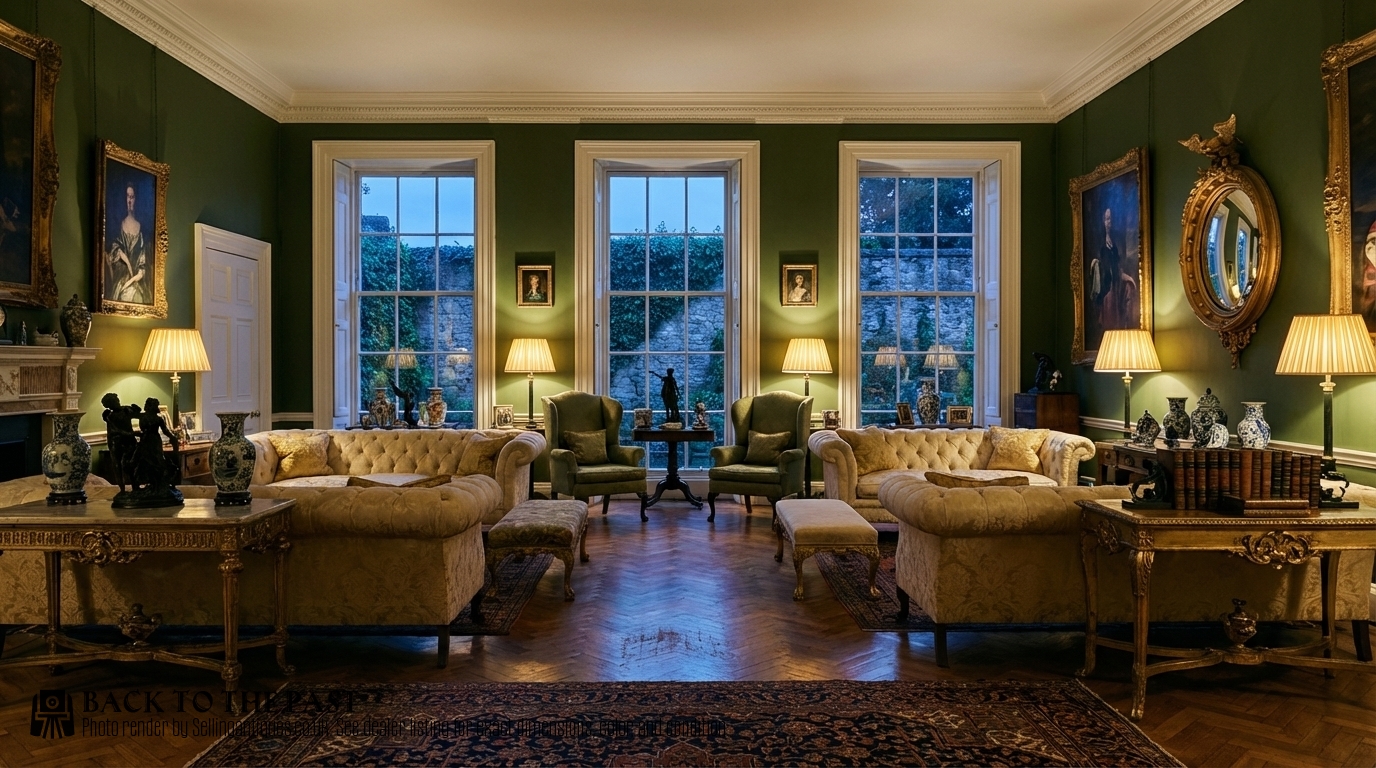
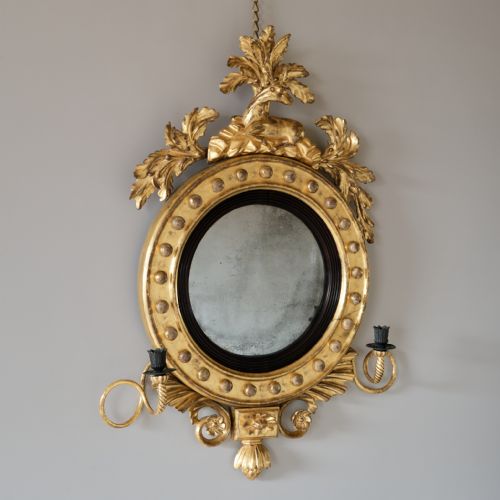
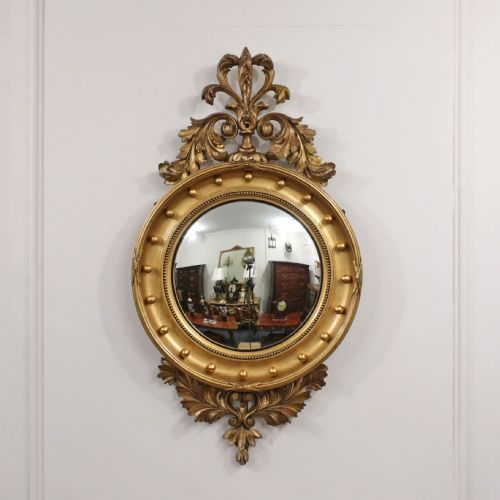
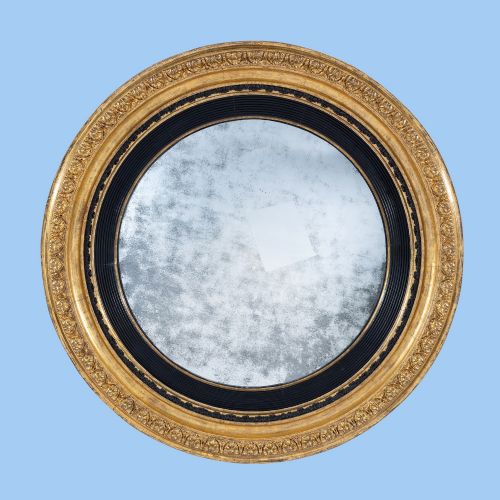
Convex Mirror, 19th Century
Priced at £2,995 from Midwinter Antiques
The 2026 retail price guide for Antique Convex Mirrors is drawn from a proprietary archive of over 1.1 million retail prices indexed by Sellingantiques since 2003. This guide relies exclusively on their own internal data; no external sources or auction records are used.
Analysing nearly 25 years of UK antique market history alongside current retail values, the data indicates that typical UK retail prices for Antique Convex Mirrors range between £500 and £3,500. Entry-level prices generally fall under £500 and premium examples upwards of £3,500.
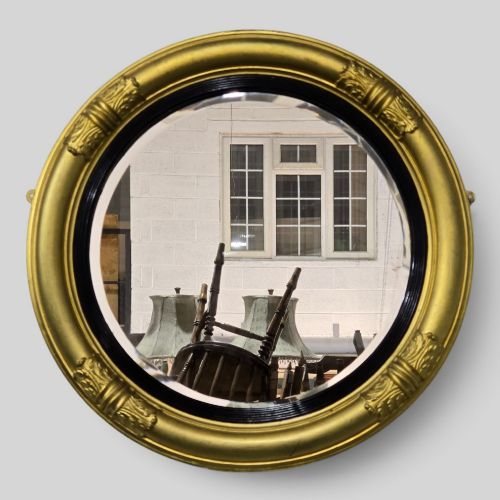
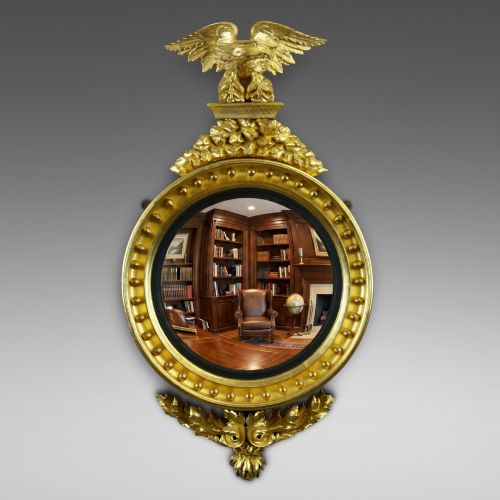
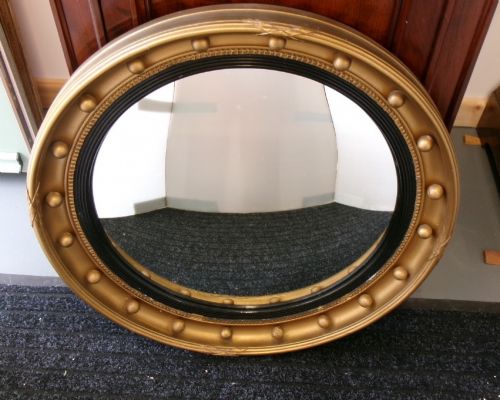
Ebonised reeded slips sit directly next to the glass. This dark inner ring creates a visual border separating the bright reflection from the gilded frame.
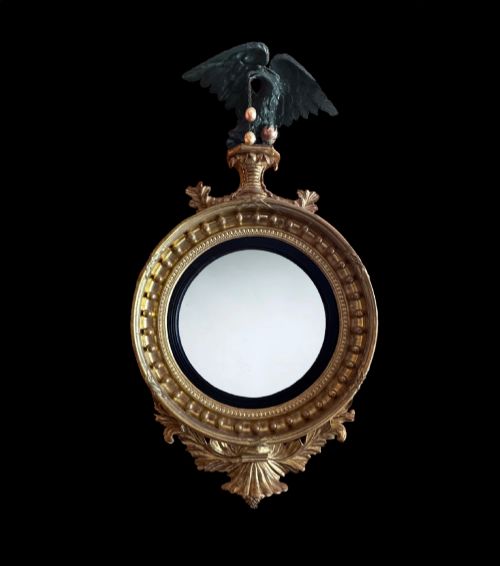
Carved eagles frequently perch on the top crest. They face left or right with outstretched wings.
Check the lower apron for crossed branches. Foliate decoration pointing downwards anchors the whole circular design visually against the flat wall.
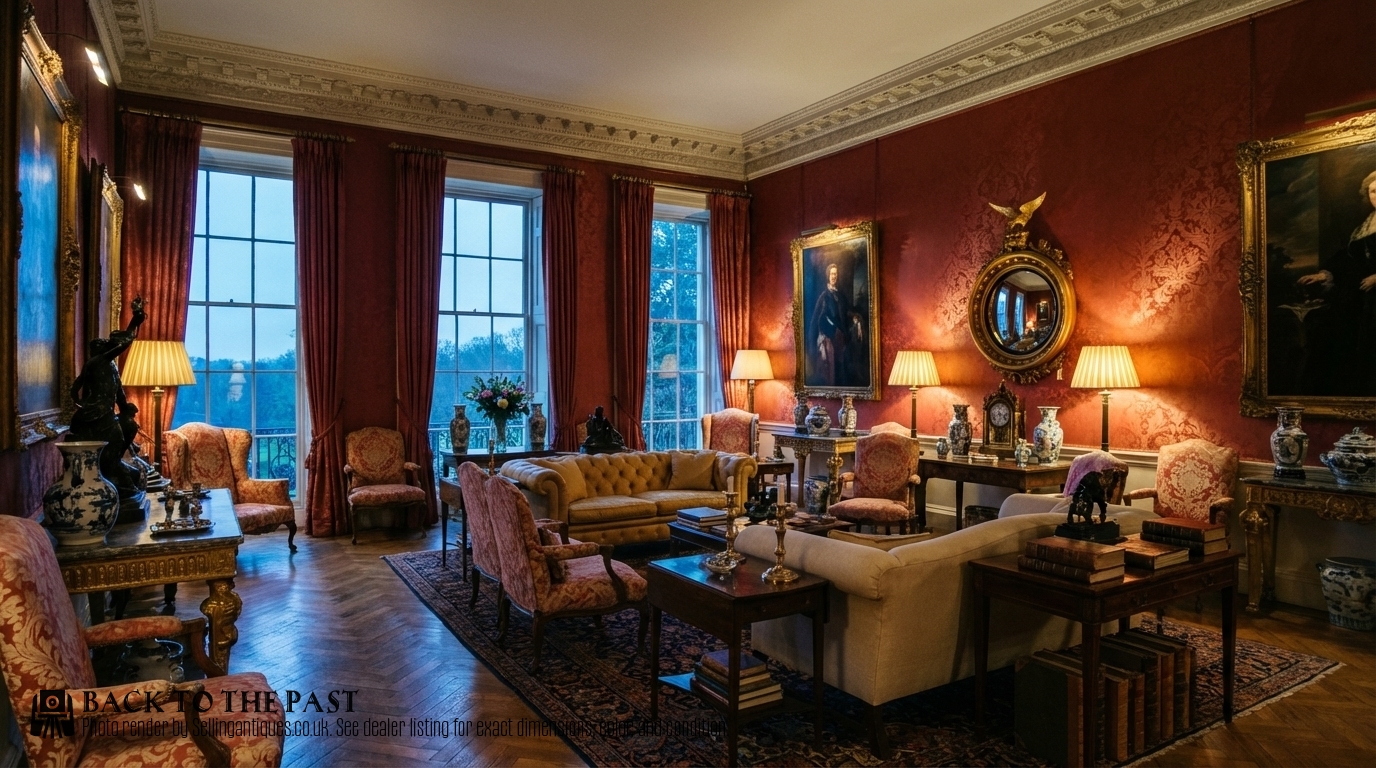
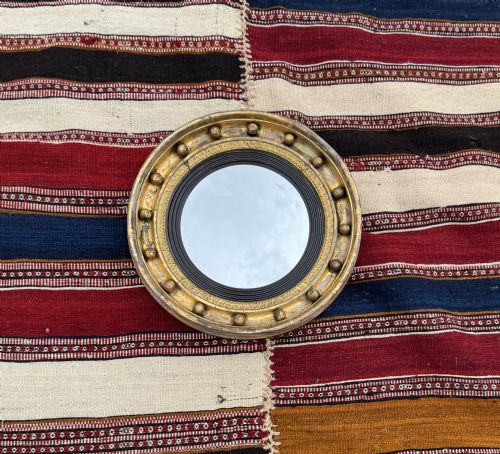
Large Regency Eagle Mounted Circular Gilded Convex Mirror, 1800
Priced at £12,500 from A Brookes
Blowing glass spheres was the first step. Workmen cut circles from the hot globe before it cooled, creating the signature curved plate.
Joiners built the carcase from overlapping segments. This stops the frame warping.
Applied composition ornament replaced carved wood later on. Wires pressed into boxwood moulds formed the complex swags and classical figures decorating the outer edges.
"Their optical distortion kept dining room staff out of sight. Servants waited outside the door, watching the reflection to know when plates needed clearing."
"The dark ebonised inner ring enhances the reflection, working as a clever optical trick."
"Notice the positioning of the carved eagles on top. Makers specifically angled them downwards so their carved eyes met those of people standing in the room below."
Based on almost 25 years of Sellingantiques UK antique market data, Antique Convex Mirrors appeared 1360 times (out of 1,100,000 antiques) which gives it a rarity score of 76/100.
This score measures scarcity within the Sellingantiques archive only and is not a survey of the entire antiques market, so these statistics may not be indicative of the general availability of Antique Convex Mirrors elsewhere.
Tilt and height matter a lot with convex glass. Hang it slightly higher than eye level so the centre of the room reflects clearly without distortion.
Early decorators often angled the top of the frame forwards. This pitches the reflection downwards to cover a dining table rather than the ceiling.
A low ceiling alters how the glass catches light. The curve will certainly pick up hanging fixtures, but it also pulls in the walls and doorways.
Try placing it opposite a window rather than a chandelier. This allows the antique convex mirror to gather natural daylight and spread it across the space instead of bouncing artificial glare.
Removing original mercury silvering destroys a major part of the history.
Specialists can patch damaged areas using antique techniques. Accept the spotting.
Restorers carve replacement sconces from pine to match the empty sockets on the frame. They apply gesso and water gild the new additions to blend with the aged surface.
Many people leave the sockets empty. The frame works well as a decorative object without reinstating the lighting elements.
Please note: This Antique Convex Mirrors guide and its associated pricing data are provided for general informational purposes only. It does not constitute formal financial, investment, or appraisal advice and should not be relied upon as the sole basis for any commercial activity, purchasing, or sales decisions. Sellingantiques.co.uk accepts no liability for any actions taken in reliance on this information. Always consult with a qualified professional or independent appraiser.
