
A 2026 Guide by Sellingantiques
Early examples appeared in the late seventeenth century as sheet glass became more affordable.
Before this period, individuals relied on small hand-held glasses for personal grooming tasks.
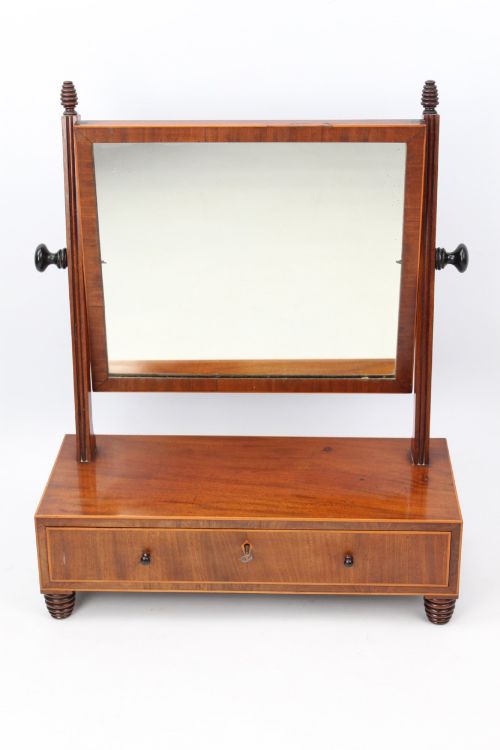
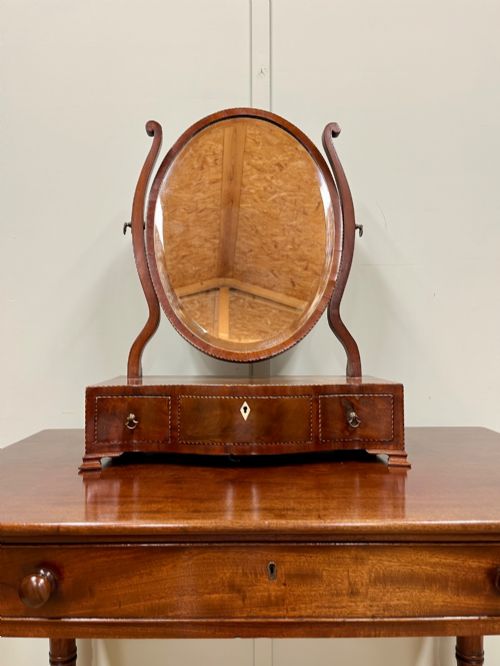
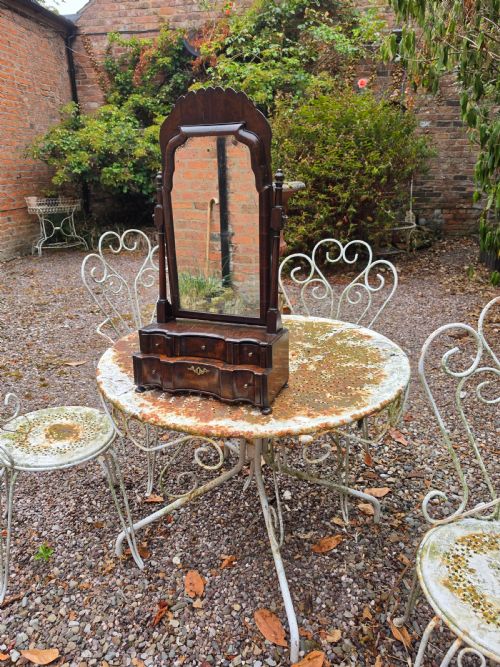
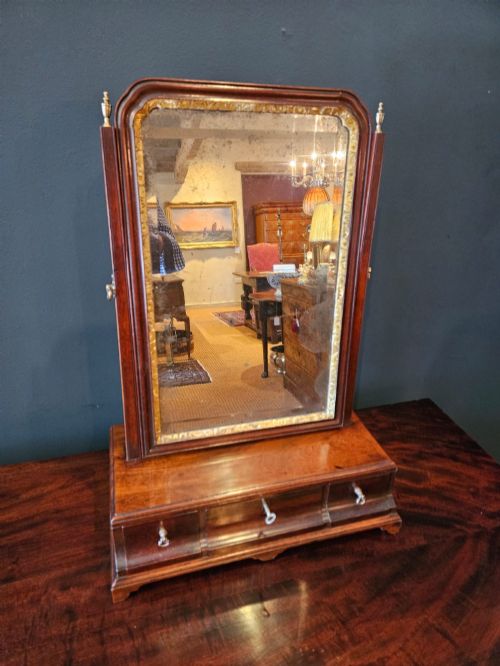
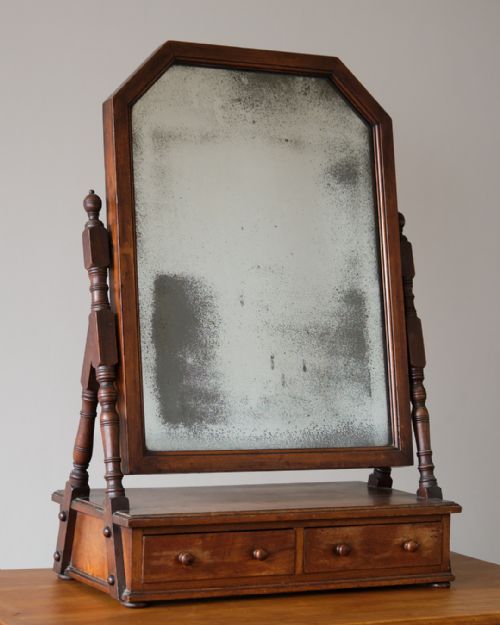
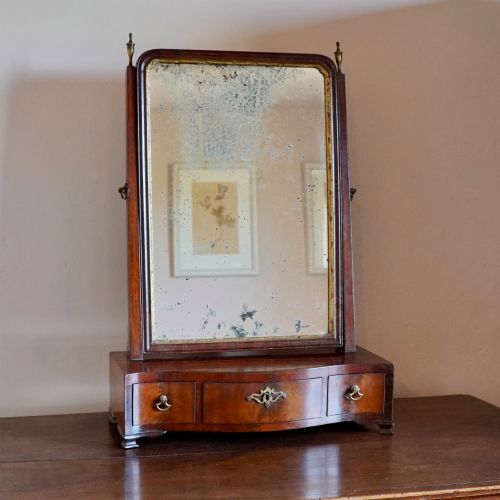
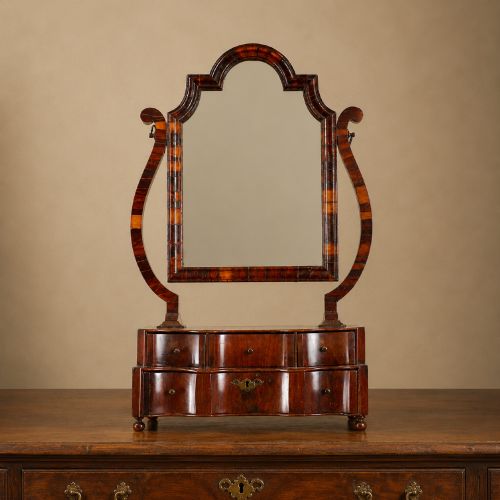
Eighteenth-century cabinet makers turned the antique vanity mirror into a status symbol by adding base tiers with drawers.
Look at the shift towards the Victorian era. The designs grew heavier and wider to match larger bedroom suites.
By the Edwardian period, standalone designs faded because factories started attaching glasses directly to dressing tables.
Gillows of Lancaster produced mahogany toilet glasses during the late eighteenth and early nineteenth centuries.
Thomas Chippendale supplied japanned dressing glasses to Nostell Priory in the 1770s.
Regional joiners made most surviving antique vanity mirrors without signing their work or leaving paper labels.
The 2026 retail price guide for Antique Vanity Mirrors is drawn from a proprietary archive of over 1.1 million retail prices indexed by Sellingantiques since 2003. This guide relies exclusively on their own internal data; no external sources or auction records are used.
Analysing nearly 25 years of UK antique market history alongside current retail values, the data indicates that typical UK retail prices for Antique Vanity Mirrors range between £300 and £1,700. Entry-level prices generally fall under £300 and premium examples upwards of £1,700.
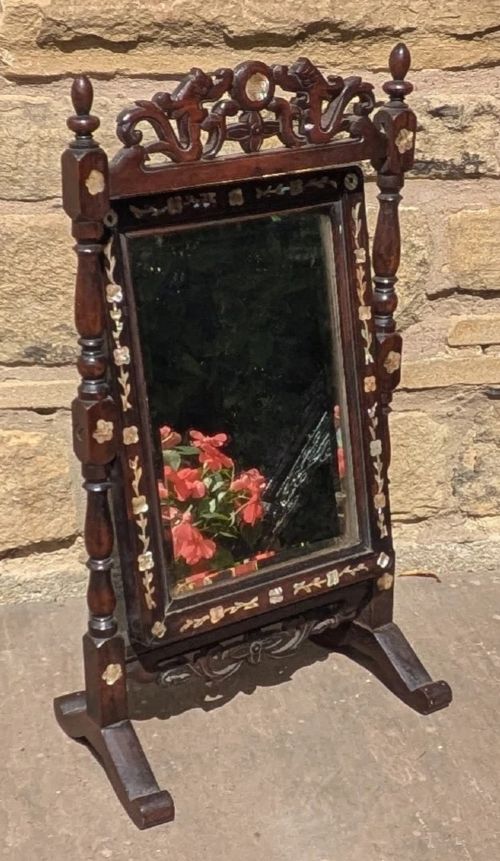
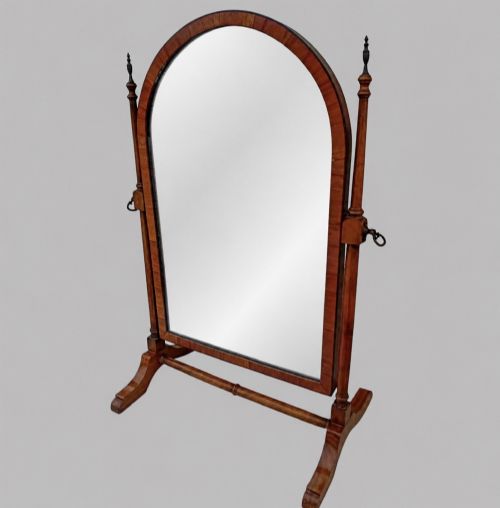
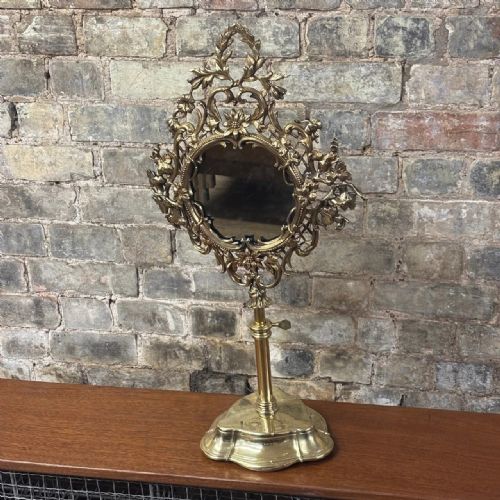
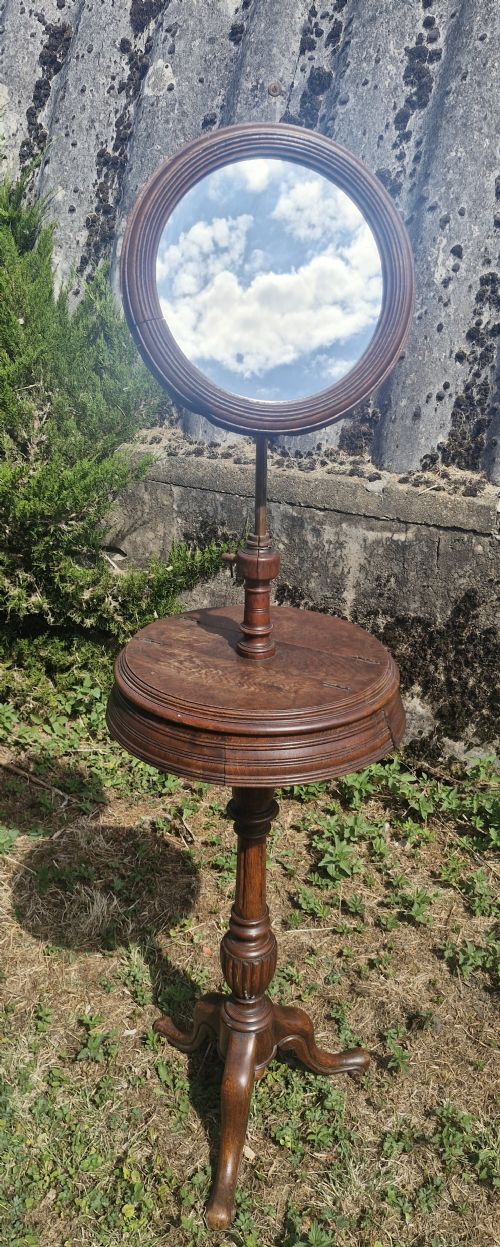
The central swinging glass always pivots between two rigid upright standards attached to a solid base.
Base sections often incorporate small drawers to hold jewellery or cosmetics.
Turn the piece around to examine the backboards. Deal or pine panels slide into grooves to protect the delicate silvering.
Craftsmen cut thin layers of expensive timber by hand to veneer the curved base sections of Georgian models.
Open a base drawer. You'll find tiny hand-cut dovetails holding the boxes together, showing the skill of the workshop.
Makers used complex friction hinges on the uprights to ensure the heavy glass frame stayed at the chosen angle.
"Some early bases feature concealed compartments hidden behind the main drawers for securing private letters."
"The adjustable angles helped direct natural window light onto the face before gas lighting became a common household feature."
"Shield-shaped frames required complex steam-bending techniques to form the wooden perimeter without snapping the grain."
Based on almost 25 years of Sellingantiques UK antique market data, Antique Vanity Mirrors appeared 1514 times (out of 1,100,000 antiques) which gives it a rarity score of 74/100.
This score measures scarcity within the Sellingantiques archive only and is not a survey of the entire antiques market, so these statistics may not be indicative of the general availability of Antique Vanity Mirrors elsewhere.
You can ask a glazier to cut a new piece of glass to fit the frame. They remove the wooden backboard and slot a modern silvered plate into the rebate.
Most buyers prefer to keep the original mercury glass. The dark spots and cloudy patches belong to the history of the piece.
Start with a dry microfibre cloth to wipe away surface dust from the timber. If the wood has sticky marks, wipe it gently with a damp cloth and dry it immediately.
Avoid modern spray polishes that contain silicon. These products leave a residue that dulls the natural patina of the wood over time.
Feed the timber once a year with a good quality beeswax. Apply a thin coat, leave it to dry for twenty minutes, and buff it to a soft shine.
The brass friction hinges holding the glass to the upright standards have worn loose. The weight of the plate pulls the frame down.
You can sometimes tighten the screws on the wooden finials to increase the friction. A restorer can fit thin brass washers to grip the pivot again.
Specialist hardware dealers sell turned bone, wood or brass knobs made for antique furniture. You need to measure the diameter of the existing hole in the drawer front before ordering.
Try to match the style of the replacements to the age of the antique vanity mirror. Simple turned brass or bone knobs suit most Georgian and Victorian base tiers well.
Please note: This Antique Vanity Mirrors guide and its associated pricing data are provided for general informational purposes only. It does not constitute formal financial, investment, or appraisal advice and should not be relied upon as the sole basis for any commercial activity, purchasing, or sales decisions. Sellingantiques.co.uk accepts no liability for any actions taken in reliance on this information. Always consult with a qualified professional or independent appraiser.
