



A 2026 Guide by Sellingantiques
Salt clumped badly before modern anti-caking agents. Cooks needed it right next to the fire to stay dry.
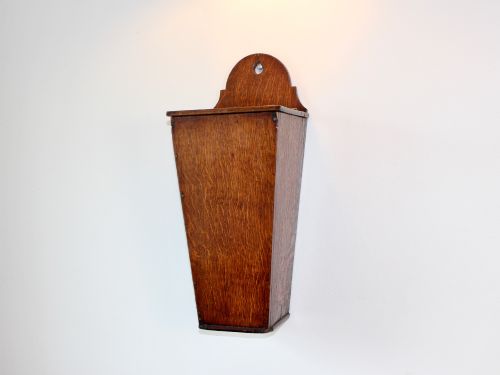
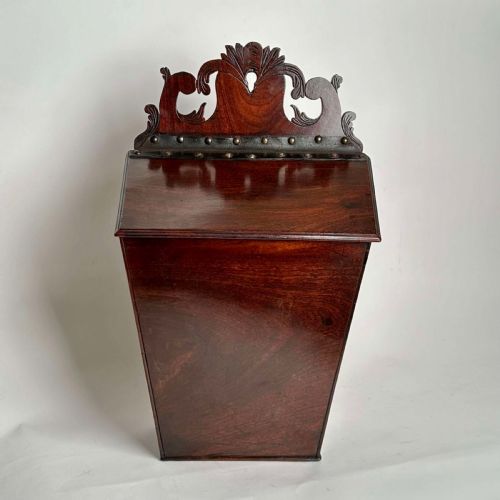
Wall mounting kept an antique salt box away from mice.
Eighteenth-century homes often had one hanging near the open hearth.
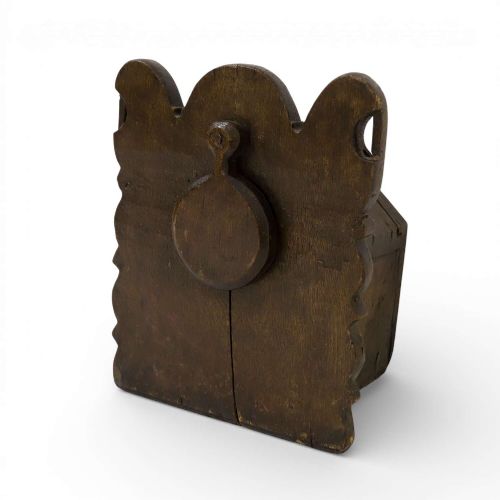
Look for blackened backs. They hung too close to the soot of the main chimney.
Designs shifted as salt became cheaper. You see more table pieces and fewer wall boxes by the late Victorian era.
Documented makers of wooden antique salt boxes hardly exist. Treen turners and village carpenters produced them locally.
Staffordshire potteries mass-produced ceramic versions during the nineteenth century.
Dutch Delft examples survive in good numbers. These exported widely across Europe.
The 2026 retail price guide for Antique Salt Boxes is drawn from a proprietary archive of over 1.1 million retail prices indexed by Sellingantiques since 2003. This guide relies exclusively on their own internal data; no external sources or auction records are used.
Analysing nearly 25 years of UK antique market history alongside current retail values, the data indicates that typical UK retail prices for Antique Salt Boxes range between £200 and £700. Entry-level prices generally fall under £200 and premium examples upwards of £700.
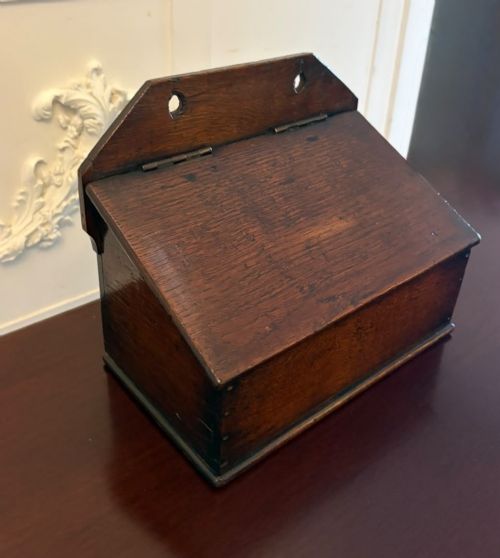
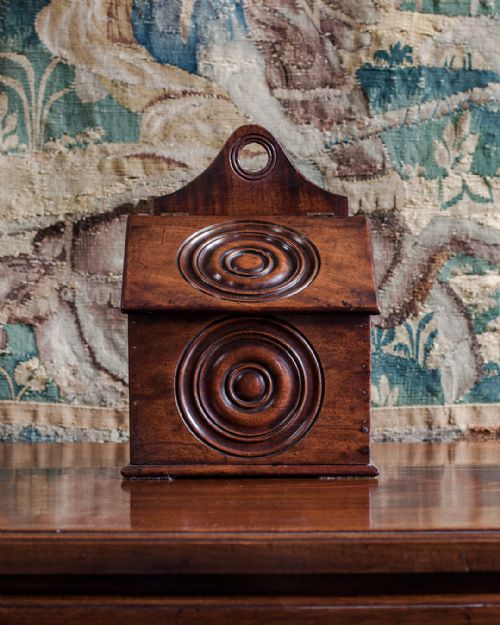
The slanting lid is standard. It throws off kitchen grease and dust.
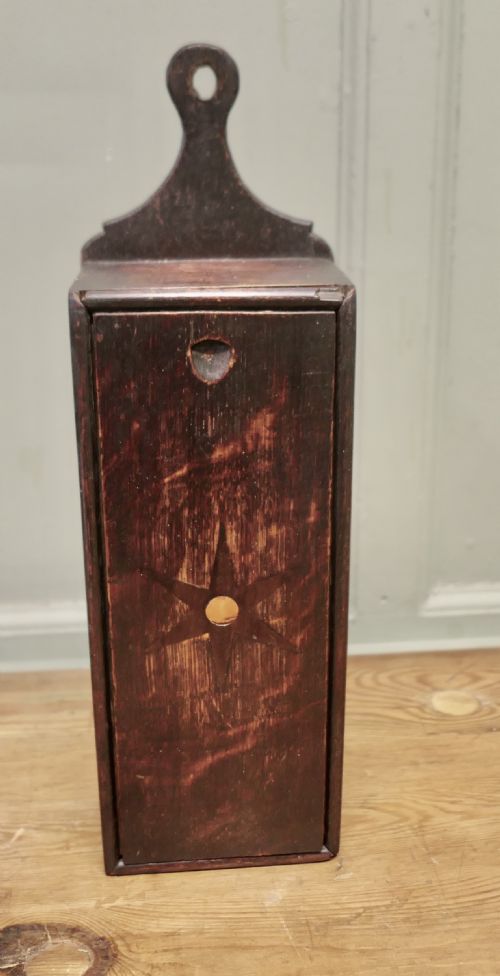
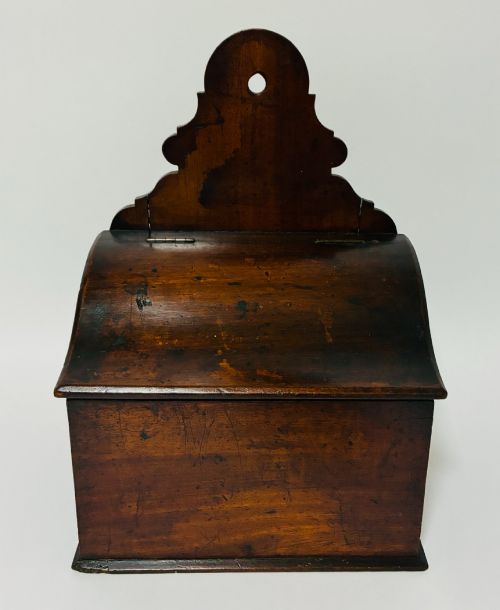
Check the projecting backplate. These usually feature a single drilled hole for hanging.
Many sit on flat bottoms. Useful for resting on a dresser when unhooked.
Early wooden boxes are pinned together with wooden dowels or hand-wrought iron nails.
Better nineteenth-century pieces use neat dovetails. This resists the warping caused by constant heat.
Ceramic versions were slip-cast in moulds. You'll often see blue underglaze lettering.
"They double as excellent dry storage for modern kitchen utensils."
"The angled lids create a satisfying sound when they drop shut."
"Ceramic versions often carry charming regional dialect spellings of the word salt."
Based on almost 25 years of Sellingantiques UK antique market data, Antique Salt Boxes appeared 308 times (out of 1,100,000 antiques) which gives it a rarity score of 94/100.
This score measures scarcity within the Sellingantiques archive only and is not a survey of the entire antiques market, so these statistics may not be indicative of the general availability of Antique Salt Boxes elsewhere.
Do not use water on wooden boxes. Salt residue has already broken down the wood fibres over the centuries. Moisture will accelerate the damage.
Brush out loose dust with a dry bristle brush. If it is a ceramic antique salt box, a damp cloth is fine for wiping the glazed interior.
Odours get trapped in the porous timber. These pieces lived next to open fires for generations, absorbing soot and cooking fats.
You can place a bowl of dry bicarbonate of soda inside and close the lid for a few weeks. This gently absorbs the smells without risking damage to the carcase.
Do not sand the inside to freshen it. Stripping away the historic surface ruins the patina.
Yes, provided the interior is clean and stable. Ceramic or stoneware examples are ideal for modern use as they wash easily and resist corrosion.
Wooden boxes are trickier. Modern table salt often falls through the dry joints. Coarse sea salt works better, but it will continue to slowly degrade the timber.
That small lower drawer held spices. Nutmeg and mace needed the same dry conditions as the salt above them.
Keeping them near the hearth prevented dampness.
Please note: This Antique Salt Boxes guide and its associated pricing data are provided for general informational purposes only. It does not constitute formal financial, investment, or appraisal advice and should not be relied upon as the sole basis for any commercial activity, purchasing, or sales decisions. Sellingantiques.co.uk accepts no liability for any actions taken in reliance on this information. Always consult with a qualified professional or independent appraiser.
