


A 2026 Guide by Sellingantiques

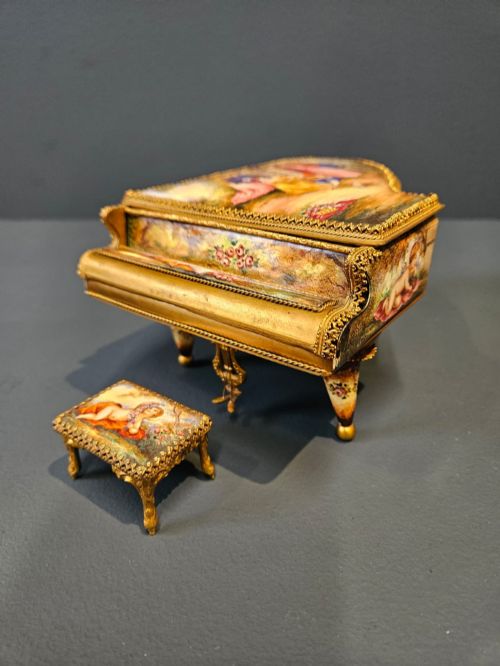
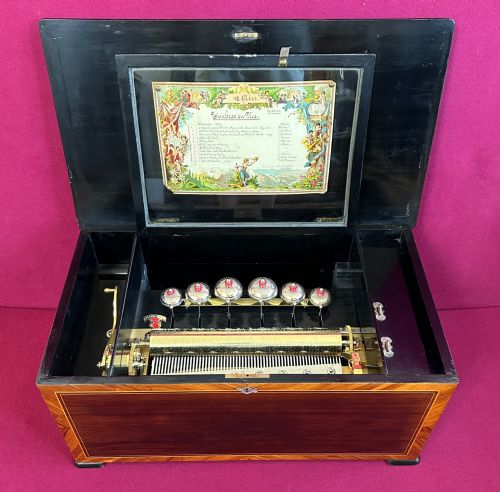
Music Box Mandolin by B a Bremond Circa 1860, 1860
Priced at £2,950 from Sovereign Antiques Of Nuneaton
Originating in late eighteenth-century Switzerland, early cylinder movements were fitted into watches.
Standalone musical movements grew larger and more complex throughout the nineteenth century, eventually evolving into substantial table-top instruments designed to entertain guests in the parlour.
Disc players emerged in Germany during the 1880s, offering buyers a cheaper way to hear new music via mass-produced interchangeable steel plates.
Gramophones ultimately pushed these mechanical instruments out of fashion in the early twentieth century.
Nicole Frères operated in Geneva from 1815. They produced large, complex cylinder boxes.
Polyphon made thousands of disc music boxes in Leipzig during the late nineteenth and early twentieth centuries.
Before Polyphon dominated the market, Symphonion pioneered the disc format in Germany.
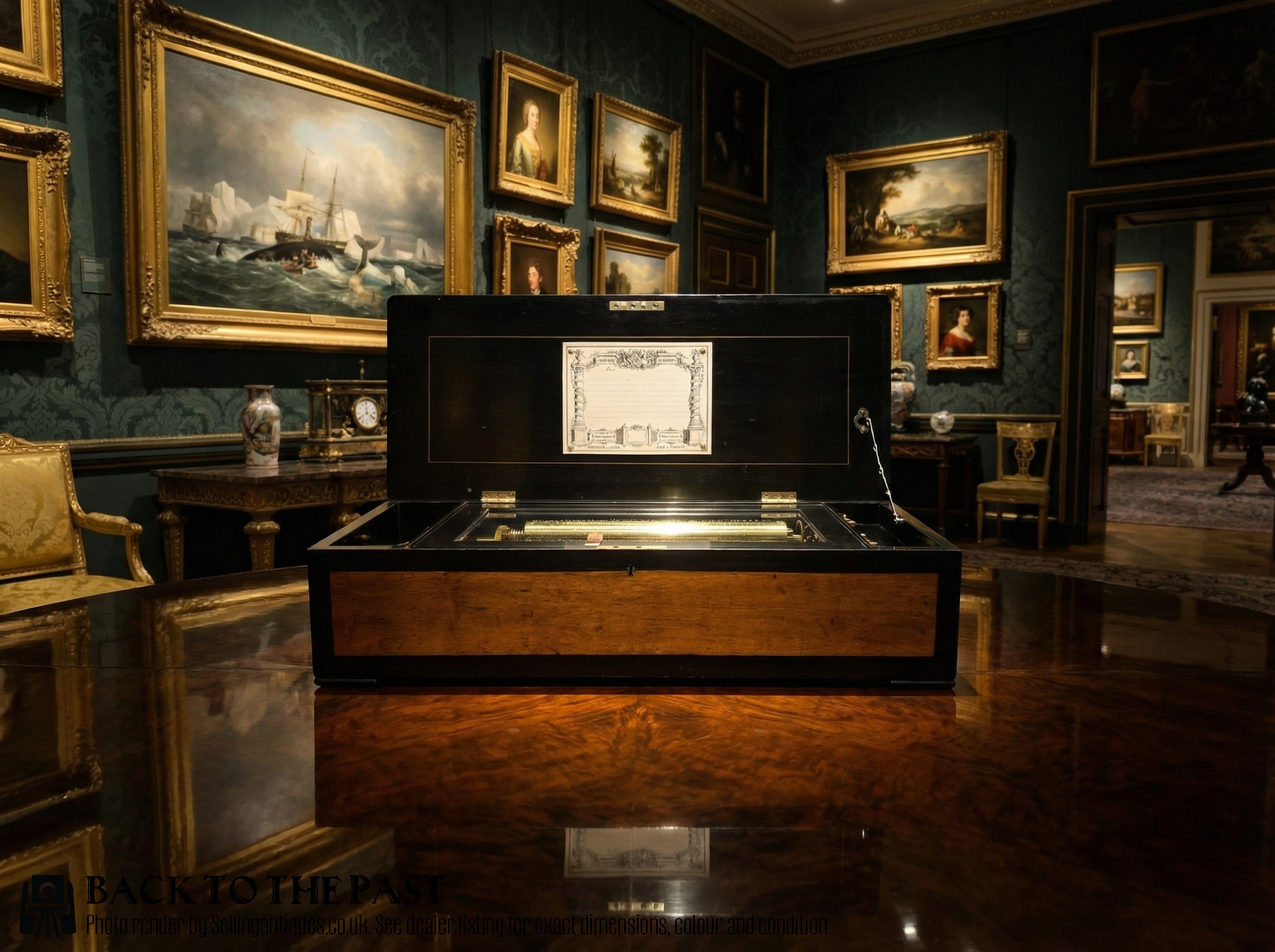
8 Air Musical Box by Nicole Freres- Serial Number 51098. Circa 1900., 1900
Priced at £2,800 from Dragoncharger Antiques
The 2026 retail price guide for Antique Music Boxes is drawn from a proprietary archive of over 1.1 million retail prices indexed by Sellingantiques since 2003. This guide relies exclusively on their own internal data; no external sources or auction records are used.
Analysing nearly 25 years of UK antique market history alongside current retail values, the data indicates that typical UK retail prices for Antique Music Boxes range between £500 and £3,500. Entry-level prices generally fall under £500 and premium examples upwards of £3,500.
Brass cylinders carry the small pins that pluck the steel comb as the mechanism rotates.
Winding handles sit either inside the wooden case or project outwards from the side profile.
Lift the lid. Many late nineteenth-century examples feature glass inner covers to protect the movement from dust while allowing you to watch the gears turn.

Victorian Music Box Circa 1860. Musical Box., Victorian
Priced at £950 from Frank Craig Antiques
Early cases feature austere fruitwood with minimal exterior decoration, hiding the movement inside.
Later Victorian models adopt complex marquetry lids. Cabinetmakers combined contrasting veneers like rosewood and tulipwood to form detailed floral motifs.
Vertical cabinet forms developed for large disc machines in public spaces.
"Subdued bass tones were achieved by inserting lead weights into the underside tips of the longer teeth."
"Some large cylinder instruments contain hidden percussion elements. Small bells and drums strike alongside the melody."
"Clockmakers originally developed these mechanisms. They applied their skills to cut the tiny gears and map the brass cylinders."
Based on almost 25 years of Sellingantiques UK antique market data, Antique Music Boxes appeared 301 times (out of 1,100,000 antiques) which gives it a rarity score of 94/100.
This score measures scarcity within the Sellingantiques archive only and is not a survey of the entire antiques market, so these statistics may not be indicative of the general availability of Antique Music Boxes elsewhere.
Yes, disc mechanisms typically project more volume. The star-wheel arrangement that plucks the comb allows for a stronger strike than the direct pin action found in cylinder versions.
They were often built for public spaces like taverns or railway stations, where background noise was a factor. Cylinder boxes were generally intended for quieter domestic parlours.
Identifying tunes without the original sheet requires patience. You will need to listen closely and try matching the melodies against online archives of nineteenth-century popular music and opera.
Some collectors record the tracks and run them through audio recognition software. This works for famous classical pieces but often struggles with obscure Victorian parlour songs.
Always let the spring motor run down before moving the cabinet. A sudden jolt while under tension can cause the governor to slip.
This leads to a rapid unwinding that destroys the pins and comb.
Never force a jammed winding lever. The spring is likely wound tight, and the blockage sits somewhere else in the gear train or the governor assembly.
Applying extra pressure to the handle will bend the winding pawl or snap the spring. A specialist must dismantle the barrel to release the tension safely.
Please note: This Antique Music Boxes guide and its associated pricing data are provided for general informational purposes only. It does not constitute formal financial, investment, or appraisal advice and should not be relied upon as the sole basis for any commercial activity, purchasing, or sales decisions. Sellingantiques.co.uk accepts no liability for any actions taken in reliance on this information. Always consult with a qualified professional or independent appraiser.
