
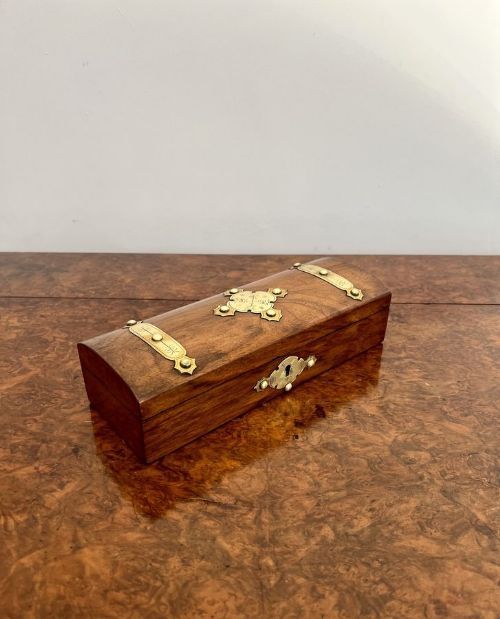


A 2026 Guide by Sellingantiques
During the nineteenth century, Victorians wore gloves for almost every social occasion.
A dedicated antique glove box kept kid leather free from dust and accidental spills in the bedroom.
Giving these containers as courtship gifts was common practice throughout the Edwardian period.
Look at the length of the box. Longer examples emerged as evening styles extended past the elbow.
Identifying a specific maker is difficult. Most antique glove boxes carry no stamp or label.
Tunbridge Wells workshops produced many examples during the mid-nineteenth century, using their signature geometric wood mosaics.
Paris was a major centre for exporting highly decorated papier-mâché versions to the British market.
The 2026 retail price guide for Antique Glove Boxes is drawn from a proprietary archive of over 1.1 million retail prices indexed by Sellingantiques since 2003. This guide relies exclusively on their own internal data; no external sources or auction records are used.
Analysing nearly 25 years of UK antique market history alongside current retail values, the data indicates that typical UK retail prices for Antique Glove Boxes range between £200 and £600. Entry-level prices generally fall under £200 and premium examples upwards of £600.
The proportions are unmistakable. They are always long and narrow to accommodate fingers laid flat.
Often, you will find a small brass lock at the front.
Some antique glove boxes include a pair of wooden stretchers inside to maintain the shape of the leather.
Early wooden carcases rely on simple glued butt joints hidden beneath thick veneers.
Turn the piece over. You might see dovetails on unveneered pine bases in later provincial work.
Applying brass stringing required cutting a precise channel into the wood before tapping the metal flat.
"Some retain a faint scent of violet or lavender. Women used perfumed powders to keep their kid leather smelling fresh."
"They often came as part of a larger, matching dressing table suite alongside jewellery caskets and brush sets."
"Look for hidden compartments. A few feature false bottoms designed to hold love letters or small keepsakes."
Based on almost 25 years of Sellingantiques UK antique market data, Antique Glove Boxes appeared 395 times (out of 1,100,000 antiques) which gives it a rarity score of 92/100.
This score measures scarcity within the Sellingantiques archive only and is not a survey of the entire antiques market, so these statistics may not be indicative of the general availability of Antique Glove Boxes elsewhere.
Brush the fabric lightly with a soft, dry bristle brush to remove surface dust. Don't use water or modern fabric cleaners. Moisture will stain the old silk and dissolve the hide glue holding it to the carcase.
If the lining smells musty, leave the box open in a dry room out of direct sunlight for a few days. You can place a small bag of activated charcoal inside to absorb odours.
Yes, that is quite normal. Some late nineteenth-century boxes feature padded, silk-covered lids on the outside. They were designed to sit on a dressing table and look soft and inviting in a bedroom setting.
The exterior fabric usually shows more wear than the interior. Dust settles into the folds, and the silk frays from handling.
That is a glove stretcher. They look like a pair of wooden tongs on a spring.
Leather gloves shrink when exposed to the warmth and moisture of human hands. Pushing the closed stretcher into the fingers and letting it spring open eases the leather back into shape.
Cloth hinges are standard for papier-mâché work. Metal hinges require screws, which would split the thin, compressed paper layers. Makers used durable strips of linen or leather to join the lid to the base instead.
These flexible hinges often tear after decades of use. You will frequently find them reinforced with a second strip of fabric or ribbon.
Please note: This Antique Glove Boxes guide and its associated pricing data are provided for general informational purposes only. It does not constitute formal financial, investment, or appraisal advice and should not be relied upon as the sole basis for any commercial activity, purchasing, or sales decisions. Sellingantiques.co.uk accepts no liability for any actions taken in reliance on this information. Always consult with a qualified professional or independent appraiser.
