

A 2026 Guide by Sellingantiques
Antique decorative boxes developed alongside the rise of global trade in the seventeenth century.
Secure storage was essential before bank vaults became common. Heavy brass locks kept household valuables safe.
Look at the shift during the nineteenth century. Changing social habits demanded specialised containers for new pastimes.
Portable writing slopes accompanied military officers on campaign.
Women required different forms for needlework and jewellery as domestic leisure hours increased.
David Roentgen produced complex mechanical boxes in the late eighteenth century. His workshop supplied royal courts across Europe.
Identify Tunbridge ware by its distinctive geometric mosaics. Edmund Nye and Thomas Barton are well-documented makers of these tessellated pieces.
George Edwards specialised in fitted writing boxes during the early nineteenth century in London.
The 2026 retail price guide for Antique Decorative Boxes is drawn from a proprietary archive of over 1.1 million retail prices indexed by Sellingantiques since 2003. This guide relies exclusively on their own internal data; no external sources or auction records are used.
Analysing nearly 25 years of UK antique market history alongside current retail values, the data indicates that typical UK retail prices for Antique Decorative Boxes range between £300 and £1,500. Entry-level prices generally fall under £300 and premium examples upwards of £1,500.
Fitted interiors mark a high-quality antique decorative box. Trays lift out to reveal hidden storage beneath.
Look for concealed drawers. They're operated by pressing a false screw or releasing a spring catch inside the main compartment.
Blank cartouches sit flush on the lid. These brass or silver plates allowed owners to engrave their initials.
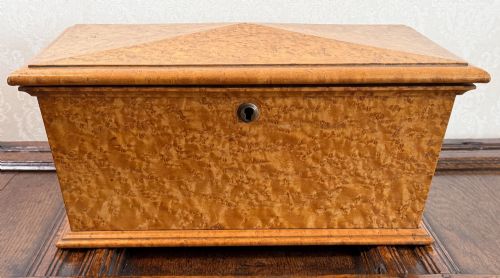
Early examples feature thick, hand-sawn veneers. The timber was cut with a pit saw before machinery made paper-thin slicing possible.
Turn a piece over to inspect the base. You might see coarse tool marks left by a smoothing plane on secondary woods.
Dovetail joints hold the corners together. Makers often hid these structural connections under external veneers or brass capping.
"Secret compartments sometimes survive with untouched contents. You can find original wax seals, old stamps or silk threads safely stored for centuries."
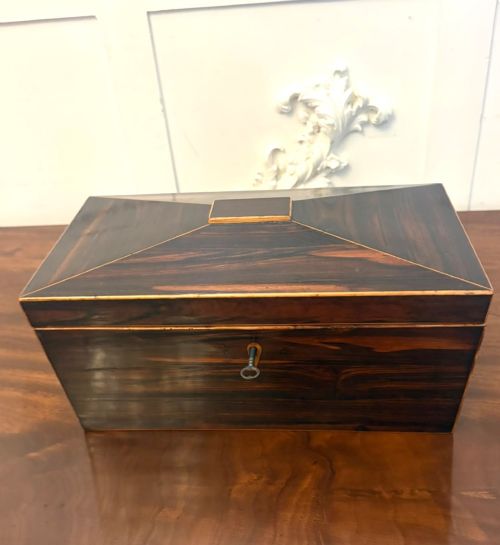
"Many tea caddies feature lead linings. This heavy foil successfully kept moisture away from the expensive imported leaves."
"Some workboxes contain specialised paper tools. Georgian ladies used these tiny instruments for rolling paper into complex filigree designs."
Based on almost 25 years of Sellingantiques UK antique market data, Antique Decorative Boxes appeared 1527 times (out of 1,100,000 antiques) which gives it a rarity score of 74/100.
This score measures scarcity within the Sellingantiques archive only and is not a survey of the entire antiques market, so these statistics may not be indicative of the general availability of Antique Decorative Boxes elsewhere.
Wipe the surface gently with a dry microfibre cloth. Dampen a cotton swab with a tiny amount of mineral spirits if the brass is sticky.
Don't use commercial metal polishes. They leave a white chalky residue in the surrounding wood grain that is hard to remove.
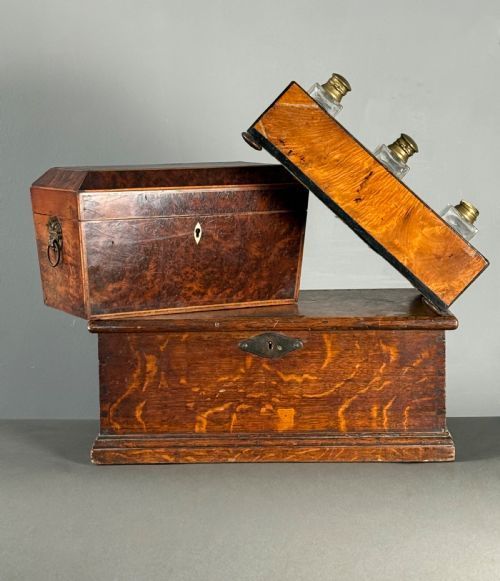
This sounds like a fitted dressing case or vanity box. Travelling wealthy individuals carried these to hold their grooming essentials.
The bottles held perfumes, colognes and scented oils. You often find a mirror concealed in the lid and a velvet-lined tray for jewellery at the bottom.
Yes, but it requires patience and matching timber. You need to find a piece of old veneer with similar grain and colour.
Cut the patch slightly larger than the hole. Use animal hide glue so the repair can be reversed in the future if necessary.
A traditional locksmith can cut a key to fit most antique locks. They take an impression of the internal wards and file a blank barrel to match.
Leave the lock in place if you take the box to a shop. Removing old screws often damages the carcase wood.
Some dealers keep a large ring of spare antique keys. You can sometimes find one that turns the mechanism by trial and error.
Please note: This Antique Decorative Boxes guide and its associated pricing data are provided for general informational purposes only. It does not constitute formal financial, investment, or appraisal advice and should not be relied upon as the sole basis for any commercial activity, purchasing, or sales decisions. Sellingantiques.co.uk accepts no liability for any actions taken in reliance on this information. Always consult with a qualified professional or independent appraiser.
