


A 2026 Guide by Sellingantiques
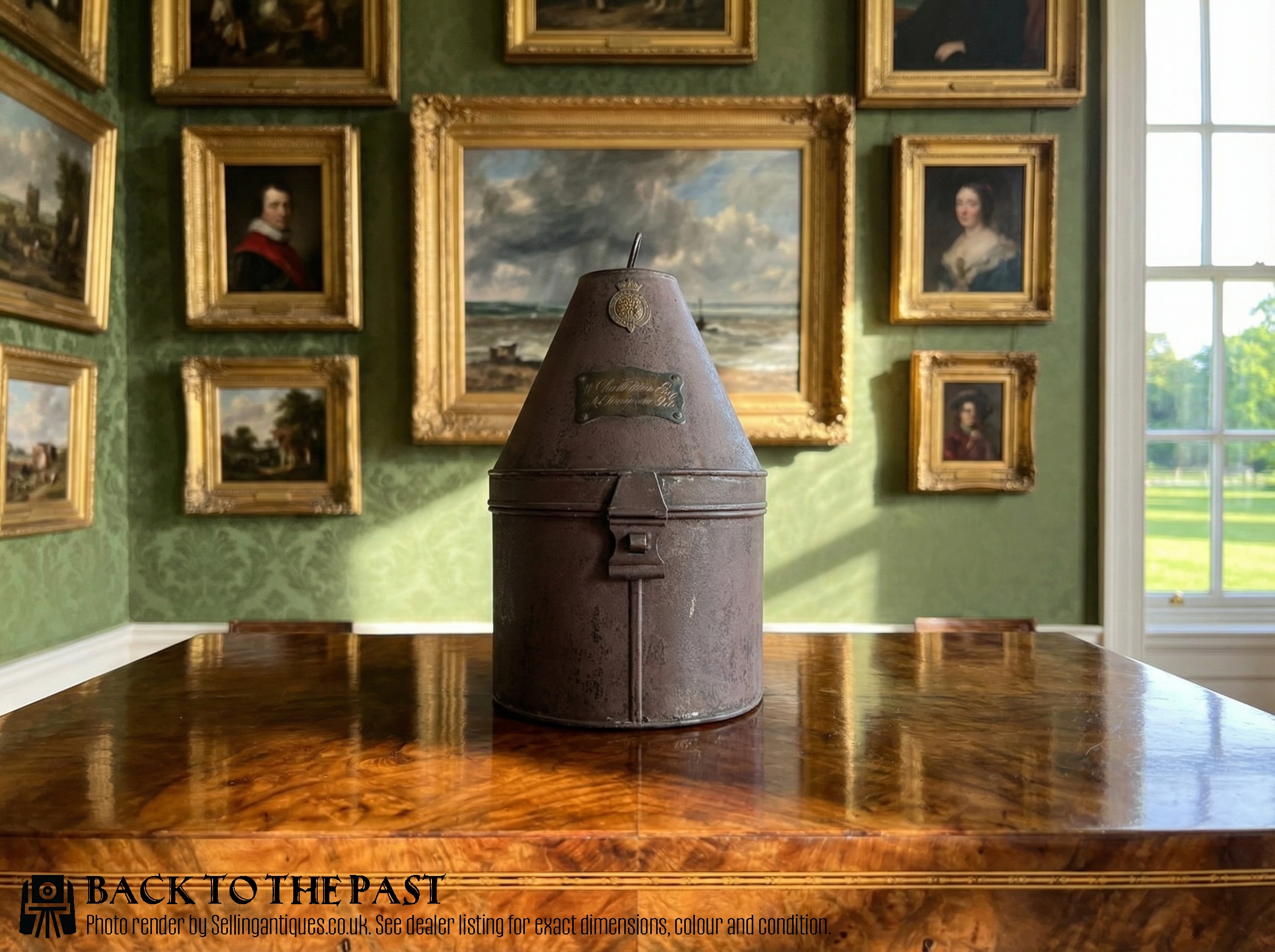
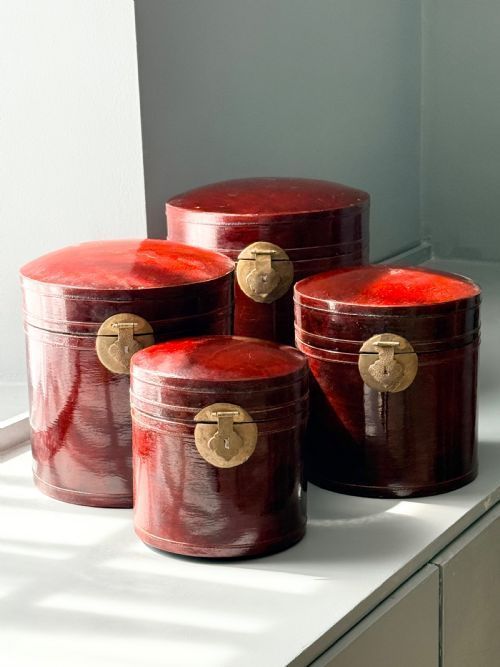
Antique Toleware Tin Military Hat Box, 1900
Priced at £195 from Pareglio & Ayres Antiques Interiors
Demand for antique hat boxes grew alongside the rise of structured headwear in the late eighteenth century.
Coach travel required proper luggage. Flimsy paper containers stayed home while robust leather versions handled the rigours of the road.
Victorian railway expansion changed how people packed. Stackable flat-bottomed cases became standard issue for long train journeys.
Keep an eye out for early wallpaper linings. Pasting printed sheets inside offered a cheap way to finish rough pasteboard.
Cardboard largely replaced heavy wood and hide varieties by the Edwardian era.
Drew & Sons of Piccadilly supplied heavy leather luggage. Their late nineteenth-century hat boxes feature thick bridle leather and brass locks.
Inspect the silk lining for stamped gold lettering. Prominent hatters like Lock & Co ordered custom boxes to sell alongside their headwear.
Many surviving pasteboard examples carry no maker marks. Regional box-makers turned them out by the thousand for local millinery shops.
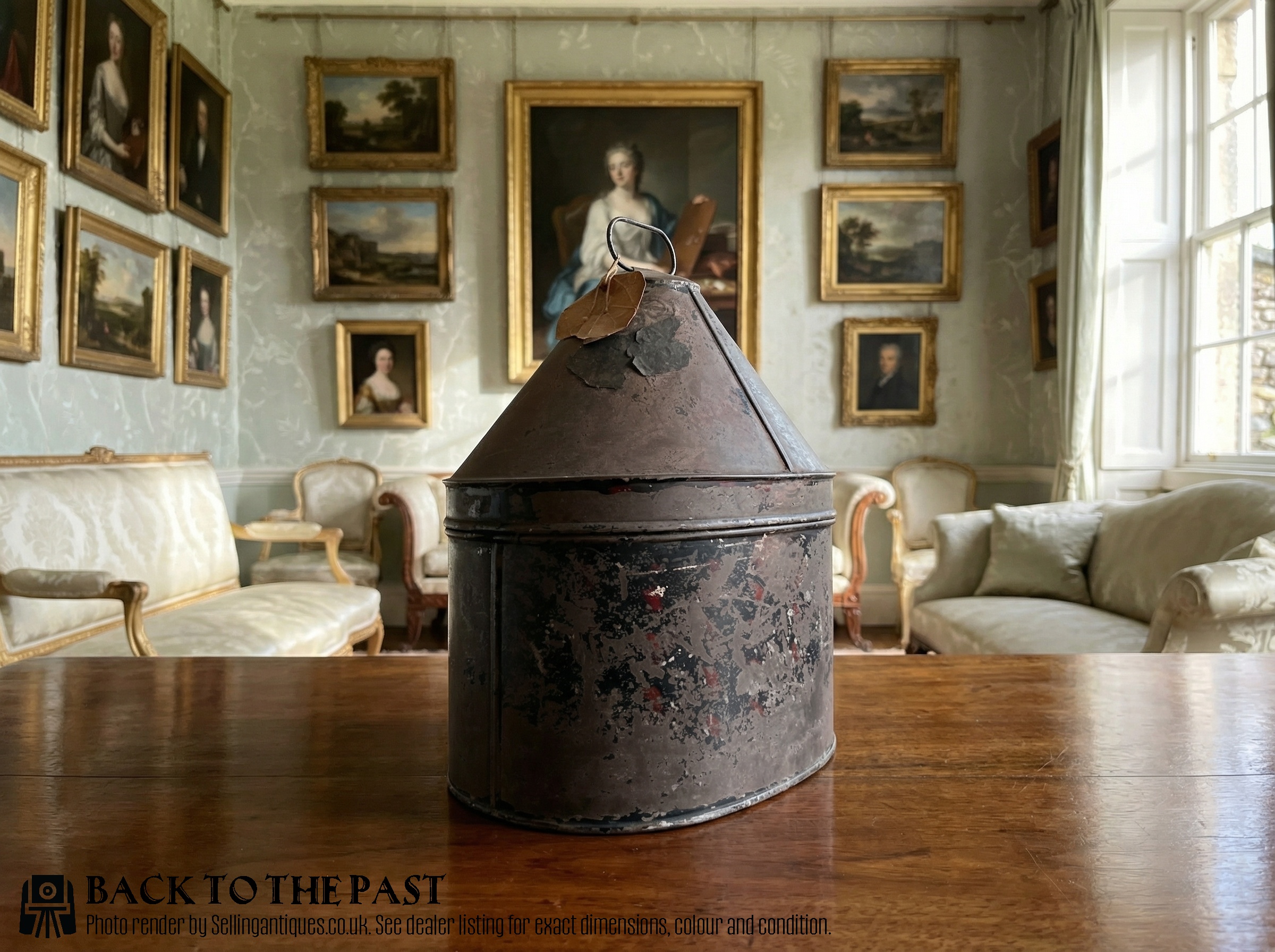
Antique Toleware Tin Military Hat Box, 1900
Priced at £135 from Pareglio & Ayres Antiques Interiors
The 2026 retail price guide for Antique Hat Boxes is drawn from a proprietary archive of over 1.1 million retail prices indexed by Sellingantiques since 2003. This guide relies exclusively on their own internal data; no external sources or auction records are used.
Analysing nearly 25 years of UK antique market history alongside current retail values, the data indicates that typical UK retail prices for Antique Hat Boxes range between £200 and £800. Entry-level prices generally fall under £200 and premium examples upwards of £800.
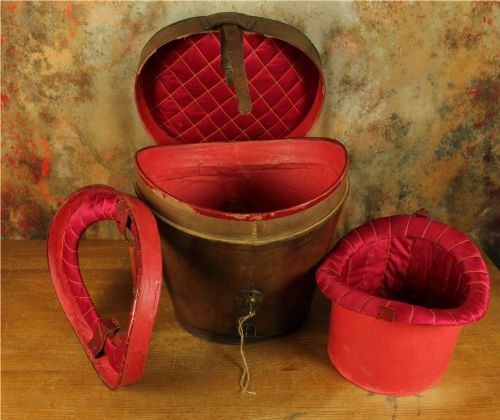
Conical interiors define top hat storage. A padded silk cushion rests in the base to grip the crown.
Check the inner walls for ribbon ties. You'll often find these silk strips tacked directly to the fabric.
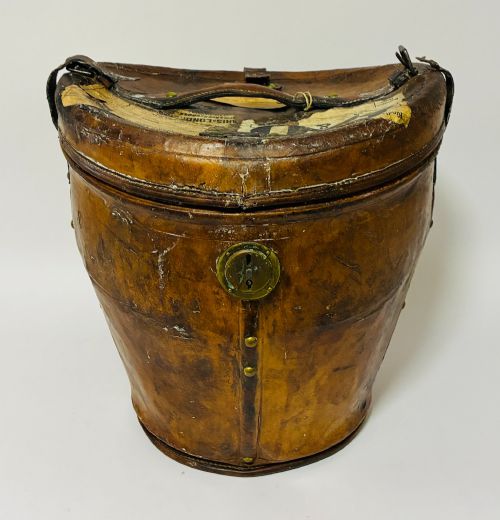
Exterior buckles need a thick leather strap. Lockable hasps provided security on stagecoaches and busy station platforms.
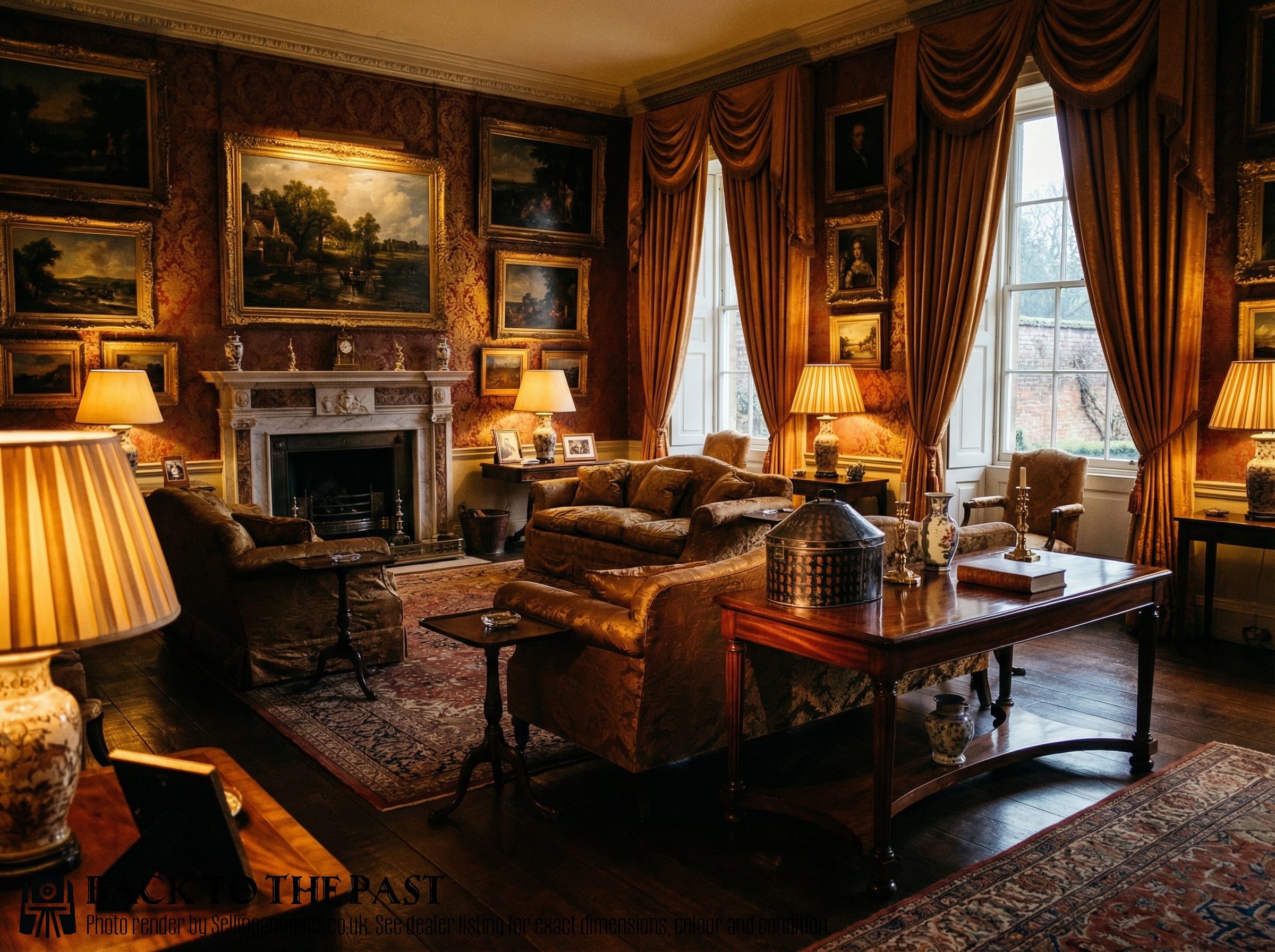
Antique Toleware Tin Military Hat Box, 1900
Priced at £250 from Pareglio & Ayres Antiques Interiors
Early makers shaped wet leather over wooden blocks. The hide shrank tight as it dried to create a seamless drum.
Saddle stitching binds the heavy travel cases. This twin-needle technique provided the durability required for stagecoach transport.
Veneer bands form the skeleton of wooden types. Steaming thin strips of ash makes them pliable enough to bend.
"Travellers packed dense items in the empty corners. Silk scarves and soft gloves nested safely around the central cone."
"Wallpaper fragments found inside early pasteboard variants help historians date undocumented domestic block-printed papers."
"Some tall examples contain secret false bottoms. Gentlemen hid letters or bank notes beneath the padded base."
Based on almost 25 years of Sellingantiques UK antique market data, Antique Hat Boxes appeared 239 times (out of 1,100,000 antiques) which gives it a rarity score of 95/100.
This score measures scarcity within the Sellingantiques archive only and is not a survey of the entire antiques market, so these statistics may not be indicative of the general availability of Antique Hat Boxes elsewhere.
Start with a soft bristle brush. Work gently around the inner rim to loosen dry dust and moth casings without snagging the delicate silk.
Use a low-suction vacuum attachment hovering just above the surface. Wet cleaning usually leaves watermarks on antique linings and can dissolve the animal hide glues holding the fabric to the pasteboard.
Traditional saddlers are a better choice for heavy luggage repairs. They use the correct gauge of waxed linen thread and saddle-stitching techniques that match nineteenth-century work.
A standard cobbler might use nylon thread on a machine. This cuts through old, dry leather under tension.
Ask the restorer to splice a new section into the broken strap rather than replacing the whole length. Retaining the original brass buckle keeps the piece intact.
Keep them away from direct heat. Radiators dry out animal hide quickly, causing surface cracking.
Avoid damp cellars or unheated attics. Mould easily attacks paper linings and organic glues.
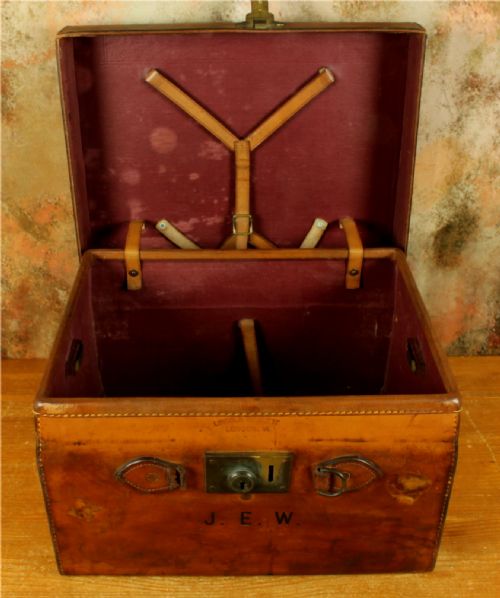
That internal strap held a smaller item of headwear or an accessory in the void above the main hat. Space was at a premium on long coach journeys.
Makers often fitted lids with webbed loops. Travellers used them to secure walking canes or soft caps that didn't require a rigid base.
Please note: This Antique Hat Boxes guide and its associated pricing data are provided for general informational purposes only. It does not constitute formal financial, investment, or appraisal advice and should not be relied upon as the sole basis for any commercial activity, purchasing, or sales decisions. Sellingantiques.co.uk accepts no liability for any actions taken in reliance on this information. Always consult with a qualified professional or independent appraiser.
