




A 2026 Guide by Sellingantiques
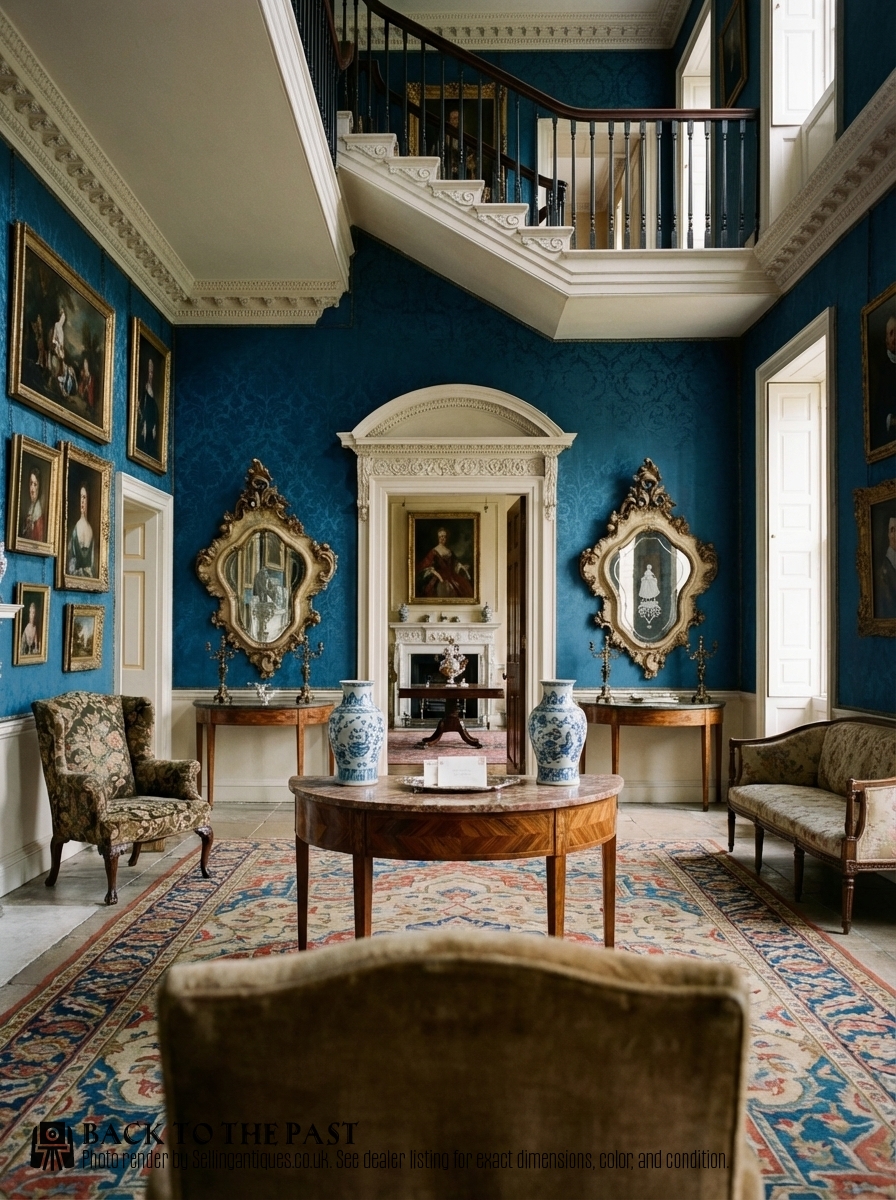
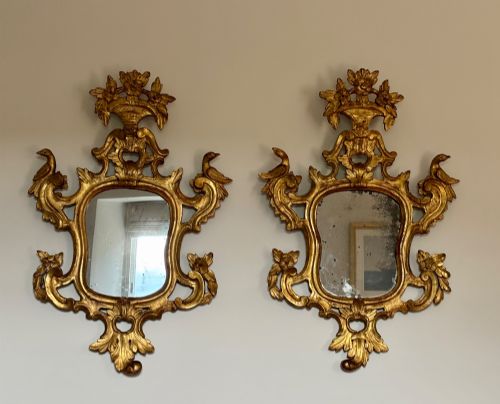
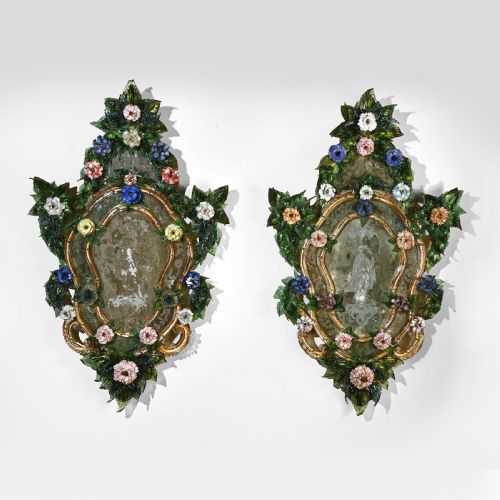
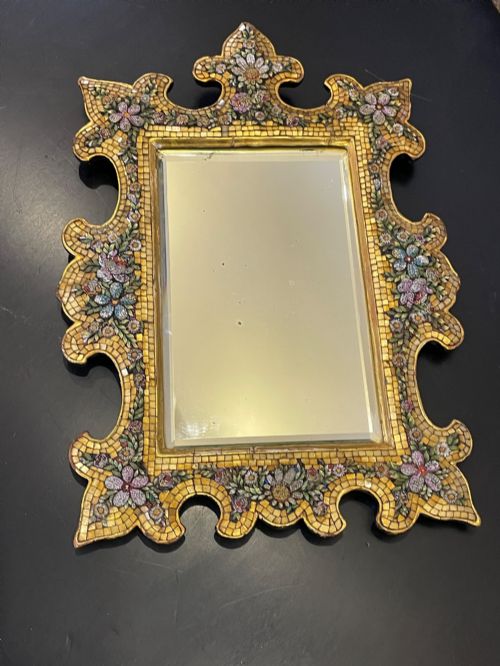
Pair of Highly Decorative C19th Italian Venetian Rococo Style Polychrome and Carved Gilt-wood Mirrors in the C18th Taste., 19th Century
Priced at £1,250 from M Lees and Sons
Murano became the centre of European glassmaking during the late thirteenth century. The Republic confined furnaces to the island to prevent fires in the city.
Look at the early development of plate glass. Artisans learned how to blow cylinders, cut them open, and flatten them on a hot stone.
True antique Venetian mirrors reached their peak export demand in the seventeenth and eighteenth centuries. They were shipped to royal courts across the continent.
Secrecy kept the trade heavily regulated. Glassmakers faced severe penalties if they attempted to leave the lagoon and share their techniques abroad.
Identifying a specific historic maker is difficult. Most antique Venetian mirrors left the island workshops without any signature or maker mark.
Focus on the regional trade instead. Families like the Barovier and Seguso operated furnaces for centuries, passing cutting and silvering skills down generations.
Archival records show groups of specialists collaborated. One workshop blew the glass cylinders, another flattened them, and a third handled the engraving.
The 2026 retail price guide for Antique Venetian Mirrors is drawn from a proprietary archive of over 1.1 million retail prices indexed by Sellingantiques since 2003. This guide relies exclusively on their own internal data; no external sources or auction records are used.
Analysing nearly 25 years of UK antique market history alongside current retail values, the data indicates that typical UK retail prices for Antique Venetian Mirrors range between £600 and £2,300. Entry-level prices generally fall under £600 and premium examples upwards of £2,300.
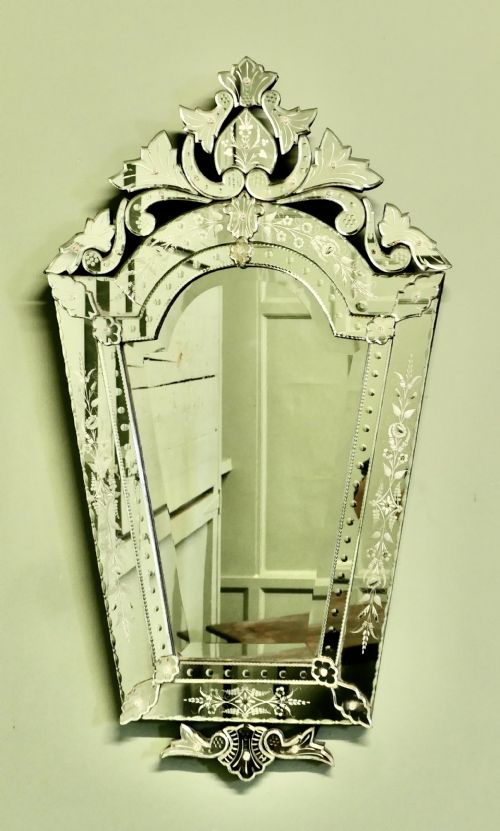
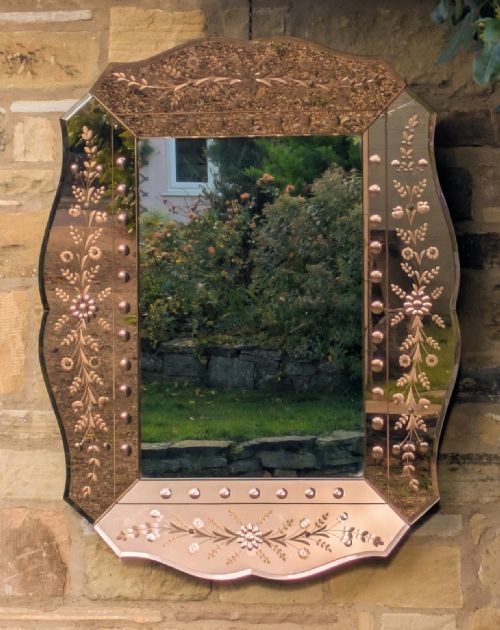
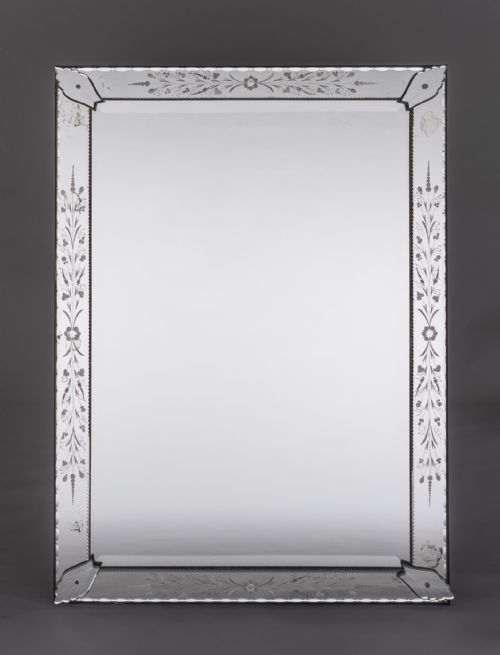
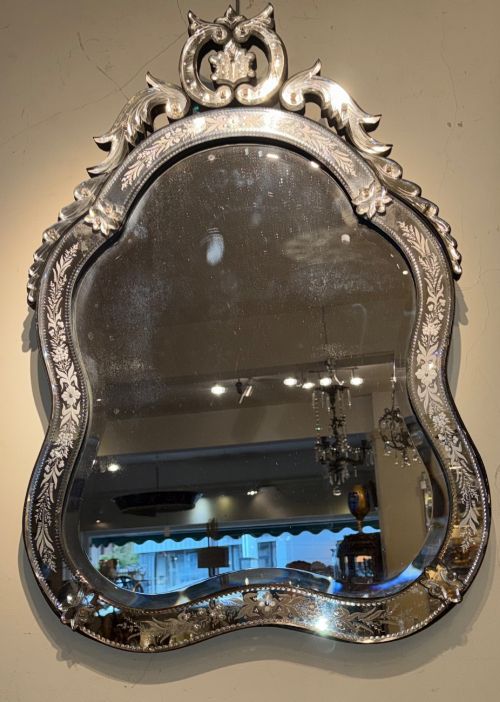
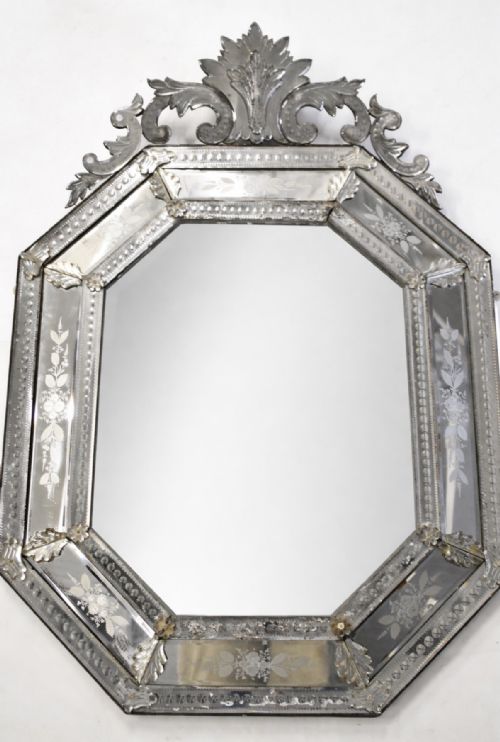
Etched floral motifs cover the marginal plates. Vines, leaves and blossoms trail up the sides and across the top crest.
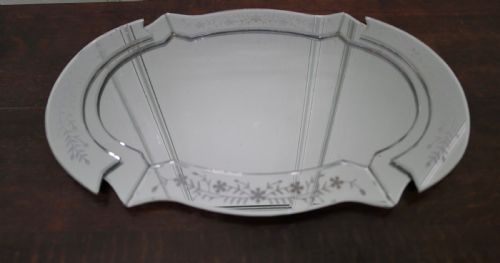
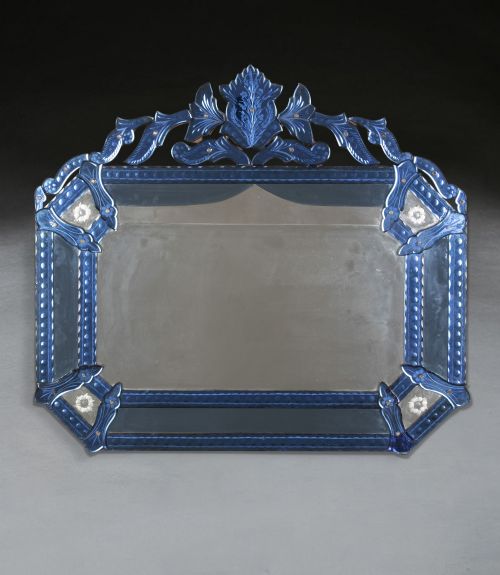
Notice the absence of a solid wood or metal outer frame. The borders are entirely built from layered, mirrored glass segments.
Applied glass elements sit on the surface. Blown glass leaves, canes and rosette covers mask the screws holding the assembly to the backboard.
Early production relied on blowing a large glass cylinder. The artisan swung the hot glass, cut the ends off, and flattened it inside an oven.
Hand engraving required a copper wheel. The craftsman pressed the cold glass plate against a spinning abrasive wheel to carve out those floral patterns.
Watch how the assembly changes over time. Later examples often use thicker cast glass plates instead of the thinner blown cylinders of early production.
"The individual border segments were deliberately angled. This geometric arrangement bounced light from a single candle into multiple corners of a dark room."
"They often travel in modular pieces. The elaborate crests and side panels detach from the backboard to allow safe shipping across long distances."
"A flat central plate was a major technological triumph. Achieving this without distortion required immense skill from the flattening oven operators."
Based on almost 25 years of Sellingantiques UK antique market data, Antique Venetian Mirrors appeared 572 times (out of 1,100,000 antiques) which gives it a rarity score of 89/100.
This score measures scarcity within the Sellingantiques archive only and is not a survey of the entire antiques market, so these statistics may not be indicative of the general availability of Antique Venetian Mirrors elsewhere.
Those cloudy patches are not dirt on the surface. They sit right at the back of the glass where the original silvering has oxidised and broken down over time.
You cannot wipe them away without removing the glass from the frame and chemically stripping the back. Most dealers leave them exactly as they are. The grey spotting is just part of what an antique mirror is.
Damp is a serious problem for these. The soft pine or deal backboards soak up moisture straight from the plaster.
Once the wood swells, it puts pressure on the metal clips holding the glass. That tension can easily crack the marginal plates. The moisture will also speed up the degradation of the silvering on the back of the glass.
Keep them on dry internal walls. If you have to use an external wall, fix wooden battens behind the mirror to leave an air gap.
You will need to find a specialist restorer. They keep boxes of salvaged parts from old mirrors that were too damaged to save.
The restorer will match the diameter, the cut pattern, and the colour of the glass. Sometimes a glassmaker on Murano can cast a replacement if an exact antique match turns up nothing.
Never move a large one in a single piece if the crest detaches. Check the backboard for screws holding the top cartouche and the lower apron in place.
Once dismantled, wrap each piece in foam and pack them in custom wooden crates. The mirror must travel upright, resting on its longest edge. If you lay it flat, the central plate will bow over every bump in the road and shatter.
Please note: This Antique Venetian Mirrors guide and its associated pricing data are provided for general informational purposes only. It does not constitute formal financial, investment, or appraisal advice and should not be relied upon as the sole basis for any commercial activity, purchasing, or sales decisions. Sellingantiques.co.uk accepts no liability for any actions taken in reliance on this information. Always consult with a qualified professional or independent appraiser.
