



A 2026 Guide by Sellingantiques
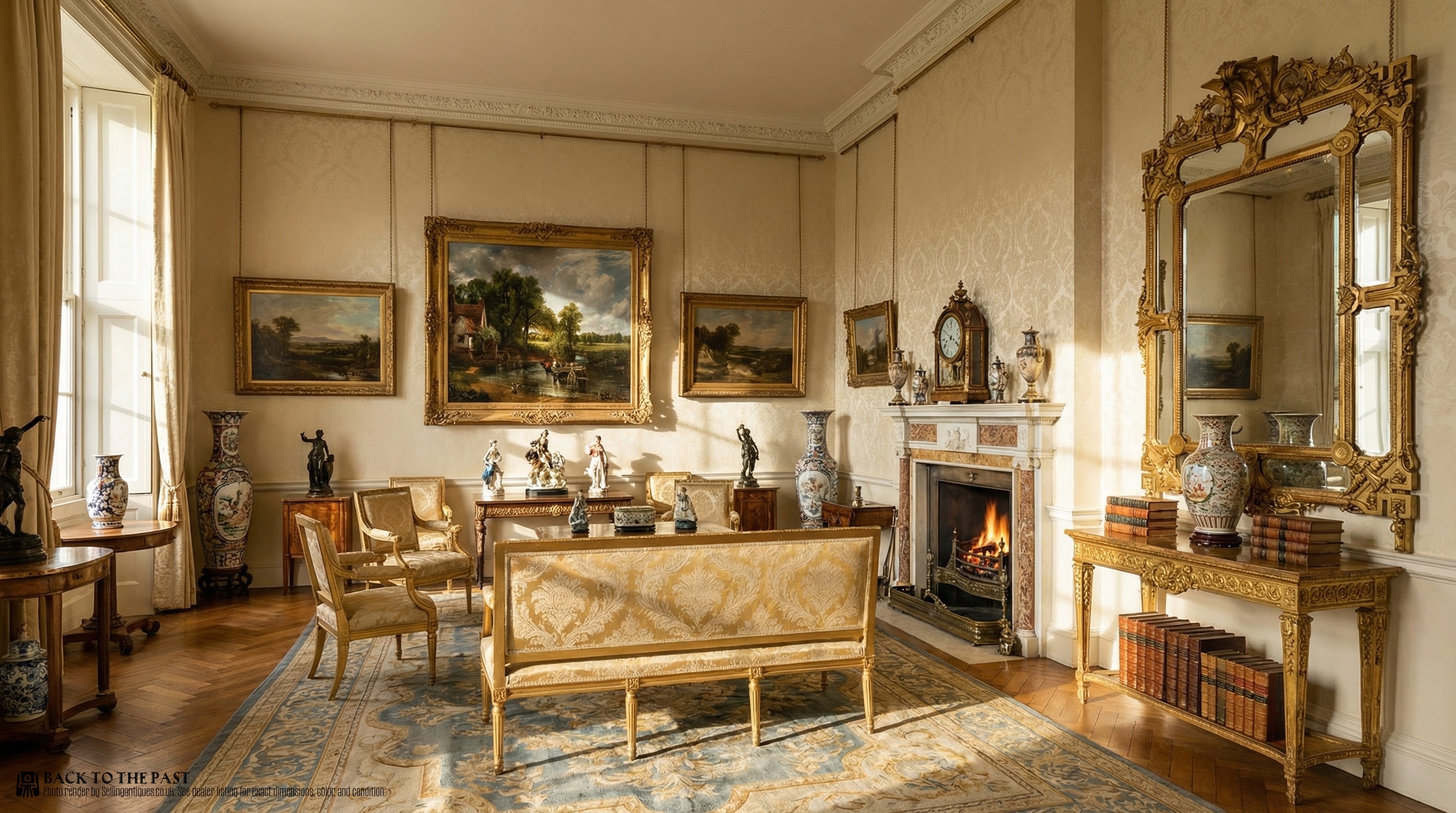
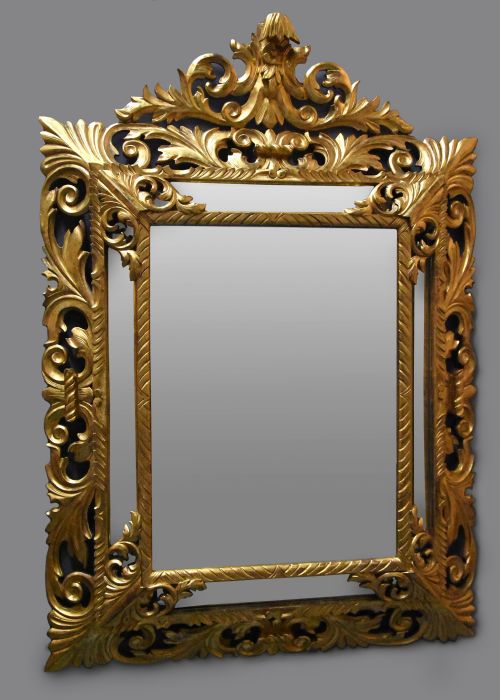
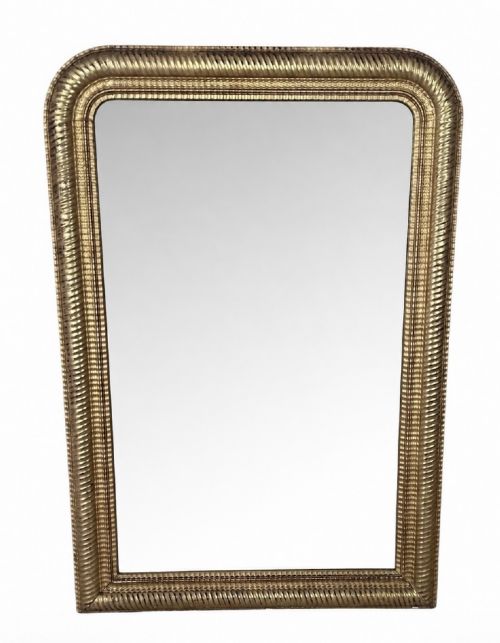
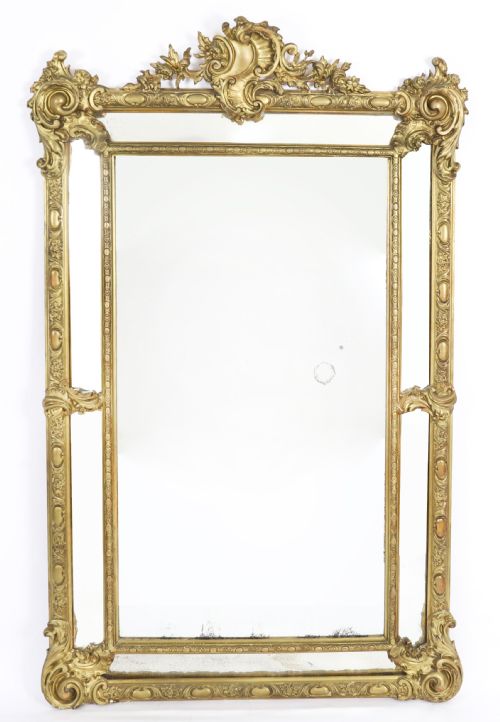
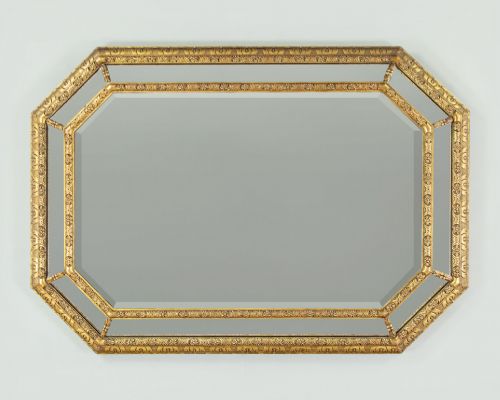
Large Antique Gilt Mirror, 19th Century
Priced at £1,950 from Youlls Antiques
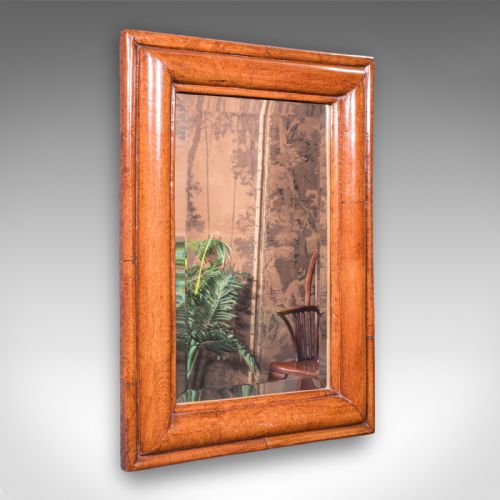
Emerging in the late seventeenth century, antique cushion mirrors saw their peak during the William and Mary period.
That convex frame gives the style its name. It bulges outward like a padded pillow.
Often hung between tall sash windows. Placing them there helped bounce limited daylight back into dim interiors.
Look at the top edge. Many lost their carved crestings when later generations moved them into rooms with lower ceilings.
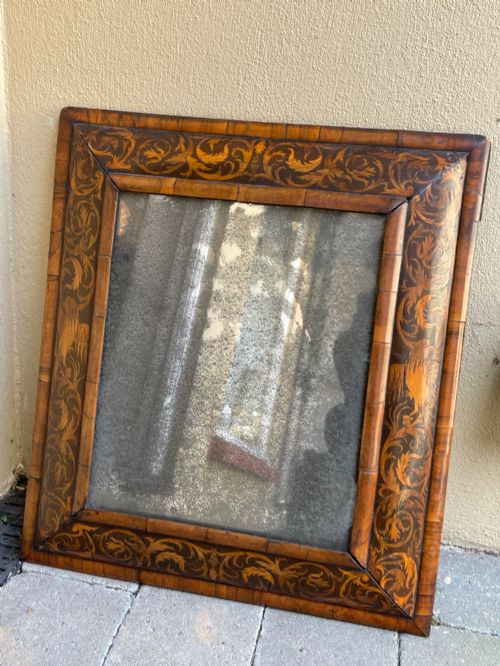
Gerrit Jensen supplied documented examples to the Royal Household. His London workshop produced intricate marquetry frames in the late seventeenth century.
No signatures on the majority of pieces. The London trade relied on a complex network of specialist glass grinders and anonymous frame makers.
Look past London. You'll find simpler oak and local elm versions originating from rural workshops across Britain.
The 2026 retail price guide for Antique Cushion Mirrors is drawn from a proprietary archive of over 1.1 million retail prices indexed by Sellingantiques since 2003. This guide relies exclusively on their own internal data; no external sources or auction records are used.
Analysing nearly 25 years of UK antique market history alongside current retail values, the data indicates that typical UK retail prices for Antique Cushion Mirrors range between £700 and £2,900. Entry-level prices generally fall under £700 and premium examples upwards of £2,900.
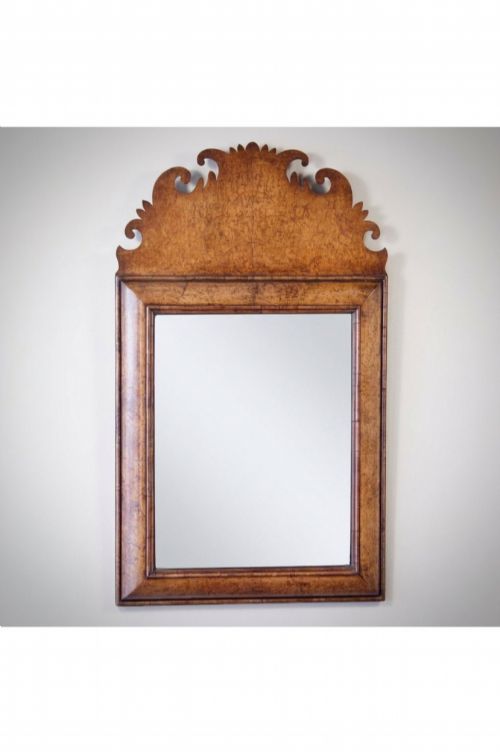
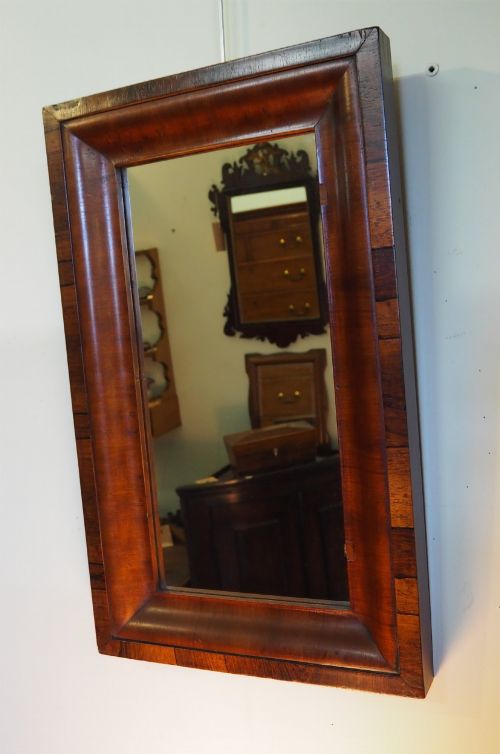
A broad convex moulding dominates the design. This stepped profile pushes out from the flat wall surface.
Central glass plates stay relatively small. The width of the surrounding frame makes the reflection area look even tighter.
Expect square or slightly rectangular overall proportions. True antique cushion mirrors rarely take the tall shapes common to later centuries.
Frame makers achieved that deep profile by stacking timber blocks. They shaped the rough pine with hand planes before laying down decorative surfaces.
Cross-grain veneering proved popular on the ovolo sections. Applying thin slices of timber at right angles created varied visual patterns.
Examine the glass itself. Hand-polishing early cast plates took heavy labour, leaving characteristic ripples and soft grey tones in the reflection.
"Their deep frames provided ample space for hidden compartments. Small sliding panels occasionally conceal shallow recesses carved right into the backboard."
"These oyster veneers come from small tree branches rather than main trunks. Cutting them diagonally creates repeating circular patterns."
"Floral marquetry versions acted as status symbols. The slow hand labour required to cut those tiny details broadcast the wealth of the original owner."
Based on almost 25 years of Sellingantiques UK antique market data, Antique Cushion Mirrors appeared 722 times (out of 1,100,000 antiques) which gives it a rarity score of 87/100.
This score measures scarcity within the Sellingantiques archive only and is not a survey of the entire antiques market, so these statistics may not be indicative of the general availability of Antique Cushion Mirrors elsewhere.
They carry serious weight. The thick timber carcase and heavy cast glass add up quickly.
Use proper fixings driven directly into masonry or strong wall studs. A standard picture hook will tear straight out of modern plasterboard.
That convex profile projects a fair bit from the wall. It was meant to catch light from all angles, so it will sit proud of the plaster.
In a room with lower ceilings, that projection works in your favour. The curved frame breaks up flat surfaces and gives the space architectural depth.
Just keep it away from narrow walkways. You don't want shoulders clipping the protruding edges every time someone walks past.
You can swap it out, but think carefully before you do. That degraded silvering is part of the historical character.
Modern replacement glass looks flat and harsh by comparison. If you just need a functional mirror, buy a new piece rather than stripping the soul out of an old one.
Direct sunlight is brutal on any antique furniture. The ultraviolet rays will bleach walnut and fade marquetry quite rapidly over a few summers.
Heat is the bigger problem in that hallway scenario. Baking the wood causes the hidden pine core to shrink, which pops the brittle veneers right off the surface.
Find a shaded spot instead. A dark corner is where these pieces belong, bringing light into the shadows just as the makers intended.
Please note: This Antique Cushion Mirrors guide and its associated pricing data are provided for general informational purposes only. It does not constitute formal financial, investment, or appraisal advice and should not be relied upon as the sole basis for any commercial activity, purchasing, or sales decisions. Sellingantiques.co.uk accepts no liability for any actions taken in reliance on this information. Always consult with a qualified professional or independent appraiser.
