

Antique Vanity Mirrors
A vanity mirror is a small dressing mirror, usually a wooden plate on a stand that tilts, made for washing, shaving and dressing rather than for hanging on a wall.
Antique Vanity Mirrors
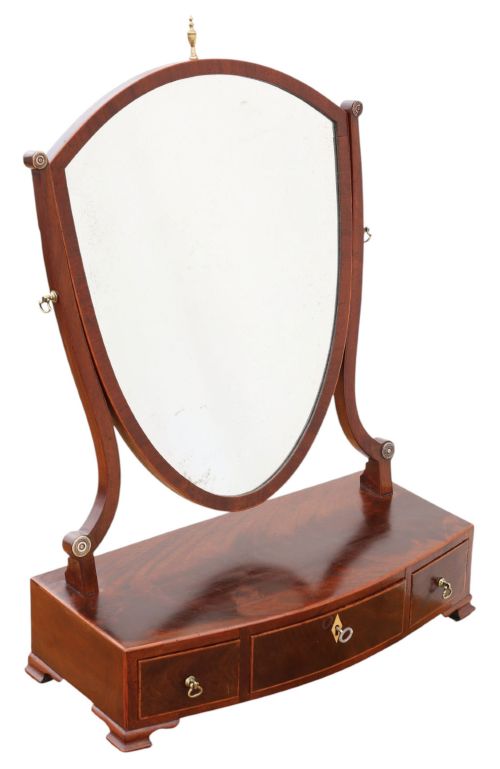
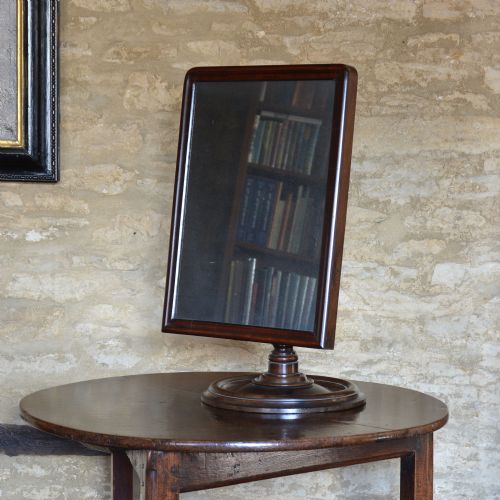
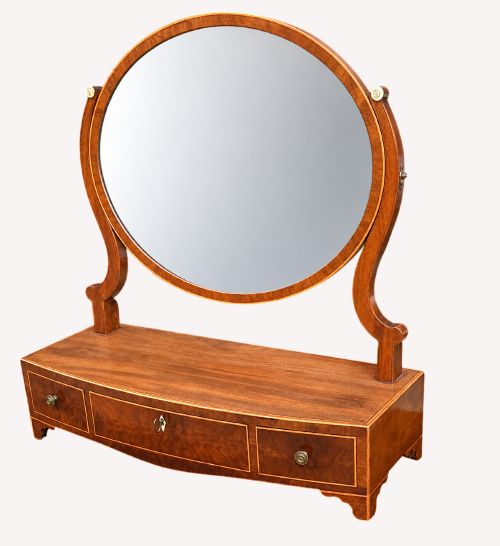
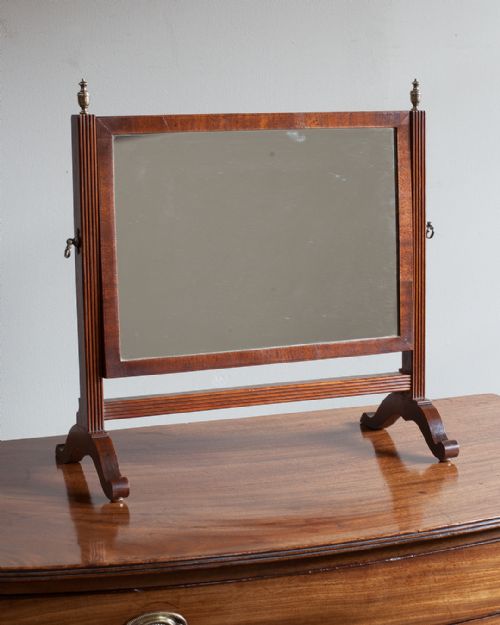
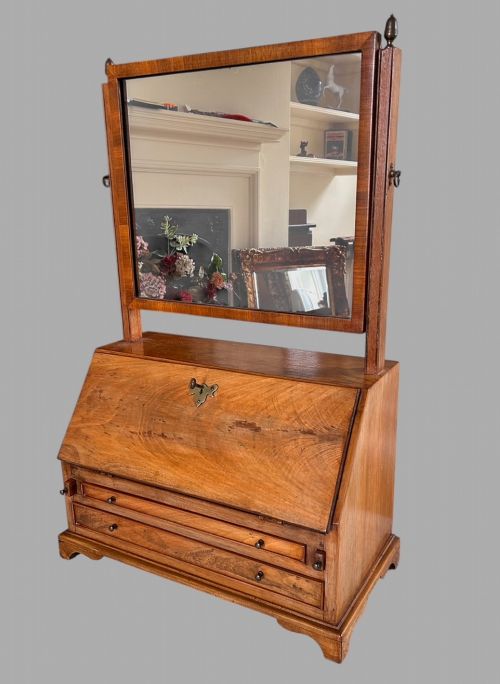
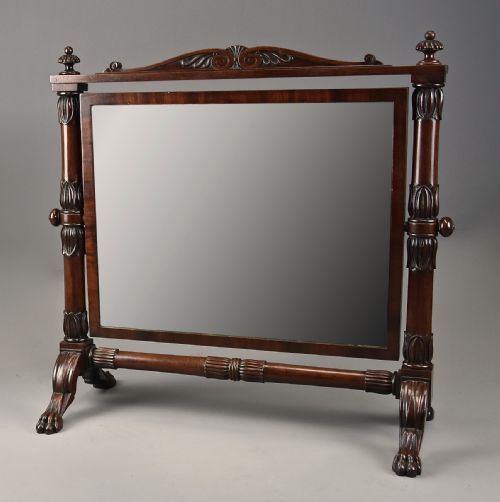
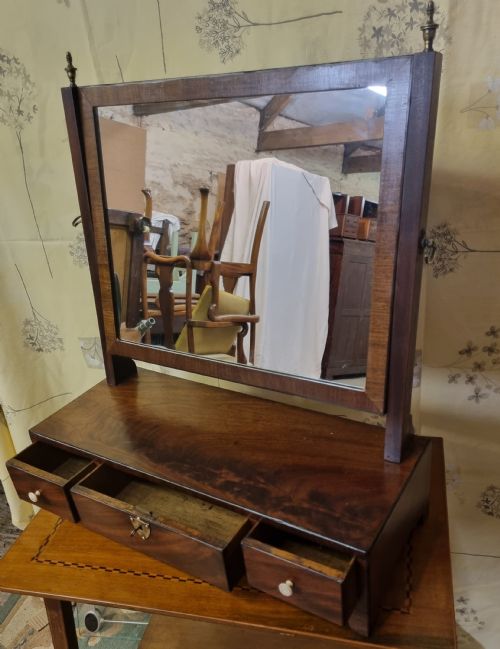
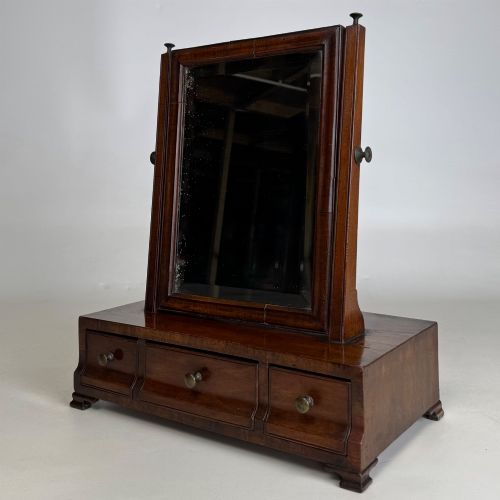
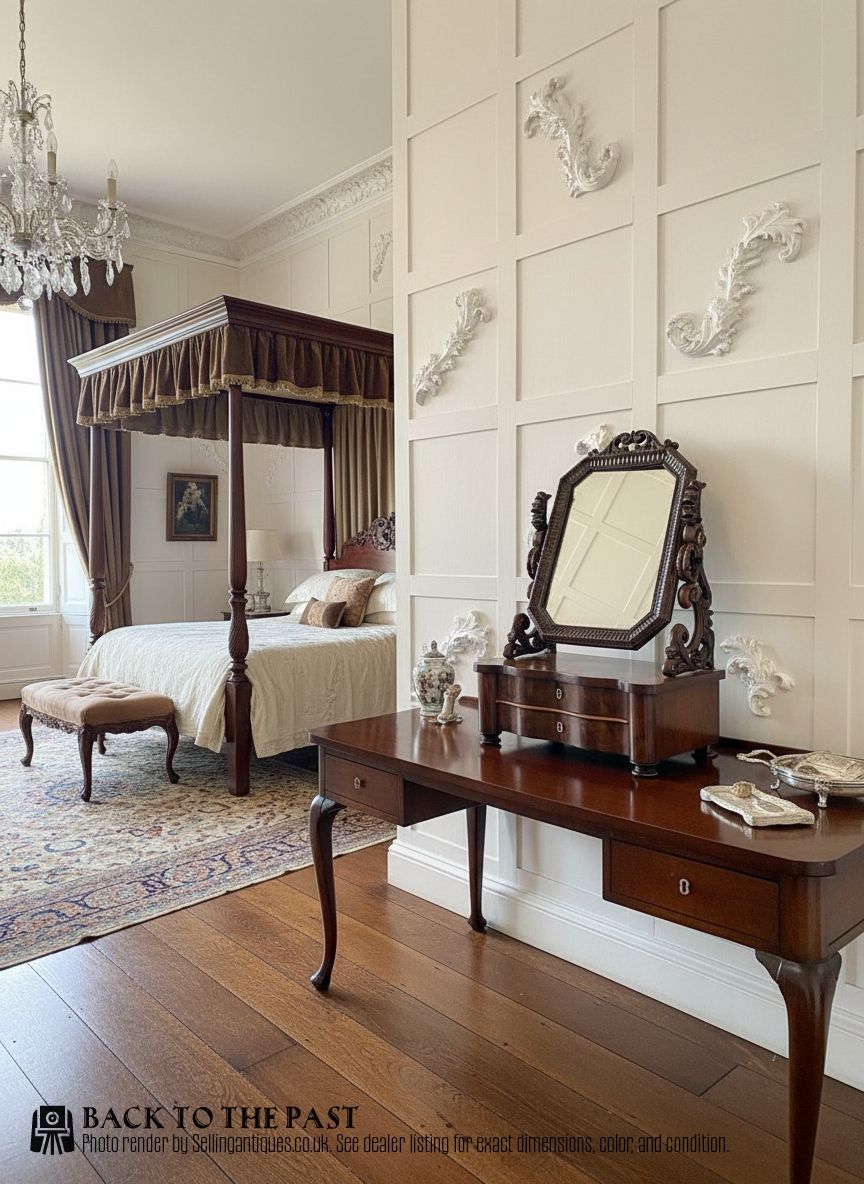
The heading covers small mirrors tied to grooming, and one object dominates it: a free-standing table-top mirror, the plate pivoted between two uprights so it can be tilted, sitting on a shallow platform or a box base fitted with one to three small drawers. Mahogany leads the timbers by a wide margin, with walnut some way behind and oak thinner still.
Three words are doing the same job. "Dressing", "toilet" and "vanity" all describe this object, and different dealers reach for different ones, which is why the category reads as three names for one thing. "Toilet mirror" is the older term and means the dressing mirror, not a bathroom fitting.
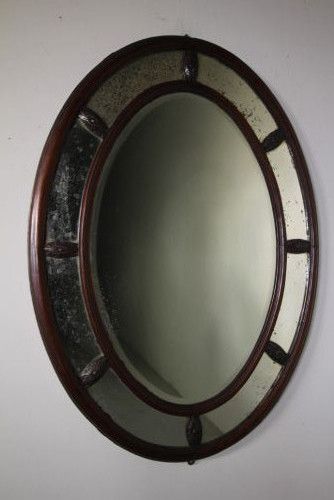
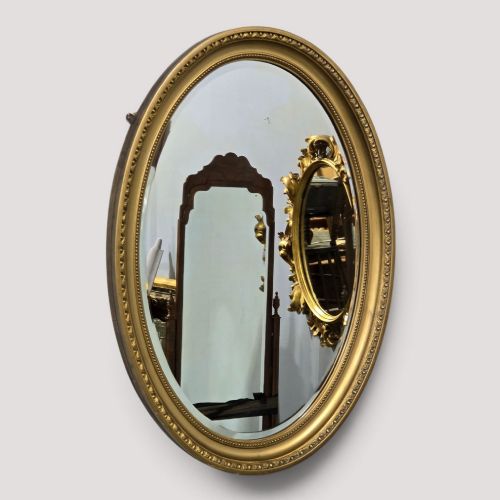
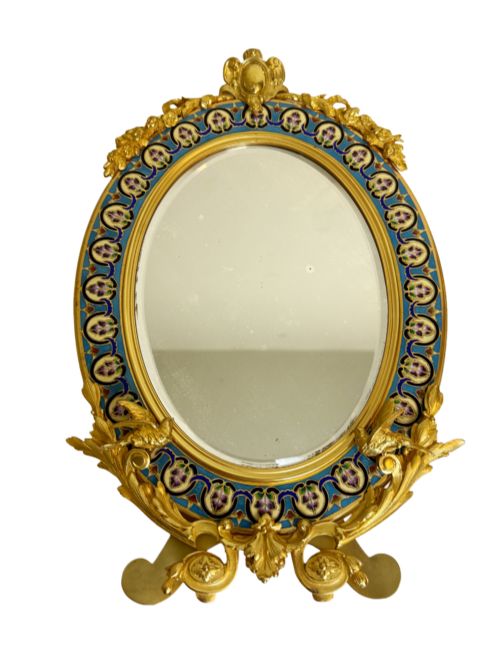
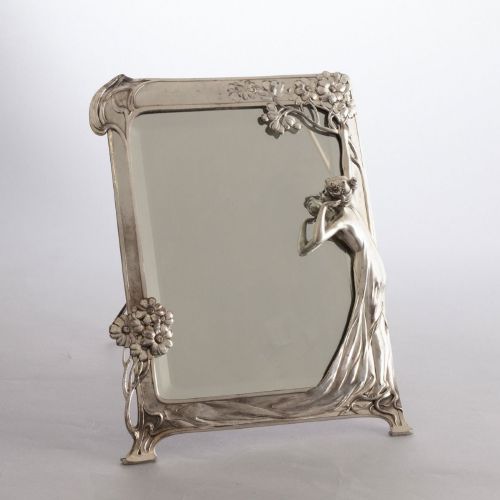
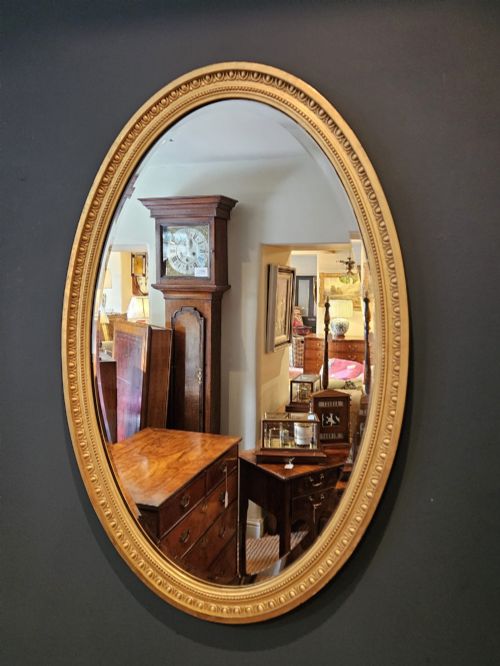
Around one in eight listings is a wall mirror sold under the vanity heading, including gilt, giltwood and hall pieces. Metal-framed mirrors in brass, gilt bronze, chrome and hallmarked silver make up roughly one in ten. Hand mirrors, easel mirrors and shaving stands, including tripod and campaign kit versions, form a small but persistent minority, with cheval mirrors scarcer again.
Dating runs from 1750 to 1950. Much of it is loose: "19th Century" is the single largest bucket, with Victorian, 18th Century, Georgian and Regency behind it, all period labels rather than years. Decade tags are thinner, clustering in the 1900s, 1920s and 1930s, where Art Deco pieces sit. Around 48 come to market in a year on Sellingantiques, listed by 185 different dealers, so this is a form nearly every general furniture dealer touches.
Where The Range Splits
Timber does most of the sorting. Plain mahogany and oak sit low in the sampled range, while flame mahogany, burr walnut, burr maple, satinwood, kingwood, harewood, padouk and laburnum cluster at the upper end. Those exotic timbers each surface only once or twice, so the figure in the wood is what separates the archetype from the exception.
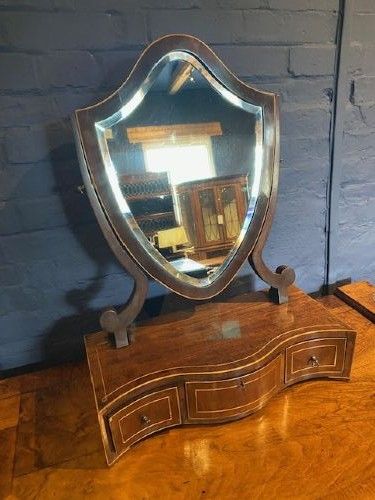
Then the base. A plain rectangular platform sits below the middle; serpentine, bow-fronted, barrel-fronted and breakfront bases sit well above it. Decoration pushes the same way, with marquetry, inlay, carving and gilding above plain surfaces, and Dutch marquetry, parcel gilt, micro mosaic and champlevé work at the top of what has been sampled.
Material and scale finish the picture. Hallmarked silver, ormolu, gilt bronze and enamel occupy the upper reaches while brass and chrome sit lower, and "large" recurs among the higher-priced pieces where "small" mostly does not. Eighteenth-century walnut and parcel-gilt work sits at the very top; small brass, painted and easel mirrors of the 1900s to 1930s occupy the bottom.
Antique Vanity Mirrors Retail Price Guide 2026
Typical UK retail prices for vanity mirrors, calculated from the Sellingantiques database of over a million retail prices indexed since 2003. This retail price guide relies exclusively on Sellingantiques data; no external sources or auction records are used, so the figures do not describe the wider market.
Dealer dates for vanity mirrors on Sellingantiques run from 1750 to 1950, a full two centuries of listings.
The Antique Vanity Mirrors Glossary
- Toilet mirror
- The older name for a dressing mirror. In these titles it means the same object as a vanity or dressing mirror, not a bathroom fitting.
- Swing mirror
- A plate pivoted between two uprights so it can be tilted. Around 26 titles use the term outright, though the form itself is far commoner than the word.
- Platform or box base
- The shallow stand the uprights rise from. It may be plain, or fitted with one to three small drawers.
- Serpentine
- A base or drawer front with a shaped, wavy outline. It appears in 15 titles and sits above the middle of the range; a bow front curves outward in one sweep instead.
- Bevelled plate
- Glass with a shallow angled border ground around the edge. Dealers also use "mercury" or "original plate" as shorthand for early glass thought to be the mirror's first.
- Barbola
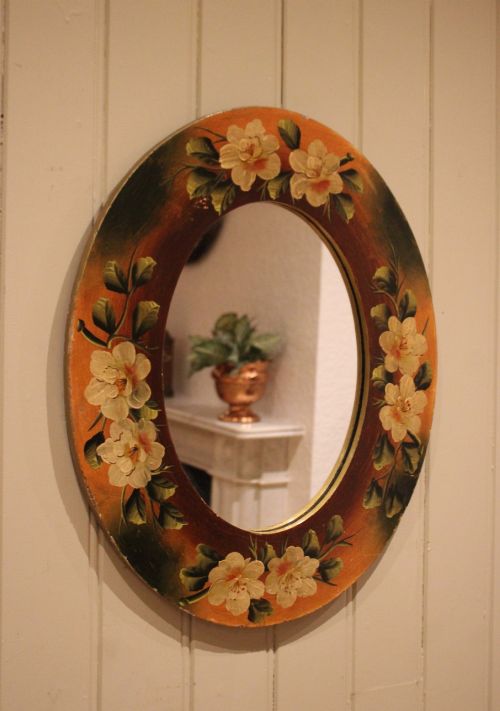
- Moulded and painted composition flowers applied to a frame, a dressing table style of the 1920s and 30s. A skeleton mirror, by contrast, is a plate held in slender supports with little or no frame.
Antique Vanity Mirrors: Frequently Asked Questions
What is the difference between a toilet and dressing mirror?
None, in practice. Both names describe the same table-top mirror on a stand, and dealers pick whichever term they favour.
"Dressing" appears in 141 titles and "toilet" in 81, with "vanity" used the same way. Reading past the word to the description tells you what the object actually is.
Which wood is most common?
Mahogany, by a wide margin. It leads the timber vocabulary at 131 titles, with walnut a distant second and oak thinner again.
Satinwood, kingwood, harewood, burr maple, laburnum, birch, beech, rosewood, teak and padouk each surface only once or twice across the sampled range, and they sit at the upper end of it.
Do these mirrors have drawers?
Many do. The archetype is a swing plate on a box base fitted with a single drawer or a run of two or three, and drawer counts turn up throughout the titles.
Others stand on a plain shallow platform with no drawers at all.
How old are most of them?
The dealer-entered dates run from 1750 to 1950, a full two centuries, with 155 listings carrying a clean year.
Much of the dating is broad rather than exact. "19th Century" is the largest single bucket, followed by Victorian, 18th Century, Georgian and Regency, all period labels rather than years.
Are wall mirrors included in this category?
Yes, around one in eight. Wall-hung pieces appear under the vanity heading, along with a handful of hall and framed mirrors, and gilt or giltwood examples including rococo frames.
The table-top mirror on a stand still accounts for roughly half to two-thirds of the category.
Do vanity mirrors come as pairs?
Occasionally. Ten titles offer pairs and a couple offer trios, so more than one at a time does happen.
Single pieces are the norm.