

Antique Slipper Chairs
A low-seated, armless upholstered chair with the seat close to the floor, made for the bedroom and dressing room and sold just as often as a nursing chair for sitting low with a child.
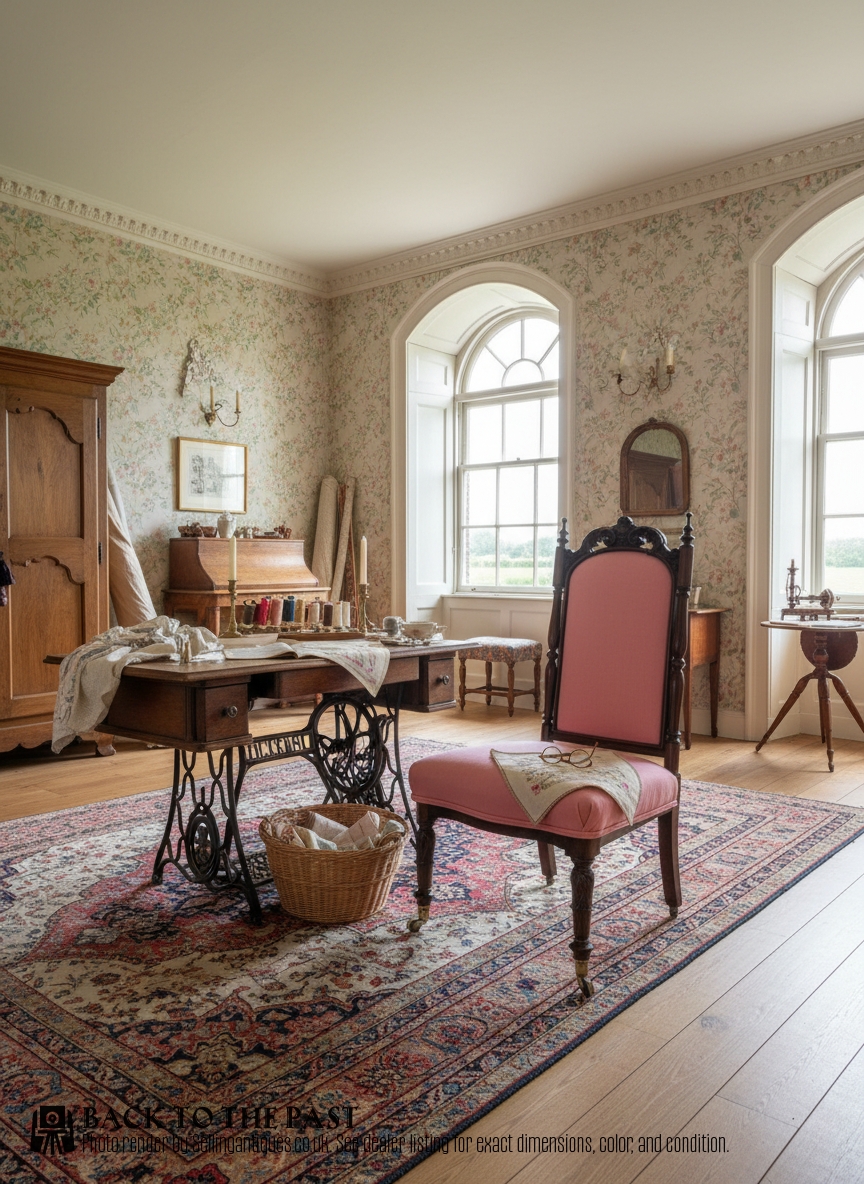
Antique Slipper Chairs
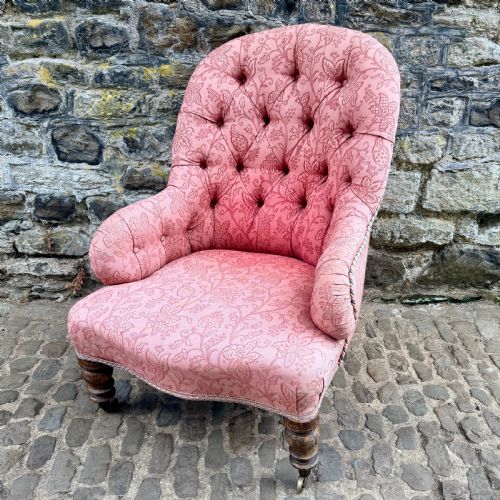
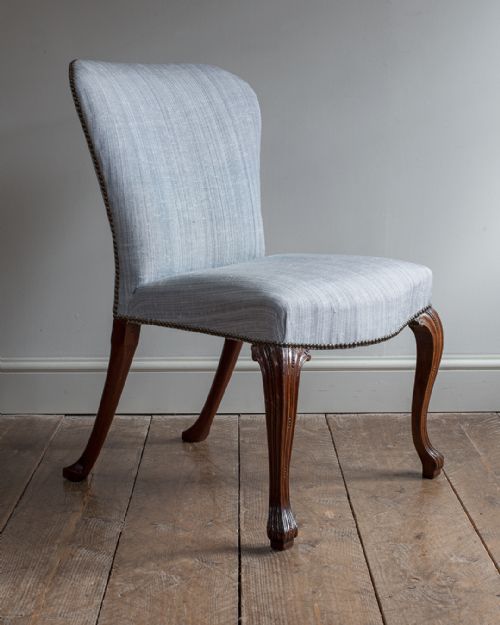
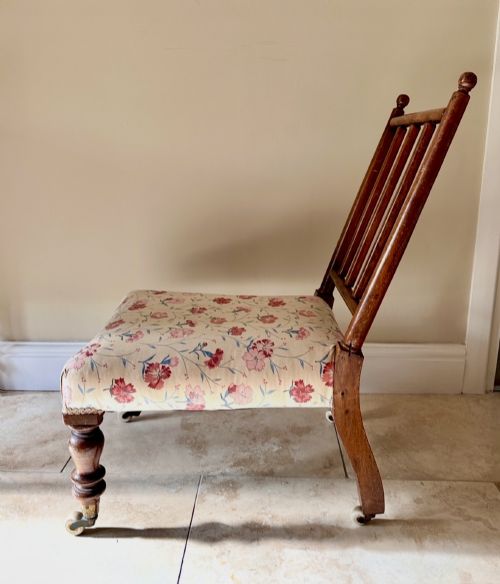
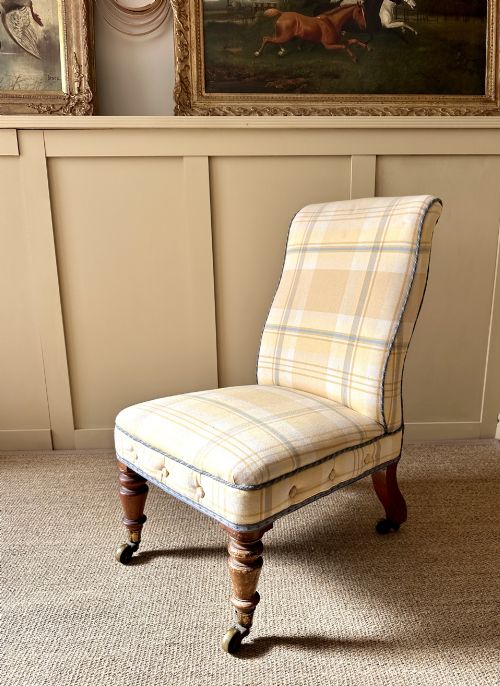
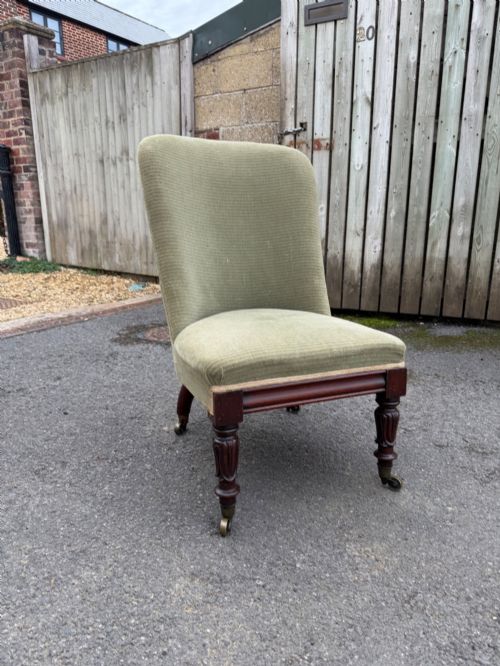
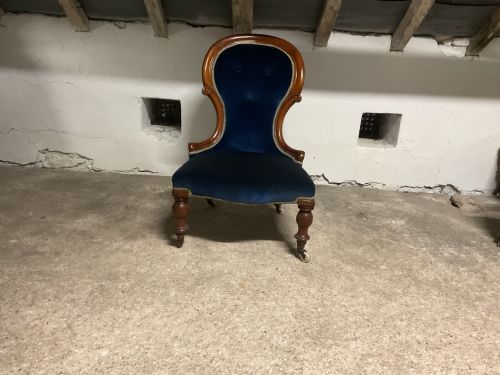
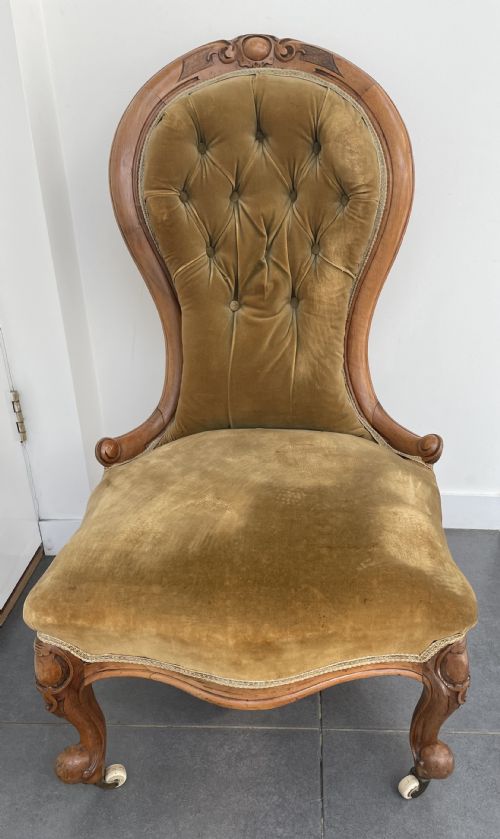
The form is a low upholstered side chair, armless or with very low arms, standing on short front legs. It came out of the 19th-century bedroom and dressing room, where the low seat suited dressing and putting on shoes and stockings. The same chair was sold as a nursing chair, low enough for a mother to feed a child.
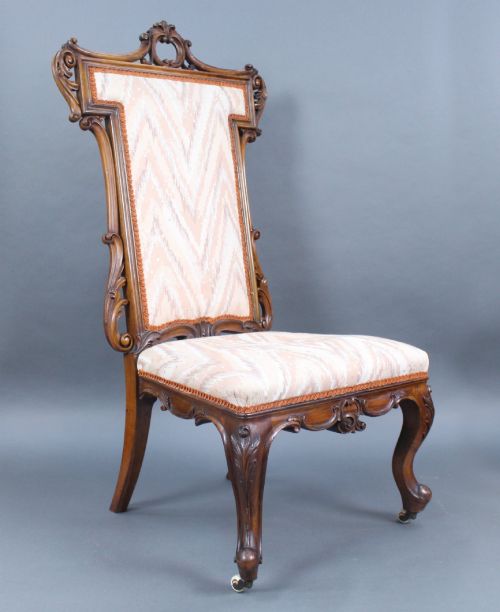
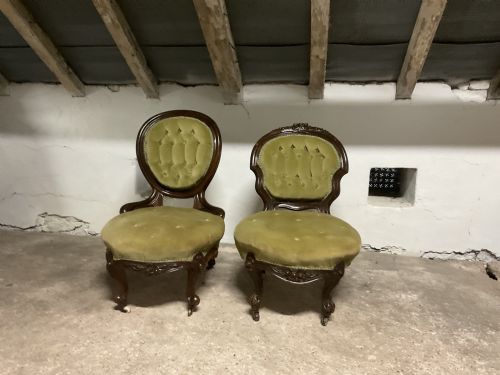
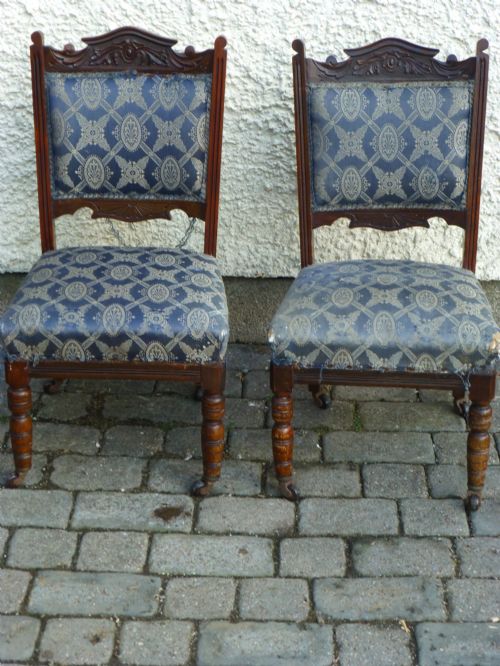
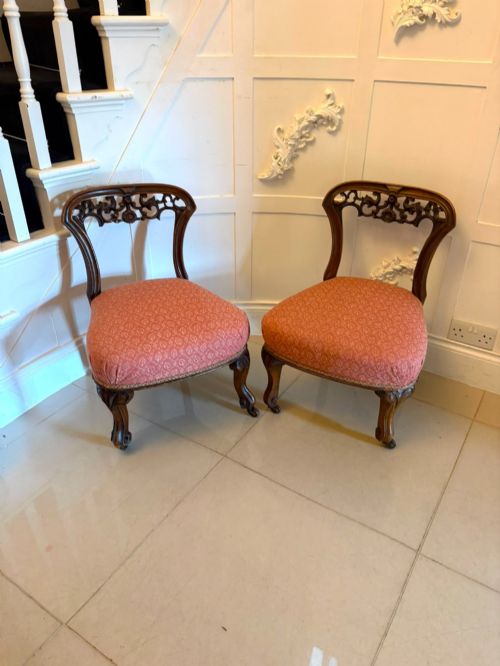
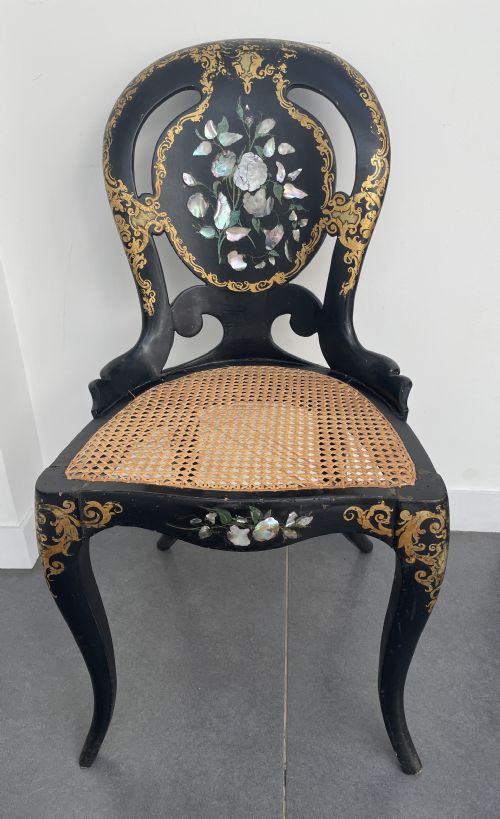
The one you'll meet most often is Victorian and show-wood framed: a polished timber frame left visible around fully upholstered seat and back. Walnut leads the titles, with mahogany and rosewood behind it. Balloon backs, spoon backs and button backs all recur, and a group of frames are ebonised or gilt.
Names overlap constantly. Slipper, nursing, bedroom and ladies chair describe the same low seat, and some titles use two or three at once. Dating is broad-brush too: far more listings say only 19th Century or Victorian than name a decade, with the 1860s the most-cited when one is given.
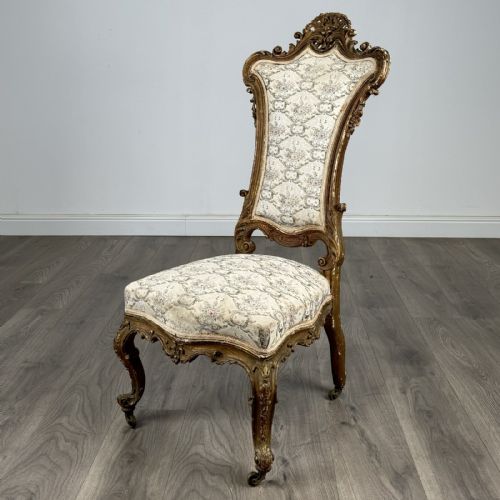
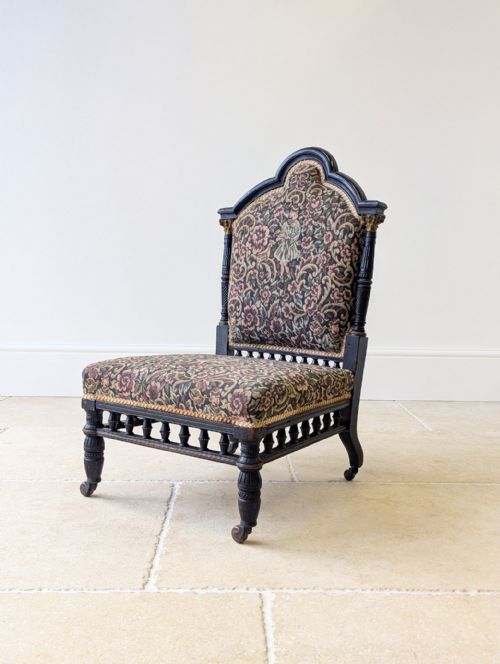
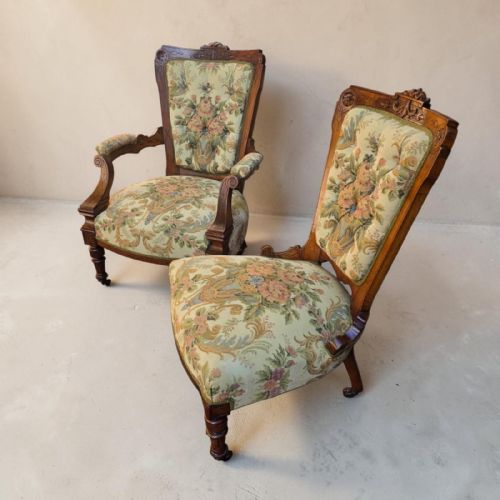
Beyond the mainstream sit smaller groups. French and Continental low chairs, including Napoleon III and boudoir examples, turn up steadily. So do Aesthetic Movement and ebonised frames, some with iron backs, and a handful of prie-dieu chairs with tall backs over very low seats. About forty-eight come to market on Sellingantiques in a year, listed by nearly a hundred different dealers.
Where The Range Splits
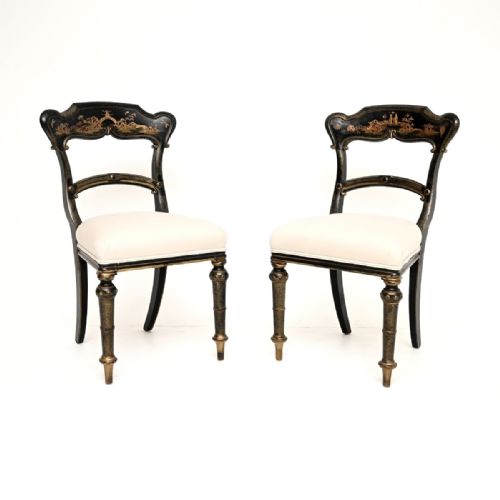
Two things carry the top of the range: a named workshop and a second chair. Howard and Sons appears in more titles than any other name, with Gillows and Holland & Sons behind it, and the highest-priced listings are pairs of Howard and Sons slipper and bedroom chairs. Pairs and matched pairs account for around one listing in six; singles fill the lower band.
How firmly the name is claimed matters as much as the name itself. Titles split between direct attribution and hedged wording, with probably by, in the manner of, attributed to, possibly by and Howard style all in regular use. The direct claims sit higher.
Then the frame and the covering. Carved walnut and rosewood run above plain mahogany, and carved walnut ladies chairs recur well above the middle. Large, good-sized and deep-seated chairs sit higher than small or petite ones, though small Howard examples break that pattern. Chairs described with a named textile or original needlework sit above those offered for re-upholstery.
Antique Slipper Chairs Retail Price Guide 2026
Typical UK retail prices for slipper chairs, calculated from the Sellingantiques database of over a million retail prices indexed since 2003. This retail price guide relies exclusively on Sellingantiques data; no external sources or auction records are used, so the figures do not describe the wider market.
Howard and Sons is the name that turns up from the most dealers on Sellingantiques, with Gillows second and Holland & Sons third.
Howard and Sons·Gillows·Holland & Sons
The Antique Slipper Chairs Glossary
- Slipper chair
- A low-seated armless upholstered chair, the seat set close to the floor.
- Nursing chair
- The same low form under a different trade name, and the commonest alternative wording in these titles.
- Bedroom or ladies chair
- Two more interchangeable names for the low upholstered side chair, both used freely alongside the others.
- Button back
- Upholstery drawn down at intervals with covered buttons, giving a dimpled back.
- Show wood
- The polished timber of the frame left visible against the upholstery.
- Prie-dieu
- A tall-backed chair on a very low seat, the form originally made for kneeling at prayer.
Antique Slipper Chairs: Frequently Asked Questions
What's the difference between a slipper and nursing chair?
In these listings, very little. The same low armless upholstered chair is sold under both names, and bedroom chair and ladies chair are used for it too.
Some titles hedge their bets and run two names together, as in Victorian walnut slipper or nursing chair.
Which woods are used for the frames?
Walnut appears in more titles than any other timber, with mahogany and rosewood following. The frame is show wood, polished and left visible around the upholstery.
A smaller group is ebonised, stained and polished black, and some frames are gilt.
How old are most of them?
The dated field runs from 1800 to 1940, but the bulk sit in the 19th century. Victorian is the single commonest label, and 19th Century the commonest date entry.
Where a decade is named, the 1860s comes up more than any other. Regency examples appear in modest numbers, and the twentieth century is thin, with a few 1920s, Edwardian and Art Deco entries.
Why do so many listings come in pairs?
Pairs account for around one title in six, alongside matched pairs, near pairs and his and hers descriptions. The low chairs were often supplied more than one at a time.
Pairs drive the extremes of the range. Every listing at the very top is a pair of Howard and Sons slipper or bedroom chairs.
What does an iron-back chair mean?
It's a frame with an iron back member carrying the upholstery rather than a timber one.
The wording recurs across several titles as iron back slipper chair, iron-back nursing chair and iron-back buttoned armchair, all dated to the middle of the 19th century.
Are French examples common in this category?
They form a small group, under a tenth of the listings. Napoleon III chairs appear several times, along with boudoir chairs reaching into the 1930s.
Scroll backs are frequent on the French pieces. One Anglo-Indian and one chinoiserie chair also turn up.