


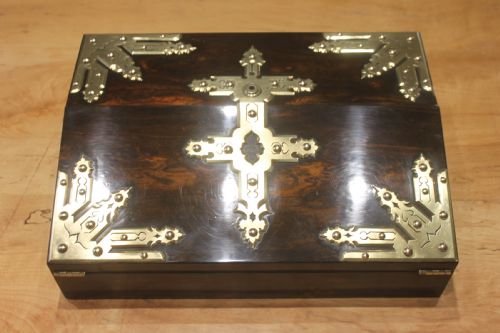


A 2026 Guide by Sellingantiques
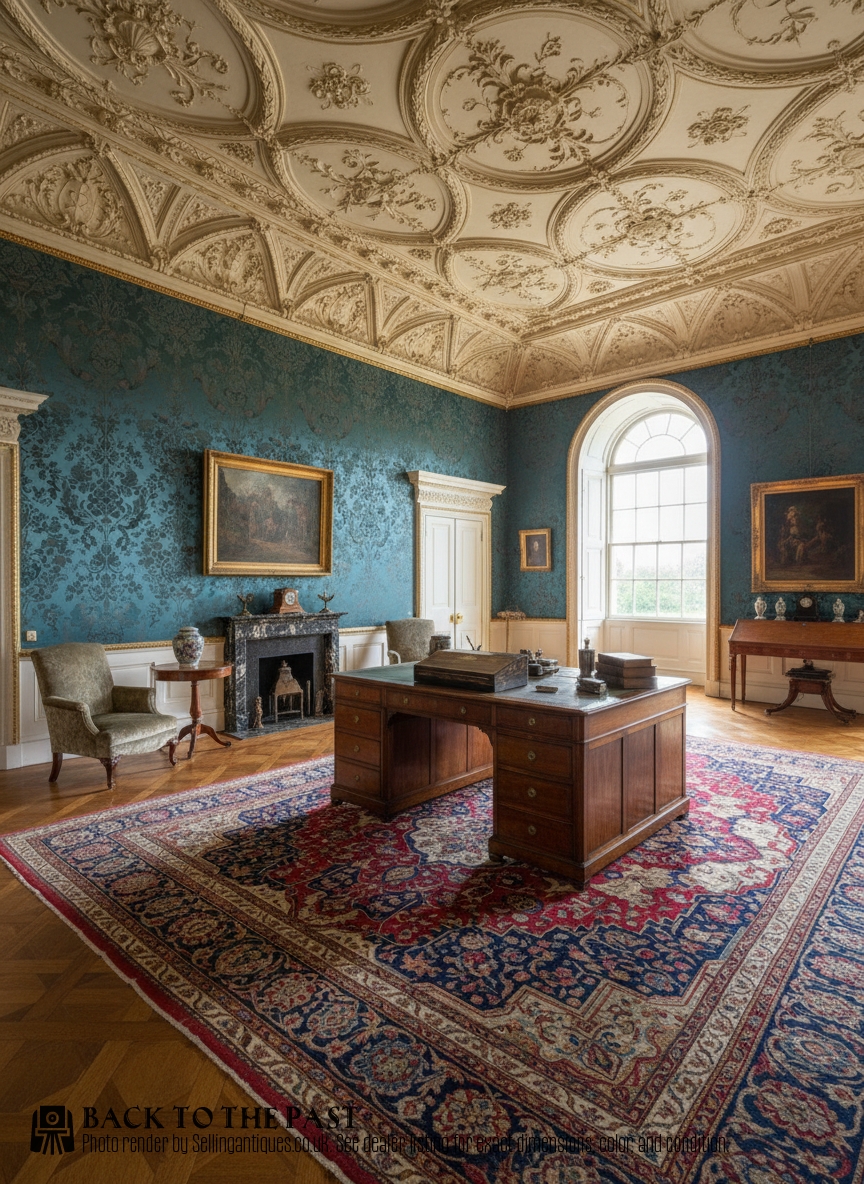
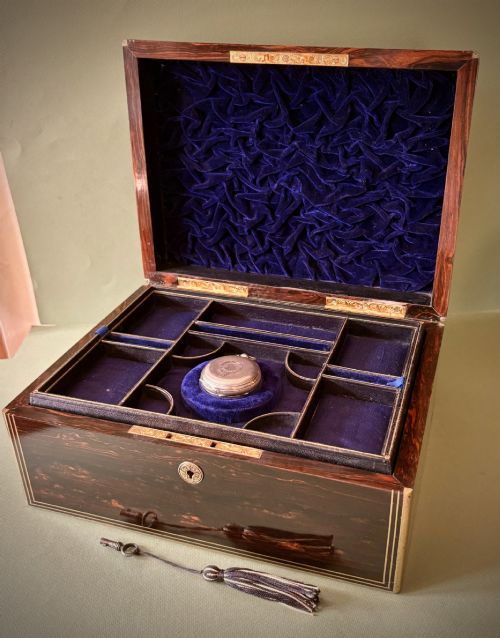
Unusual Antique Victorian Quality Inlaid Coromandel Wood Writing Box, 1850
Priced at £1,285 from London City Antiques
Calamander or Coromandel arrived in Britain from Ceylon during the late Georgian period.
A sudden surge in demand around 1820 for high-end fitted dressing cases.
By the late nineteenth century, over-logging meant the timber supply was largely exhausted.
Trace the timeline through the brass fittings. You'll find early examples built to survive rigorous travel.
Workshops restricted this dense wood almost exclusively to luxury commissions meant for affluent households.
David Edwards made brass-bound dressing cases in Coromandel during the early nineteenth century from his London workshop.
Well-documented fitted boxes from Thomas Lund of Cornhill, frequently lined with quality leathers.
Look for the maker's name stamped into the brass lock plate or stamped on an ivory plaque.

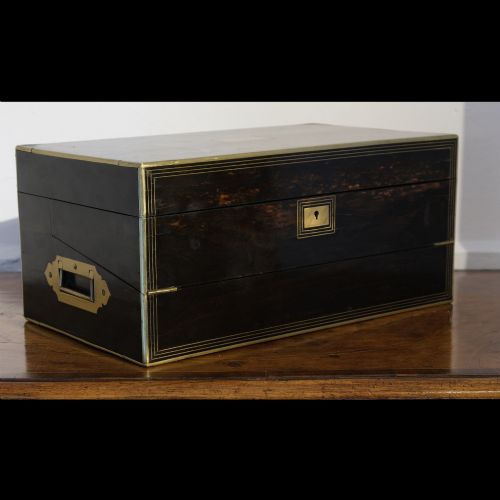
19th Century Coromandel-wood Sewing Box by Edwards, 1860
Priced at £1,950 from Quiet Street Antiques of Bath
The 2026 retail price guide for Antique Coromandel Boxes is drawn from a proprietary archive of over 1.1 million retail prices indexed by Sellingantiques since 2003. This guide relies exclusively on their own internal data; no external sources or auction records are used.
Analysing nearly 25 years of UK antique market history alongside current retail values, the data indicates that typical UK retail prices for Antique Coromandel Boxes range between £400 and £1,500. Entry-level prices generally fall under £400 and premium examples upwards of £1,500.
Flush-fitted brass handles and corner brass strapping on campaign-style examples.
Notice the internal brass hinges and complex locking mechanisms requiring a specific key.
These antique Coromandel boxes often feature intricate lift-out trays designed to hold cut glass jars or fitted writing implements.
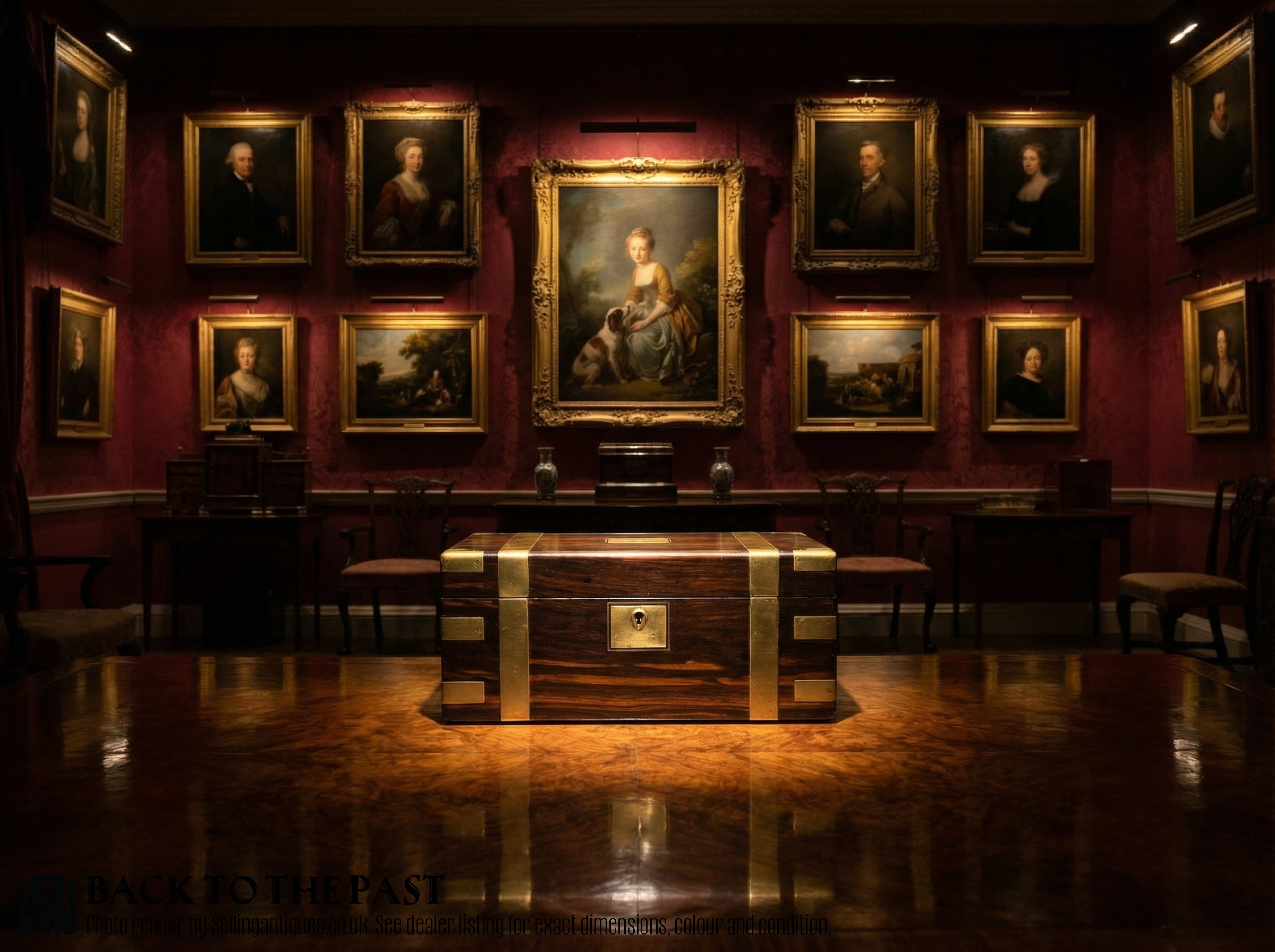
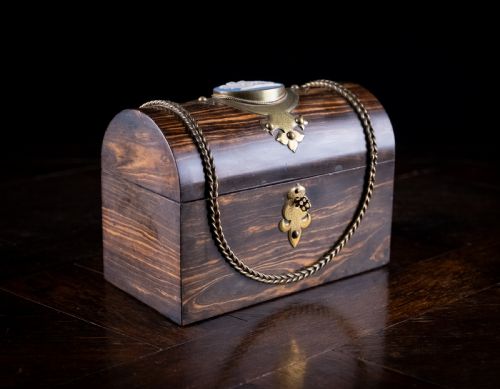
Writing Slope Coromandel with Secret Drawers, 1860
Priced at £695 from Sovereign Antiques Of Nuneaton
Early nineteenth-century cabinet makers relied on thick hand-sawn veneers to combat the natural tendency of this wood to split.
Turn an antique Coromandel box over. You'll spot heavy brass corner pieces added to reinforce the carcase joints.
Later Victorian production featuring thinner machine-cut veneers and elaborate mother-of-pearl inlay rather than plain brass strapping.
"The distinctive striped wood comes from a specific species of ebony tree native to Sri Lanka."
"Tap the base gently when examining a writing slope. You might discover cleverly hidden compartments."
"A natural resistance to pests and rot thanks to the high density of the raw timber."
Based on almost 25 years of Sellingantiques UK antique market data, Antique Coromandel Boxes appeared 926 times (out of 1,100,000 antiques) which gives it a rarity score of 83/100.
This score measures scarcity within the Sellingantiques archive only and is not a survey of the entire antiques market, so these statistics may not be indicative of the general availability of Antique Coromandel Boxes elsewhere.
Dust the surface with a soft dry cloth. Avoid spray polishes containing silicone as they build up and cloud the finish over time.
Feed the wood occasionally with a good quality microcrystalline wax. Apply sparingly, leave it for ten minutes, and buff it gently.
Most traditional locks on these pieces were made by firms like Bramah or Chubb. They used complex mechanisms that differ from modern household locks.
Take the antique Coromandel box to a specialist restorer rather than a high street locksmith. They can sometimes trace the correct key profile or adapt a period blank to fit.
This approach avoids drilling out the lock or damaging the surrounding veneer.
You won't often see them at first glance. They usually sit concealed behind a false wall or under the main storage tray.
Pressing a specific wooden divider releases a hidden catch.
Brass stringing lifts when the underlying wood shrinks over the decades. The metal stays the same length and pops out of its channel.
Keep the piece away from direct heat sources. Secure any loose pieces of metal with masking tape so they don't snap off or get lost.
Have a professional relay the brass using traditional animal hide glue. Modern adhesives often fail to bond well with both wood and metal.
Please note: This Antique Coromandel Boxes guide and its associated pricing data are provided for general informational purposes only. It does not constitute formal financial, investment, or appraisal advice and should not be relied upon as the sole basis for any commercial activity, purchasing, or sales decisions. Sellingantiques.co.uk accepts no liability for any actions taken in reliance on this information. Always consult with a qualified professional or independent appraiser.
