
A 2026 Guide by Sellingantiques
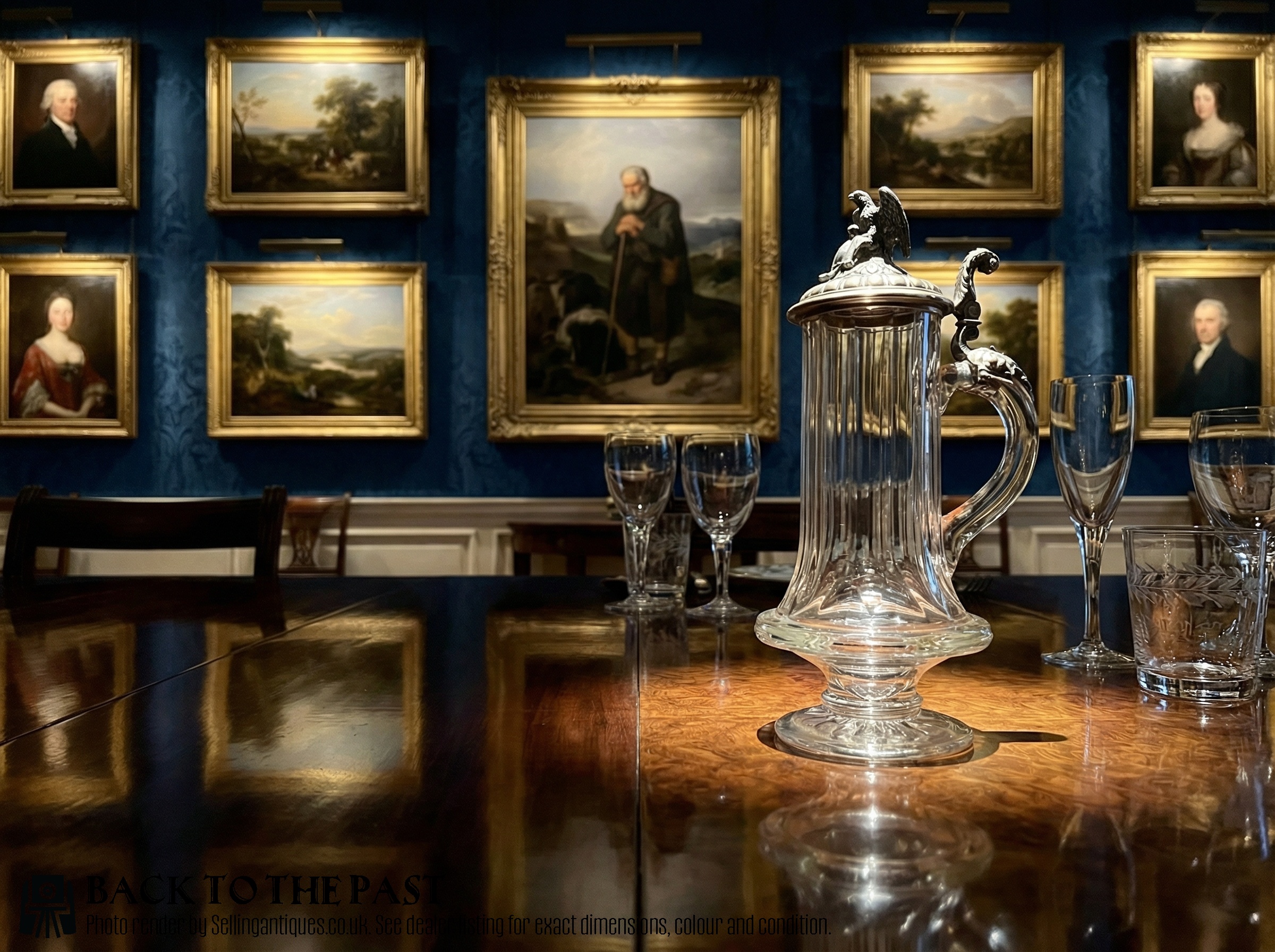
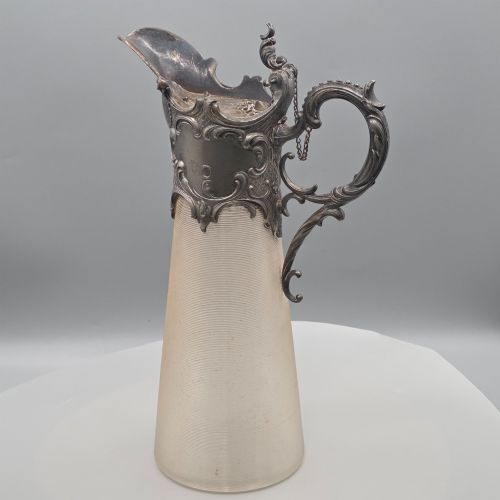
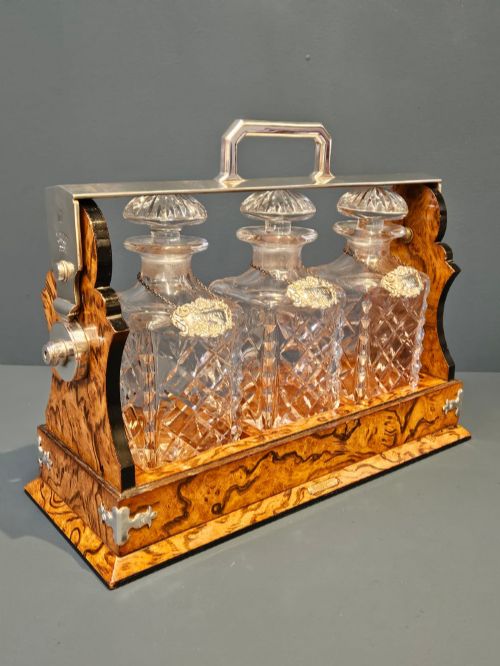
Unusual Antique Victorian Glass and Silver Plated Claret Jug, 1880
Priced at £495 from Unique Antiques by Emma Jade
The repeal of the glass tax in 1845 changed everything.
Mass production grew rapidly throughout the period. Middle-class homes demanded affordable decorative wares.
Look at the Great Exhibition of 1851. It showcased British glassmaking to the world and drove a boom in ornate domestic pieces across the country.
Regional hubs emerged in the Midlands and the North East. Stourbridge became the undisputed centre for cameo and engraved work during the final decades.
Antique Victorian glass often reflects changing social habits. Specialized drinking vessels matched the strict etiquette of formal dining.
Thomas Webb & Sons operated in Stourbridge during the late nineteenth century. They produced detailed cameo pieces featuring classical motifs layered over coloured grounds.
Sowerby dominated the pressed market from their Gateshead base. Their slag glass often carries a distinctive peacock head trademark.
George Davidson is a major North East name. Pearline glass, with its graduated opalescent edges, was their main contribution to the late Victorian trade.
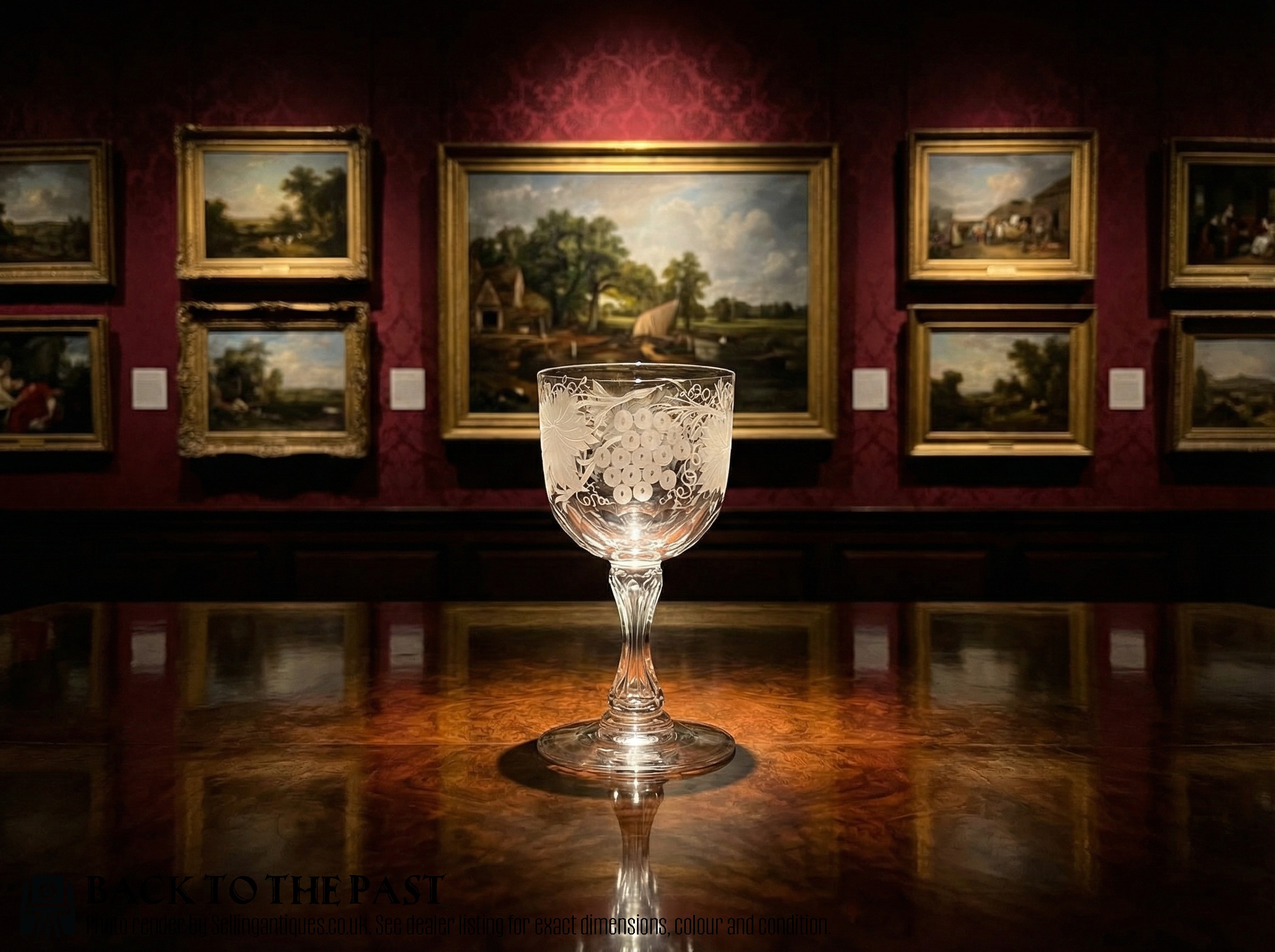
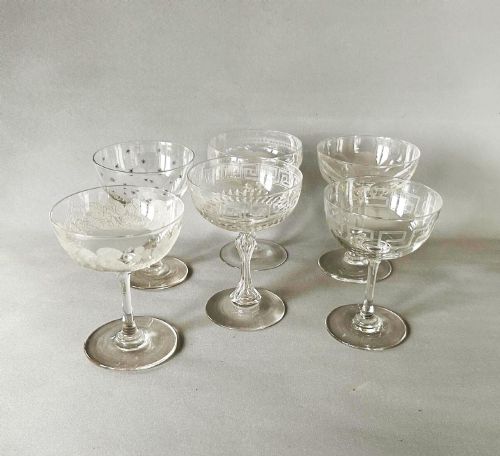
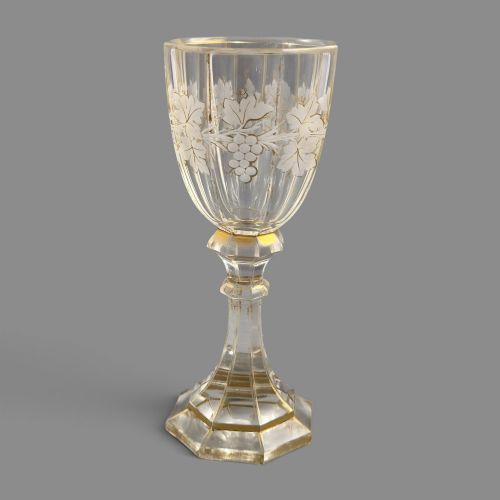
A Fabulous Victorian Etched Wine Glass, 1880
Priced at £155 from Andrew Cox Antiques
The 2026 retail price guide for Antique Victorian Glass is drawn from a proprietary archive of over 1.1 million retail prices indexed by Sellingantiques since 2003. This guide relies exclusively on their own internal data; no external sources or auction records are used.
Analysing nearly 25 years of UK antique market history alongside current retail values, the data indicates that typical UK retail prices for Antique Victorian Glass range between £200 and £1,500. Entry-level prices generally fall under £200 and premium examples upwards of £1,500.
Bright colours define this era. Cranberry, ruby, emerald and cobalt blue appear across tablewares and household ornaments.
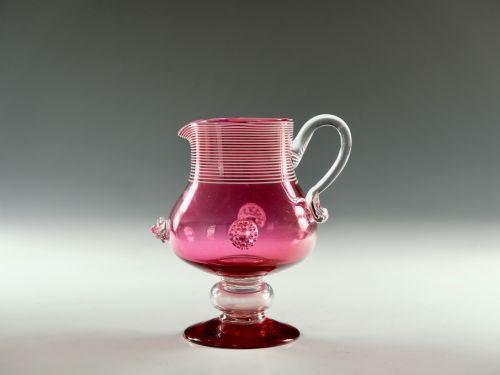
Notice the applied decoration. Trailed threads, ruffled rims and pinched edges add complex texture to blown shapes.
Pressed patterns imitate expensive cut crystal. Intricate star bursts, deep ridges and raised hobnail motifs cover the outer surfaces of heavy bowls and jugs.
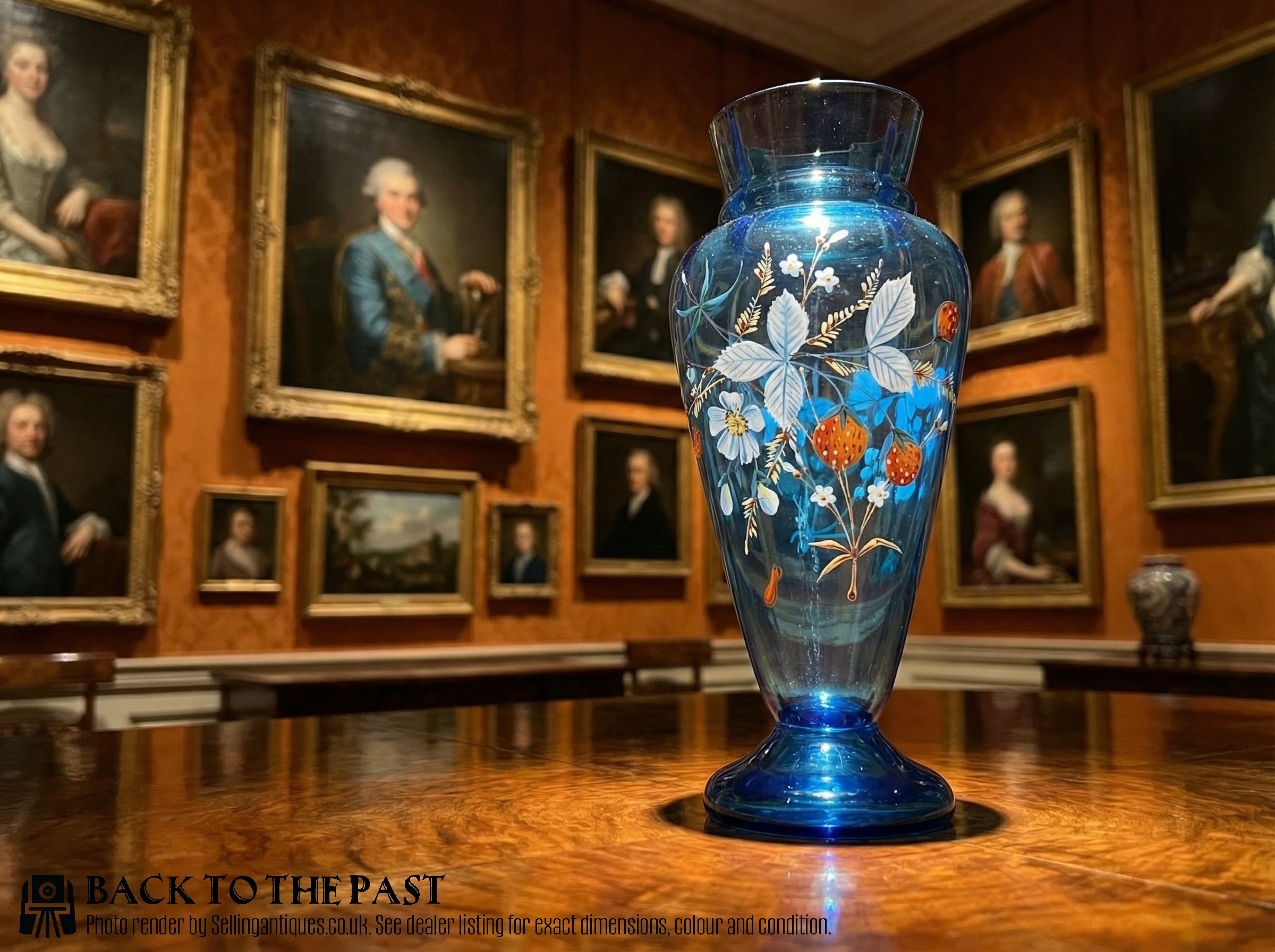
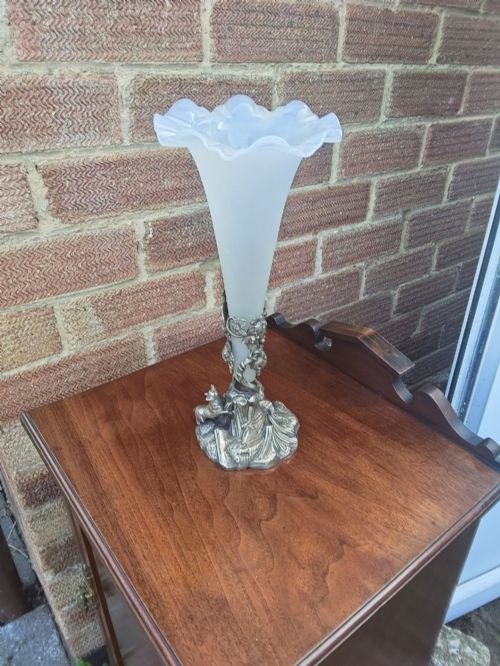
A Delightful Victorian Enamel Painted Glass Vase, Victorian
Priced at £125 from Andrew Cox Antiques
Free blowing required physical control. Craftsmen shaped molten gathers using wooden blocks and gravity before reheating them at the furnace to maintain the working temperature.
Metal moulds transformed the industry. Workers dropped hot gathers into cast iron forms to press complex patterns in a single action.
Wheel engraving demanded a steady hand. Copper wheels of different sizes ground away the glass surface to create matte landscapes and portraits.
"Some pressed bowls conceal tiny registration diamonds moulded into the inner base. These small marks tell you the exact day the design was registered."
"The ruby red colour relies on gold. Makers dissolved real gold coins in acid to achieve that deep cranberry tint."
"Hand tools shaped many frilled rims. A skilled glassmaker spun the piece rapidly and relied on centrifugal force to form the undulating wave."
Based on almost 25 years of Sellingantiques UK antique market data, Antique Victorian Glass appeared 11538 times (out of 1,100,000 antiques) which gives it a rarity score of 10/100.
This score measures scarcity within the Sellingantiques archive only and is not a survey of the entire antiques market, so these statistics may not be indicative of the general availability of Antique Victorian Glass elsewhere.
Don't use harsh modern chemicals or dishwasher tablets. They will permanently etch the surface and worsen the cloudiness.
Try a mixture of white vinegar and uncooked rice. Swirl this around inside the bowl to gently scrub the bloom without scratching the soft lead glass.
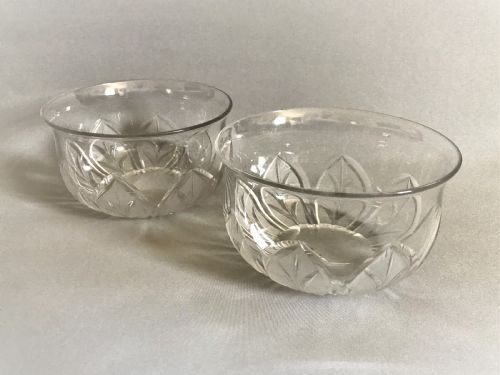
These ruffled bowls are usually part of a dessert service. They held stewed fruits, soft puddings or cream.
Victorian dining relied on visual contrast. The bright pink glass stood out against the pale desserts, catching the candlelight and adding colour to the white tablecloth.
You might occasionally find them paired with a silver-plated stand, elevating them above the main dishes.
Makers added uranium to the batch simply as a colourant. It produced a striking yellow-green tint that was fashionable in the late nineteenth century.
The fluorescent glow under UV light is just a chemical side effect. The Victorians did not have blacklights to see it.
Those are pressed glass jugs. They were mass-produced specifically for everyday household use rather than formal entertaining.
The bumpy patterns serve a dual purpose. They imitate the look of expensive hand-cut crystal, but they also hide the swirl marks and flaws created by the metal mould.
Families used them for water or ale. The thick glass walls meant they could survive the daily rough and tumble of a busy kitchen.
Please note: This Antique Victorian Glass guide and its associated pricing data are provided for general informational purposes only. It does not constitute formal financial, investment, or appraisal advice and should not be relied upon as the sole basis for any commercial activity, purchasing, or sales decisions. Sellingantiques.co.uk accepts no liability for any actions taken in reliance on this information. Always consult with a qualified professional or independent appraiser.
