


A 2026 Guide by Sellingantiques
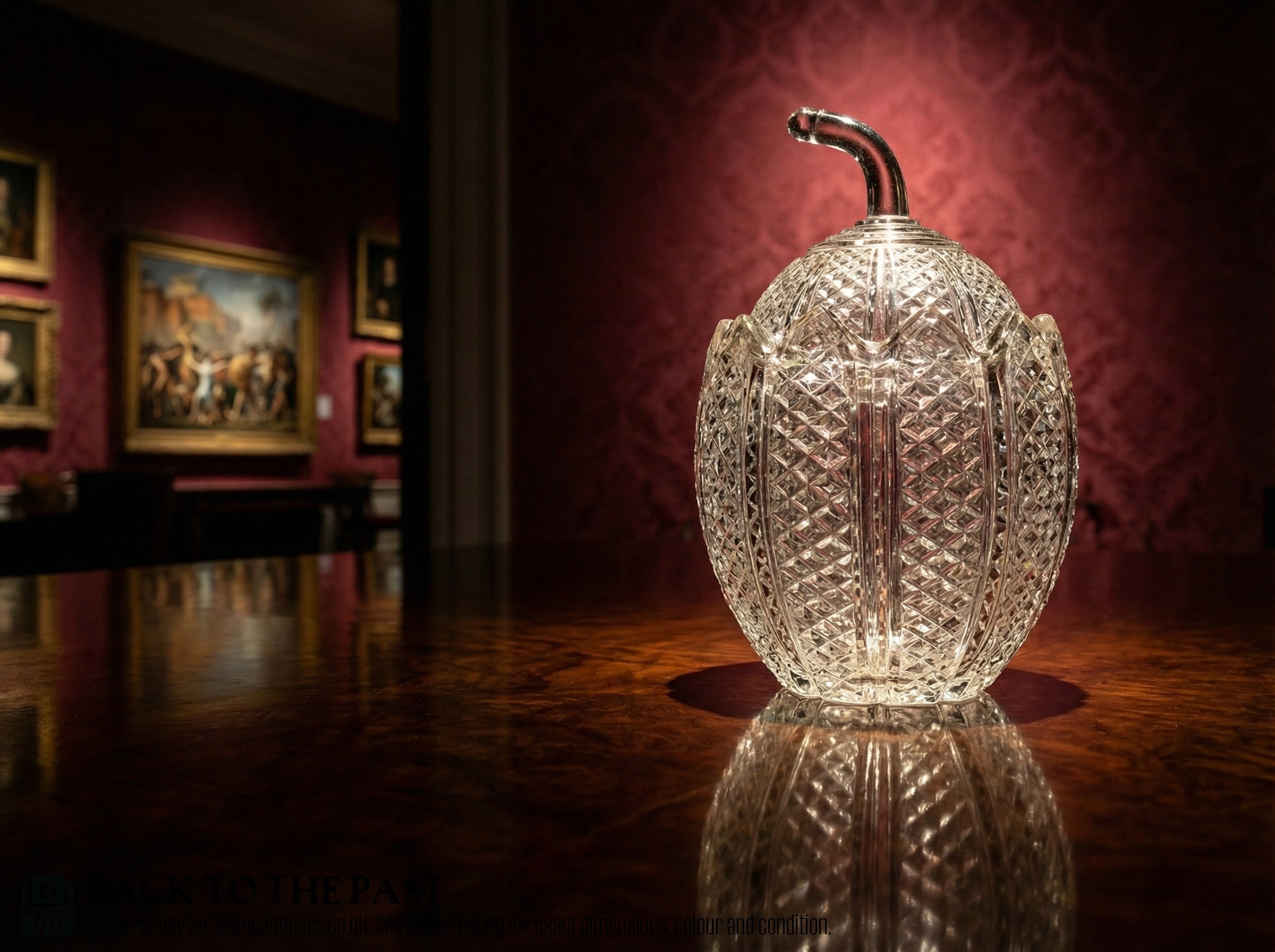
A Georgian Cut Glass Novelty Melon Biscuit Barrel, Georgian
Priced at £195 from Jeff Sims Antiques
Look at the timeline. The afternoon tea habit took hold in Britain during the mid-nineteenth century, creating a sudden need for dedicated tableware.
Mass production of baking followed soon after. Families needed a tabletop vessel to store these commercial products and serve them to guests.
Edwardian households kept the tradition going. They demanded wider varieties of shapes and decorations to match their changing interior fashions.
Silver-plated mounts and swing handles. These additions transformed simple jars into formal drawing-room accessories fit for polite company.
Wedgwood produced many jasperware examples throughout the late Victorian period. Their classical figures on solid blue or green grounds are instantly recognisable.
James Macintyre & Co operated in Burslem. During the late nineteenth century they made slip-decorated earthenwares fitted with electroplated mounts.
Elkington & Co supplied plated fittings. They frequently supplied the base metal collars and lids for glass and ceramic factories to assemble.
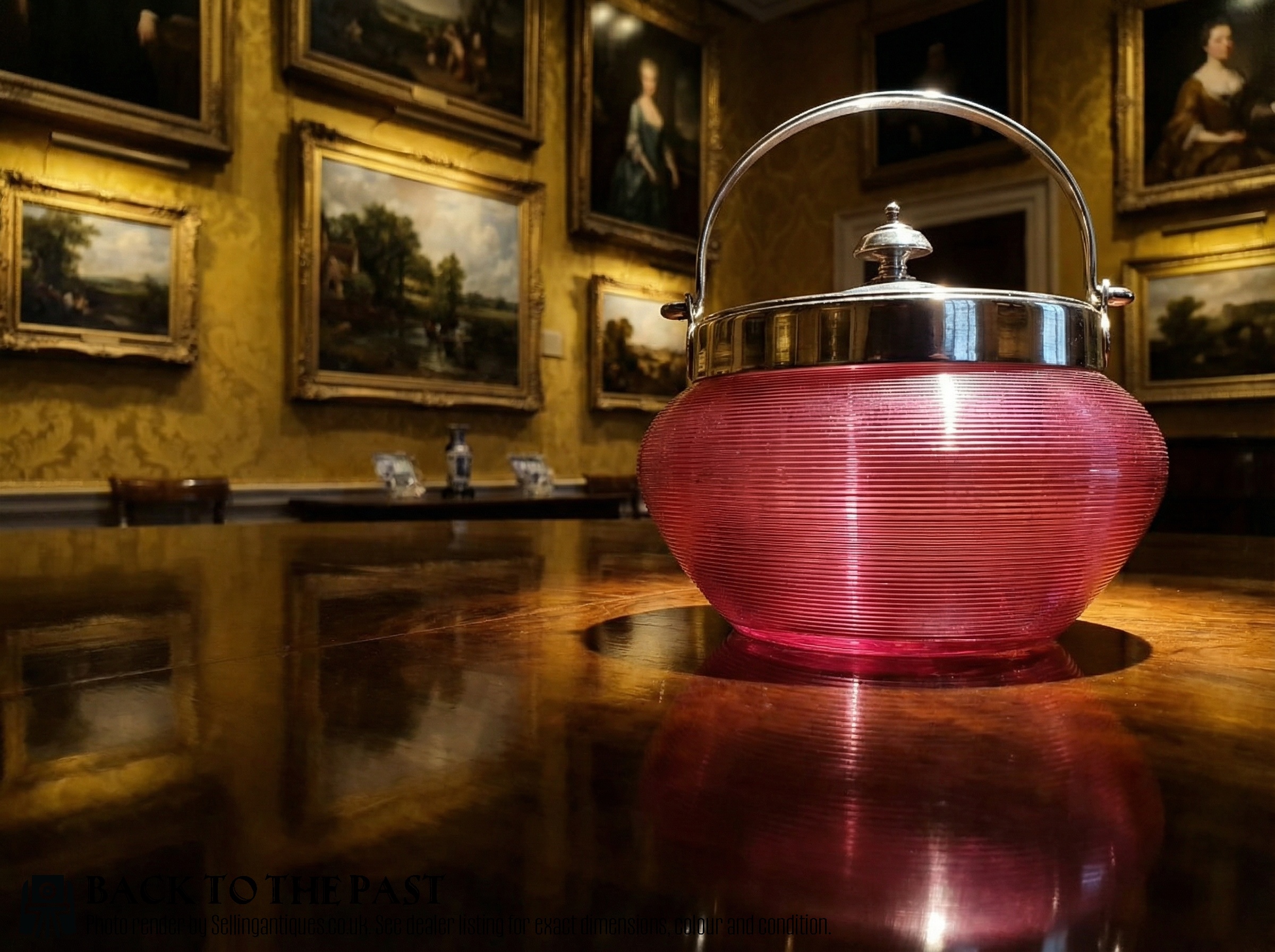
Nice Antique Edwardian Cranberry Glass Biscuit Barrel with Silver-plated Mounts – Circa 1905, 1900
Priced at £165 from Kingsdown Antiques
The 2026 retail price guide for Antique Biscuit Barrels is drawn from a proprietary archive of over 1.1 million retail prices indexed by Sellingantiques since 2003. This guide relies exclusively on their own internal data; no external sources or auction records are used.
Analysing nearly 25 years of UK antique market history alongside current retail values, the data indicates that typical UK retail prices for Antique Biscuit Barrels range between £200 and £700. Entry-level prices generally fall under £200 and premium examples upwards of £700.
Check the lid. A tight seal was essential to keep out damp air and stop the contents going soft.
Swing handles feature on most late nineteenth-century versions. They'll drop flat for storage and lift up for passing across the table.
Internal divisions occasionally appear. Some larger ceramic forms have a central divider moulded inside to separate different varieties of baking.
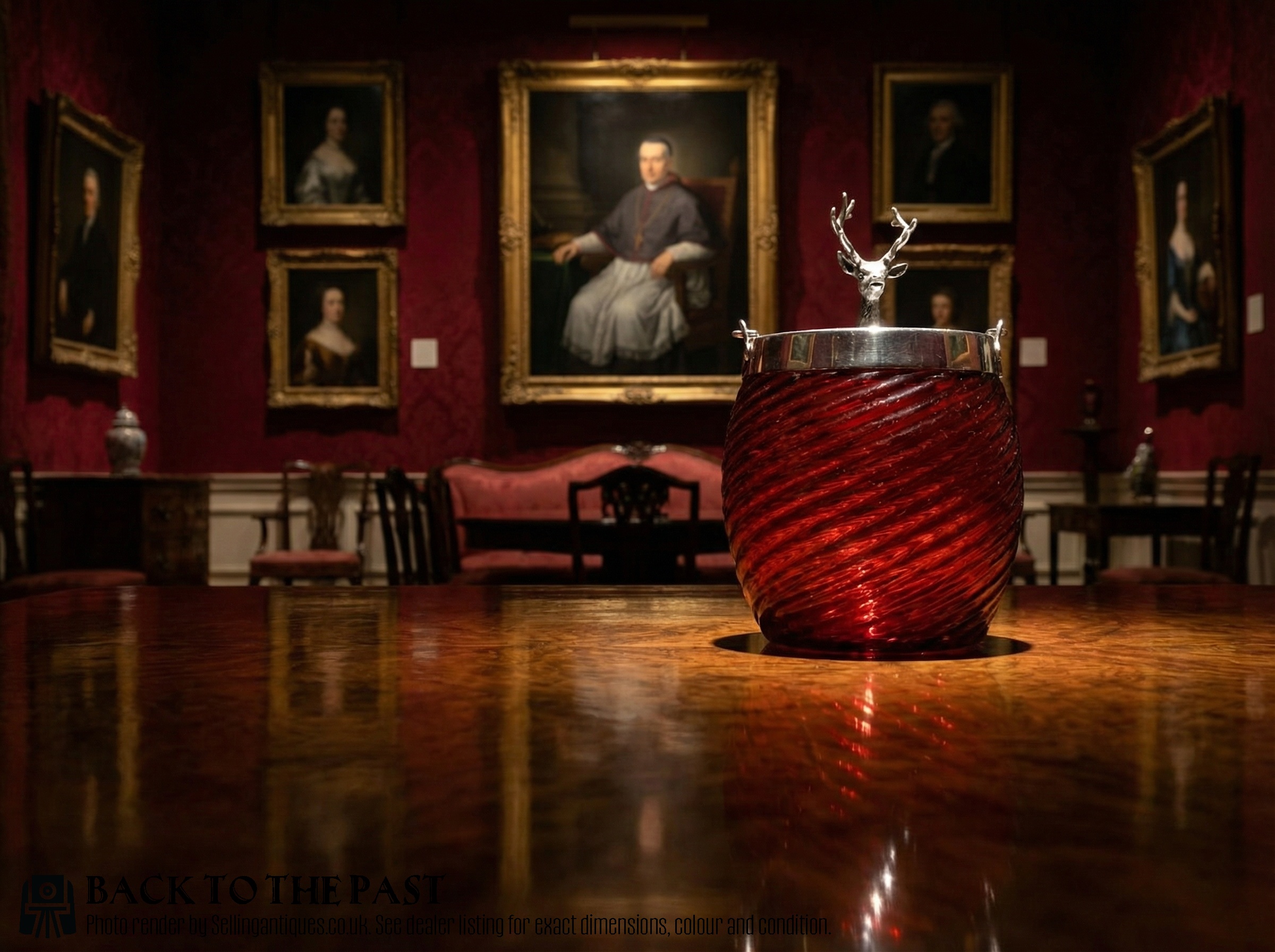
Gorgeous Antique Victorian Cranberry Glass Biscuit Barrel/cookie Jar – Circa 1890, Victorian
Priced at £225 from Kingsdown Antiques
Early wooden forms rely on traditional coopering techniques. Staves of oak were bound tight under tension using pinned metal bands.
Glass versions required separate trades. Glassblowers formed the basic vessel in a mould before metalworkers attached the collar using plaster of Paris.
Understand the plating process. Manufacturers used electroplating to coat cheap base metals with a thin layer of silver for the lids.
"They work well as modern tea caddies. The tight-fitting lids keep loose-leaf tea fresh just as effectively as they kept old bakes crisp."
"Match strikes sometimes hide under the lid. A few makers added a textured patch inside the cover so gentlemen could light cigars after eating."
"Many glass bodies glow under ultraviolet light. Factories added small amounts of uranium to the glass mixture to create a distinct green tint."
Based on almost 25 years of Sellingantiques UK antique market data, Antique Biscuit Barrels appeared 470 times (out of 1,100,000 antiques) which gives it a rarity score of 91/100.
This score measures scarcity within the Sellingantiques archive only and is not a survey of the entire antiques market, so these statistics may not be indicative of the general availability of Antique Biscuit Barrels elsewhere.
You can use glass and ceramic ones directly. A quick wash with warm soapy water gets them ready for modern biscuits.
Wooden examples are different. The oak can taint the flavour of baked goods, and crumbs get stuck between the staves. It pays to use a loose plastic liner.
The metal collar doesn't come off. Manufacturers secured these mounts using strong adhesives like plaster of Paris, designed to last the life of the piece.
Trying to twist or soak the collar off will just break the glass. You need to wash the inside carefully without submerging the whole rim in water.
A gentle silver cloth takes off light tarnish. Rub the mounts lightly, avoiding the glass.
Skip the liquid polishes. They seep under the metal collar and leave a hard powdery residue.
They began strictly as tableware. The Victorians loved dedicated serving pieces for specific rituals, and the afternoon tea table demanded proper containers for shop-bought bakes.
Once the afternoon tea habit faded, these useful pots found other jobs around the house. They often moved from the dining room to the bedroom to hold sewing supplies or buttons.
Repurposing them is a long tradition. A tight lid and a carrying handle make them practical for storing almost anything small.
Please note: This Antique Biscuit Barrels guide and its associated pricing data are provided for general informational purposes only. It does not constitute formal financial, investment, or appraisal advice and should not be relied upon as the sole basis for any commercial activity, purchasing, or sales decisions. Sellingantiques.co.uk accepts no liability for any actions taken in reliance on this information. Always consult with a qualified professional or independent appraiser.
