
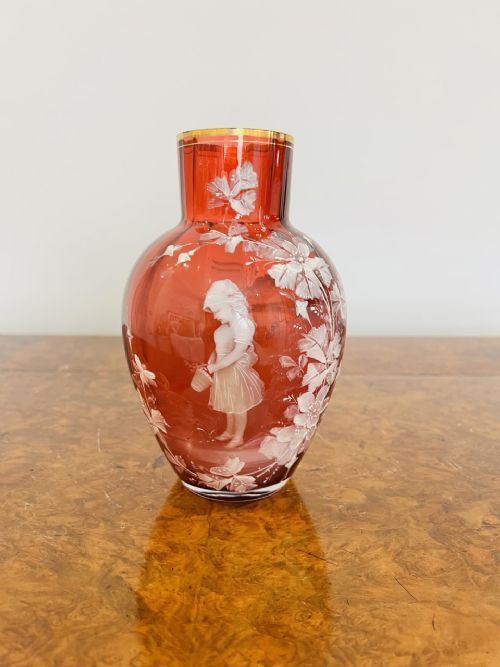
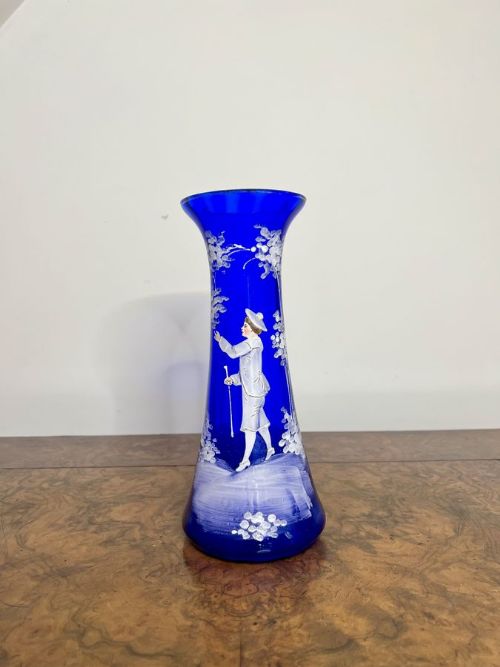




A 2026 Guide by Sellingantiques
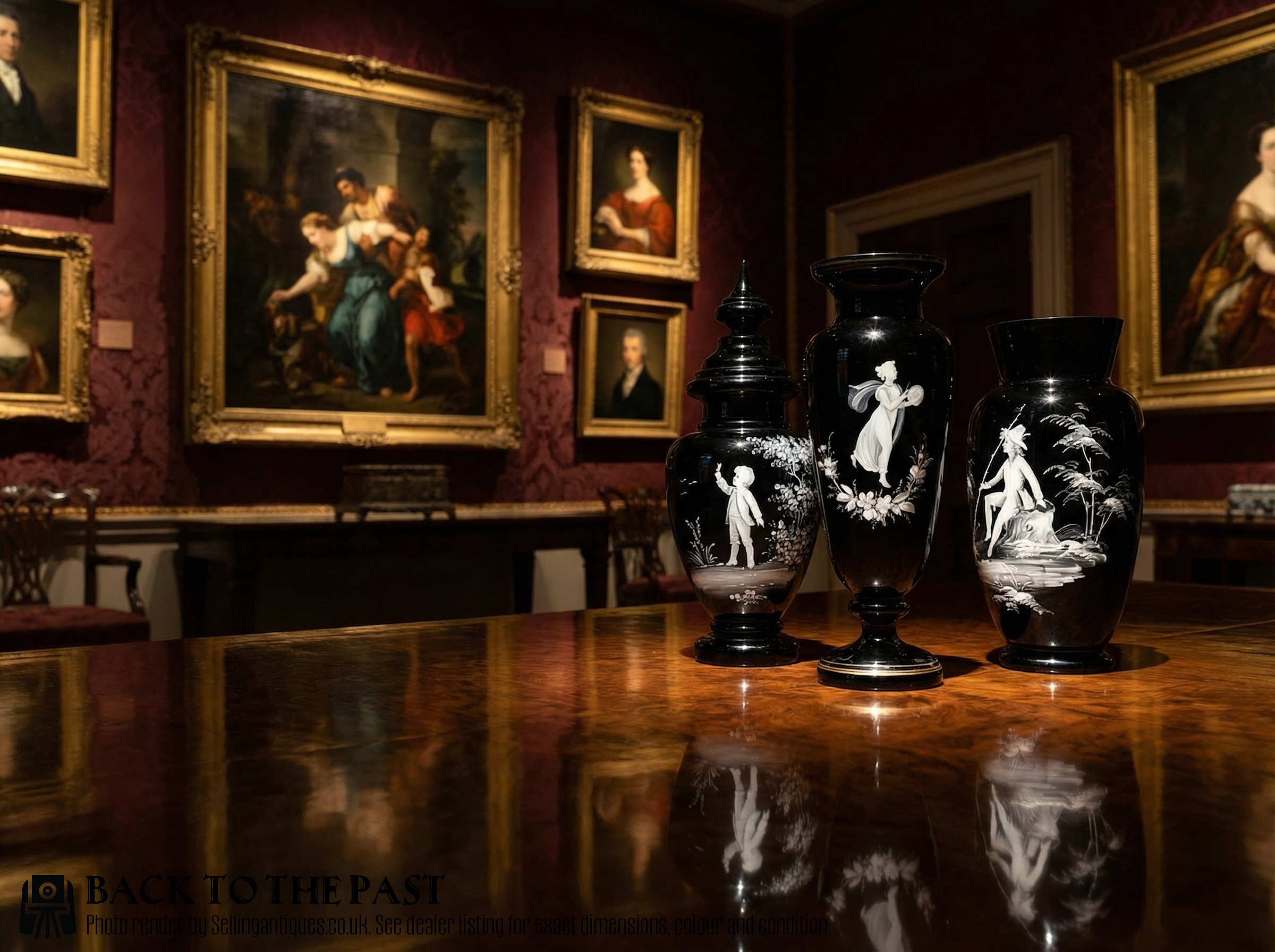
Three Large Pieces of 19thc Glass by Mary Gregory, Victorian
Priced at £350 from Church Street Antiques & Interiors
Most Antique Mary Gregory Glass actually originated in Bohemia during the late nineteenth century.
The name comes from a persistent myth. People mistakenly believed an American decorator named Mary Gregory painted these white enamel children at the Boston and Sandwich Glass Company.
Victorian homes displayed these vases and pitchers on parlour mantels.
European glasshouses exported vast quantities across the Atlantic to satisfy the demand for affordable decorative wares.
Hahn originated some of the notable Bohemian output. This workshop supplied plain blanks to independent decorating studios across the region.
The Boston and Sandwich Glass Company did produce enamelled wares in Massachusetts during the 1880s, though rarely matching the specific child motifs.
Fritz Heckert in Petersdorf created high-quality enamelled pieces in a similar vein, often signing his distinctive work.
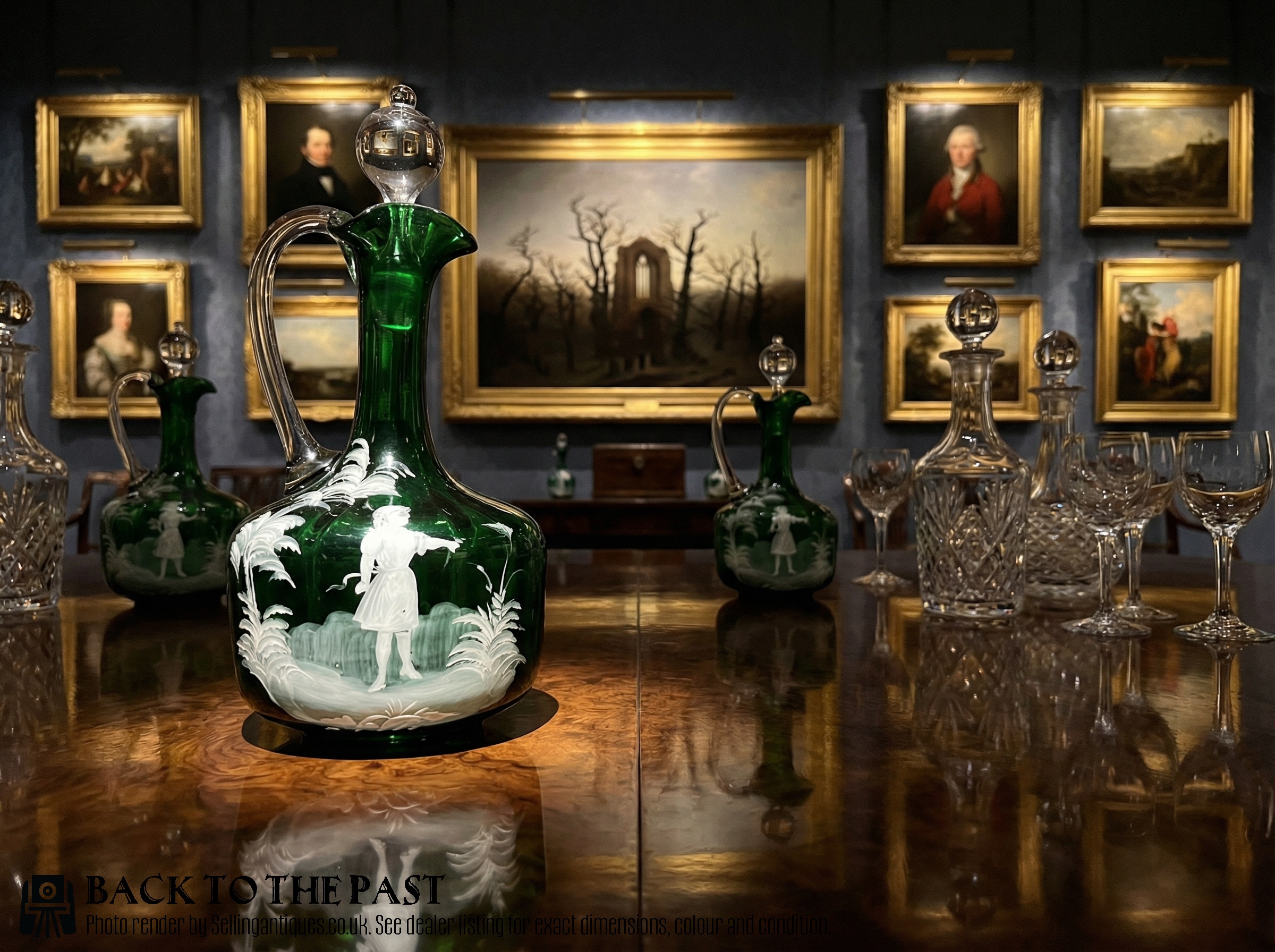
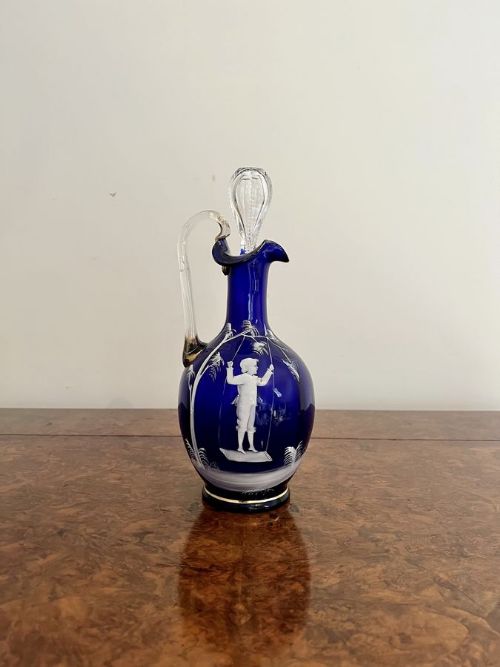
Stunning Quality Antique Victorian Mary Gregory Green Glass Ewer, 1860
Priced at £275 from Unique Antiques by Emma Jade
The 2026 retail price guide for Antique Mary Gregory Glass is drawn from a proprietary archive of over 1.1 million retail prices indexed by Sellingantiques since 2003. This guide relies exclusively on their own internal data; no external sources or auction records are used.
Analysing nearly 25 years of UK antique market history alongside current retail values, the data indicates that typical UK retail prices for Antique Mary Gregory Glass range between £100 and £300. Entry-level prices generally fall under £100 and premium examples upwards of £300.
Figures almost always appear in profile holding objects like hoops, butterfly nets or sprigs of foliage.
A painted landscape base anchors the children. Ferns and trees border the edges to frame the central subject.
Notice the distinct tinting. Sometimes artists added a faint flesh tone to the faces and hands of the figures.
Early Bohemian pieces show a thicker paste application. This builds up the white enamel to create a distinct relief effect on the glass.
Mould-blowing later replaced free-blown techniques for standard shapes to speed up the manufacturing process.
Artists applied the white mixture using a fine brush before sending the glass to a muffle kiln for firing.
"The children painted on the glass often wear adult clothing styled for the 1880s fashion trends."
"You can sometimes find matching facing pairs. Decorators painted a boy on one vase and a girl on another to sit at opposite ends of a shelf."
"Some continental decorators specialised in specific elements. One painted the foliage while another handled the figures."
Based on almost 25 years of Sellingantiques UK antique market data, Antique Mary Gregory Glass appeared 141 times (out of 1,100,000 antiques) which gives it a rarity score of 97/100.
This score measures scarcity within the Sellingantiques archive only and is not a survey of the entire antiques market, so these statistics may not be indicative of the general availability of Antique Mary Gregory Glass elsewhere.
Wash the glass by hand in lukewarm water with a mild dish soap. Use a soft sponge rather than a brush, as stiff bristles can scratch the delicate surface.
Never put enamelled glass in a dishwasher. The heat and harsh detergents will strip the white decoration right off the surface over time. Dry it immediately with a lint-free cloth to prevent hard water spots.
The thickness of the glass blank varies depending on how the glassblower formed the piece. Free-blown items often have thinner walls, while pieces blown into a mould tend to be heavier.
The intended use also dictates the weight. Water jugs need thick bases and sturdy walls. Decorative parlour vases feature finer construction.
It is a snapped pontil mark. It shows where the maker broke the iron rod away from the glass.
Higher quality wares have this area ground down and polished. A rough mark indicates a faster finishing process.
The term now covers almost any Victorian glass featuring white enamel silhouettes, regardless of the subject matter. While children are the most common motif, decorators frequently painted animals, birds and architectural scenes.
Bohemian factories used the exact same blanks and enamel paste for these natural subjects. The painting techniques and the period of production remain identical to the pieces featuring children.
Please note: This Antique Mary Gregory Glass guide and its associated pricing data are provided for general informational purposes only. It does not constitute formal financial, investment, or appraisal advice and should not be relied upon as the sole basis for any commercial activity, purchasing, or sales decisions. Sellingantiques.co.uk accepts no liability for any actions taken in reliance on this information. Always consult with a qualified professional or independent appraiser.
