

A 2026 Guide by Sellingantiques
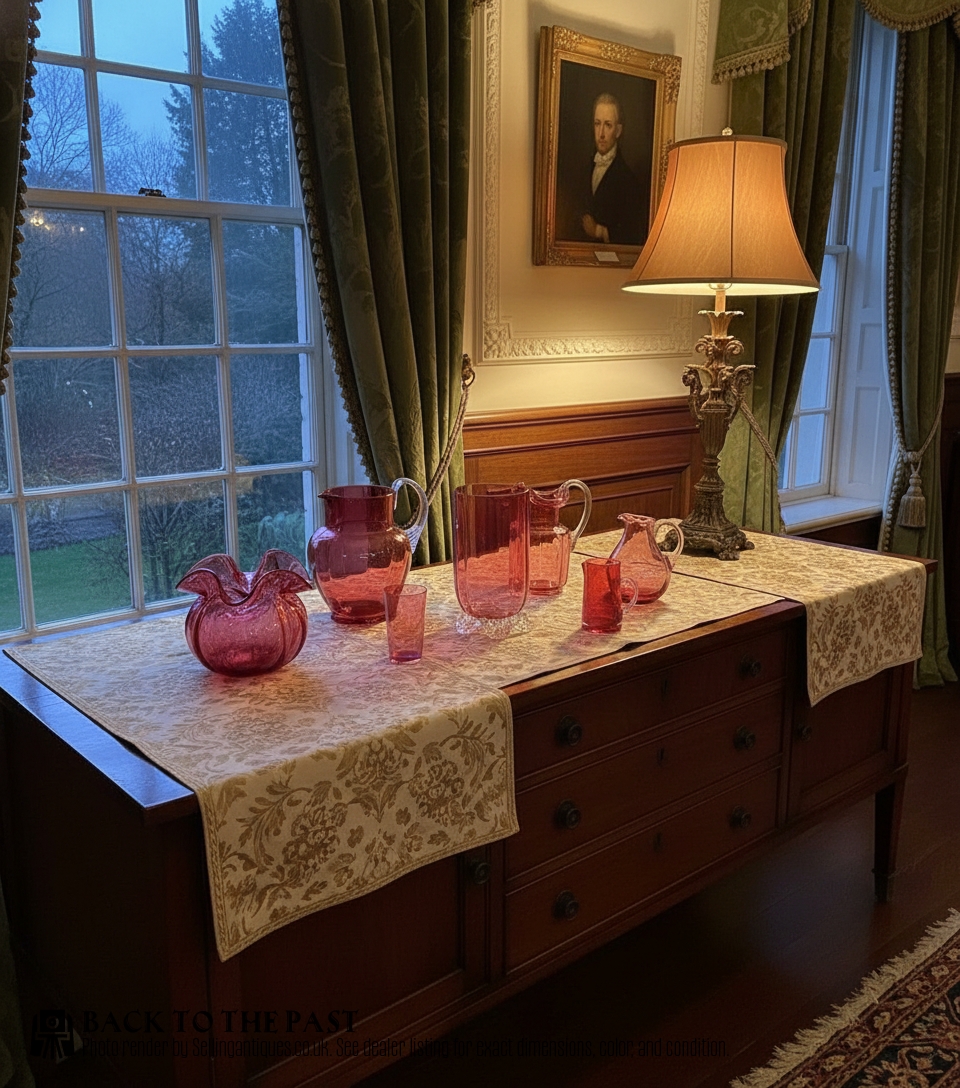
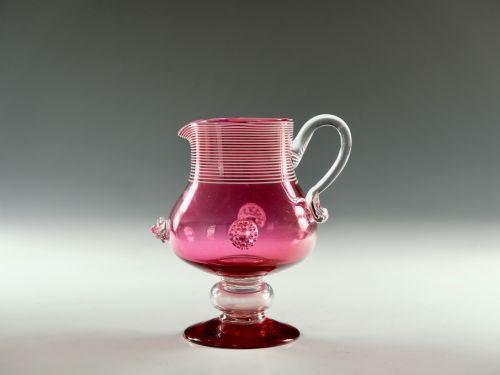
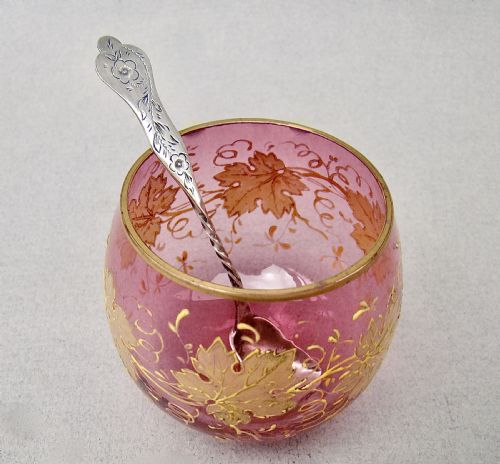
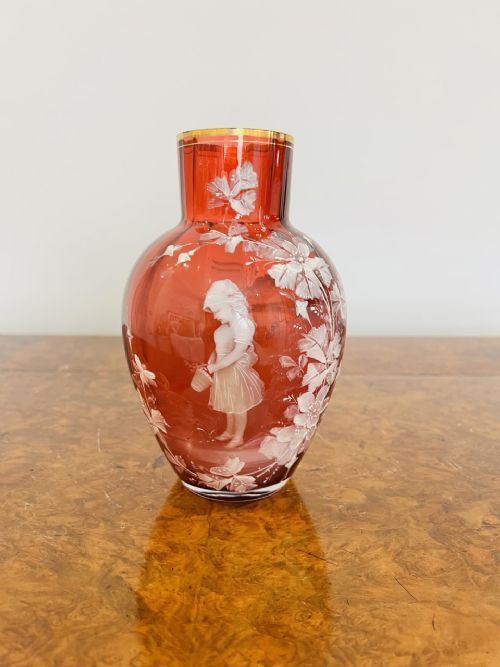
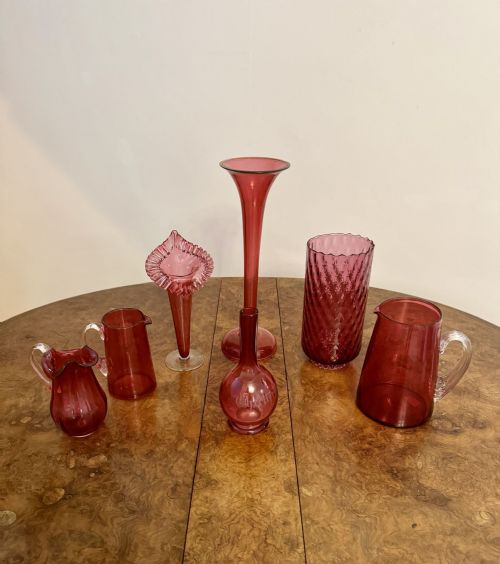
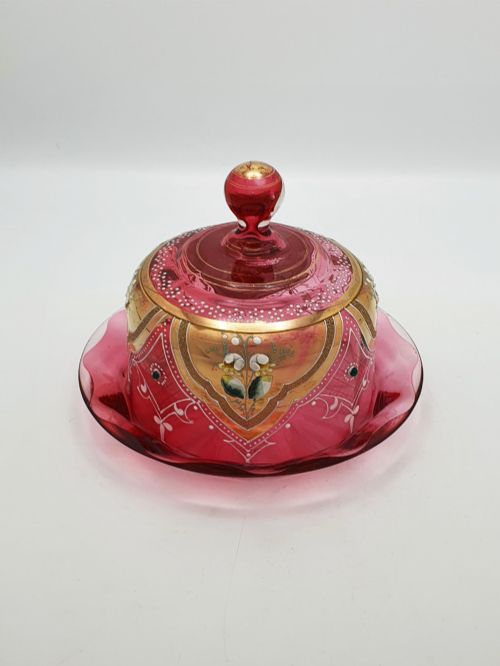
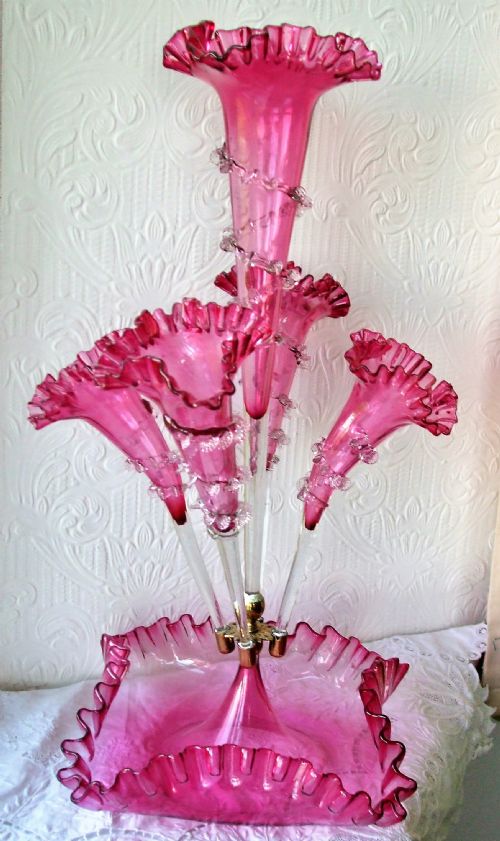
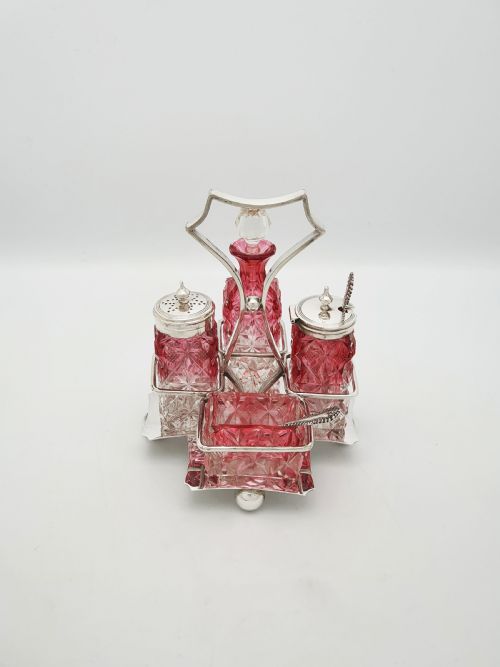
Antique Collection of Victorian Quality Cranberry Glass Items, 1880
Priced at £685 from London City Antiques
Production of antique cranberry glass took off in Britain during the mid-nineteenth century.
Look for the expansion of shapes after the glass tax repeal in 1845. Factories could finally experiment with heavier, larger forms.
The Bohemian glasshouses dominated the earlier trade. They exported blanks to be decorated or sold finished pieces directly into the British market.
Late Victorian dining tables often featured full sets of this red glassware. It caught the gaslight well.
Stevens & Williams operated in Stourbridge and produced high-end cranberry forms from the 1830s onwards.
Thomas Webb & Sons also worked out of Stourbridge during the late nineteenth century. They often combined the red glass with intricate clear trails.
Many pieces remain unmarked. The wider Black Country region held dozens of smaller factories blowing similar domestic wares.
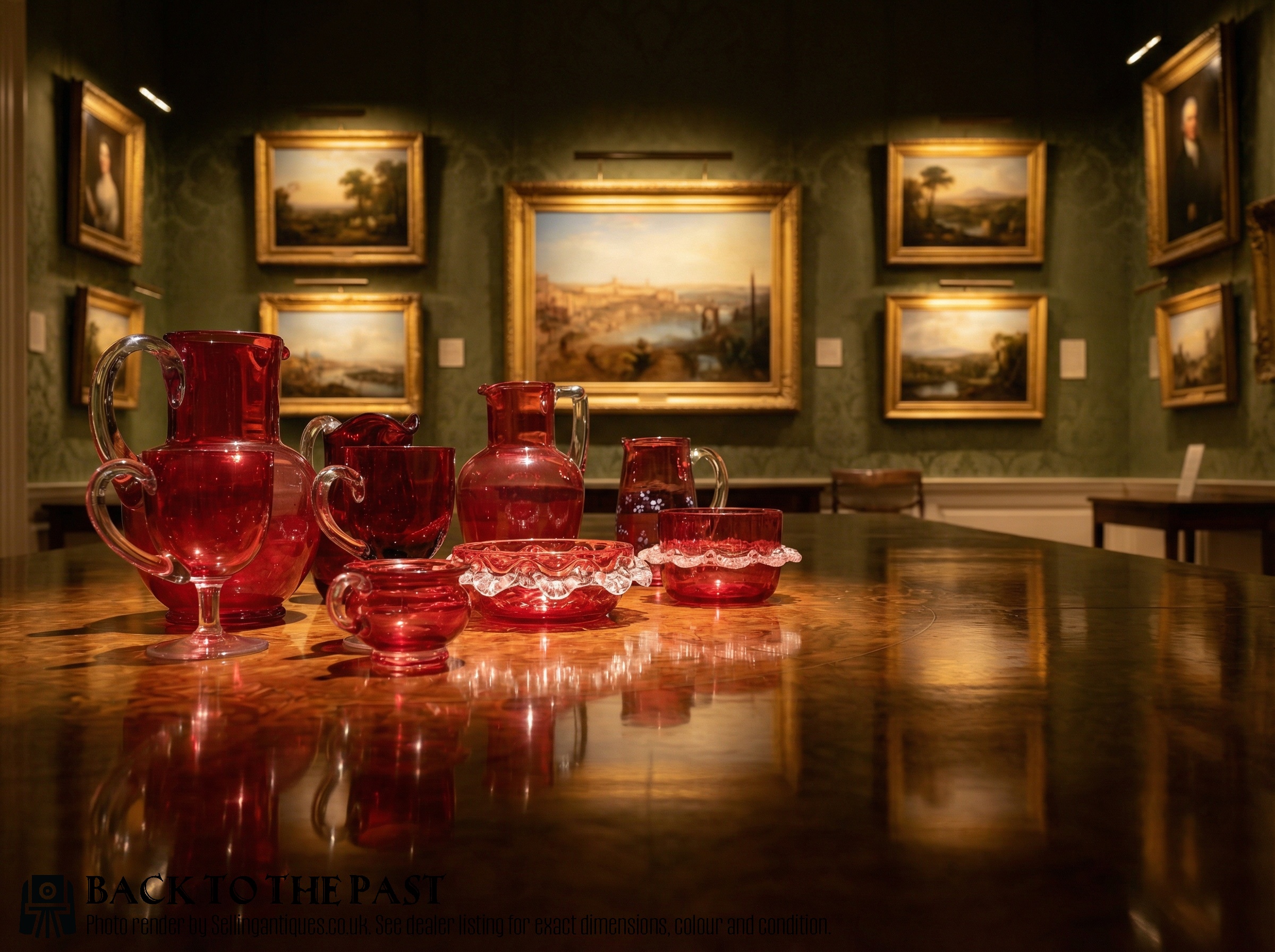
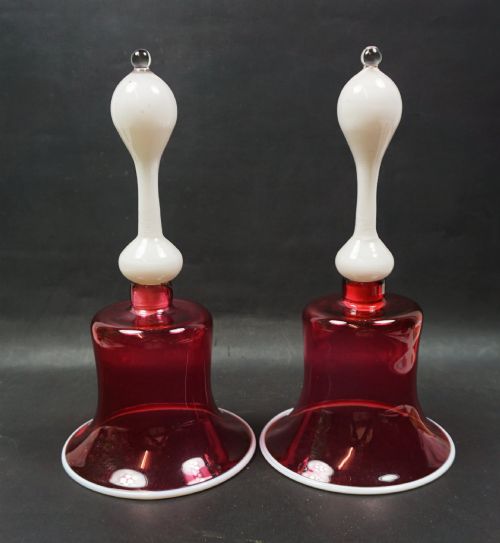
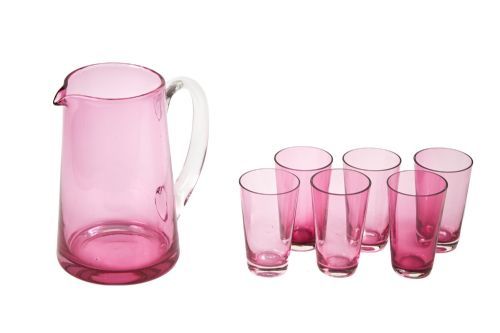
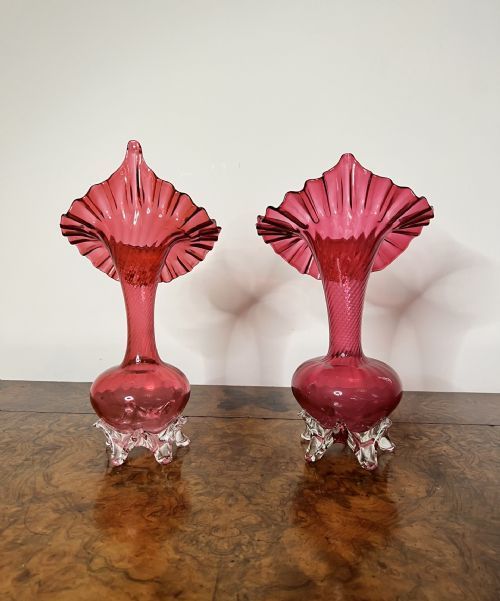
Quality Collection of Antique Victorian Cranberry Glass, 1880
Priced at £525 from Unique Antiques by Emma Jade
The 2026 retail price guide for Antique Cranberry Glass is drawn from a proprietary archive of over 1.1 million retail prices indexed by Sellingantiques since 2003. This guide relies exclusively on their own internal data; no external sources or auction records are used.
Analysing nearly 25 years of UK antique market history alongside current retail values, the data indicates that typical UK retail prices for Antique Cranberry Glass range between £100 and £600. Entry-level prices generally fall under £100 and premium examples upwards of £600.
Blown shapes usually carry a pontil mark on the base. A rough or polished scar shows where the rod broke away.
Applied clear glass trails often spiral around the neck or body of jugs and decanters.
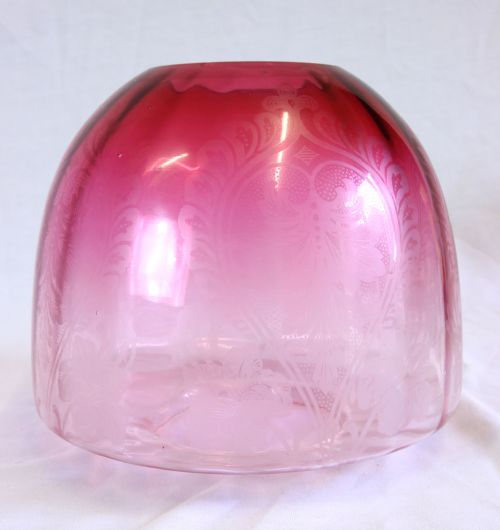
Ruffled or crimped rims are very common on bowls and shades.
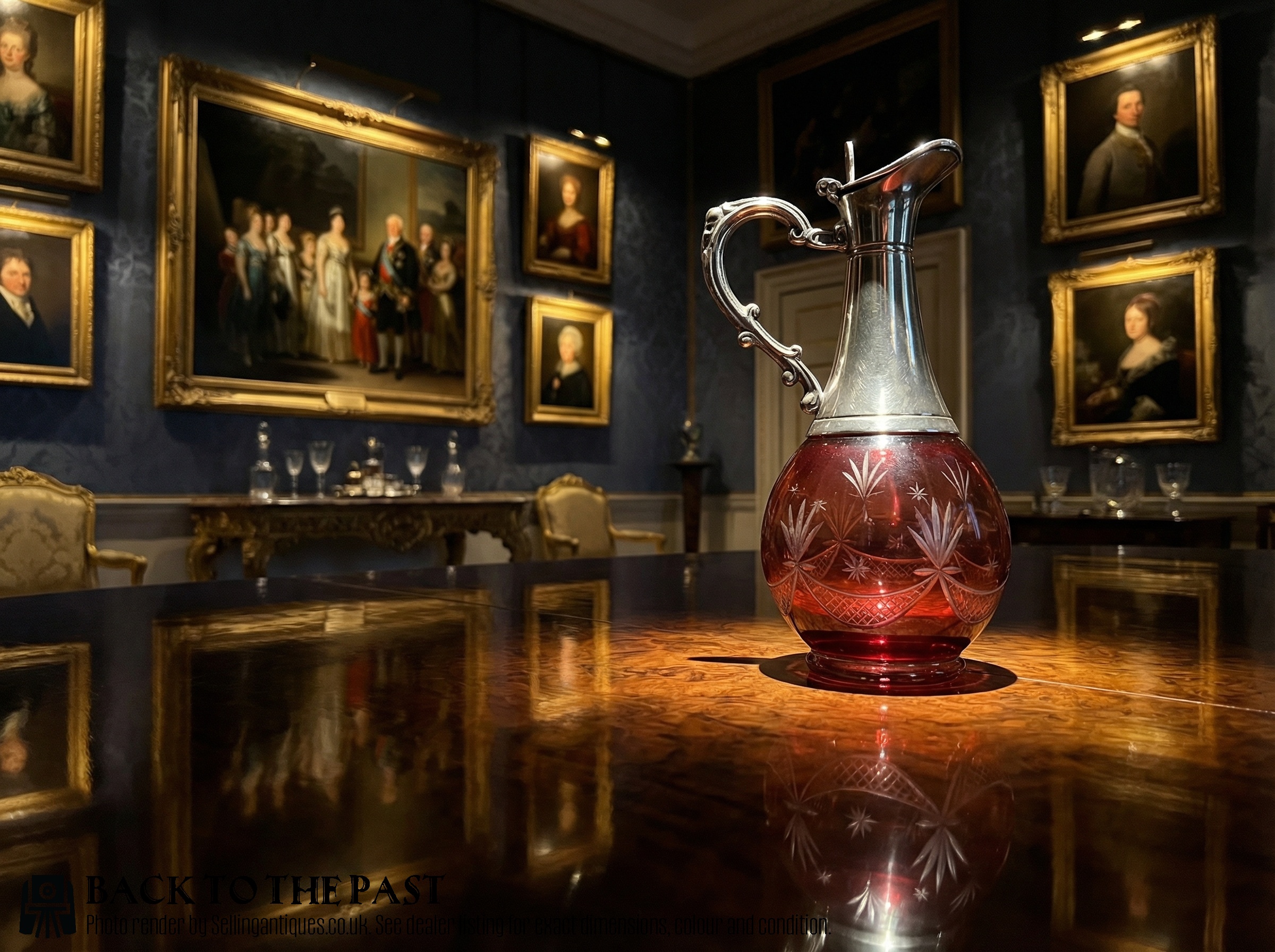
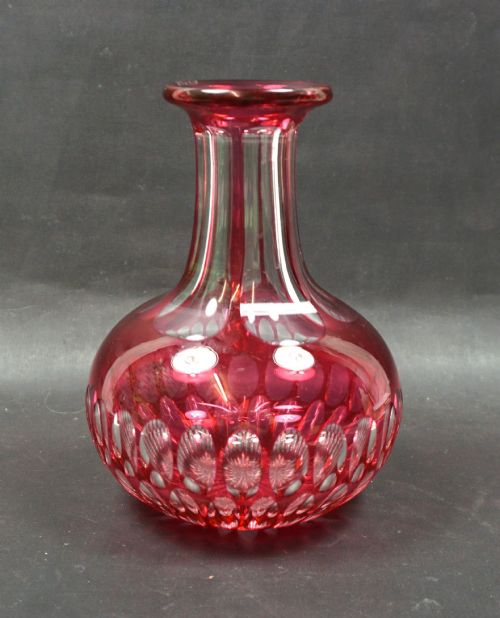
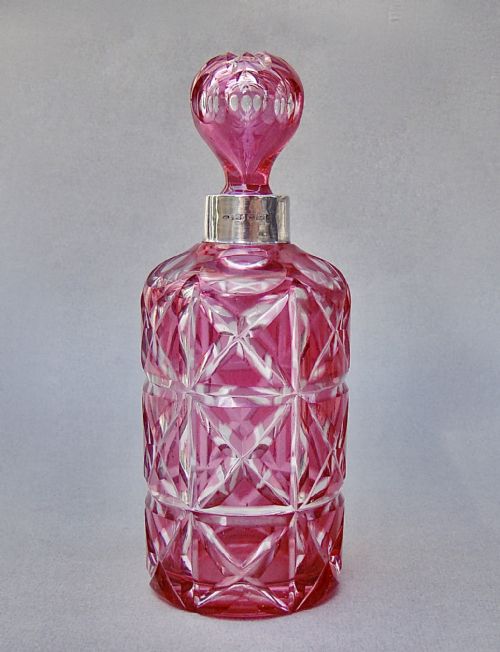
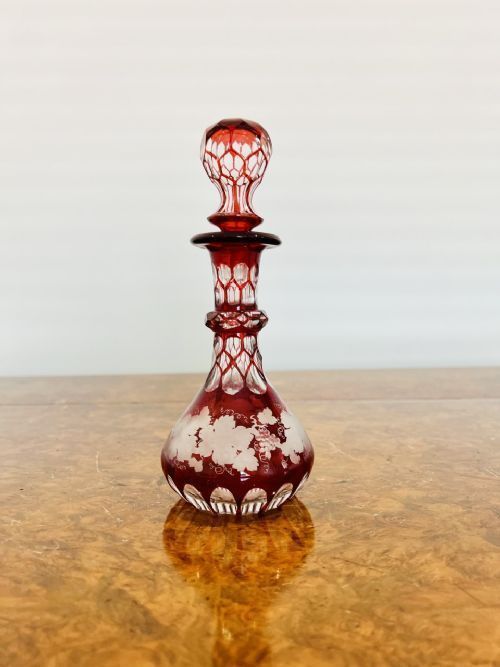
Quality Antique Edwardian Cranberry Glass Wine Decanter, 1900
Priced at £385 from Unique Antiques by Emma Jade
The gather required precise temperature control. Too much heat and the gold chloride turned the batch a muddy brown.
Blowing into a patterned mould created optic ribs or diamond patterns on the finished surface.
Hand-tooling shaped the crimped edges while the rim was still soft. Pincers pulled the hot glass into deep ruffles.
"The gold chloride formula relies on a tiny amount of actual metal. A single coin could tint an entire crucible of glass."
"Pale pink pieces often come from the very end of a batch. The remaining glass held less of the active colourant."
"Mixing a little tin into the gold solution brightens the final shade. It produces a cleaner ruby tone."
Based on almost 25 years of Sellingantiques UK antique market data, Antique Cranberry Glass appeared 1622 times (out of 1,100,000 antiques) which gives it a rarity score of 72/100.
This score measures scarcity within the Sellingantiques archive only and is not a survey of the entire antiques market, so these statistics may not be indicative of the general availability of Antique Cranberry Glass elsewhere.
You can use most of these pieces for their original purpose. Hand washing is the rule though. Modern dishwashers will etch the surface and leave a permanent cloudy residue over time.
Keep them away from sudden temperature changes. Pouring boiling water into a cold jug risks cracking the base. Warm the glass gradually if you plan to serve hot drinks.
Hand-blown bowls often sit slightly unevenly. The pontil mark on the base or a slight asymmetry in the foot rim can cause a minor rock. Factory-produced blanks are generally flatter but earlier hand-finished wares show these variations.
Check if the base has a deep polished dip. Sometimes the grinder took off too much glass when smoothing the pontil scar. This uneven grinding leaves the bowl resting on a narrow outer edge.
White vinegar and water shifts most hard water stains. Leave it to soak overnight before rinsing out the vessel.
Stubborn clouding might be sickness in the glass itself. This happens when the chemical structure breaks down and nothing will wash that away.
The glassblower applied the handle while both parts were hot. They attached the top first and then pulled the hot trail of glass down to form the loop.
The bottom join was snapped off and pressed into the body. This leaves a thick pad of clear glass that often feels rough or irregular to the touch.
Tool marks are common around these joins. Pincers or shears were used to shape the terminal before the glass cooled down.
Please note: This Antique Cranberry Glass guide and its associated pricing data are provided for general informational purposes only. It does not constitute formal financial, investment, or appraisal advice and should not be relied upon as the sole basis for any commercial activity, purchasing, or sales decisions. Sellingantiques.co.uk accepts no liability for any actions taken in reliance on this information. Always consult with a qualified professional or independent appraiser.
