




A 2026 Guide by Sellingantiques
Pharmacies needed uniform storage for hundreds of distinct preparations. Antique apothecary bottles solved this problem.
Look for the shift from free-blown forms to moulded glass. This happened gradually across the nineteenth century as industrialisation took hold.
Regulatory acts slowly changed how chemists worked. Poison laws meant dangerous contents required distinct, tactile glass shapes.
Early examples were often imported from continental Europe before local glasshouses captured the market.
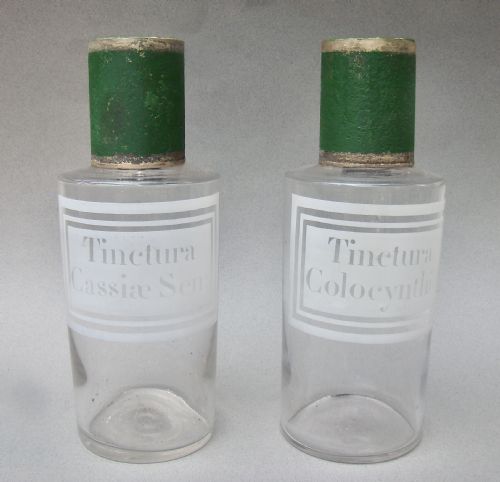
Paper labels on standard shop rounds routinely replaced the older style of fired enamel lettering when a business changed hands.
York Glass Company dominated the supply of these vessels to chemists across Britain during the late nineteenth century.
Beatson, Clark & Co. in Rotherham also produced vast numbers of medicine and shop rounds from the 1830s onwards.
Many bottles lack factory marks. Wholesalers simply bought blanks in bulk and applied custom labels for regional chemists.
The 2026 retail price guide for Antique Apothecary Bottles is drawn from a proprietary archive of over 1.1 million retail prices indexed by Sellingantiques since 2003. This guide relies exclusively on their own internal data; no external sources or auction records are used.
Analysing nearly 25 years of UK antique market history alongside current retail values, the data indicates that typical UK retail prices for Antique Apothecary Bottles range between £200 and £1,000. Entry-level prices generally fall under £200 and premium examples upwards of £1,000.
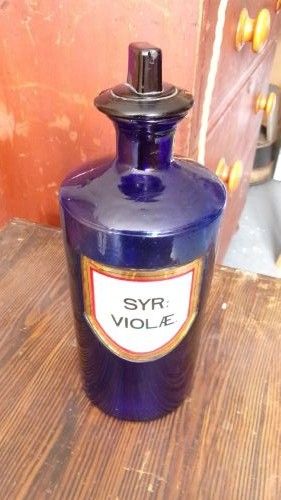
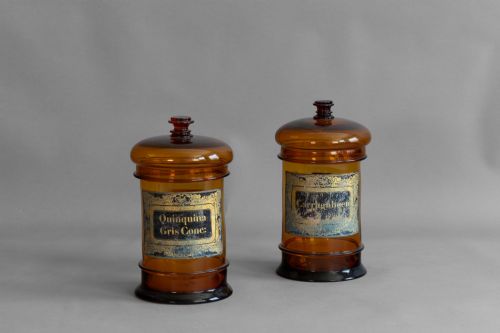
Recessed glass labels backed with gold leaf are a classic feature of late Victorian shop rounds.
Turn the piece over to find a pontil mark on older blown examples. This scar shows where the glassmaker snapped off the iron rod.
Ribbed or hobnail textures quickly identify poison vessels. The law required these to be recognisable in the dark by touch alone.
Craftsmen free-blew the earliest vessels without a mould. This resulted in asymmetrical shapes and varying glass thickness.
Two-piece hinge moulds became the standard by the mid-nineteenth century. You'll usually trace a faint seam running up the sides.
Stoppers were individually ground to fit a specific neck. They drop in snugly to create an airtight seal protecting the chemicals.
"Some rare surviving examples still retain their original wax seals over the stopper. This guaranteed the contents remained undisturbed during transit."
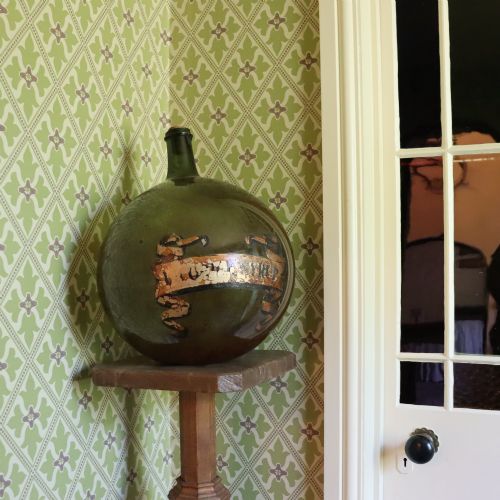
"Apothecaries often reused imported olive oil and wine vessels in the early days. They simply pasted their own paper labels over the old ones."
"Matching sets of hundreds of bottles were sometimes offered as a complete package to young chemists opening their first high street shop."
Based on almost 25 years of Sellingantiques UK antique market data, Antique Apothecary Bottles appeared 143 times (out of 1,100,000 antiques) which gives it a rarity score of 97/100.
This score measures scarcity within the Sellingantiques archive only and is not a survey of the entire antiques market, so these statistics may not be indicative of the general availability of Antique Apothecary Bottles elsewhere.
Rinse them out with warm, soapy water and a soft bottle brush. Avoid boiling water, as thermal shock will easily crack old glass.
If a cloudy residue remains, it is likely sickness etched into the glass by the original chemical contents. Scrubbing will not remove this damage, so dealers leave it alone as part of the object's history.
Take your time. Forcing a stuck closure almost always ends in a broken neck or a sheared stopper finial.
Some dealers wrap a hot, damp cloth around the neck to gently expand the outer glass. Tap the stopper lightly with a wooden spoon handle while twisting.
If it still sits tight, leave it. A seized stopper is common in antique apothecary bottles that once held sticky tinctures.
Those symbols are historic apothecary weights and measures for drachms and ounces. Chemists used them for quick visual reference.
Latin text replaced alchemical symbols by the nineteenth century.
Latin served as the universal language of medicine and science across Europe. It allowed a complex prescription written by a physician in London to be accurately dispensed by a pharmacist travelling abroad.
Using traditional abbreviations also kept the exact nature of the treatment private from the patient.
This guarded the trade secrets of the profession, preventing people from trying to source the raw materials and mix the cures themselves.
Please note: This Antique Apothecary Bottles guide and its associated pricing data are provided for general informational purposes only. It does not constitute formal financial, investment, or appraisal advice and should not be relied upon as the sole basis for any commercial activity, purchasing, or sales decisions. Sellingantiques.co.uk accepts no liability for any actions taken in reliance on this information. Always consult with a qualified professional or independent appraiser.
