



Antique Windsor Chairs
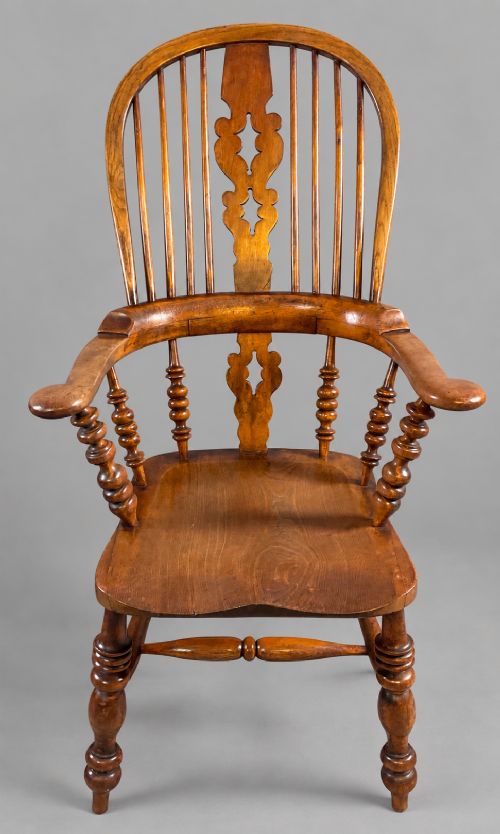
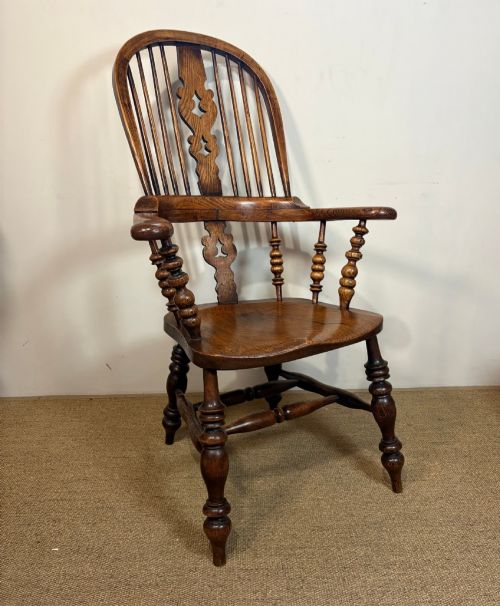
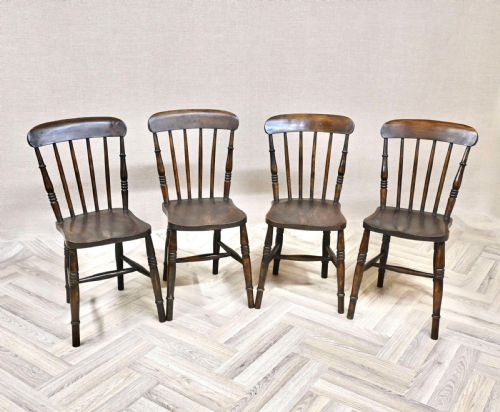
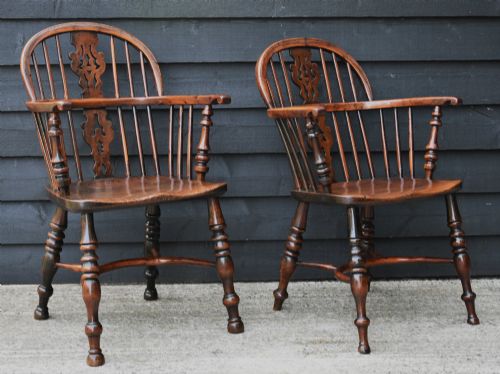
A Windsor is an English country chair with a solid plank seat into which the legs, sticks and back members are socketed, made for kitchens, taverns and gardens.
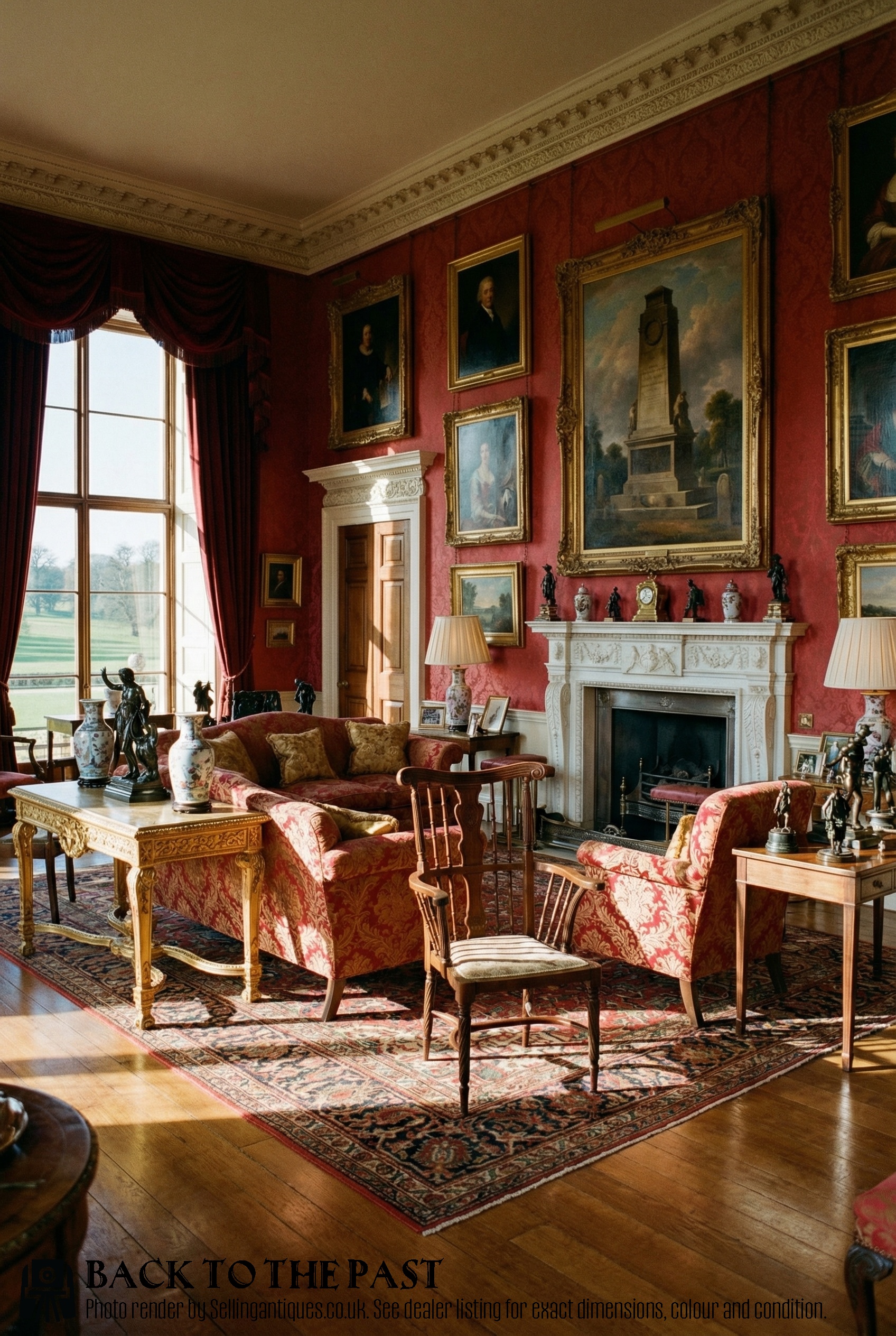
Antique Windsor Chairs
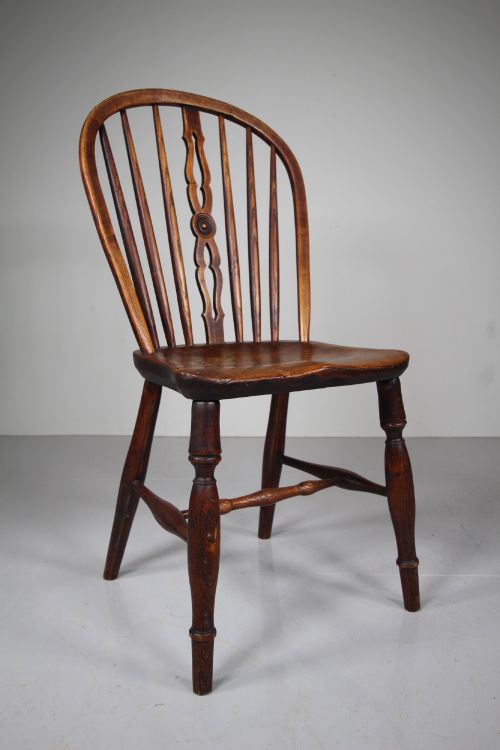
The construction is what makes a Windsor. Rather than a frame of rails and joints, a shaped solid seat takes the sockets: turned legs below, sticks or laths and a bent bow above. Cheap, strong and quick to build, which is why it became a trade in the Thames Valley, the East Midlands, the West Country and Wales from the 18th century onward.
Timber does most of the describing in these listings. Elm turns up in 759 titles, yew in 556 and ash in 474, with beech behind them, and "ash elm" appears as a single compound phrase in 113 - the seat cut from elm, the turned and bent parts from ash, beech, yew or fruitwood.
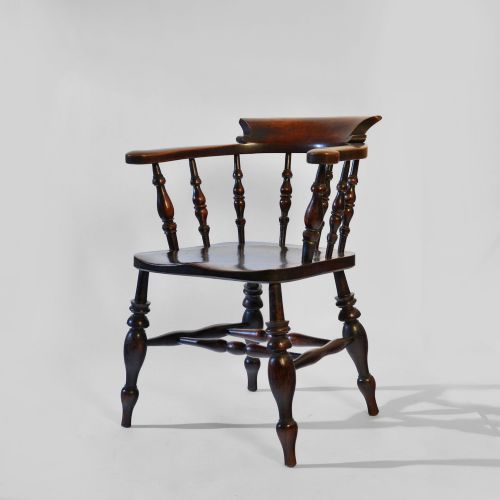
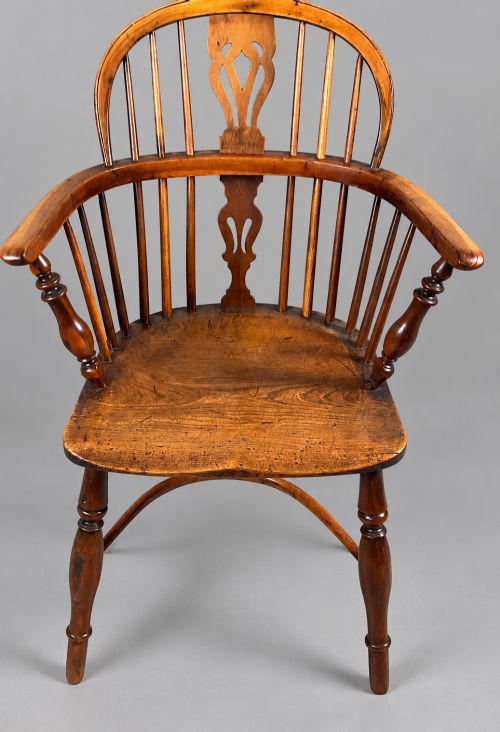
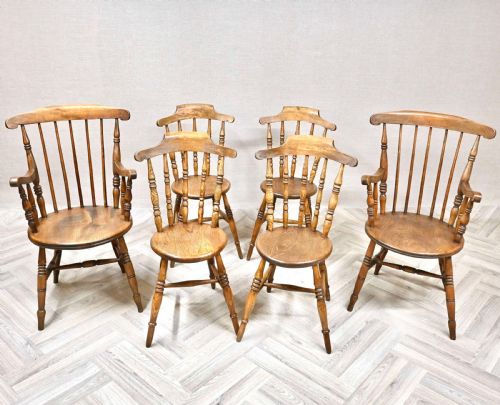
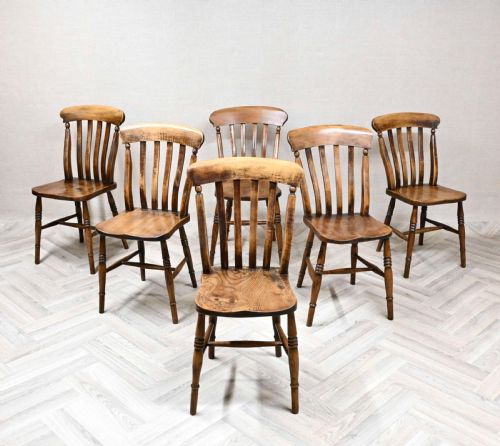
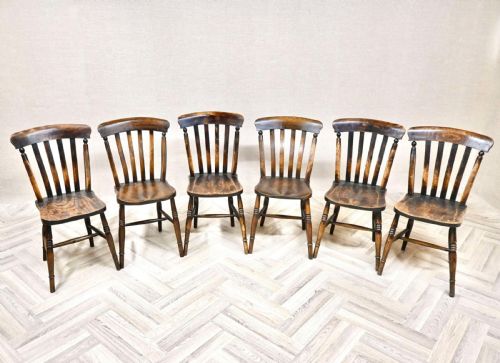
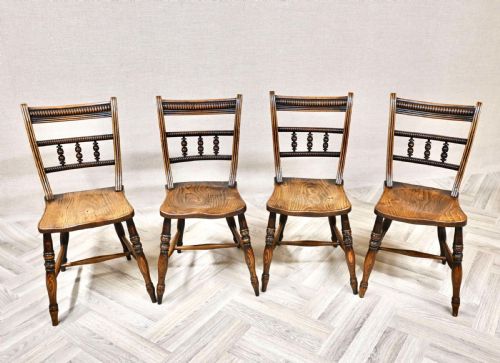
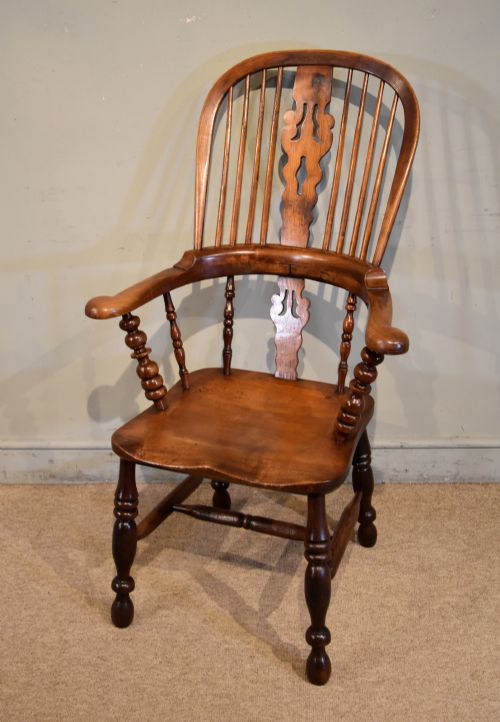
The chair you'll meet most often is a 19th-century ash-and-elm side chair sold as a Windsor kitchen chair, in a set of four or six. "Kitchen" sits in 680 titles and "chairs" plural in 930. Single armchairs are the other large group, described as high back, low back or broad arm, alongside smoker's bows and captain's chairs, and a steady minor line of children's chairs, high chairs and rockers.
Dating is broad. "19th Century" alone covers 1,587 listings, with Victorian and Georgian bands behind it; only 587 of 3,019 carry a clean year, and those run from 1750 to 1940. Edwardian and 1920s tags show the form still being made and listed well past 1900.
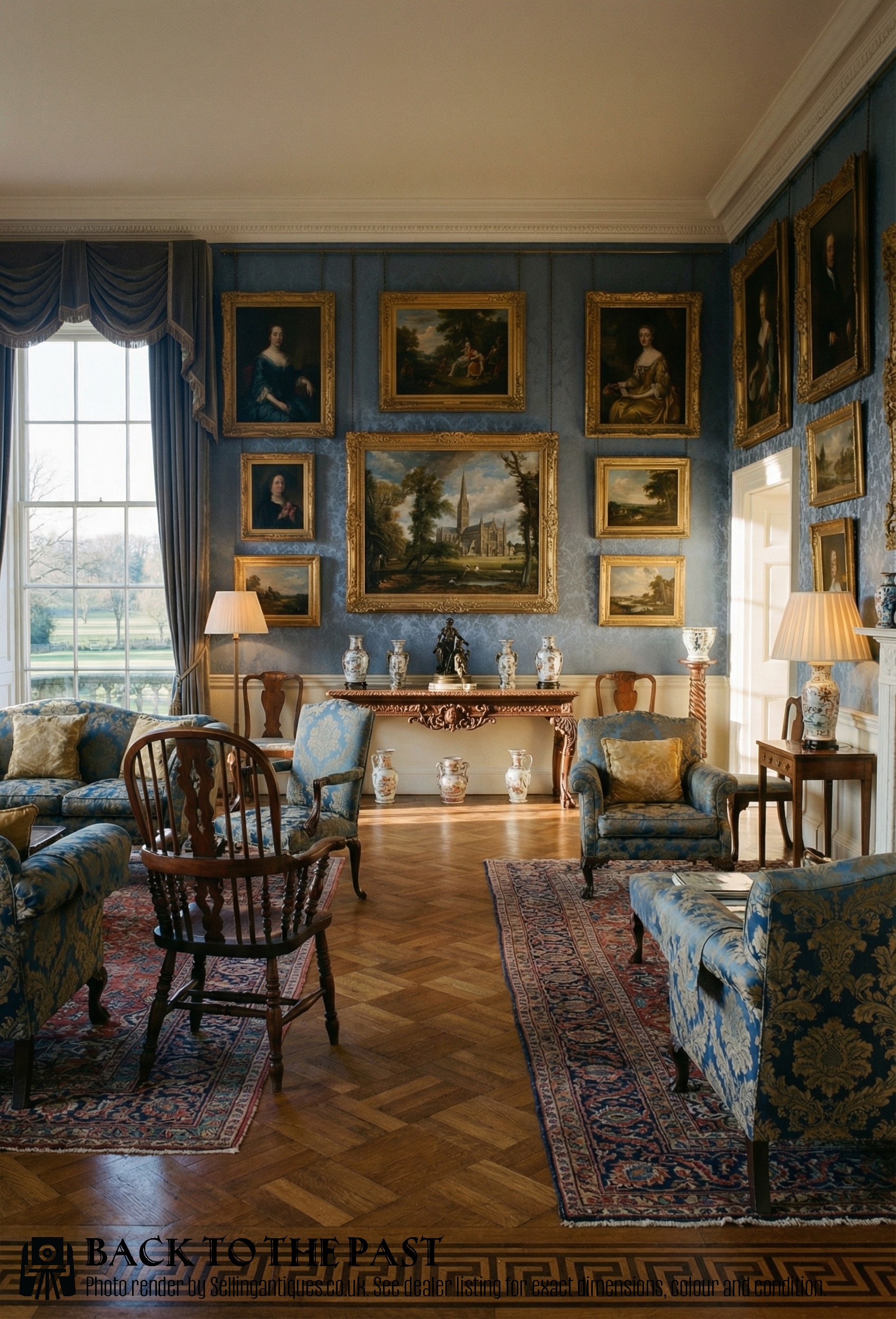
What Sets Them Apart
Timber sorts the range faster than anything else. Yew-wood chairs, and above all burr and pippy yew, sit in the upper reaches; plain beech-and-elm kitchen chairs sit at the bottom. Yew was harder to work and it shows in the price, which is why "yew wood" gets said in 383 titles rather than left to the description.
Numbers matter next. A single chair or a pair is one thing, a true set of six or eight another, and sets of ten and twelve appear only at the very top. Listings are careful to distinguish a true set from a harlequin, matched or assembled one, because chairs put together to look alike don't carry the same weight as chairs made together.
After that it comes down to who and where. A stamped or named workshop pushes a chair upward, as does an identified region - Thames Valley, Nottinghamshire, Lincolnshire, Welsh, West Country, Yorkshire, Scottish. So does an 18th-century or Georgian attribution, and so does an unusual back: lobster pot, panel back, ball back, lyre back and bullseye each turn up only once or twice across the whole archive.
Antique Windsor Chairs Retail Price Guide 2026
Typical UK retail prices for windsor chairs, calculated from the Sellingantiques database of over a million retail prices indexed since 2003. This retail price guide relies exclusively on Sellingantiques data; no external sources or auction records are used, so the figures do not describe the wider market.
Around three hundred Windsor chairs are listed on Sellingantiques each year, from more than two hundred dealers.
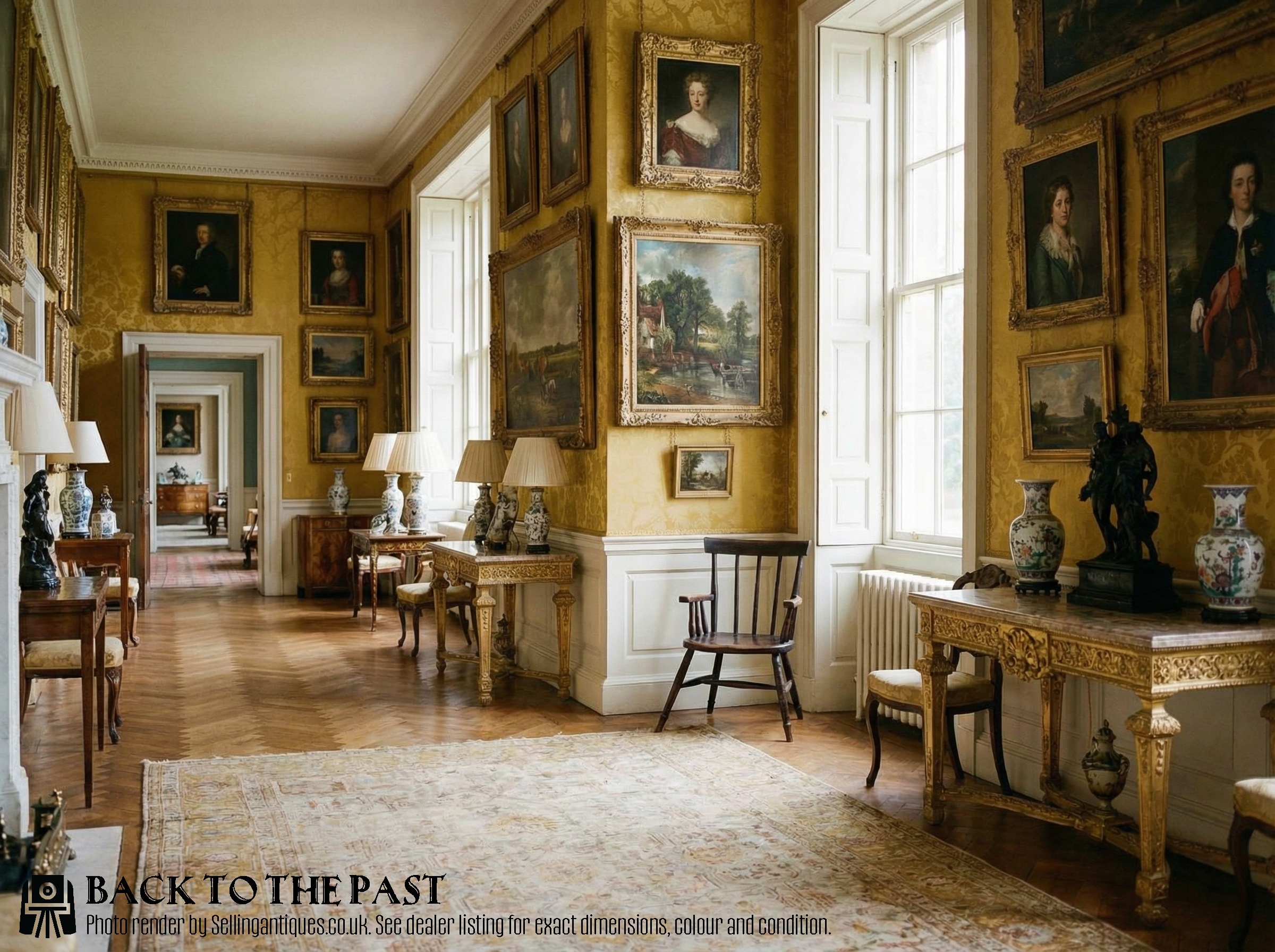
Nicholson of Rockley
The Antique Windsor Chairs Glossary
- Stick back
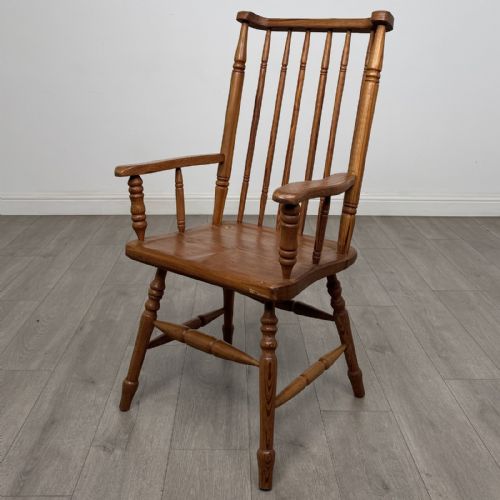
- A back of plain turned or shaved spindles socketed into the seat and top rail. Named in 96 titles, and the plainest of the back patterns.
- Lathback
- Flat vertical laths instead of round sticks. It appears in 69 titles, spelled both lathback and lathe back.
- Hoop back
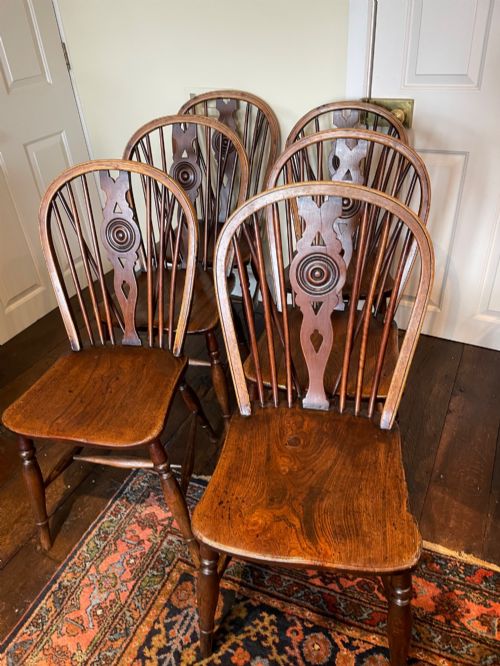
- The back framed by a single steam-bent hoop, in 80 titles, with "bow" used in a further 62 for much the same idea.
- Comb back
- The flat top rail carried up above the sticks like the head of a comb. In 68 titles.
- Wheel back
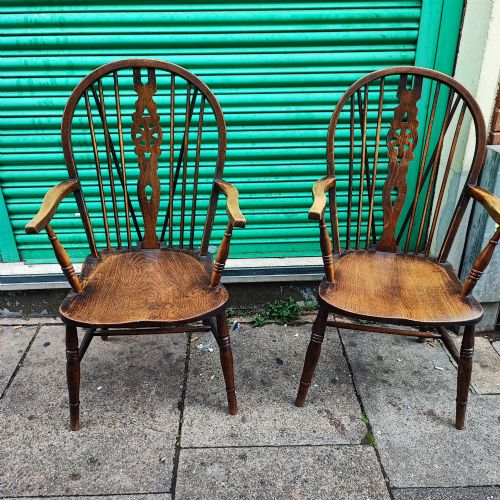
- A central splat pierced as a wheel or roundel. Written both wheel back and wheelback, in 53 titles.
- Smoker's bow
- A low armchair with a continuous bow forming arms and back on turned supports, also listed as a captain's chair.
- Crinoline stretcher
- A curved hooped stretcher joining the front legs, rather than a straight turned one. Named now and then in the descriptions.
- Penny seat
- A seat with a small round dished hollow worked into it, a note that recurs across the archive.
Antique Windsor Chairs: Frequently Asked Questions
What wood are Windsor chairs made from?
Elm for the seat is the常 note, appearing in 759 titles, with ash in 474 and beech in 111 for the turned and bent parts. The phrase "ash elm" is used as one compound in 113 titles.
Yew is the other big one, in 556 titles. Fruitwood turns up as well, and burr or pippy yew is the scarcest timber note in the archive.
How many chairs come in a set?
Sets of four and six are the most repeated shape in these listings, with eight also common. Sets of ten and twelve exist but appear only at the very top of the range.
Singles and pairs are widely listed too - "pair" is in 223 titles. Roughly a quarter of the archive is armchairs, usually sold on their own.
Why is Rockley mentioned so often?
One small East Midlands village dominates the maker vocabulary. Rockley appears in 97 titles and nearby Worksop in 59, with Retford, Gamston, Grantham and Sleaford named alongside them.
These are the yew-wood chairs, and the named-workshop examples run high. The name may be stamped on the chair or given as an attribution.
Are Windsor chairs Georgian or Victorian?
Both, and later. "19th Century" alone accounts for 1,587 listings, with Victorian on 420 and Georgian on 139.
Eighteenth-century attributions number 96 and sit almost entirely in the upper reaches. At the other end, Edwardian tags and scattered 1920s dates show the form still being listed well past 1900.
What does harlequin mean in a chair listing?
It means the chairs were assembled to look alike rather than made together as one set. "Matched" and "assembled" are used the same way.
Dealers also flag the opposite, describing a group as a true set. The distinction is made deliberately, because a true set of six or eight carries more than an assembled one.
Which back patterns are unusual?
Stick back, lathback, hoop back, comb back and wheel back are the everyday patterns, each named in dozens of titles.
Then there are the ones that turn up once or twice across the whole archive: lobster pot, panel back, ball back, lyre back, bullseye, Prince of Wales and a heraldic lion back.