


Antique Trumeau Mirrors
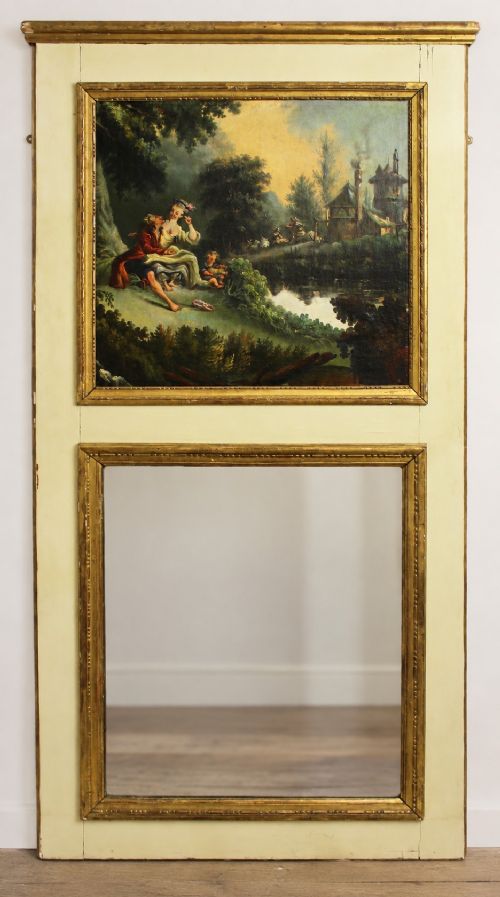
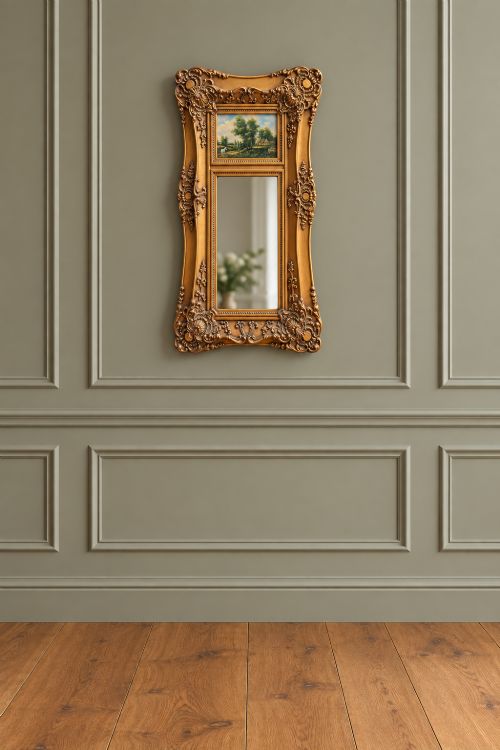
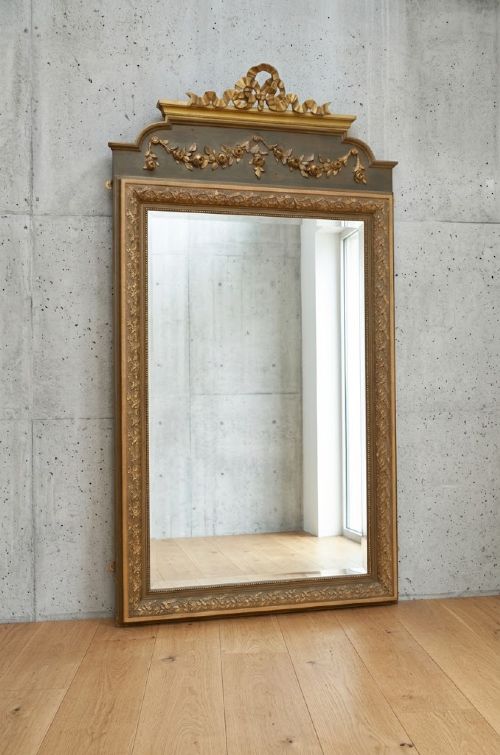
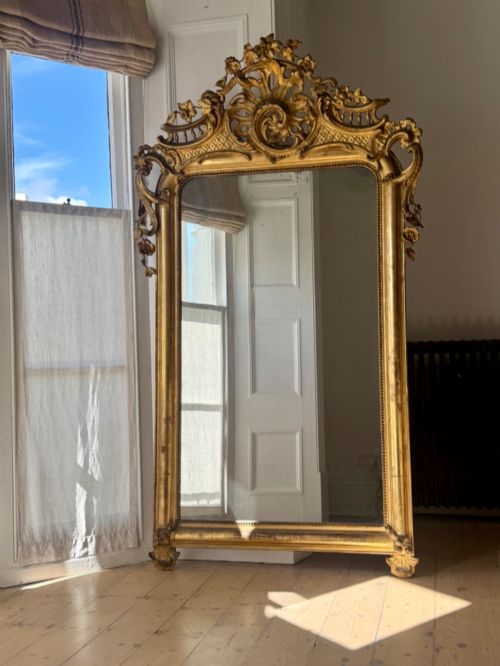
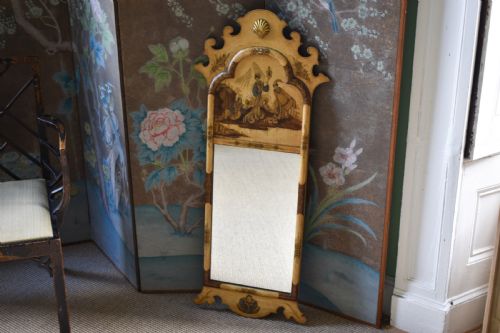
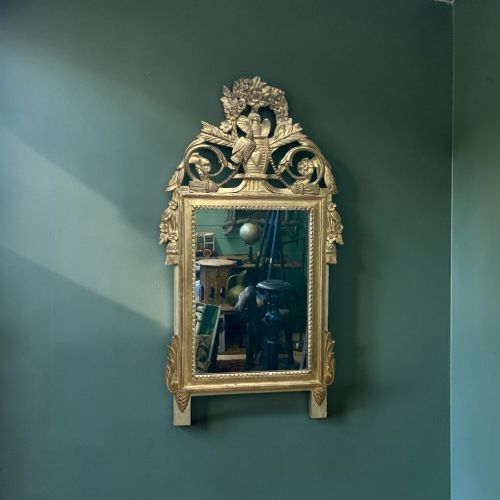
A tall wall mirror in a carved wood and gesso frame, commonly French, with a painted panel or moulded upper section set above the plate, made for the pier of wall between windows or over a chimneypiece.
Antique Trumeau Mirrors
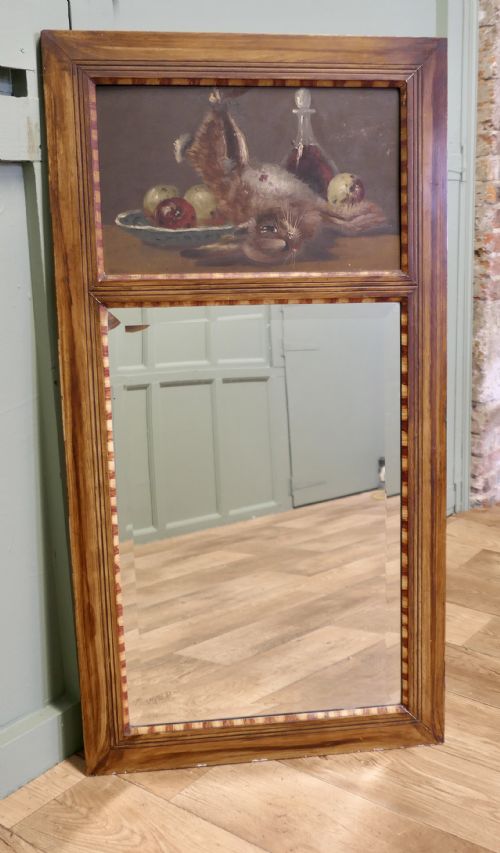
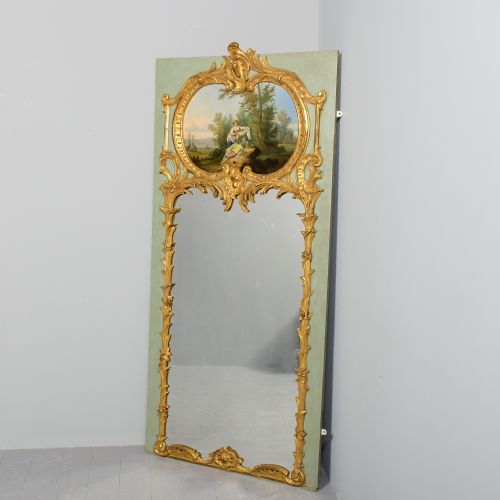
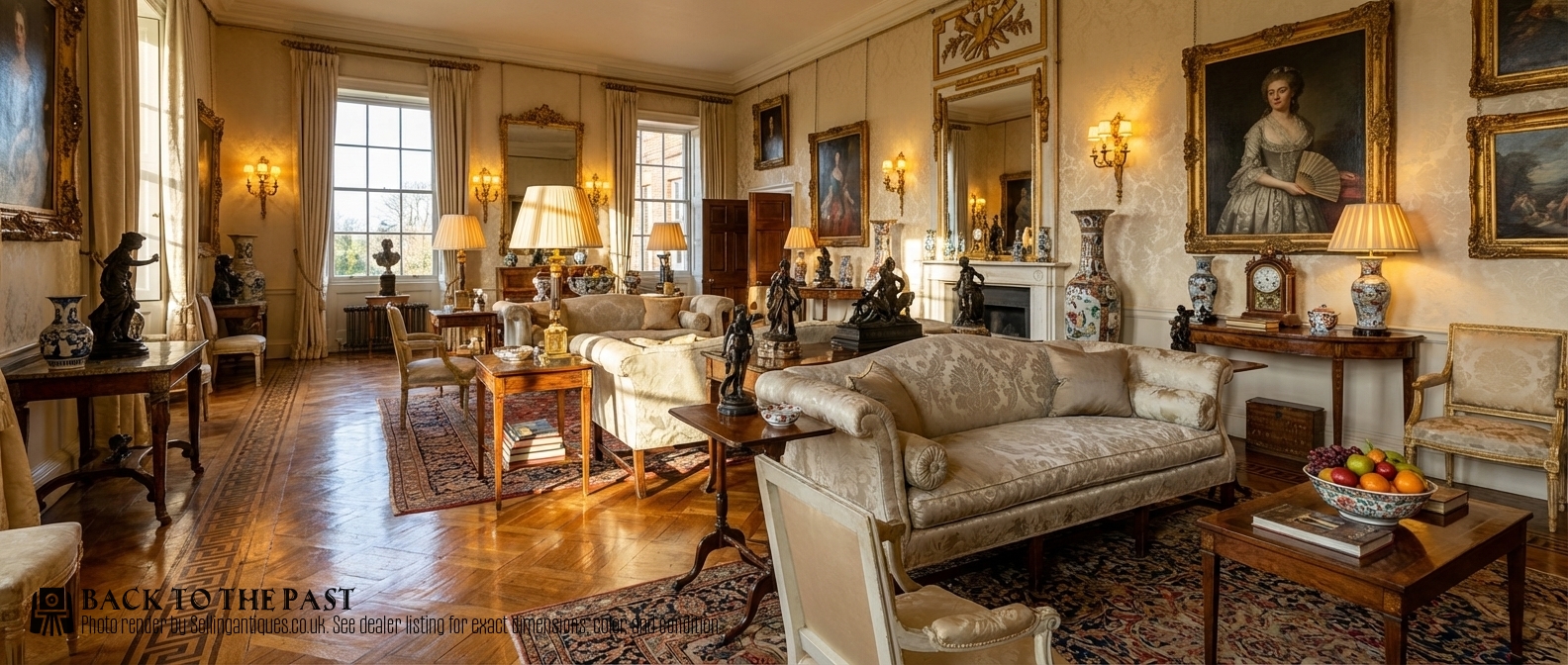
The name comes from the French word for the pier of wall between two windows or above a fireplace. From the eighteenth century a tall mirror was fitted there as part of the panelling, and the form that grew out of it pairs a mirror plate with a decorative upper section inside one architectural frame. That upper register might be a painted panel, an oil on canvas, a relief plaque or a moulded cornice.
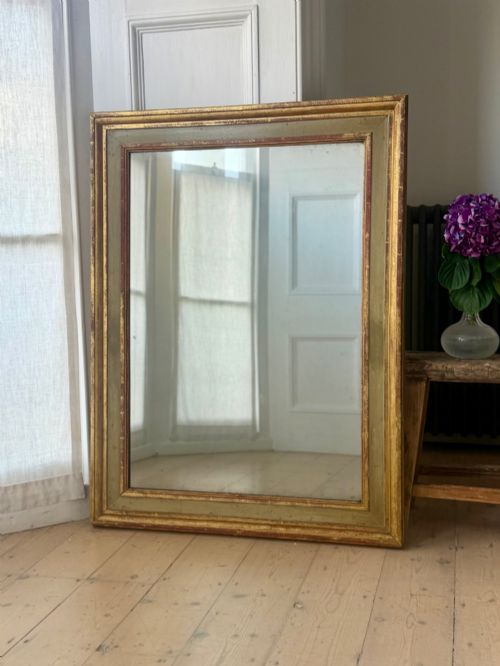
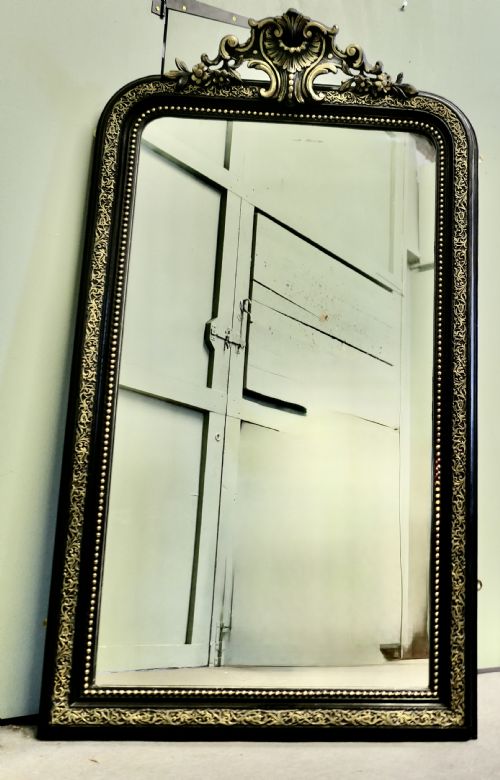
The version you are most likely to meet on Sellingantiques is a 19th-century French carved wood and gesso frame, painted, gilded or both, of tall upright proportions. Around six in ten titles say French, and the frames are described as gilt, painted, carved, gesso or parcel gilt. The word large turns up in a good quarter of titles.
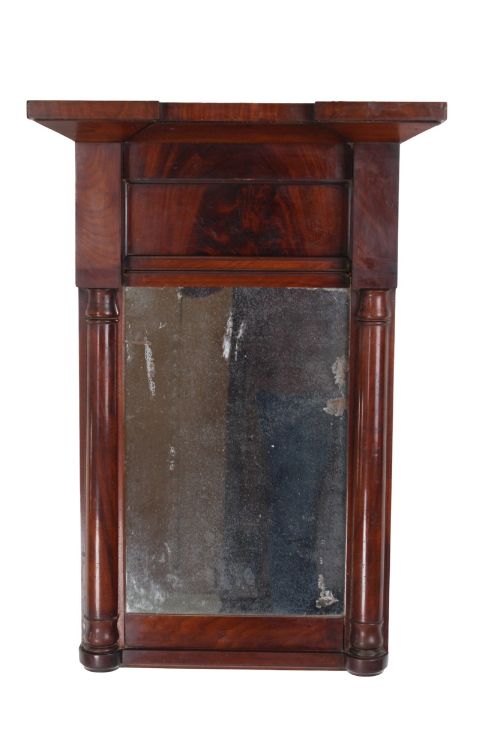
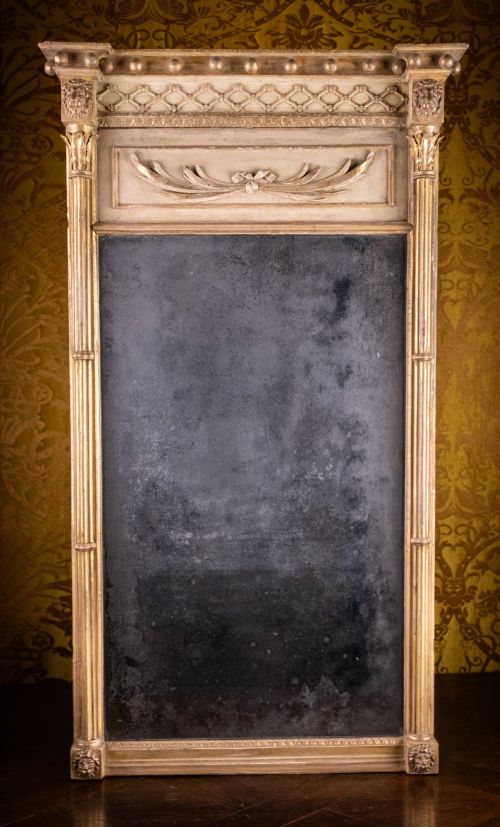
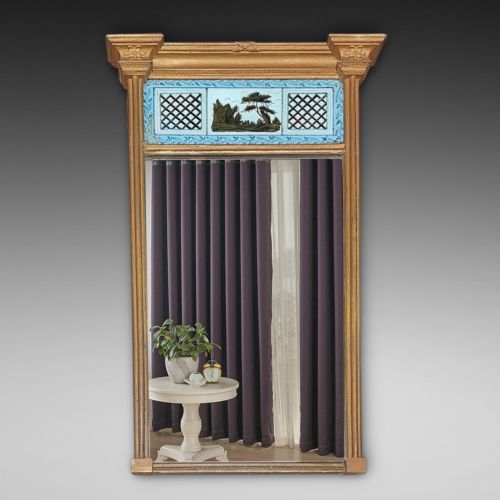
The heading covers more than the strict French definition. Pier mirrors and pier glasses run to about a quarter of the archive and are stronger in current stock, taking in Regency, Biedermeier, Dutch, Swedish and Georgian frames. Overmantles are a smaller group, roughly one in fourteen. Carved giltwood frames, some with verre eglomisé panels, sit under a tenth, and walnut or mahogany frames account for about one in ten.
Dating on this site is mostly to a century. Sixty-five listings say no more than "19th Century", and the dated field as a whole runs 1750 to 1930. Where decades are given they cluster in the 1860s to 1890s, with a second group in the early 20th century. Eighteenth-century examples are scarce. Style names in titles, Louis XVI, Empire, Queen Anne, Directoire, often carry the word "style", so they describe the design rather than the date.
Where The Range Splits
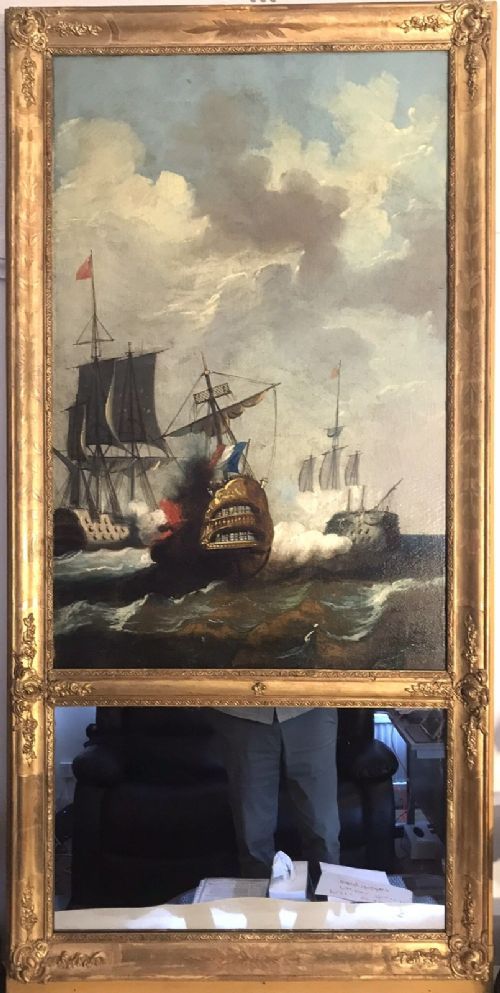
The upper panel does most of the work. Listings that name a subject, a pastoral oil, a neo-classical scene, a relief of Bacchus and cherubs, a seascape of galleons at sea, a reverse glass print, sit well above the plain entries that say only French trumeau mirror. A painted still life or a religious scene gives the frame something to be about.
Scale is the other lever. Large turns up in a quarter of titles, stated heights climb to 218cm and one piece at 260cm, and the biggest measured frames sit at the very top of the range. Construction pulls the same way: carved wood and gesso recur through the upper half, while gilt composite is named on mid-range pieces.
Surface counts too. Titles claiming original painted decoration, original gilt, original glass or a mercury plate recur among the higher-priced examples, where later regilding and replaced plates do not. Pairs are the exception across the whole archive, only about half a dozen of them, and every one falls in the highest band.
Antique Trumeau Mirrors Retail Price Guide 2026
Typical UK retail prices for trumeau mirrors, calculated from the Sellingantiques database of over a million retail prices indexed since 2003. This retail price guide relies exclusively on Sellingantiques data; no external sources or auction records are used, so the figures do not describe the wider market.
19th Century is the period label used most on Sellingantiques for trumeau mirrors, with the 1880s next and the 1870s third.
The Antique Trumeau Mirrors Glossary
- Trumeau
- A tall mirror made for the wall pier or overmantel, usually with a decorative panel above the plate.
- Pier mirror
- A narrow upright mirror for the wall between two windows; fifty titles in the archive use the word pier.
- Overmantle
- A mirror designed to sit above a chimneypiece, spelled overmantel as often as not, and named in fifteen titles.
- Gesso
- Chalk-and-size ground laid over carved wood, then gilded or painted. Named in fifteen titles.
- Parcel gilt
- Partly gilded, with gilding on selected mouldings and the rest of the frame left painted.
- Verre eglomisé
- Glass decorated on the reverse, often with gilding, and appearing on several Regency-labelled pier mirrors.
Antique Trumeau Mirrors: Frequently Asked Questions
Are all trumeau mirrors French?
No. Around six in ten titles say French, and the painted-and-gilt French frame is the core of the category.
Other origins turn up only rarely. Two Swedish, two Dutch, two Italian and a Biedermeier example or two account for nearly all the rest, alongside British Regency and Georgian pier glasses listed under the same heading.
How old are they usually?
The dated field runs 1750 to 1930, though fewer than half the listings carry a clean year.
Sixty-five are dated no more precisely than "19th Century", which makes that the single largest period entry. Where decades are given, the 1880s and 1870s lead, with a smaller early 20th-century group.
Eighteenth-century examples are scarce, with eight clean years before 1800.
What sits above the mirror plate?
Commonly a painted panel or oil on canvas. Subjects named in titles include still life, pastoral landscape, neo-classical scenes, cherubs, a religious scene, an equestrian oil and a seascape of galleons at sea.
Others carry a carved relief plaque, a reverse glass print, or simply a moulded cornice with no picture at all.
How big do they get?
Tall is the norm. Quoted heights include 170cm, 178cm, 181cm and 218cm.
The tallest recorded in a title stands 260cm, a little over eight and a half feet. Large is a recurring word in titles across the category.
Do they come in pairs?
Rarely. Only about half a dozen pairs appear across the whole archive, among them Empire pier mirrors, Louis XV style trumeaux, Second Empire mirrors and Geo IV giltwood.
Every one of them sits at the very top of the range.
Are trumeau mirrors always hung on the wall?
Almost always. The form was made for the pier of wall between windows or above a chimneypiece.
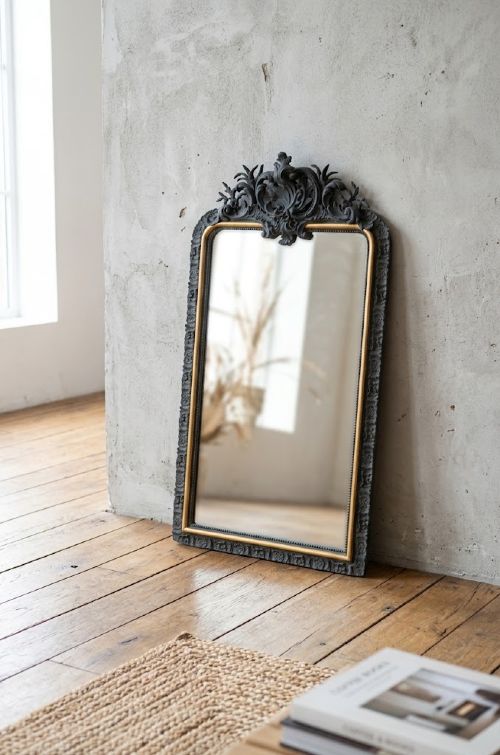
Two exceptions appear in the archive: one mirror mounted on its own console table, and an Italian example standing on a plinth. Terms like leaner, easel mirror and floor standing pier glass surface only once or twice.