

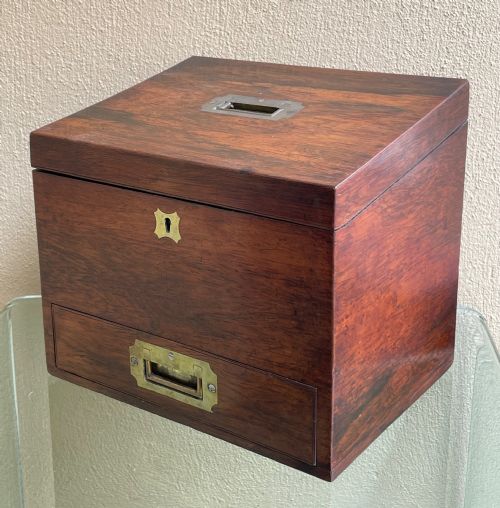
Antique Writing Boxes
A portable wooden box whose hinged lid opens into a sloping, usually leather-lined writing surface, fitted with inkwells, pen trays and compartments for paper, made for writing away from a fixed desk.
What Are Antique Writing Boxes?
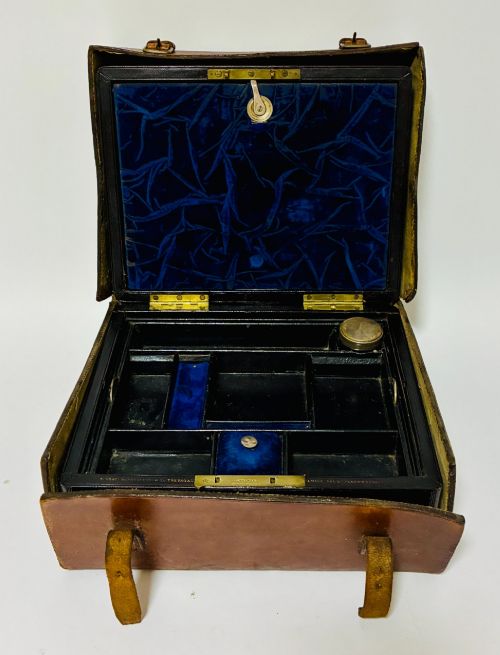
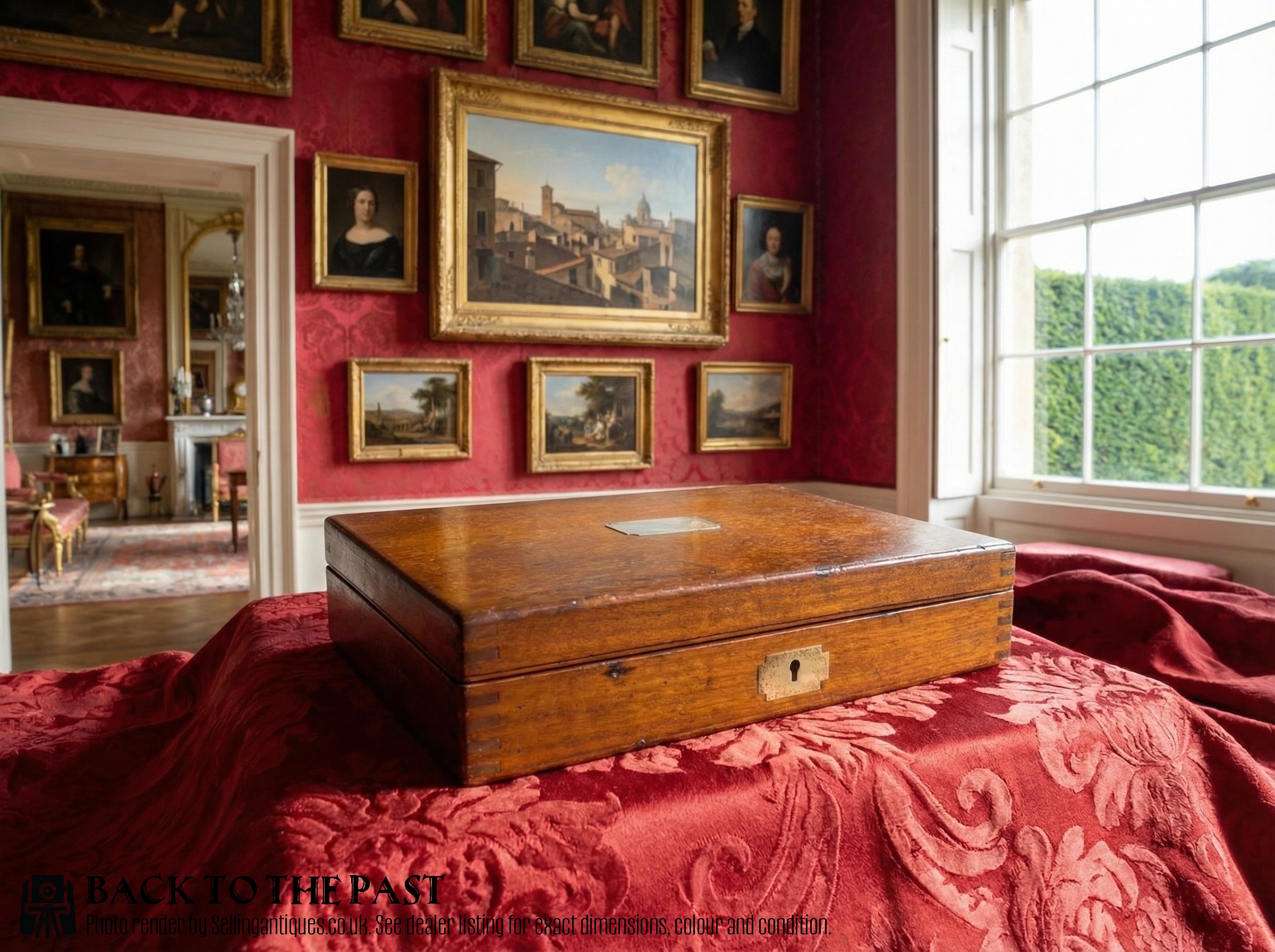
Open the lid and the two halves fall together into a slope, lined in leather or velvet, with inkwells and pen trays set into the well and space for paper underneath. The form spread from the later 18th century, when travel, military service and colonial postings made a self-contained desk useful, and faded once fountain pens and typewriters displaced the dip pen.
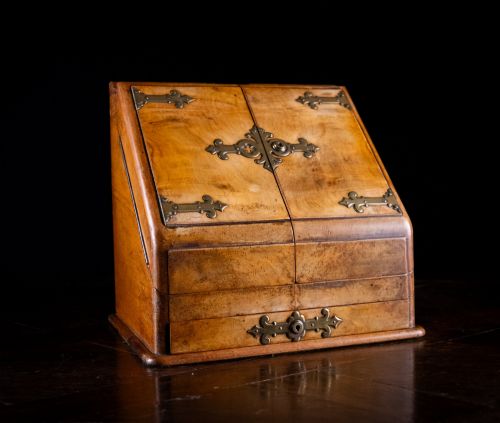
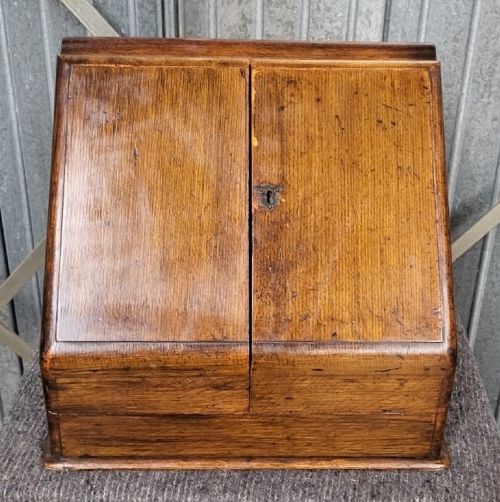
The heading covers three overlapping things on Sellingantiques. The true hinged slope or lap desk dominates, named in 575 of the titles. Alongside it sit flat-lidded writing and correspondence boxes, and desk-top stationery boxes and cabinets that stand rather than travel, a group that is rising in live stock.
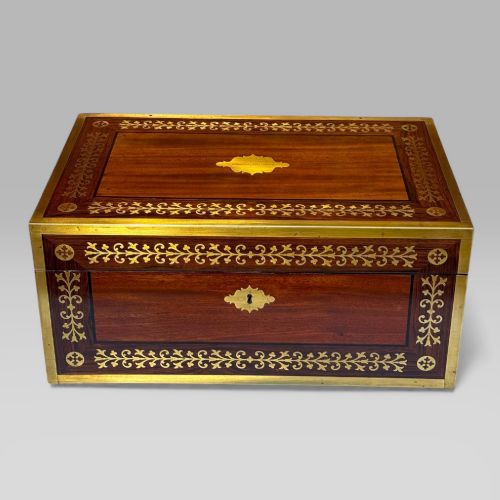
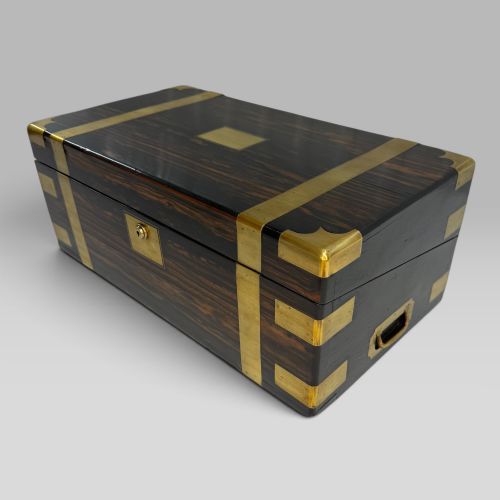
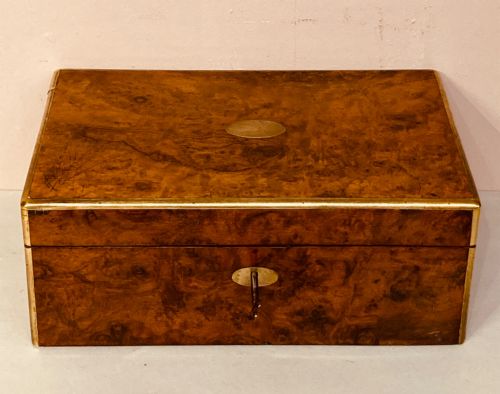
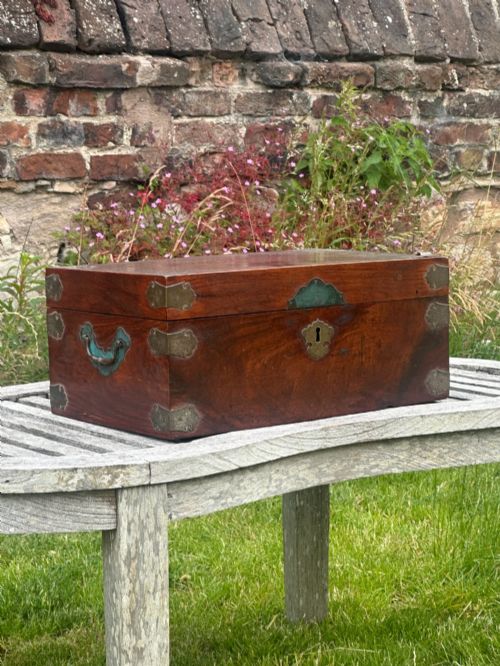
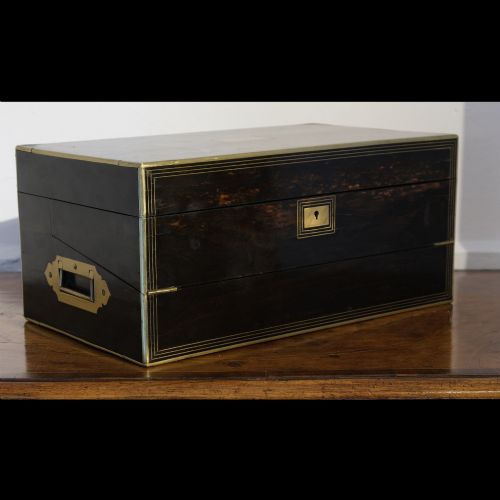
The piece you are most likely to meet is a Victorian veneered slope in walnut, with rosewood, mahogany and coromandel close behind and burr walnut named in around a hundred titles. Brass is everywhere: strapped over the edges on campaign and military boxes, or let flush into the veneer as lines and scrollwork.
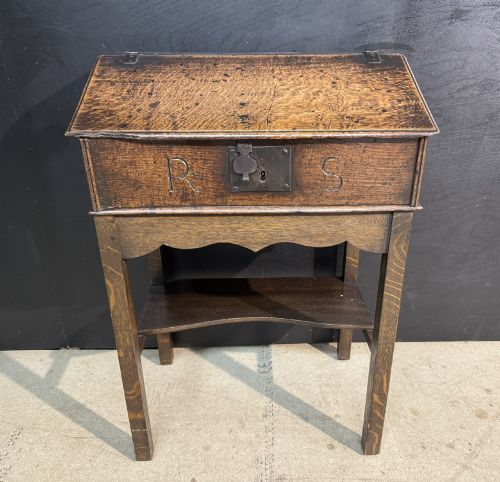
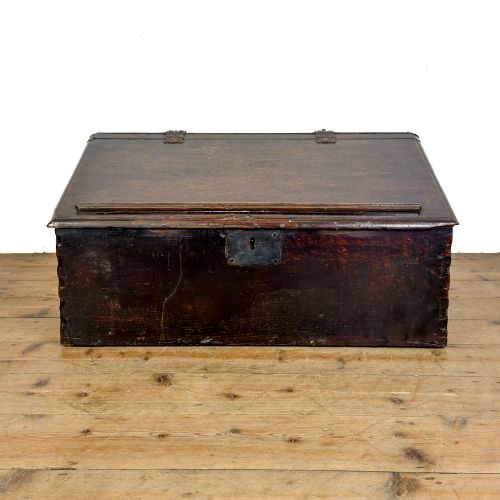
Dates come loosely. Victorian and a bare 19th Century together outweigh every decade bucket, and only 274 of 738 sold listings carry a clean year, so read the dated field as a bracket. Where decades are given they cluster mid to late century. Regency and Georgian mahogany and rosewood boxes form the earlier body, with 17th-century oak desk and Bible boxes at the far end and Edwardian and around 1920 pieces at the other.

Where The Range Splits
Timber does most of the separating. Burr and figured walnut, coromandel and other exotic veneers sit at the top of the range, while plain walnut, oak and simulated finishes sit at the bottom. Brass sorts the middle: brass binding spreads across the whole range, but brass inlaid into the veneer, and applied brass mounts, concentrate high.
Then the interior. A simple well with two inkwells and a tray is the baseline. Compendiums, bi-fold and triple-opening actions and metamorphic slopes that change shape as they open cluster near the top, and so do concealed fittings, with secret drawers named outright in 53 titles and named locks and candle sconces called out in the upper range.
Size and provenance both count. Large appears in 47 titles, and the sample runs to a monumental rosewood brass-inlaid slope and a huge coromandel with mother-of-pearl inlay. Boxes carrying a retailer's name or a documented owner sit in the upper half, though no single firm recurs often enough to count as a house name for the category.
Retail Price Guide 2026
Typical UK retail prices for writing boxes, calculated from the Sellingantiques database of over a million retail prices indexed since 2003. This retail price guide relies exclusively on Sellingantiques data; no external sources or auction records are used, so the figures do not describe the wider market.
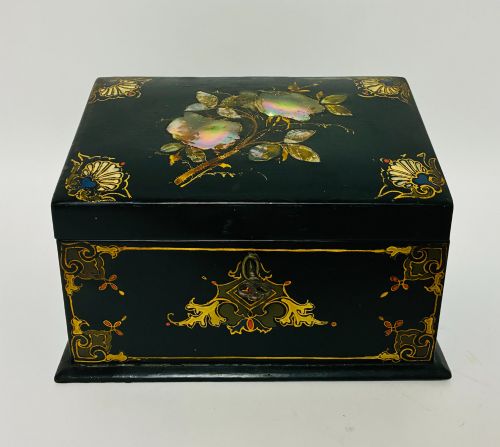
The most expensive writing box ever sold on Sellingantiques was a grand large English papier mache table cabinet of about 1860, sold in September 2016.
The Antique Writing Boxes Glossary
- Writing slope
- The box itself, named for the sloping leather-covered surface formed when the lid opens. It is the word to expect, appearing in 575 titles.
- Brass bound
- Brass straps or corner mounts protecting the edges, associated with travelling and campaign use. Named in 138 titles, spread right across the range.
- Brass inlaid
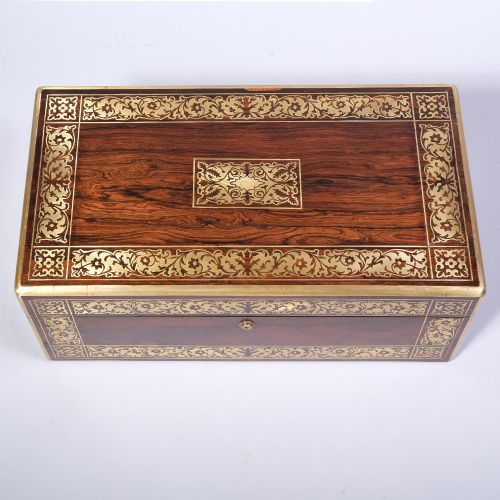
- Flush brass lines or foliate scrollwork let into the veneer rather than applied over it. Named in 35 titles and concentrated at the top of the range.
- Campaign
- Made for military or travelling use, typically brass-bound with flush handles. In 139 titles, sometimes with military or travelling alongside.
- Secret drawers
- A concealed drawer or compartment released from within the interior. Fifty-three titles say so outright.
- Coromandel
- A dense dark-striped exotic hardwood used as veneer, in 62 titles. It reads almost black with paler stripes.
- Tunbridge ware
- Mosaic banding built from assembled wood rods, named in 27 titles. Two slopes in the archive carry a named view of Eridge Castle.
- Suzuribako
- A Japanese lacquered writing box for brush, inkstone and paper. Only a handful appear among the listings.
Frequently Asked Questions
What is the difference between a writing slope and a writing box?
A slope has a hinged lid that opens out into a sloping writing surface, leather or velvet lined, with inkwells and pen trays inside. That is the form named in 575 titles.
Writing box is used more broadly on Sellingantiques. It takes in flat-lidded correspondence boxes and desk-standing stationery boxes and cabinets, which hold paper and letters rather than folding out for use on the knees.
Which woods are most common?
Walnut leads, named in 252 titles, with burr walnut in around a hundred and figured walnut in another thirty. Rosewood, mahogany and coromandel follow.
Earlier Georgian and Regency boxes lean towards mahogany and rosewood. Oak turns up at both ends of the range: in 17th-century desk and Bible boxes, and in plainer later work.
What makes a box a campaign writing slope?
Campaign means made for military or travelling use. In practice that shows as brass straps over the edges and corners, flush handles that sit level with the sides, and a sturdy build.
Campaign appears in 139 titles and brass bound in 138, which puts this group at roughly one in eight of the category. Military and travelling turn up in smaller numbers alongside.
Do writing boxes have secret compartments?
Fifty-three titles name secret drawers outright, and secret in some form appears in sixty-one. The usual arrangement is a drawer or compartment released from within the interior once the slope is open.
Concealed work sits with other upper-range fittings. Named locks are called out in several titles, and candle sconces or candlesticks in a few more.
How accurate are the dates given in listings?
Treat them as brackets. Victorian and a plain 19th Century between them outweigh every decade, and only 274 of 738 sold listings carry a clean year.
Titles are often more precise than the dated field. Several William IV and George III boxes are filed simply as Victorian, Regency or Georgian.
The range as a whole runs 1700 to 1920.
Are there Asian or colonial examples?
Yes, as a small steady tail. Indian, Anglo-Indian and colonial boxes appear in modest numbers, including vizagapatam sandalwood and a porcupine-quill and ebony box.
Japanese lacquer suzuribako turn up in a handful of listings, and single pieces include a Chinese huanghuali box and a Sri Lankan ebony one. Among 995 listings, these are the origins that appear once or twice rather than by the dozen.