


A 2026 Guide by Sellingantiques

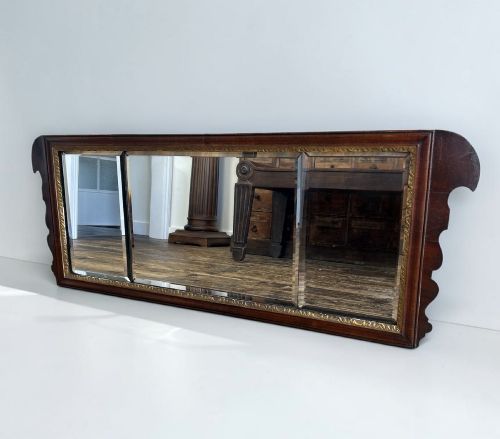
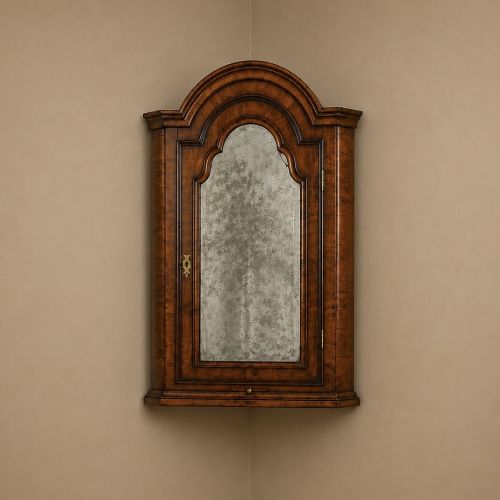
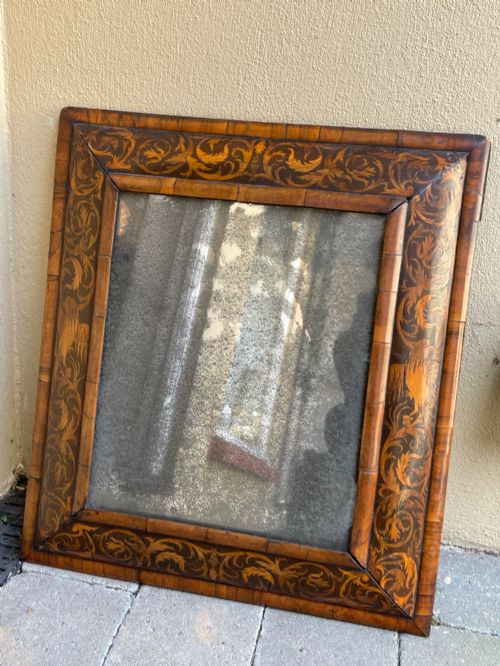
Victorian Tunbridge Wear Walnut Overmantel Mirror, Victorian
Priced at £360 from Elmgarden
Early examples from the late seventeenth century often mirrored the severe architectural lines of the period.
Demand surged when glassmakers developed improved casting techniques. This allowed for taller plates.
Look at how Queen Anne frames shifted towards softer curves.
Burr veneers became highly sought after by wealthy Georgian classes for their complex swirling patterns that resembled rippling water.
The popularity of these frames slowly declined as imported mahogany took over the London cabinet trade in the mid-eighteenth century, pushing native timbers out of fashion across the capital.
John Gumley supplied tall looking glasses to the Royal household during the early eighteenth century.
Some frames bear the label of Gerrit Jensen. He incorporated complex marquetry into his walnut designs before his death in 1715.
Most antique walnut mirrors were produced by anonymous workshops. They aren't stamped with maker's marks, and the trade was heavily concentrated around St Martin's Lane.
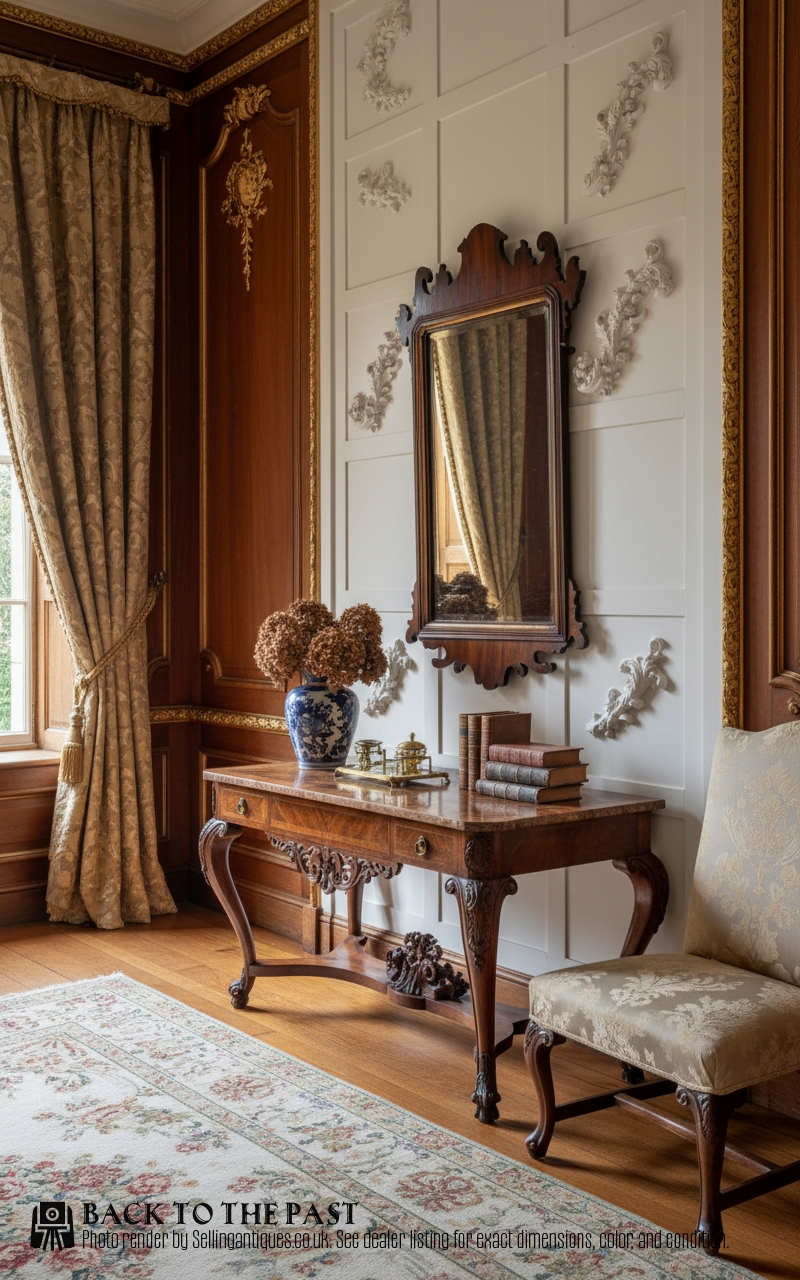
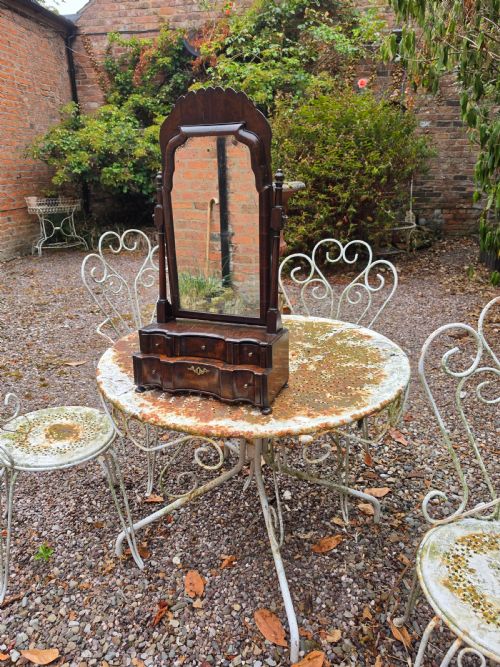
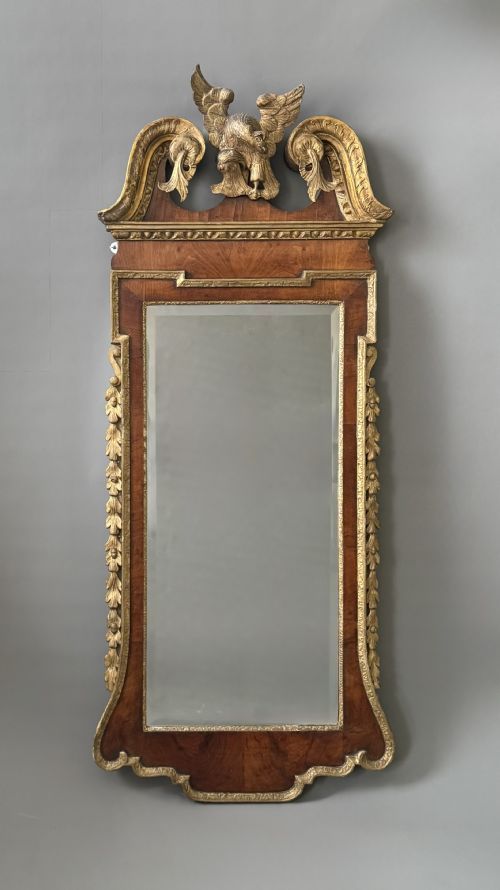
Large Antique George III Quality Walnut Wall Mirror, 1800
Priced at £1,385 from London City Antiques
The 2026 retail price guide for Antique Walnut Mirrors is drawn from a proprietary archive of over 1.1 million retail prices indexed by Sellingantiques since 2003. This guide relies exclusively on their own internal data; no external sources or auction records are used.
Analysing nearly 25 years of UK antique market history alongside current retail values, the data indicates that typical UK retail prices for Antique Walnut Mirrors range between £400 and £2,900. Entry-level prices generally fall under £400 and premium examples upwards of £2,900.
Prominent fretwork outlines frequently decorate the top and bottom edges.
Check the heavy mirror plate for a shallow hand-ground bevel. It should gently follow the shape of the inner moulding.
Gilded inner slips sometimes border the glass. They catch ambient room light and visually separate the reflective surface from the dark timber outer frame.
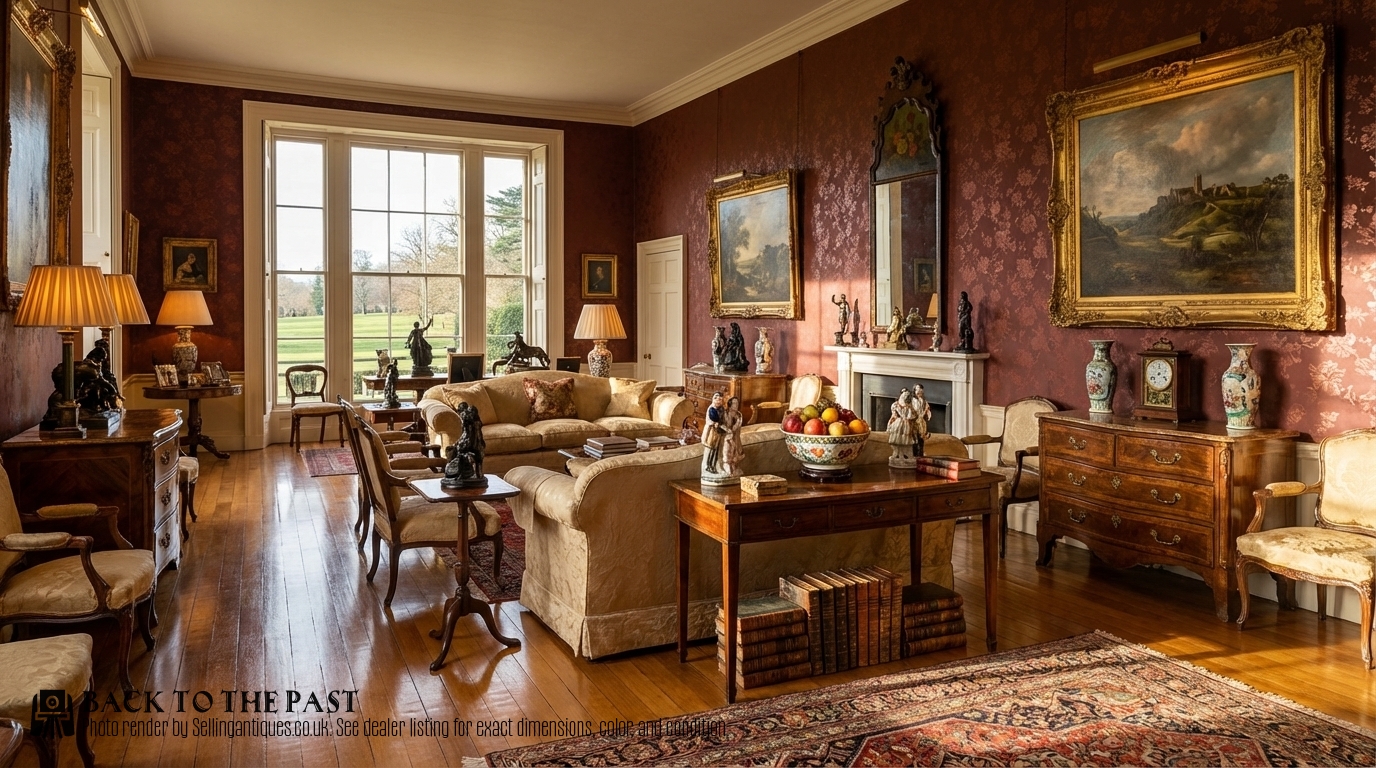
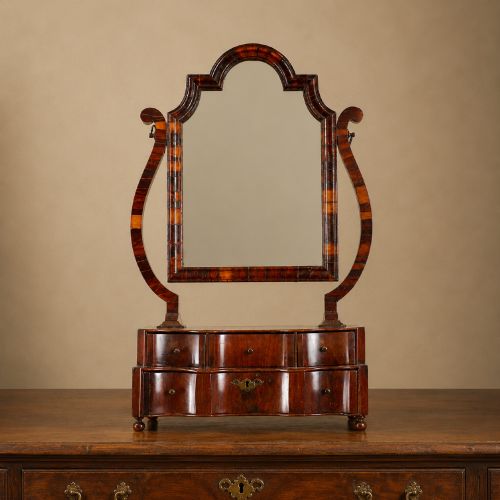
Continental Dutch 18th Century Walnut Painted Pier Mirror, 18th Century
Priced at £2,250 from Baggott & Co.
Craftsmen used hot animal glue to press thick veneers onto curved pine profiles.
Fret-cutting became much easier when the traditional bow saw was adapted with finer blades.
Apprentices often pieced together multiple small sections of burr veneer. This slow technique created symmetrical repeating patterns across wide flat frame surfaces.
"Small pieces of leftover veneer from grand cabinet projects were routinely recycled into complex border patterns."
"You'll notice original glass plates contain tiny air bubbles that cast interesting shadows on the wall behind."
"The oil finishes applied centuries ago have settled into a rich natural patina that modern synthetic varnishes cannot replicate."
Based on almost 25 years of Sellingantiques UK antique market data, Antique Walnut Mirrors appeared 2928 times (out of 1,100,000 antiques) which gives it a rarity score of 56/100.
This score measures scarcity within the Sellingantiques archive only and is not a survey of the entire antiques market, so these statistics may not be indicative of the general availability of Antique Walnut Mirrors elsewhere.
Dust the wood lightly with a soft dry cloth. Avoid commercial spray polishes because they build up a sticky residue in the grain over time.
Use a lightly damp leather chamois to clean the glass. Keep moisture away from the inner slip so water doesn't seep behind the plate.
Restorers can apply new silvering to the back of an original plate. The process involves stripping the degraded metallic backing and laying down a fresh chemical layer.
Many buyers prefer the early cloudy appearance. A re-silvered plate lacks those subtle grey tones.
Hang the frame away from direct heat sources. Sudden temperature shifts will cause the underlying pine carcase to expand and contract rapidly.
This movement stresses the old animal glue. The walnut veneer will eventually lift and crack along the grain.
Keep them away from draughts. A stable environment preserves the timber joints.
Weigh the piece on standard scales before buying hardware. Antique walnut mirrors contain dense timber and thick cast glass that require robust wall support.
Fix a sturdy wooden batten directly into the vertical wall studs. Rest the back of the frame on the batten and secure it with heavy-duty metal brackets.
Don't rely on the original wire or old iron rings. They suffer from metal fatigue and often snap under continuous strain.
Please note: This Antique Walnut Mirrors guide and its associated pricing data are provided for general informational purposes only. It does not constitute formal financial, investment, or appraisal advice and should not be relied upon as the sole basis for any commercial activity, purchasing, or sales decisions. Sellingantiques.co.uk accepts no liability for any actions taken in reliance on this information. Always consult with a qualified professional or independent appraiser.
