
Antique Walnut Mirrors
A looking-glass in a walnut frame or stand, made for the wall above a fireplace, the space between windows, the dressing table or the bedroom floor.

Antique Walnut Mirrors
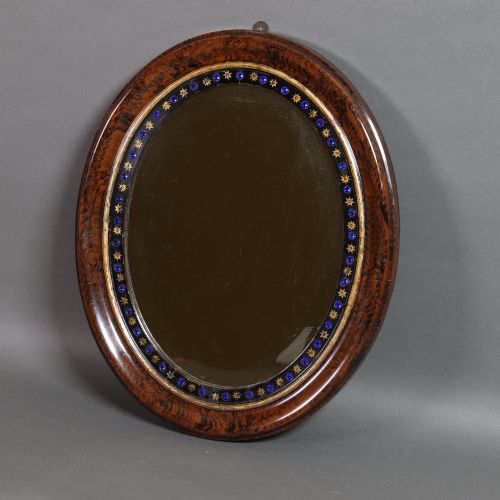
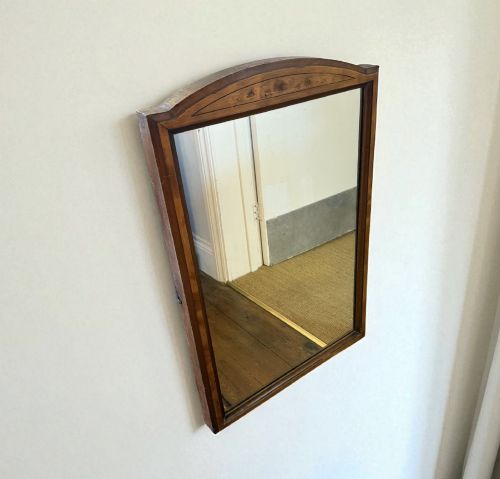
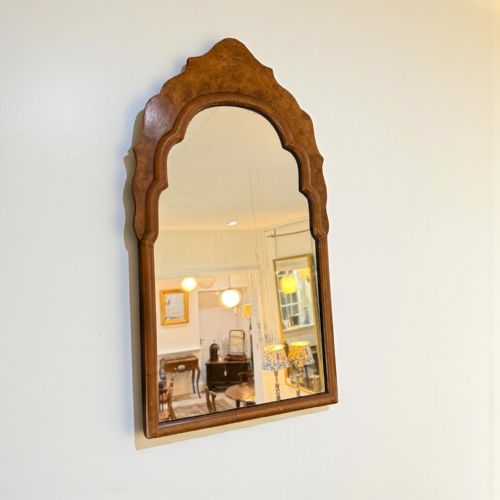
Frames and stands in walnut - veneered, solid, burr or figured - carrying a mirror plate. The range runs from small toilet mirrors on a box or drawer base up to overmantels and pier glasses, with the largest pieces described running to eight feet.
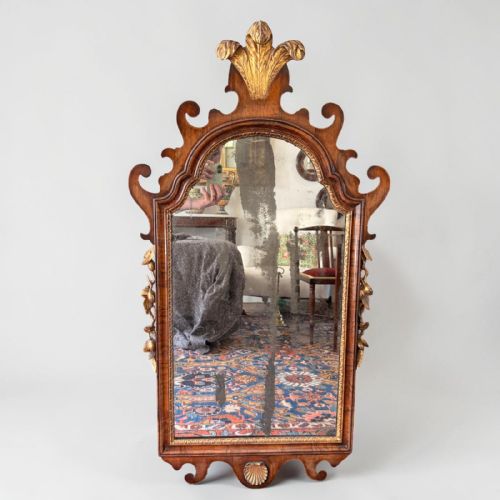
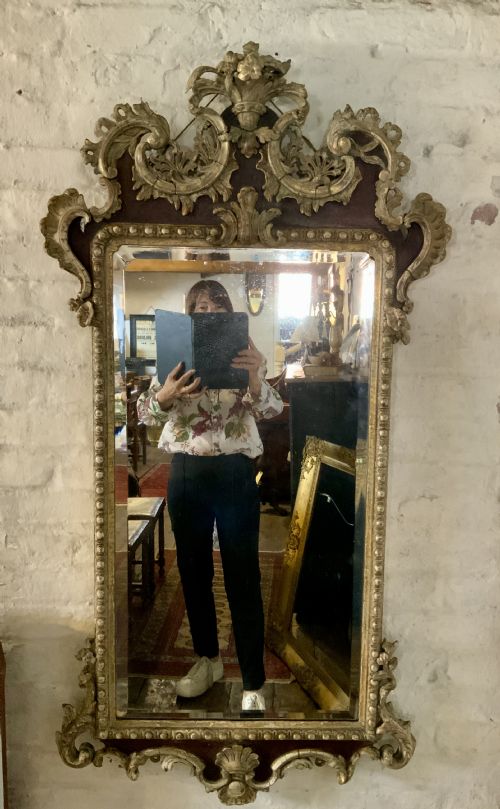
The form you'll meet most is a hanging wall mirror, usually titled by reign rather than by form: George, Georgian, Victorian, Queen Anne. Cheval mirrors are the single most identifiable named type, and dressing and toilet mirrors together make up another sizeable block. Gilding is a recurring partner, with titles reading walnut and gilt or walnut and parcel gilt.
Framed looking-glasses became common British furnishings from the late seventeenth century, when walnut veneer was the fashionable cabinet timber. Cushion-framed mirrors of the William and Mary and Queen Anne type are the earliest recognisable group on Sellingantiques, several dated to the 1690s. Walnut came back as a mirror timber in the early twentieth century for copies of those earlier styles.
That revival wave matters when you read a title. Period labels are often loose, and pieces described as Queen Anne, George I or George II are frequently dated 1900 to 1930, meaning the style and not the date of making. Around 93 walnut mirrors are listed a year, handled by 196 different dealers, so no single specialist defines the field.
Where The Range Splits
Period against revival does most of the work. Titles reading George II period or William and Mary period cluster at the top, while those saying Georgian Style, George I Style or Queen Anne Revival sit low. Same shapes, different centuries, and the wording usually tells you which you're looking at.
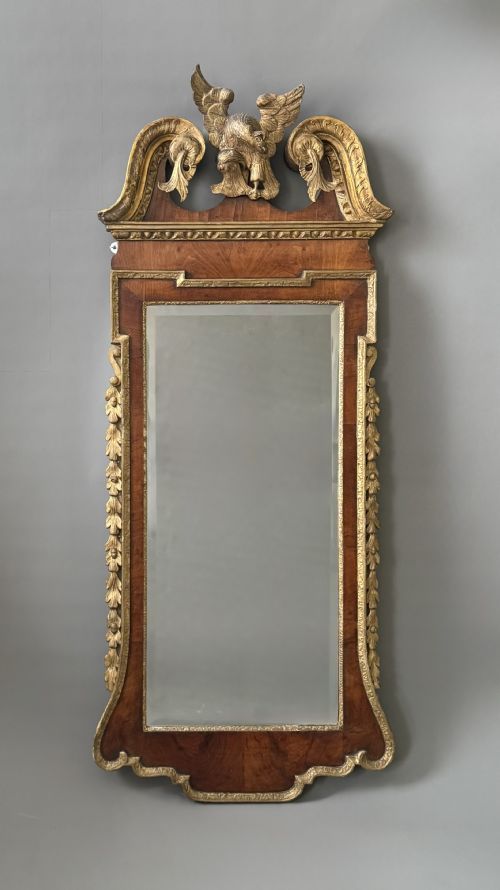
Gilding worked into the frame lifts a mirror. The highest-priced examples sampled are overwhelmingly walnut and gilt or walnut and parcel gilt wall and pier glasses, where the gilding runs on selected mouldings or carving. Veneer figure pulls the same way: burr, figured, marquetry, inlaid and oyster veneer all sit above plain walnut-framed mirrors, which occupy the bottom.
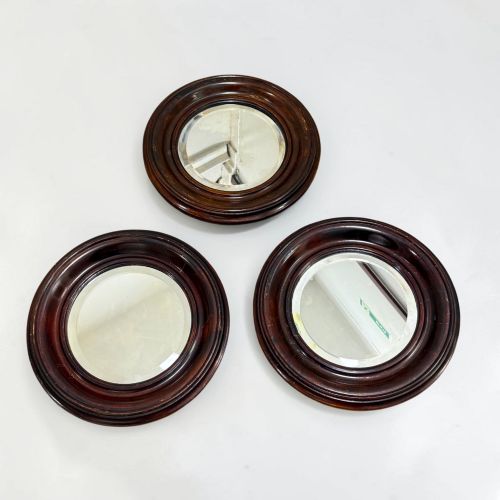
Scale and glass finish the picture. Huge, massive, very large and full-length recur among the upper half, and titles specifying original plate, original glass plate or mercury plate appear at the higher end. Pairs are unusual across the whole archive, with a set of three round mirrors appearing just once.
Antique Walnut Mirrors Retail Price Guide 2026
Typical UK retail prices for walnut mirrors, calculated from the Sellingantiques database of over a million retail prices indexed since 2003. This retail price guide relies exclusively on Sellingantiques data; no external sources or auction records are used, so the figures do not describe the wider market.
19th Century is the period label used most on Sellingantiques for walnut mirrors, with 18th Century next and the 1920s third.
The Antique Walnut Mirrors Glossary
- Cheval mirror
- A full-length plate swinging between two uprights on a floor-standing frame. It's the most identifiable named form in the category.
- Toilet mirror
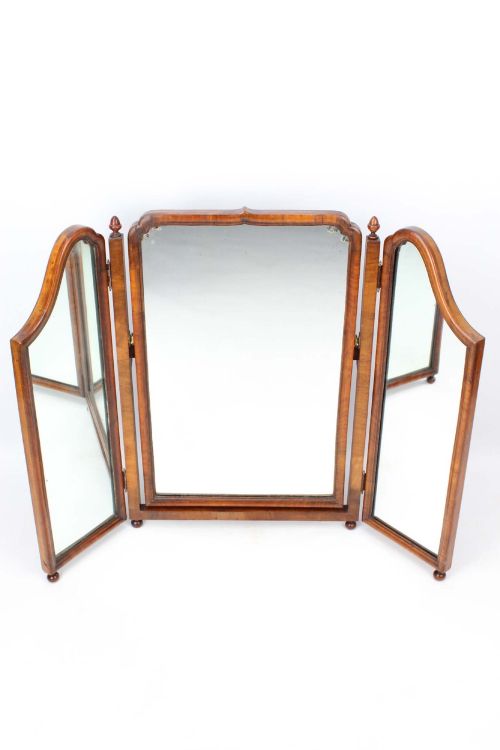
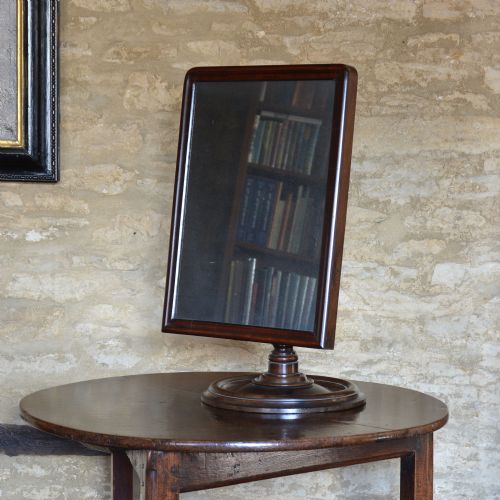
- Small dressing mirror, commonly swinging on posts above a box or drawer base. Titles also use dressing mirror and dressing table mirror for related things.
- Overmantel
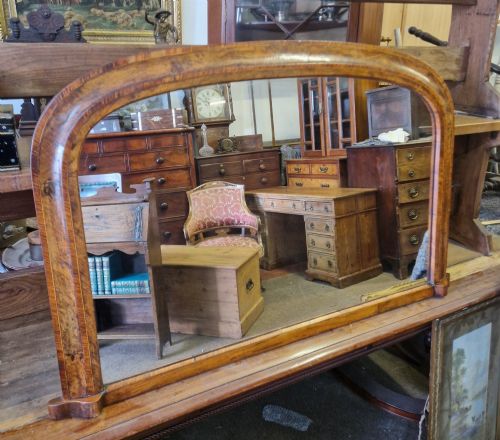
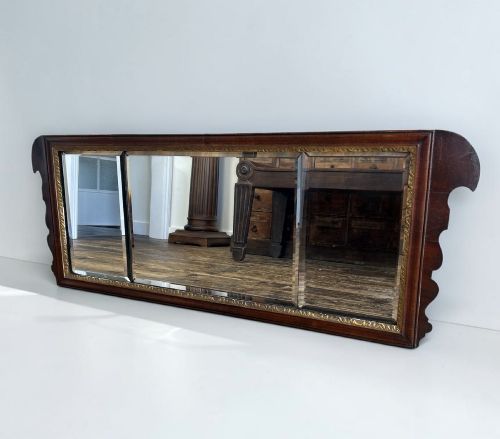
- A wide mirror made to sit above a fireplace. Spelled both overmantel and overmantle in titles, so both spellings are worth searching.
- Pier glass
- Tall narrow mirror for the wall pier between two windows. Some titles shorten it to pier mirror.
- Parcel gilt
- Partly gilded: gilding on chosen mouldings or carved detail rather than the whole frame. A frequent pairing with walnut at the top of the range.
- Cushion frame
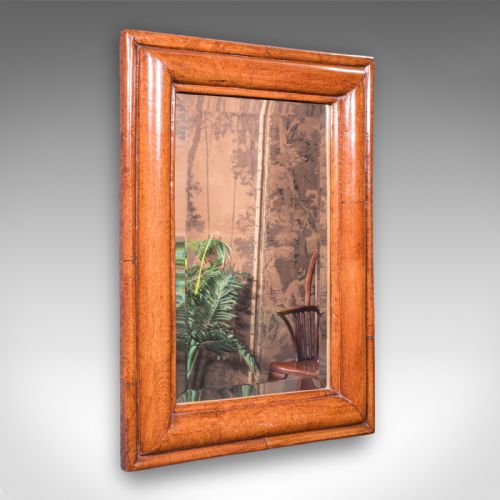
- Deep convex moulded frame of the late seventeenth and early eighteenth century, sometimes veneered in oyster cuts or inlaid with marquetry.
Antique Walnut Mirrors: Frequently Asked Questions
Which walnut mirror form turns up most often?
Hanging wall mirrors. About a fifth of titles say simply wall mirror, and together with overmantels, pier glasses and framed wall pieces they account for roughly a third of the category.
Cheval mirrors follow as the most identifiable named form, and dressing and toilet mirrors make up another block of similar size.
Why do so many say Georgian but date to the 1920s?
Walnut came back into favour as a mirror timber in the early twentieth century, used for frames in earlier styles. The title names the style; the date field gives the making.
That's why titles reading Queen Anne, George I or George II sometimes carry dates of 1900 to 1930. Seventeen titles use the word revival outright.
The dated field on Sellingantiques runs from 1700 to 1930, with 409 listings carrying a clean year rather than a vague label.
What does parcel gilt mean on a walnut frame?
Partly gilded. The gilding sits on selected mouldings, carving or crests, leaving the walnut visible elsewhere.
It appears in 56 titles, with gilt more broadly in 113. Walnut and parcel gilt wall and pier mirrors are among the highest-priced examples sampled.
Are burr walnut mirrors different from plain walnut?
Burr walnut is veneer cut from a burr growth, giving a dense swirling figure. It shows up in 71 titles, with figured walnut in another 19.
Burr, figured, marquetry and inlaid frames sit above plain walnut-framed mirrors in the range.
How large do these mirrors get?
The largest described run to eight feet. Huge, massive and full length recur among the biggest wall and floor mirrors.
At the other end, small toilet and table mirrors on box bases are common, and small appears in a handful of titles.
Do any unusual one-off shapes come up?
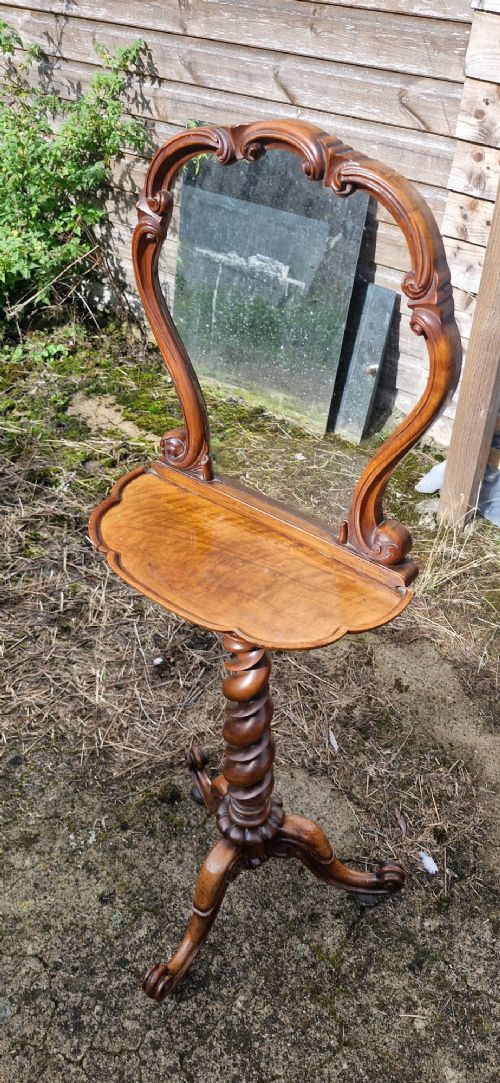
Yes, though only occasionally. A portable campaign shaving kit mirror, a horseshoe-shaped hall mirror, a tailor's shop mirror and a cloakroom mirror with a towel rail have all appeared.
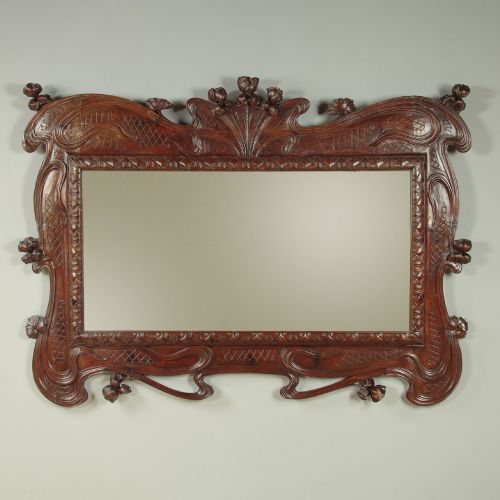
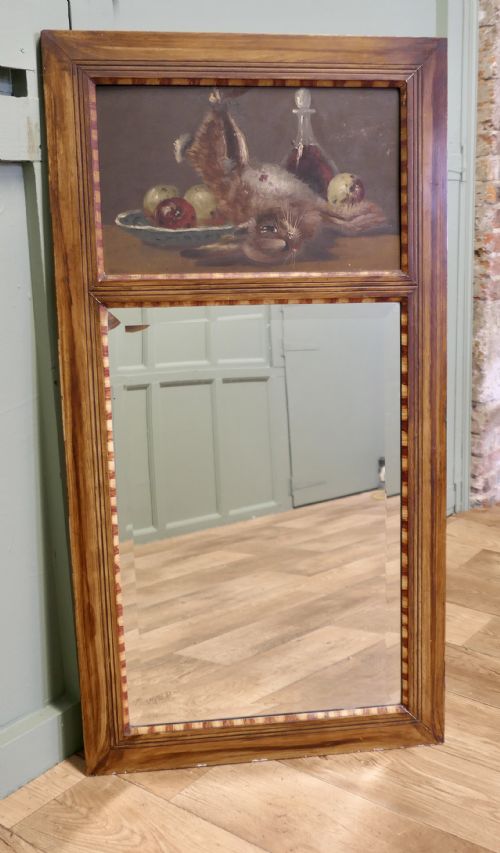
Carved animal and heraldic frames surface now and then: eagles, mythical birds, a HoHo bird in the cresting, a heraldic shield. A few mirrors are set with painted oil panels of naval and equestrian subjects.
Continental examples are scarce beside the English majority. French appears in 38 titles; Dutch, Italian and Black Forest pieces only a few times each.