


A 2026 Guide by Sellingantiques
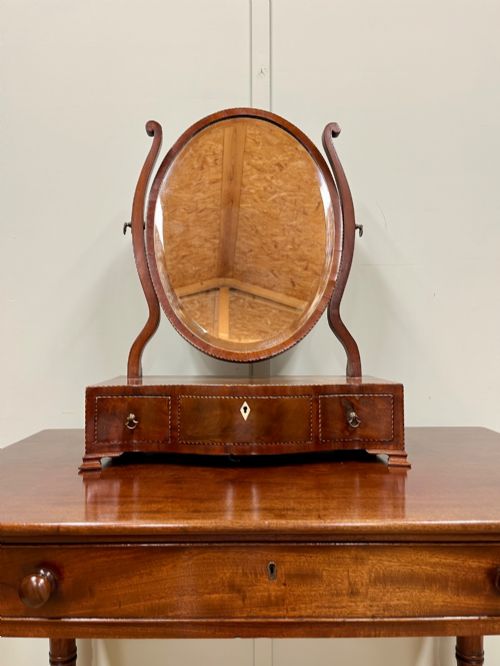
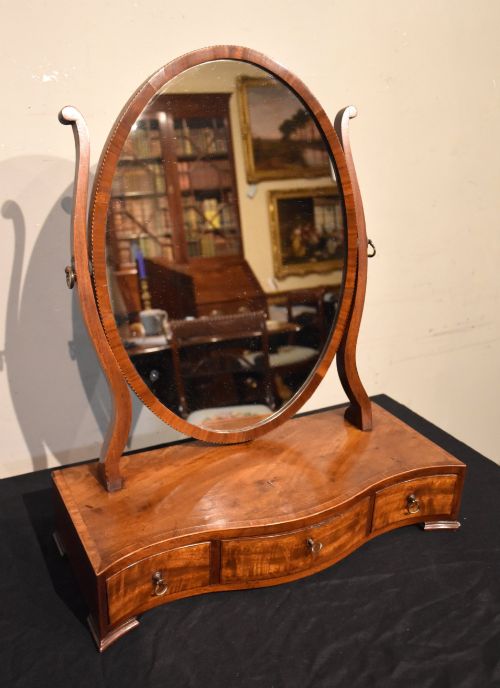
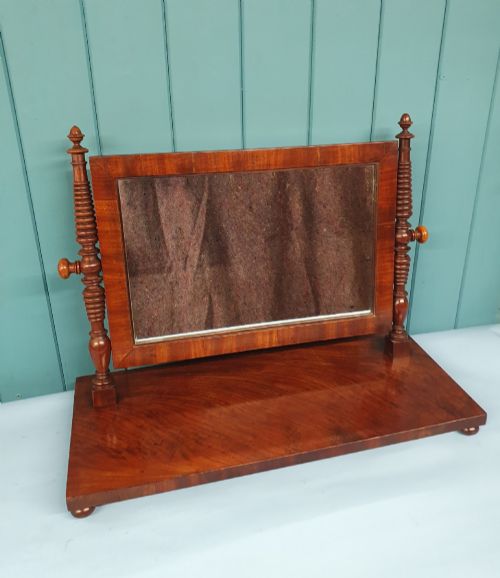
Georgian Mahogany Table Mirror with Drawers, 18th Century
Priced at £295 from Abersoch Antiques
Look at the evolution from the late seventeenth century onwards. They became essential bedroom items as flat glass production advanced.
Early antique toilet mirrors often feature a simple box base. These held one or two small drawers for keeping cosmetics.
The eighteenth century brought a steady shift towards lighter frames, matching the broader changes in Georgian cabinet-making.
By the Victorian era, heavier bases and larger arched plates appear. These reflect the wider, bulkier furniture trends of the period.
Documented makers of antique toilet mirrors are rare. Most were produced by anonymous cabinet-makers and looking-glass merchants working in regional centres.
Thomas Chippendale did supply them to wealthy clients. His firm's accounts occasionally list small swing glasses matching larger bedroom suites.
Specialist carvers often made the more ornate frames. They would then sell them on to mirror merchants for glazing.
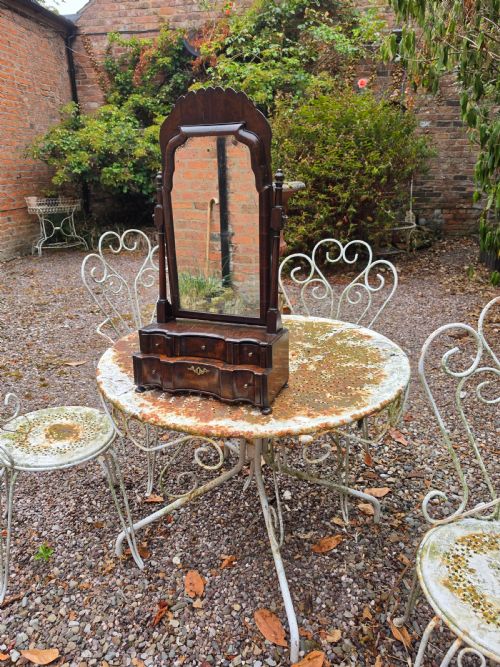
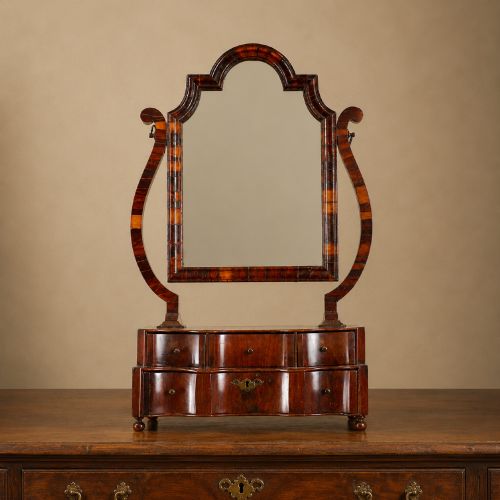
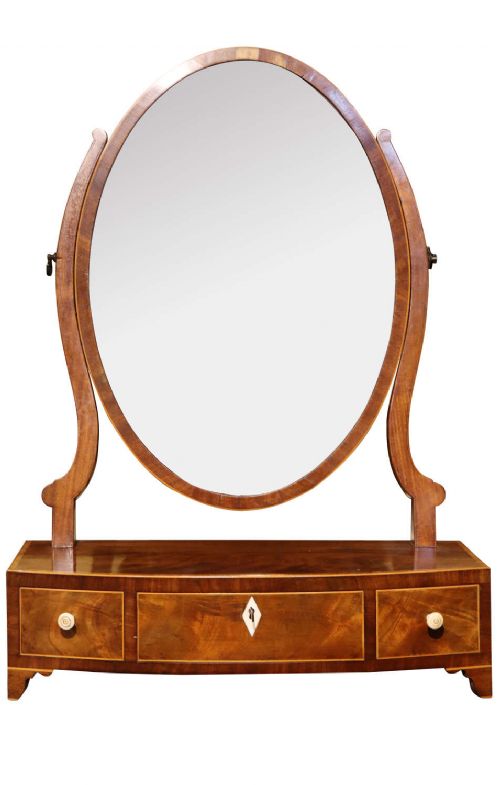
Antique Dutch Marquetry Toilet Mirror, 18th Century
Priced at £2,150 from Moxhams Antiques
The 2026 retail price guide for Antique Toilet Mirrors is drawn from a proprietary archive of over 1.1 million retail prices indexed by Sellingantiques since 2003. This guide relies exclusively on their own internal data; no external sources or auction records are used.
Analysing nearly 25 years of UK antique market history alongside current retail values, the data indicates that typical UK retail prices for Antique Toilet Mirrors range between £300 and £1,100. Entry-level prices generally fall under £300 and premium examples upwards of £1,100.
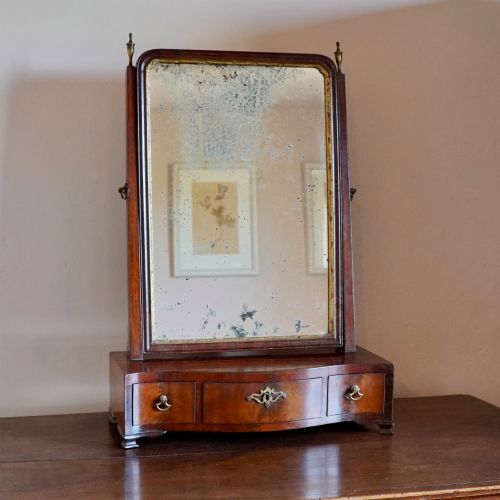
Adjustable tension comes from brass friction knobs at the sides. These allow the framed glass to tilt and hold the correct angle.
Base styles range from flat platforms with small feet to deep box structures containing miniature drawers for jewellery.
Finials usually cap the upright supports. You see them turned in matching timber or occasionally cast in brass on Regency models.
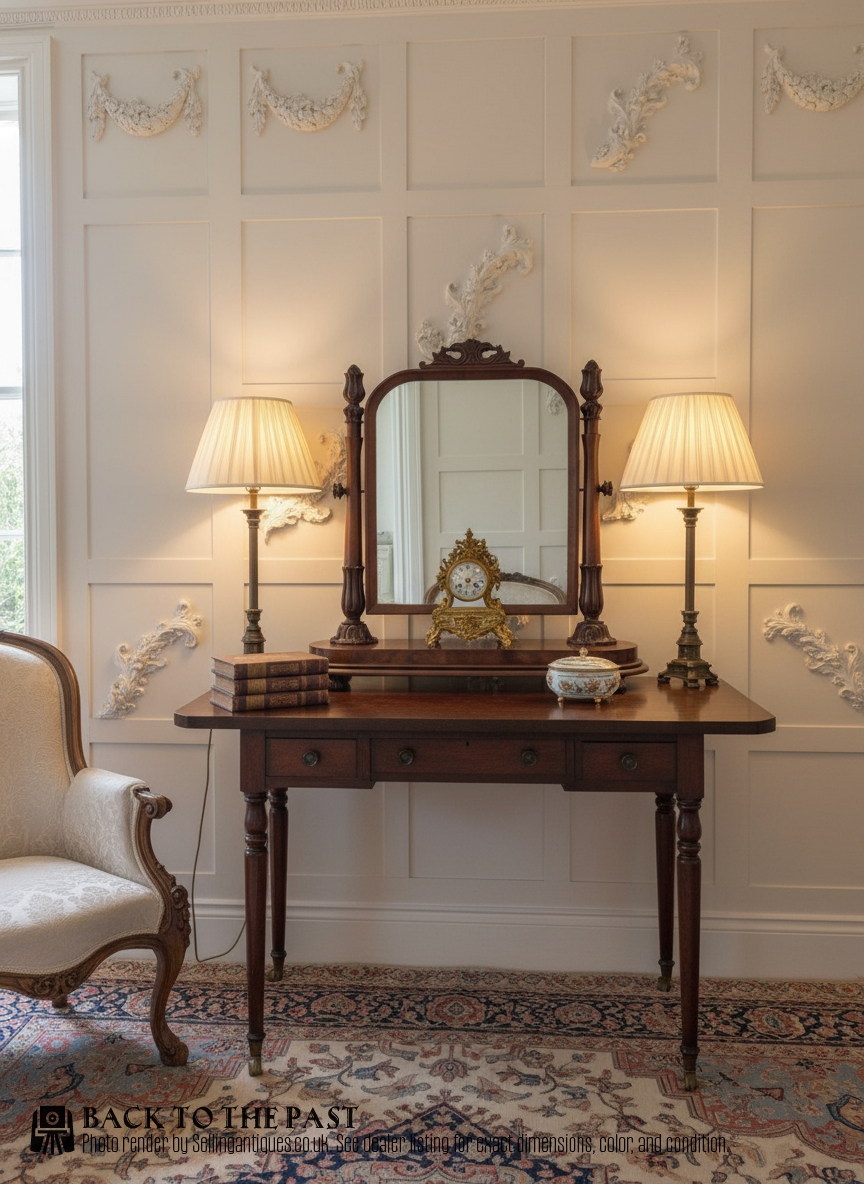
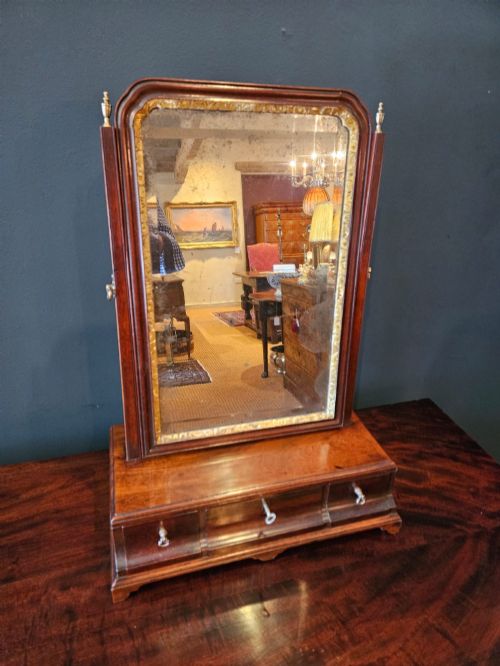
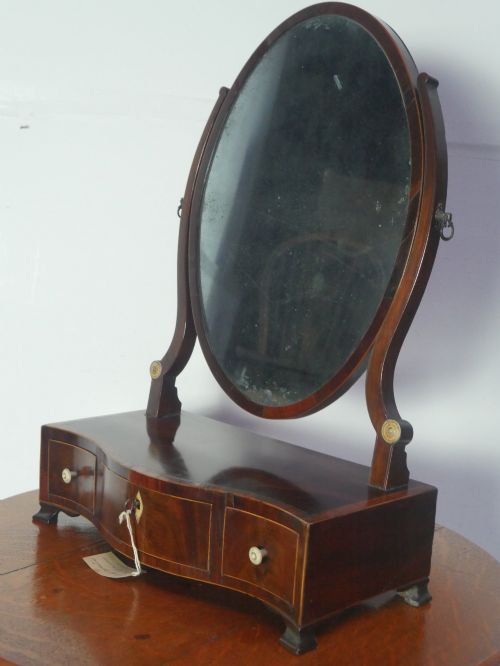
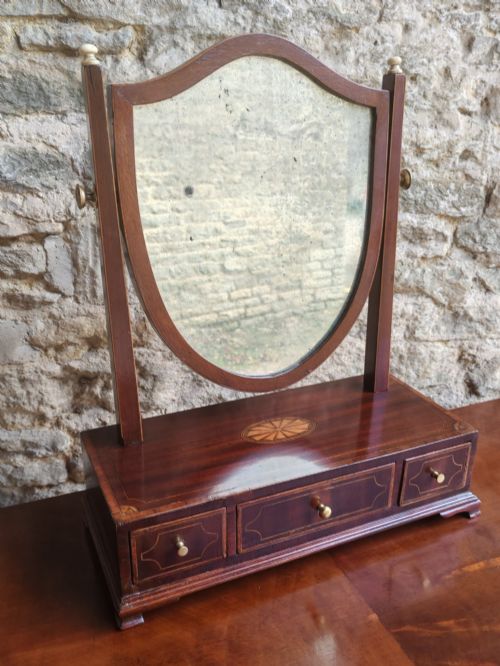
Outstanding Quality Antique Victorian Mahogany Dressing Mirror
, 1850
Priced at £1,085 from London City Antiques
Hand-cut dovetails join the drawer sides in the box bases. Early examples show thicker pins that become much finer by the turn of the nineteenth century.
Craftsmen applied crossbanded veneers around the frame edges. This technique required cutting the timber across the grain to create a contrasting border.
Turn the piece around to see the backboards. They were usually rough-sawn pine or oak slotted into rebates and held with handmade nails.
"Some box bases contain secret compartments. Cabinet-makers cleverly hid shallow sliding trays behind the visible drawer runners for storing private letters."
"The small ivory or bone escutcheons on Georgian examples were cut by hand. They add a bright contrast against dark mahogany veneers."
"Shield-shaped frames require serious skill to build. Makers bent the wooden edge sections using steam to achieve those smooth flowing curves."
Based on almost 25 years of Sellingantiques UK antique market data, Antique Toilet Mirrors appeared 1404 times (out of 1,100,000 antiques) which gives it a rarity score of 76/100.
This score measures scarcity within the Sellingantiques archive only and is not a survey of the entire antiques market, so these statistics may not be indicative of the general availability of Antique Toilet Mirrors elsewhere.
The brass friction hinges on the uprights are usually the culprit. Most have a small screw you'll need to tighten to increase the grip on the metal thread.
Sometimes the thread itself is stripped. If turning the side knobs doesn't add any tension, a restorer can insert a small wooden shim or replace the metal spindle.
Cloudy glass is a chemical issue, not dirt. The original silvering on the back of the plate reacts with moisture in the air and breaks down over the decades.
You can't clean it away with surface polish. Some people choose to have the glass re-silvered, which restores a clear reflection but removes the historic character. Many buyers prefer the cloudy look as a mark of age.
The small base drawers held grooming accessories. You often find evidence of them storing hairpins, powders, and jewellery.
Some wider central drawers have small wooden dividers. These helped organise rings and miniature pots of cosmetic rouge.
Cabinet-makers were commercial tradesmen who rarely wasted expensive finishes on areas no one looked at. The back of the mirror usually faced a bedroom wall.
They left the pine or oak backboards bare or gave them a very quick coat of wash. The shiny mahogany on the front is a thin veneer glued over a cheaper secondary wood.
Finding rough wood on the reverse is standard practice. It shows how historic workshops managed their materials.
Please note: This Antique Toilet Mirrors guide and its associated pricing data are provided for general informational purposes only. It does not constitute formal financial, investment, or appraisal advice and should not be relied upon as the sole basis for any commercial activity, purchasing, or sales decisions. Sellingantiques.co.uk accepts no liability for any actions taken in reliance on this information. Always consult with a qualified professional or independent appraiser.
