


A 2026 Guide by Sellingantiques
An Art Deco Walnut Dressing Table Mirror by Whytock & Reid., 1930
Priced at £1,350 from Drennan & Sturrock Ltd
Emerged as a distinct furniture form during the late seventeenth century.
Earlier forms often rested directly on a table or required propping up against a wall.
Look for the shift in the Georgian period when antique dressing table mirrors gained small drawer bases.
Victorian examples grew much larger to match the heavier proportions of mahogany bedroom suites.
Few antique dressing table mirrors carry visible maker marks or trade labels.
Thomas Sheraton published influential designs for these pieces in his late eighteenth-century drawing books.
Gillows of Lancaster produced substantial mahogany examples during the early nineteenth century.

Fine Satinwood Inlaid Dressing Table Mirror, 1900
Priced at £895 from Shackladys Antiques
The 2026 retail price guide for Antique Dressing Table Mirrors is drawn from a proprietary archive of over 1.1 million retail prices indexed by Sellingantiques since 2003. This guide relies exclusively on their own internal data; no external sources or auction records are used.
Analysing nearly 25 years of UK antique market history alongside current retail values, the data indicates that typical UK retail prices for Antique Dressing Table Mirrors range between £300 and £2,000. Entry-level prices generally fall under £300 and premium examples upwards of £2,000.
Pivot hinges allow the main glass plate to tilt and hold a chosen angle for the user.
Base tiers often incorporate two or three small drawers fitted with tiny brass pulls.
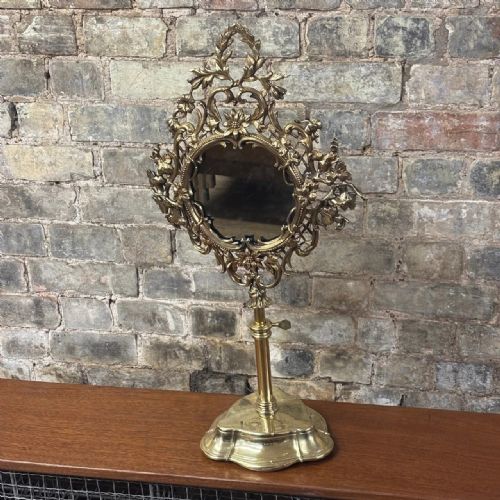
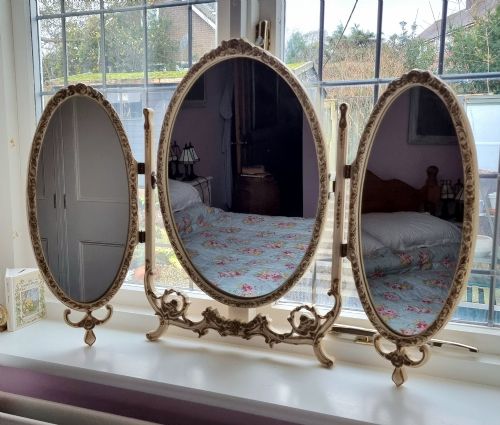
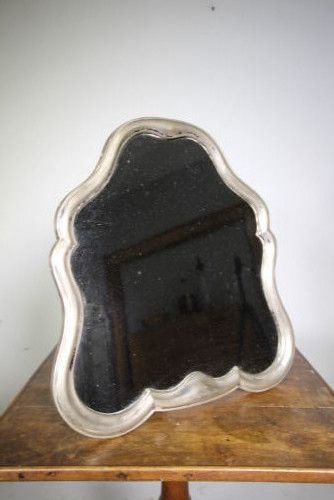
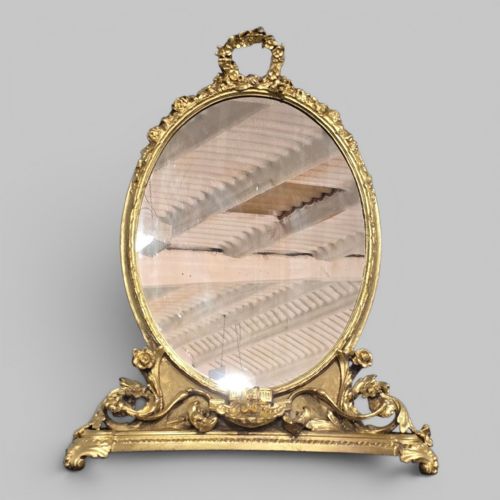
Notice the shape of the frame. Shield, oval and rectangular plate shapes dominate different periods of production across the trade.
Crossbanding frequently decorates the flat borders of earlier veneered bases.
Hand-cut dovetails secure the thin drawer linings found in most Georgian examples.
Turners shaped the vertical supports on a lathe, matching the foot profiles to the uprights.
"Some Georgian bases conceal hidden compartments behind the main drawer linings."
"Lockable central drawers appear on many pieces to secure small valuable items."
"Ivory or bone escutcheons often protect the wooden keyholes from daily wear."
Based on almost 25 years of Sellingantiques UK antique market data, Antique Dressing Table Mirrors appeared 10352 times (out of 1,100,000 antiques) which gives it a rarity score of 13/100.
This score measures scarcity within the Sellingantiques archive only and is not a survey of the entire antiques market, so these statistics may not be indicative of the general availability of Antique Dressing Table Mirrors elsewhere.
Most antique dressing table mirrors use brass friction hinges. You tighten these by turning the wooden finials or a small brass knob on the side of the upright.
If the thread is worn out, a restorer can pack the joint or replace the internal brassware. It's a routine repair.
Replacement handles are widely available from specialist brass founders. You'll need to measure the distance between the two mounting holes on the drawer front.
Taking off the broken handle will show the original colour of the wood underneath. Many people replace the whole set to ensure they match, keeping the broken original in the drawer.
Dust the surface gently with a dry cloth. Don't spray modern glass cleaners directly onto the plate. Moisture can seep behind the frame and damage the silvering.
Dark spots are trapped inside the glass sandwich. You shouldn't try wiping them away.
The pivot points often wear down after decades of use. Sometimes the wooden friction blocks inside the uprights have shrunk or perished.
A temporary fix involves placing a small rubber washer between the frame and the upright. A cabinetmaker can rebuild the internal wooden blocks properly.
Please note: This Antique Dressing Table Mirrors guide and its associated pricing data are provided for general informational purposes only. It does not constitute formal financial, investment, or appraisal advice and should not be relied upon as the sole basis for any commercial activity, purchasing, or sales decisions. Sellingantiques.co.uk accepts no liability for any actions taken in reliance on this information. Always consult with a qualified professional or independent appraiser.
