


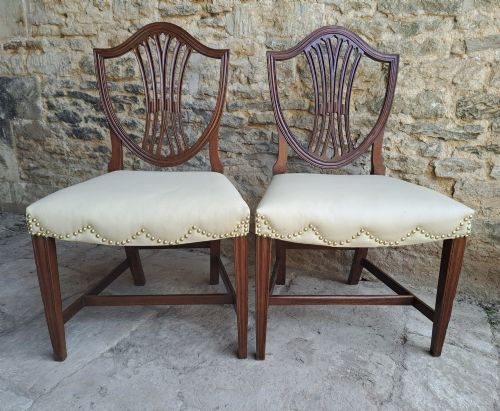
Antique Shield Back Chairs
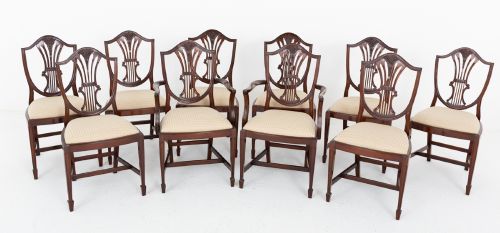
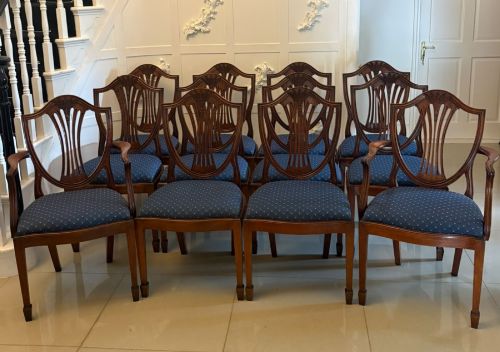
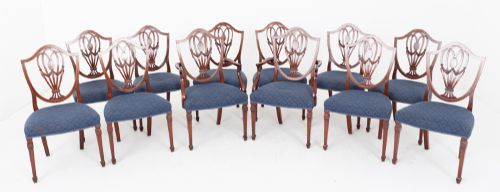
A chair with its back framed as a curved, tapering shield around a central splat, made in England from the late eighteenth century for dining rooms and halls, and revived for both ever since.
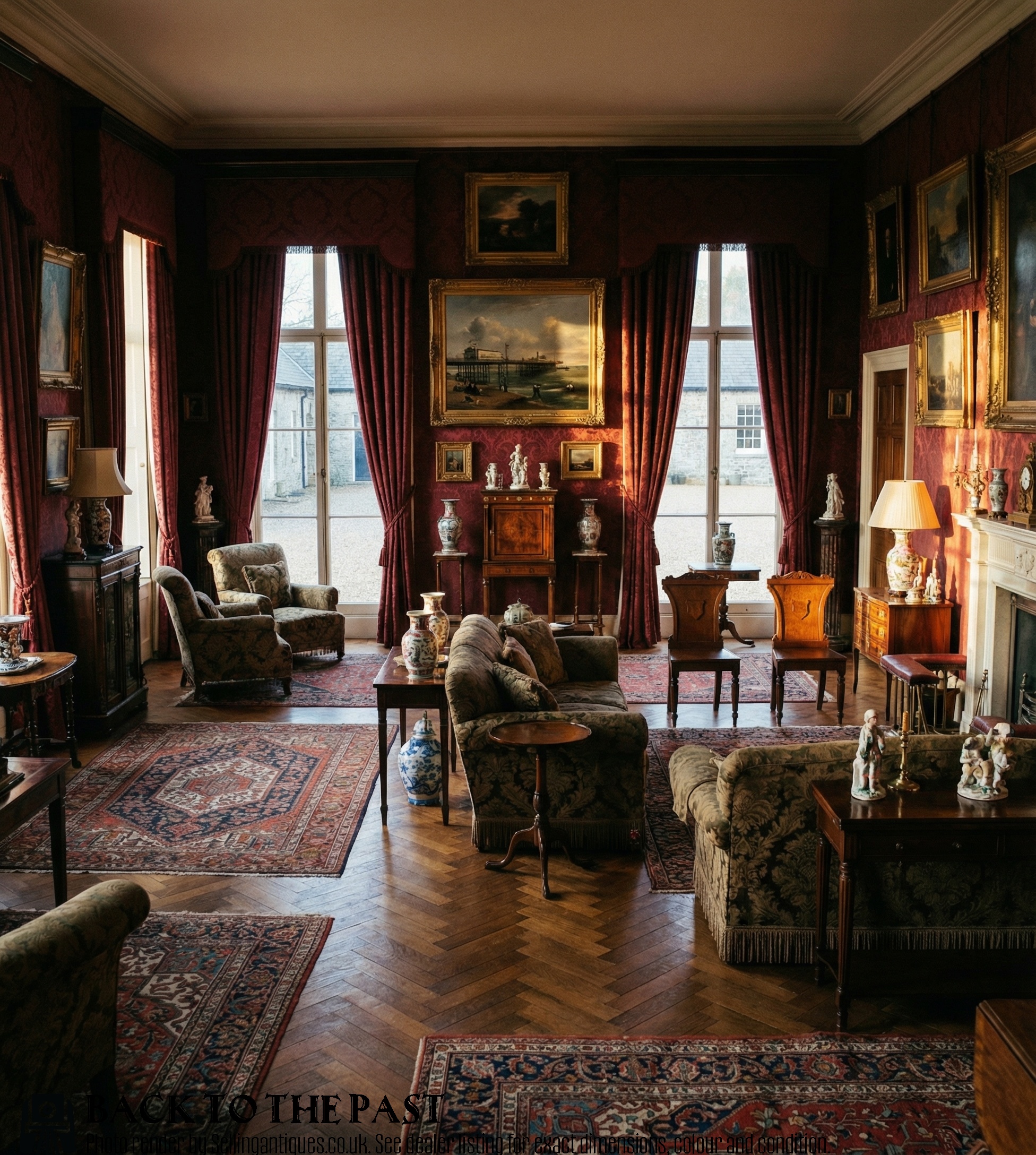
Antique Shield Back Chairs
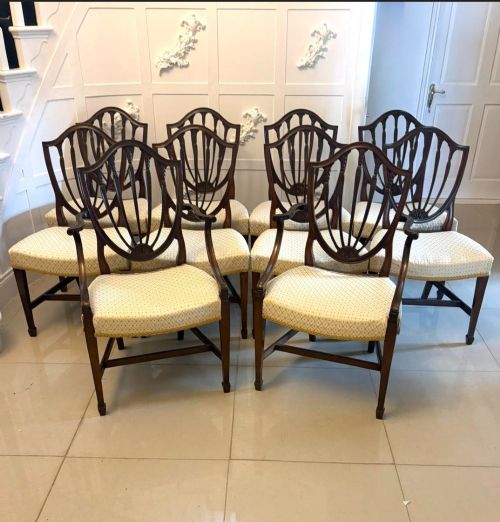
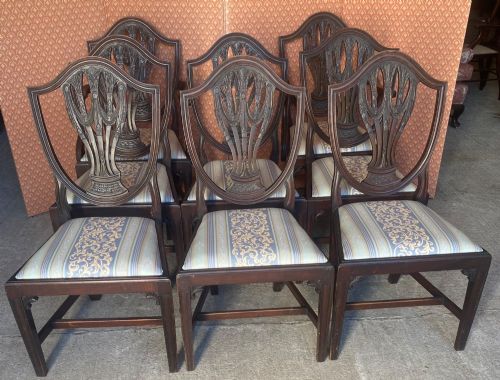
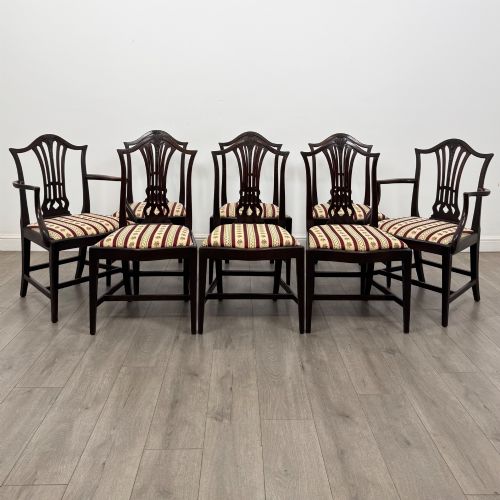
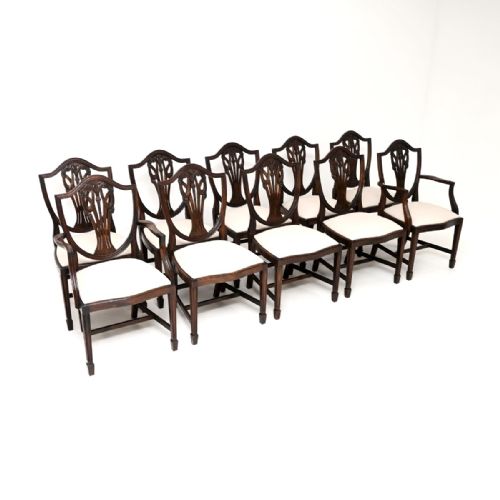
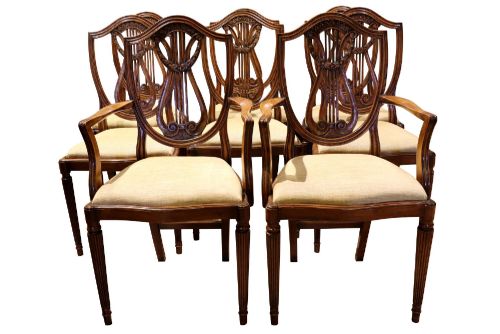
The shield back is a late eighteenth-century English pattern: the back framed as a shield outline rather than a square, with a splat set inside it. It was revived repeatedly from the later nineteenth century onward, so the same shape turns up across a two-hundred-year span of listings on Sellingantiques, dated anywhere from 1750 to 1950.
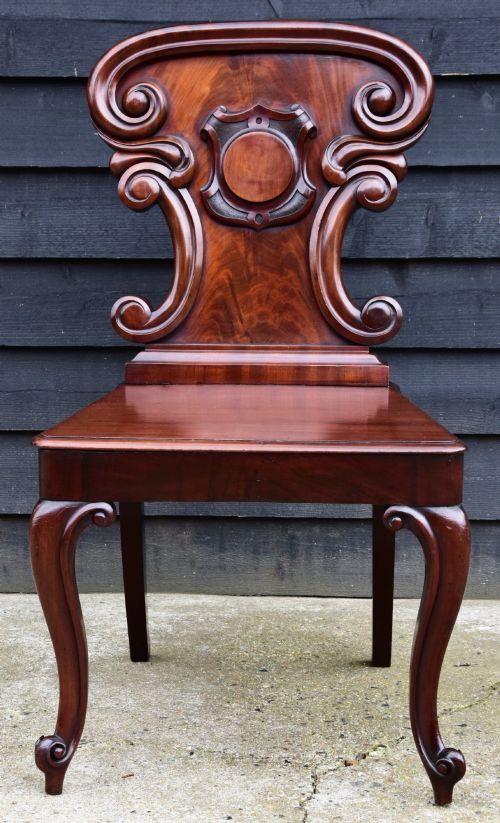
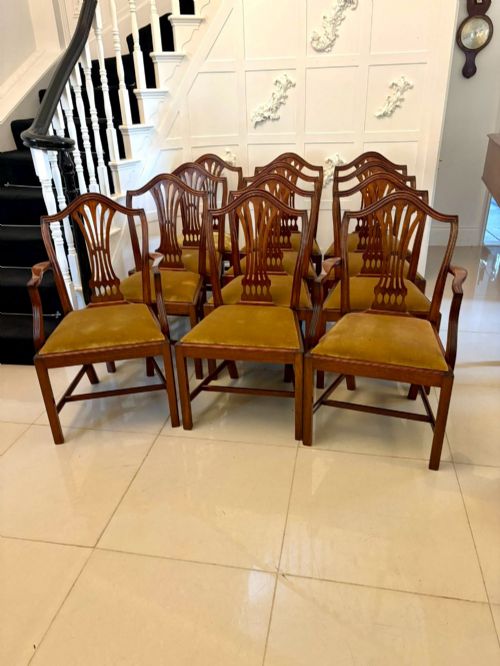
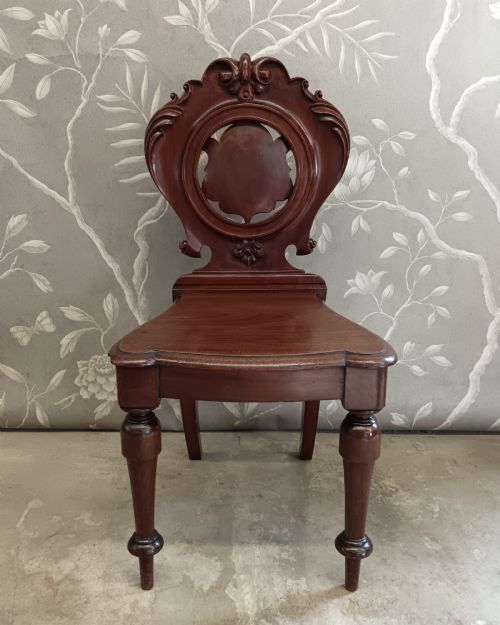
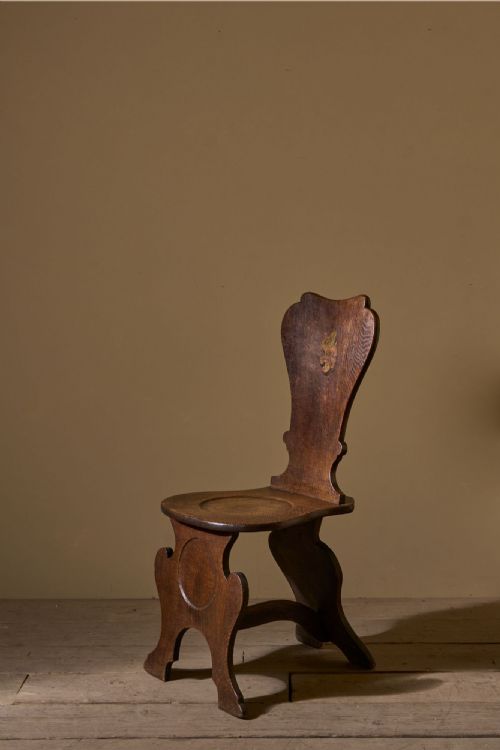
Mahogany dominates, named in over half the titles, with oak a distant second and satinwood, walnut, elm, fruitwood and birch surfacing only once or twice. The most likely encounter is a Hepplewhite-pattern or Hepplewhite-style mahogany dining set of six or eight, or a pair of mahogany hall chairs. Plural "chairs" appears in roughly two-thirds of titles, "pair" in about a third.
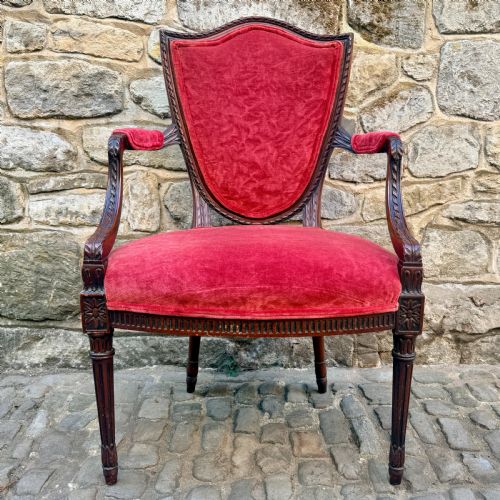
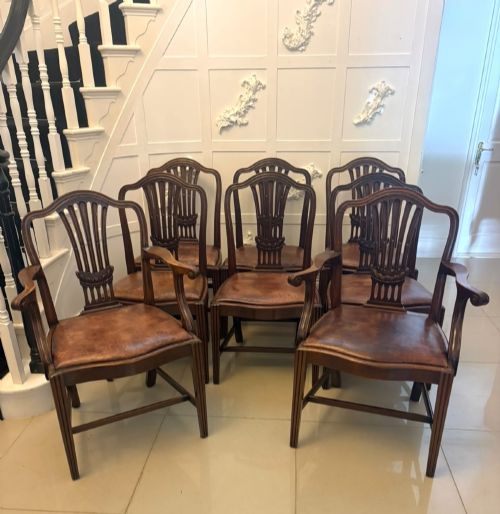
Beyond the dining sets and hall pairs, two smaller strands run through the archive. Open armchairs and carvers sell singly or in pairs, listed as elbow chairs, open arm chairs and desk chairs. A tightly defined French group catalogued as Napoleon III covers upholstered shield-back armchairs, more than half of them buttoned, one a tub chair.
Dating is dealer-applied and often loose. "19th Century" is the commonest label, followed by Victorian and Georgian, all brackets rather than dates, and only a minority of listings carry a clean year. Where a title says George III or gives a year, that is firmer ground than the date field alone.
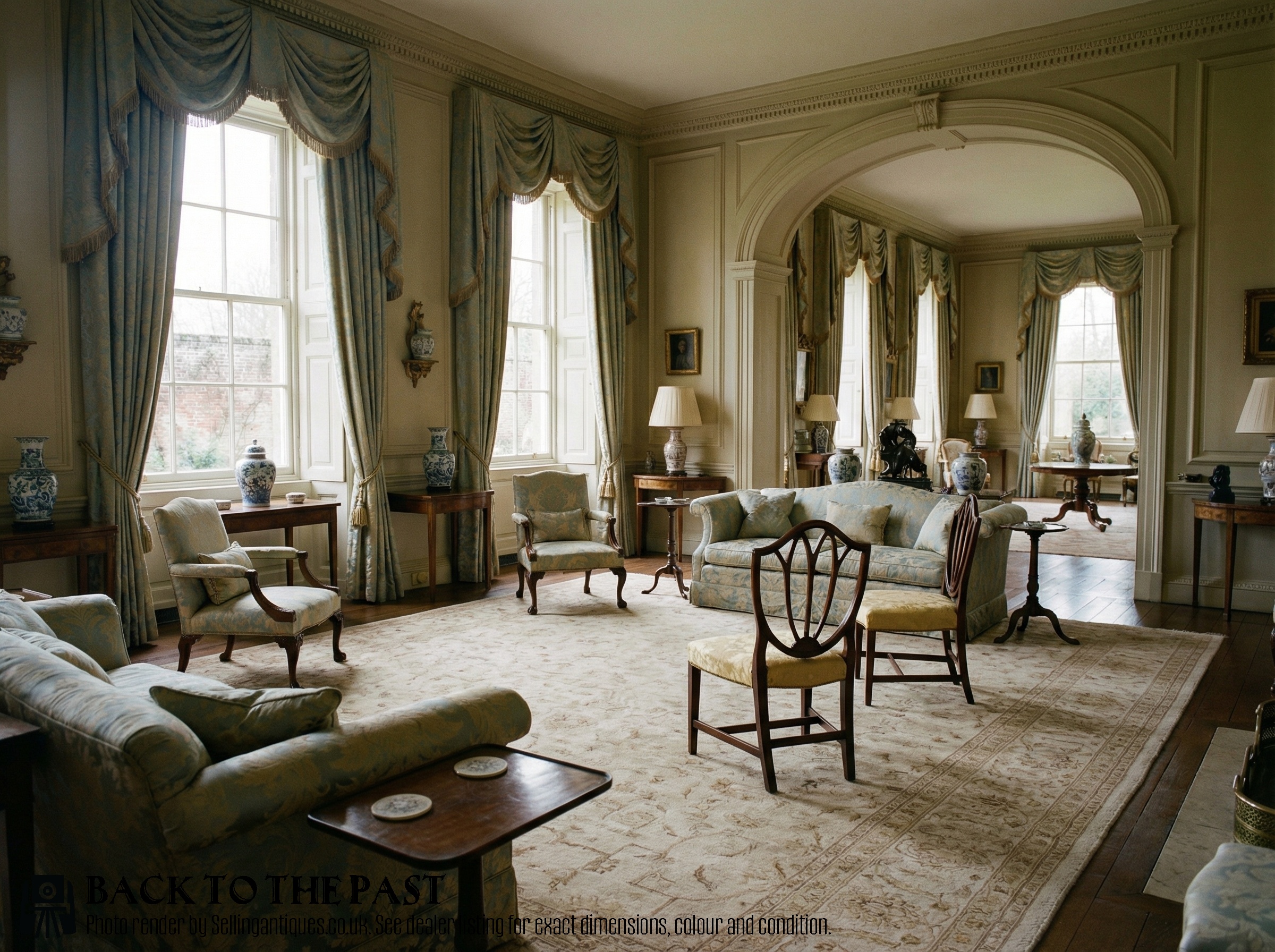
Where The Range Widens
Numbers do most of the work. Single chairs and pairs sit at the bottom, sixes and eights are routine, and tens and twelves recur toward the top, with one set of sixteen alone at the very top of the range. The "8 (6+2)" notation, six singles and two carvers, appears often enough to read as a standard formation. Armchairs and carvers hold more than plain side chairs of the same pattern.
Timber and surface come next. Oak and plain mahogany hall chairs occupy the lower samples; satinwood, inlaid, ebonised, painted and polychrome-decorated frames sit consistently higher, though there are few of them. Carving counts too: the named motifs, anthemion, wheat sheaf, lyre back, Prince of Wales feathers, each appear once or twice in the archive and cluster in the upper samples.
Then the period claim in the title. "George III", "18th century" and "Hepplewhite period" run above "style" and "revival" for otherwise comparable chairs. Only sixteen listings carry an 18th Century date, so the eighteenth-century end of this category is a minority within it, not the norm.
Antique Shield Back Chairs Retail Price Guide 2026
Typical UK retail prices for shield back chairs, calculated from the Sellingantiques database of over a million retail prices indexed since 2003. This retail price guide relies exclusively on Sellingantiques data; no external sources or auction records are used, so the figures do not describe the wider market.
About twenty-three shield back chairs are listed on Sellingantiques each year, and ninety dealers have listed them.
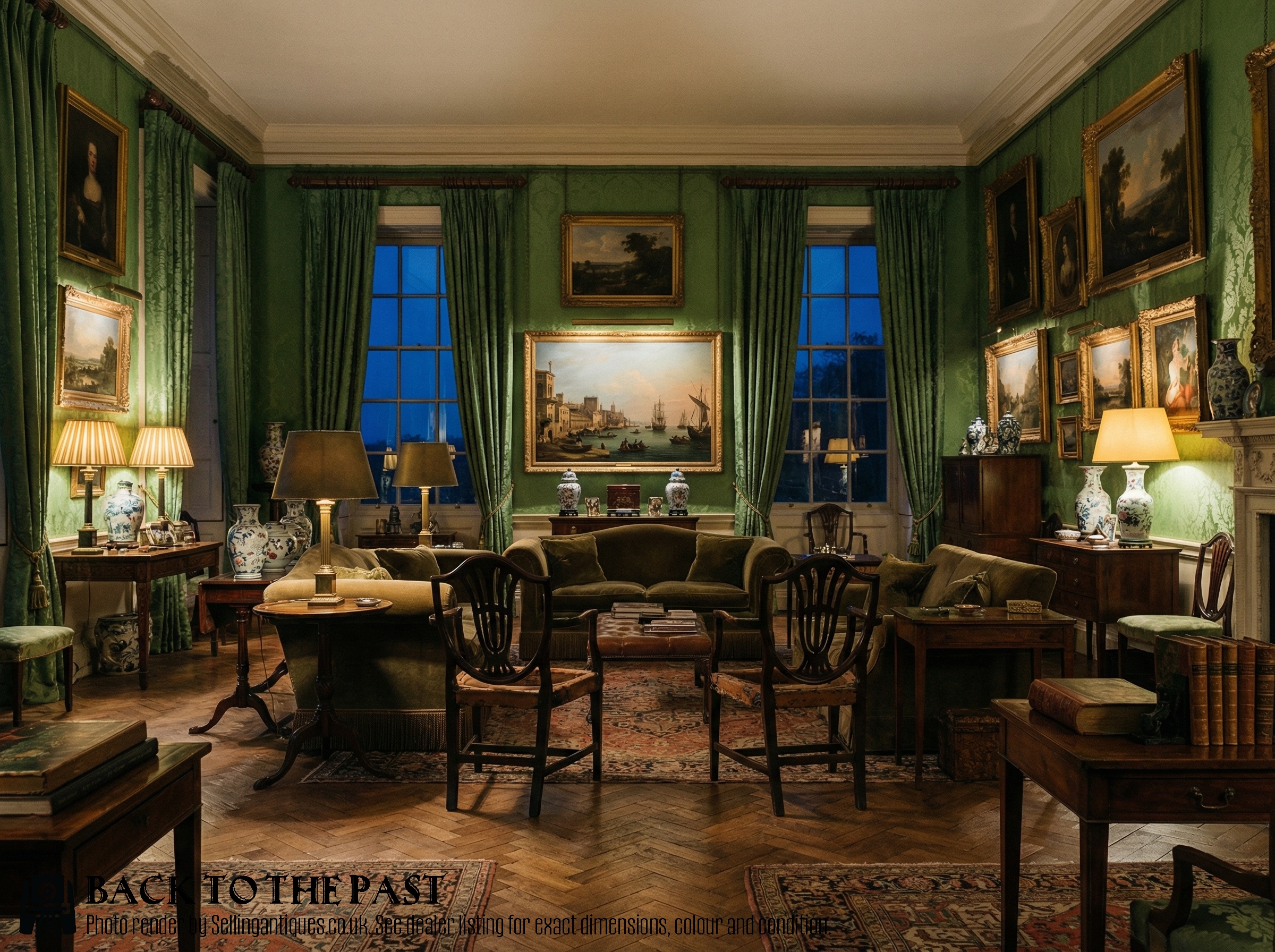
The Antique Shield Back Chairs Glossary
- Shield back
- The back framed as a curved, tapering shield outline rather than a rectangle. The defining feature of the whole category.
- Splat
- The central vertical infill of the back, sitting inside the shield frame. It carries whatever carving or piercing the pattern calls for.
- Carver
- The armchair in a dining set. A title reading "8 (6+2)" means six single chairs and two carvers.
- Hall chair
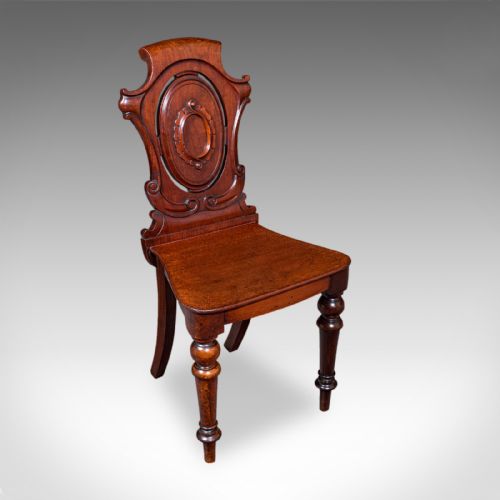
- A hard-seated side chair made for a hall or passage, usually sold in pairs. Around a quarter of titles here mention halls.
- Revival
- A later chair made to an earlier pattern. Titles use Hepplewhite revival, Georgian revival and Federal revival.
- Buttoned
- Upholstery drawn down with buttons, and the marker of the Napoleon III French armchairs in this archive.
Antique Shield Back Chairs: Frequently Asked Questions
What wood are shield back chairs usually made from?
Mahogany, in over half of the titles on Sellingantiques. Oak comes a distant second, at a fraction of that.
Everything else is occasional. Satinwood, walnut, elm, fruitwood and birch each turn up only once or twice across the whole archive.
Why do so many listings say Hepplewhite?
Hepplewhite is used in titles as the name of the shield-back pattern itself, and roughly a quarter of listings carry it. It covers both period English chairs and later ones made to the same design.
Where a title adds "style" or "revival", it is signalling the later work. Around eleven titles use revival outright.
How large do the dining sets get?
Sixes and eights are routine. Tens and twelves recur through the archive, and a single set of sixteen sits alone at the top.
Smaller groupings are common too: fours, sevens and pairs all appear, along with plenty of single chairs.
Are shield back chairs always English?
No. A distinct French strain is catalogued as Napoleon III, fourteen titles in all, covering upholstered shield-back armchairs, more than half of them described as buttoned.
Two titles reach further still, describing Federal revival shield backs. One of those is the sixteen-chair set.
What is the difference between a hall chair and a dining chair here?
Hall chairs have hard seats and were made for halls and passages. They come in pairs, and mahogany hall chairs are the commonest version.
Dining chairs sell in sets, often with carvers included. Hall chairs account for about a quarter of titles and are rising in current stock.
How reliable are the dates on these listings?
Treat them as approximate. Only 78 of 206 listings carry a clean year; the rest fall back on "19th Century", Victorian or Georgian, all of which are brackets.
Some samples dated "18th Century" describe Regency or 1840 chairs, and one titled circa 1790 carries 1750. A year in the title is the firmer signal.