
Antique Kitchen Chairs
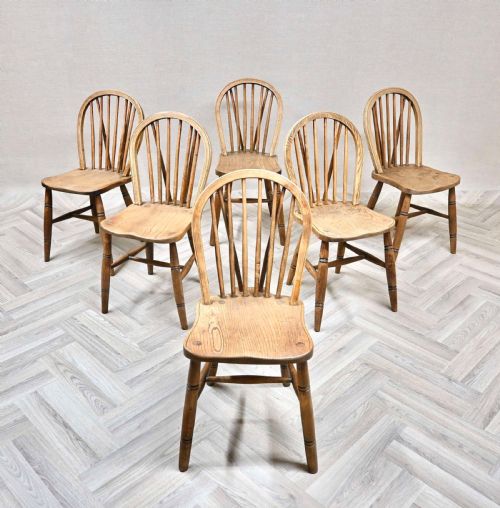
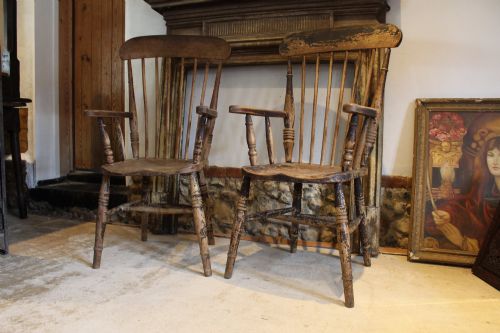
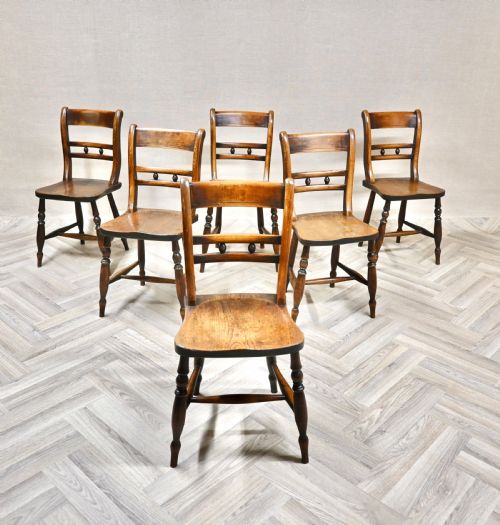
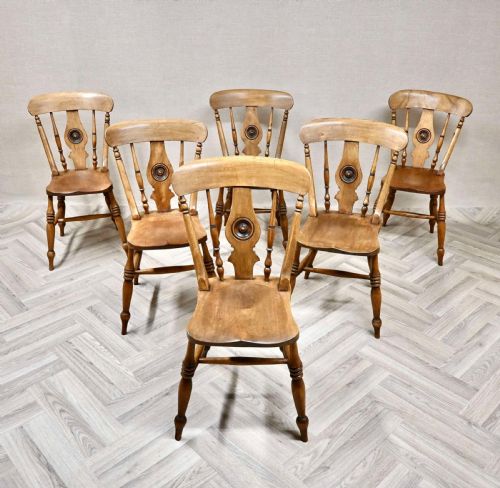
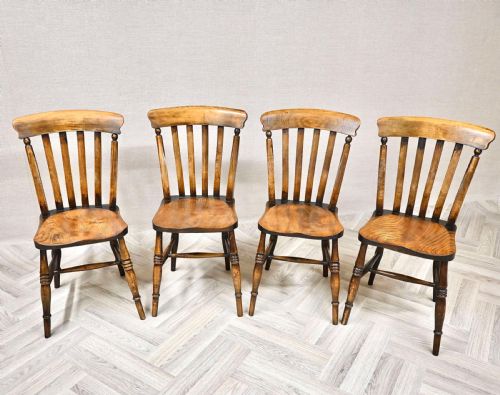
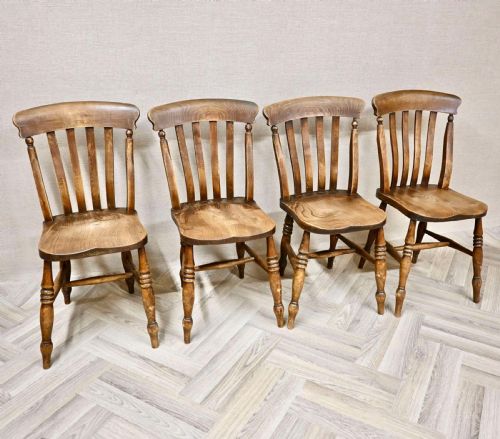
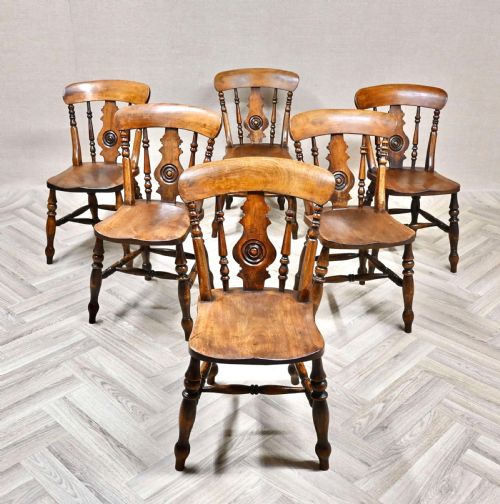
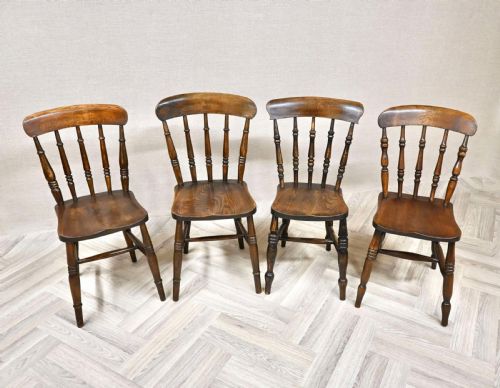
Vernacular English seating built for kitchens, farmhouses and inns: turned legs and back sticks socketed into a solid plank seat, sold in fours and sixes rather than one at a time.
Antique Kitchen Chairs
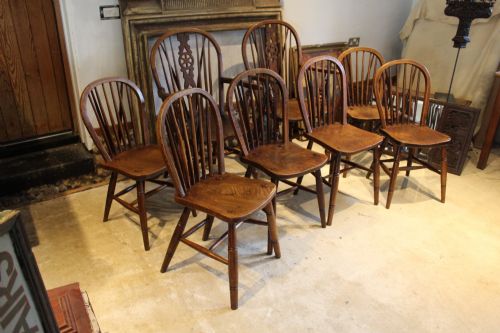
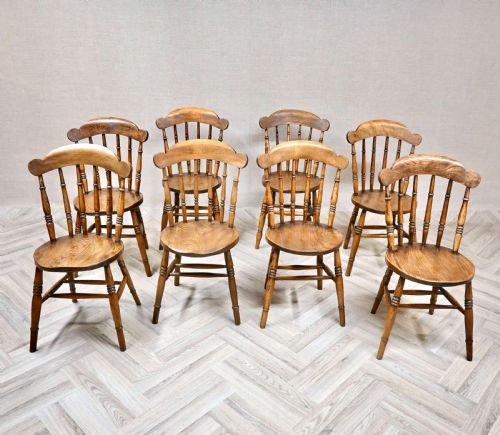
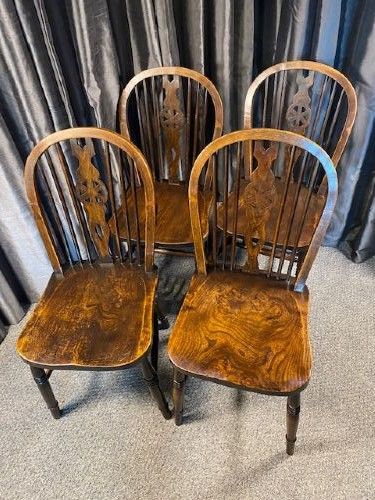
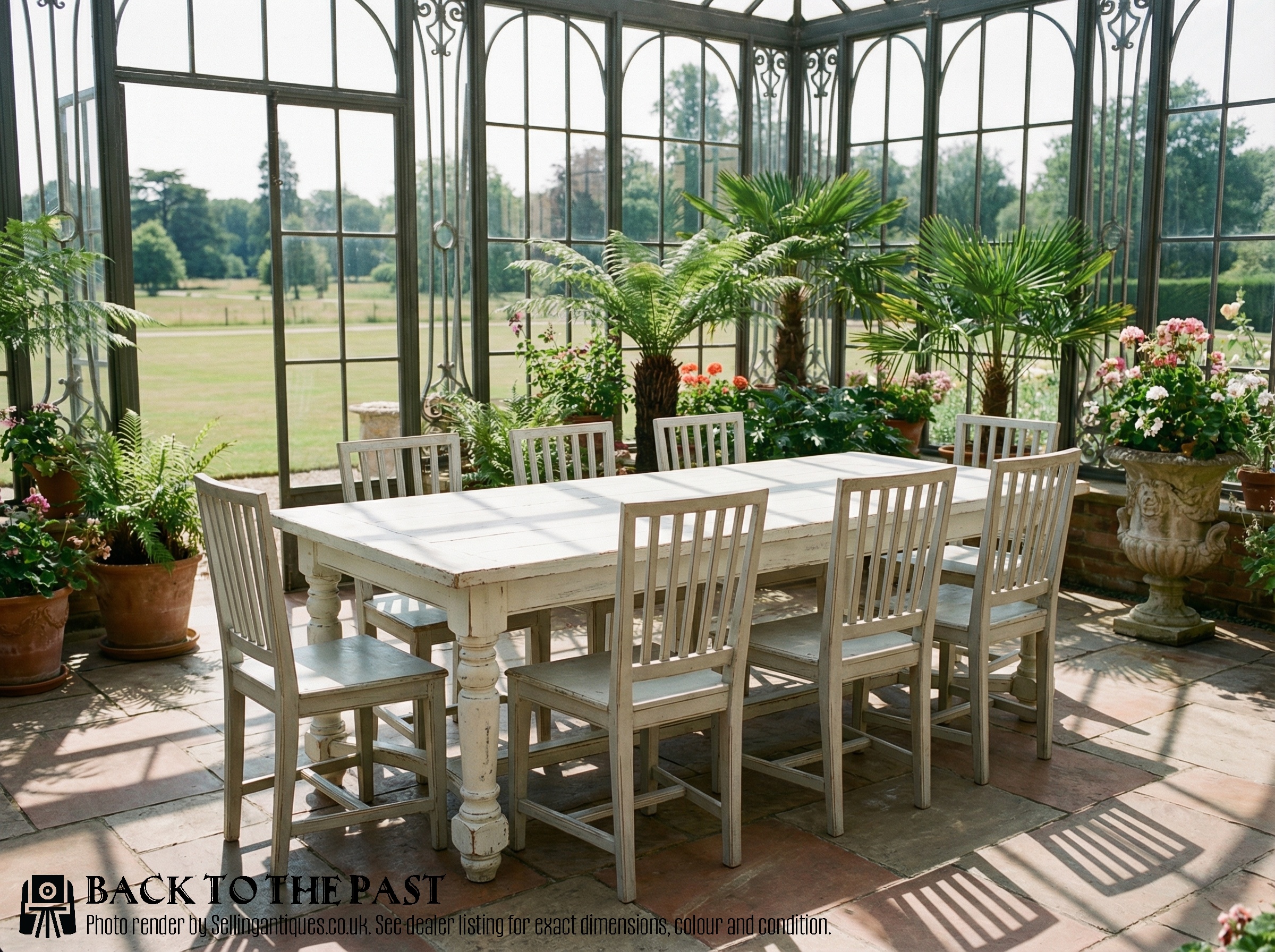
Half of all titles on Sellingantiques use the word Windsor, and that is the form you'll meet most: a solid saddle or dished seat, legs socketed in from below, back sticks or laths socketed in from above. Elm, ash and beech are the timbers named far more often than oak or pine.
They arrive in multiples. "Chairs" plural appears in 1,241 of 1,402 titles, sets of four and six lead the count, eights turn up regularly, and pairs are the minority at 78 titles. Single chairs exist but the category is built around groups.
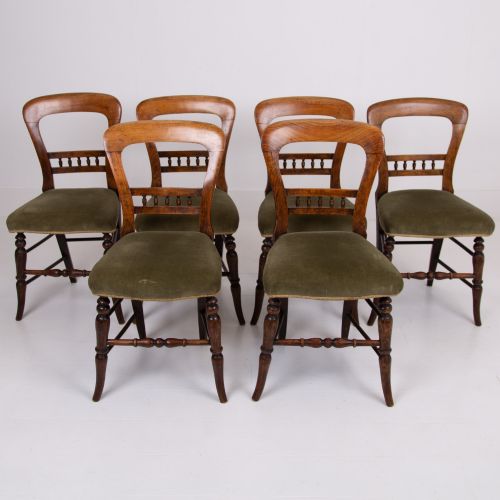
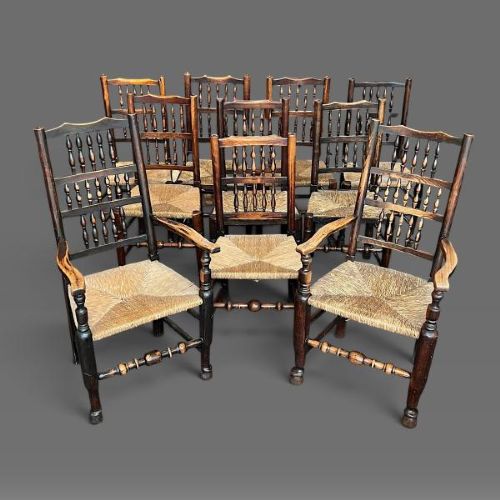
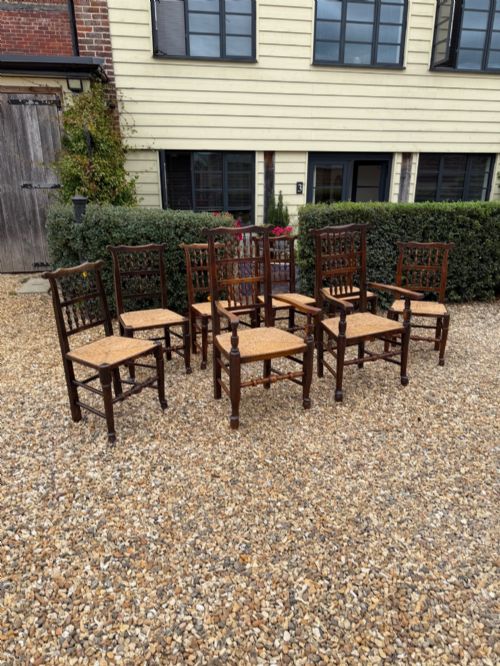
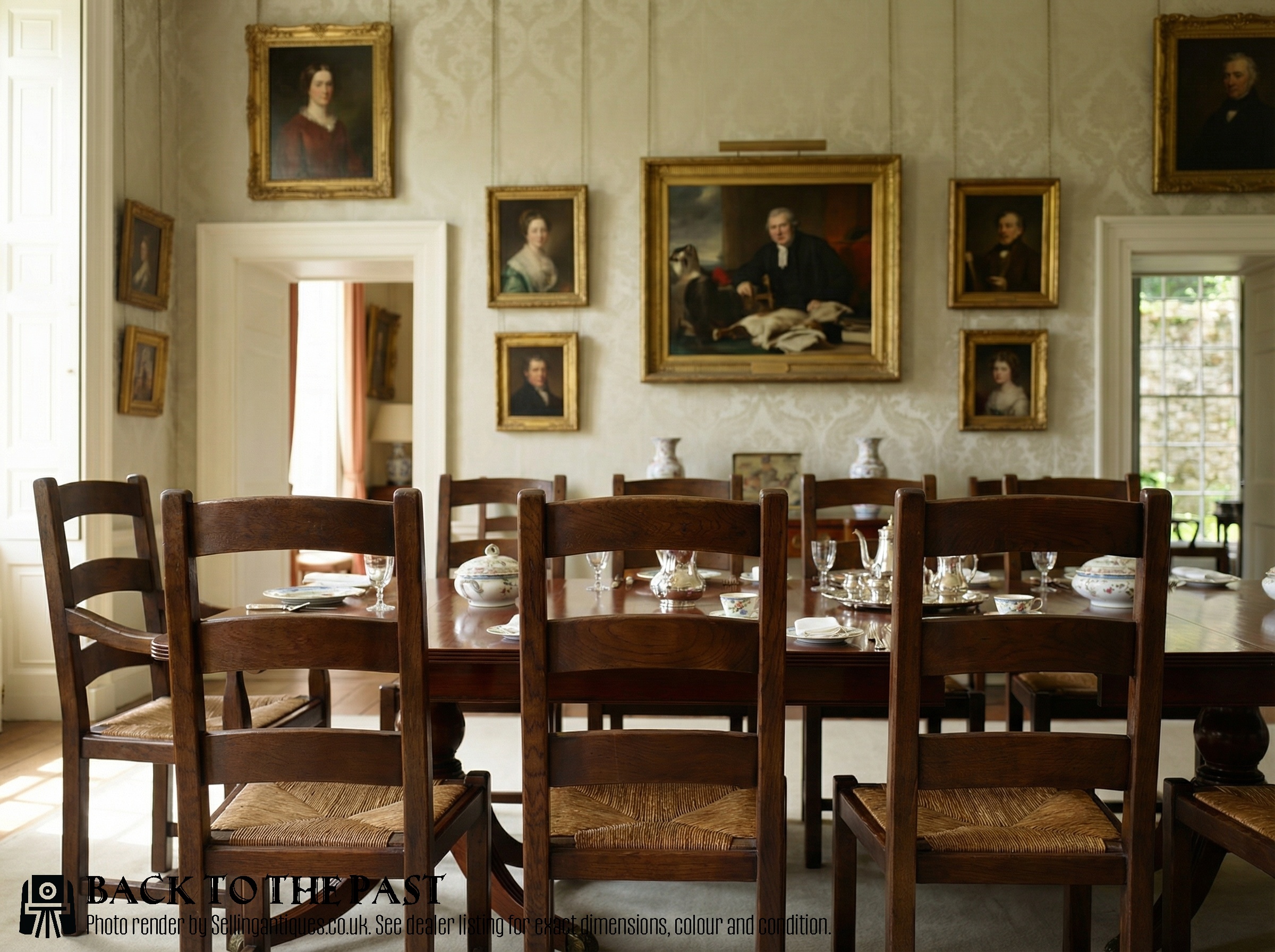
Beyond the Windsor types sits a run of plainer farmhouse and country chairs with no back type named, and a smaller steady strand of ladder-backs and rush-seated chairs, including Lancashire sets. A small imported thread runs through too: French oak rush-seat sets, French cherry, bistro bentwood, and Swedish, Flemish, Dutch and Hungarian pieces.
Dating is broad rather than precise. 649 listings say only "19th Century" and 217 say "Victorian", with decade tags clustering in the late 19th and early 20th century. The dated field runs 1750 to 1940; Georgian and Regency entries appear, but they are a small minority.

Where The Range Sits
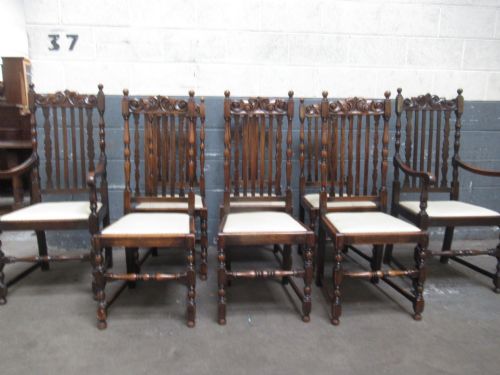
Set size does most of the work, and dealers care whether the set is genuine. "True set of six" and "matched set" are written to distance a group from harlequin, mixed and "set of similar", and from a near pair. Larger genuinely matching groups sit at the top: the samples run to ten, twelve, sixteen ash chairs and once twenty-two.
Timber and named back type both push a set upward. Yew appears in only 22 titles across the whole archive and those examples cluster high, while elm, ash, beech and oak are the everyday woods and pine sits low. A specified back sells: lathback, wheelback, bar back, hoop back, comb back, lyreback, fiddle back and bullseye all get used as selling points against a bare "Set Of 4 Kitchen Chairs".
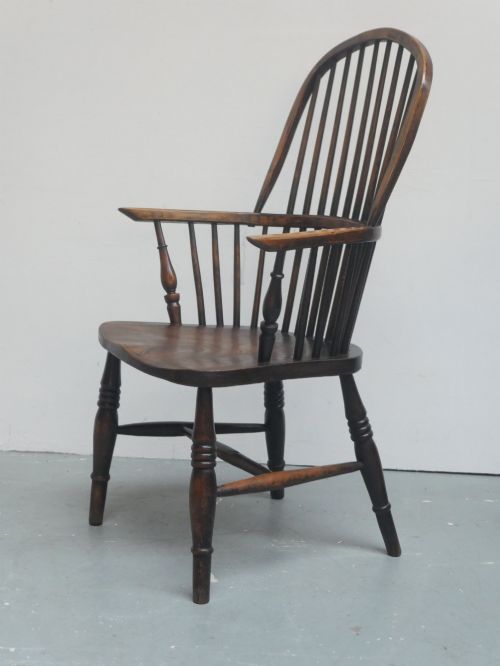
Two other things lift a listing. Regional labels in the title, sparing but persistent, generally land in the upper half: Worksop, Lincolnshire, East Anglian, Thames Valley, Wycombe, Lancashire, Derbyshire, Yorkshire, Nottinghamshire, Grantham, Suffolk, Welsh and West Country. And arms count, so a set given as "8 (6 + 2)" or with a carver sits above side chairs alone, with smoker's bow armchair sets among the highest in the samples.
Antique Kitchen Chairs Retail Price Guide 2026
Typical UK retail prices for kitchen chairs, calculated from the Sellingantiques database of over a million retail prices indexed since 2003. This retail price guide relies exclusively on Sellingantiques data; no external sources or auction records are used, so the figures do not describe the wider market.
Half of all kitchen chair titles on Sellingantiques use the word Windsor. Yew is named in just twenty-two of them.
The Antique Kitchen Chairs Glossary
- Windsor
- A chair whose legs and back members socket into a solid plank seat. Used in half the titles in this category.
- Lathback
- A back filled with flat vertical laths instead of turned sticks. Around 39 titles name it, sometimes as "Windsor lathback".
- Wheel back
- A pierced central splat cut as a wheel or roundel, spread across some 70 titles under wheel, wheelback and wheel back.
- Harlequin set
- Chairs of similar type but not all identical, put together as a set. Only 49 titles use the word, though matched, mixed, similar and near pair do the same job.
- Carver or elbow chair
- The armed chair in a set. Armchair appears in 56 titles, with carver and elbow used in the descriptions.
- Smoker's bow
- A low-back Windsor armchair with a bowed rail serving as both arms and back. Scarce in the archive, and sits at the upper end.
Antique Kitchen Chairs: Frequently Asked Questions
How many kitchen chairs usually come in a set?
Four and six lead, with 108 titles each. Sets of eight appear 41 times, and tens and twelves turn up in the samples.
Pairs are less common than you might expect, at 78 titles. Single chairs exist, but the category is overwhelmingly a multiples one.
The biggest groups recorded are a set of sixteen ash chairs and, once, twenty-two scumbled dining chairs.
What woods were these chairs made from?
Elm is named in 262 titles, ash in 111 and beech in 98. Oak appears in 104. Those four are the everyday timbers of the category.
Yew shows up in only 22 titles across the whole archive, and those sets cluster near the top of the range. Pine, at 26 titles, sits low.
Fruitwoods appear too, including French cherry among the Continental listings.
Are Windsor chairs the same as kitchen chairs?
Windsor describes the construction: legs and back sticks socketed into a solid plank seat. Kitchen chair describes the job it did.
Most of what sells under this heading is both. Half of all titles on Sellingantiques use the word Windsor, alongside dining, farmhouse and country as the other common framings.
The rest includes ladder-backs, rush-seated country chairs and plain sets with no back type given.
What does a harlequin set of chairs mean?
Chairs of similar type and period assembled into a group, without being identical. Rail profiles, splats or leg turnings will differ between them.
Only 49 titles admit to harlequin, but matched, mixed, similar and near pair carry the same meaning. Dealers draw a firm line between those and a true set.
Genuinely matching sets sit higher in the range.
Which regions made country kitchen chairs?
Regional labels turn up sparingly but persistently in titles: East Anglia, the Thames Valley, Wycombe, Lancashire, Derbyshire, Yorkshire, Nottinghamshire, Lincolnshire, Suffolk, Wales and the West Country.
Worksop and Grantham appear too, and Worksop recurs often enough to look like a small collecting field on its own.
Chairs carrying a regional name in the title generally sit in the upper half of the range.
When were most antique kitchen chairs made?
The dealer dating is broad. 649 listings say simply 19th century and 217 say Victorian, with Edwardian used 42 times as a further loose band.
Where decades are given, they cluster in the late 19th and early 20th century, the 1900s and 1920s heaviest among them.
The full span runs 1750 to 1940, the earliest sampled piece being a set of six Georgian elm spindlebacks.