



A 2026 Guide by Sellingantiques
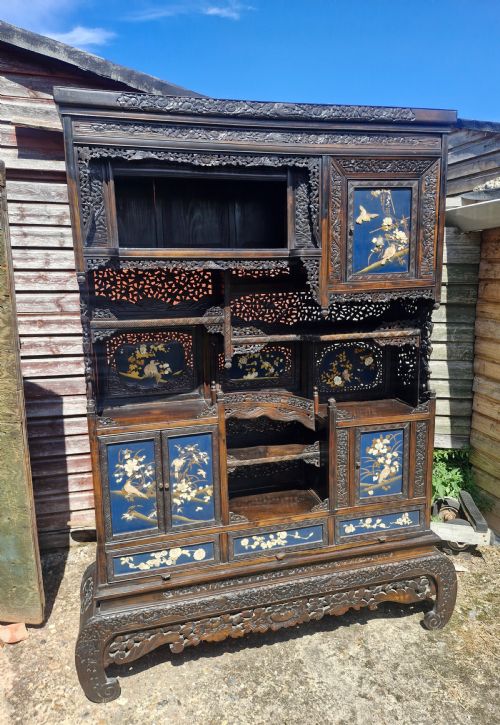
Japanese Shodana Cabinet, 19th Century
Priced at £2,250 from Sinclairs Antiques and Interiors
Developed during the Edo period from simple shelving built into traditional Japanese alcoves.
The Meiji era saw craftsmen adapt antique Shodana cabinets for the Western market.
Demand from European buyers led to larger freestanding forms distinct from earlier domestic types.
Look for the transition from restrained domestic pieces to highly decorated export furniture.
Many left Japanese ports in sections before being assembled by retailers abroad.
The Ozeki company operated in Yokohama during the Meiji period, producing decorated examples for export.
Shibayama Senzo lent his name to the encrusted inlay style that characterises many of these cabinets.
Anonymous artisans. Most trade pieces remain unsigned, built by craftsmen working in collaborative regional workshops.
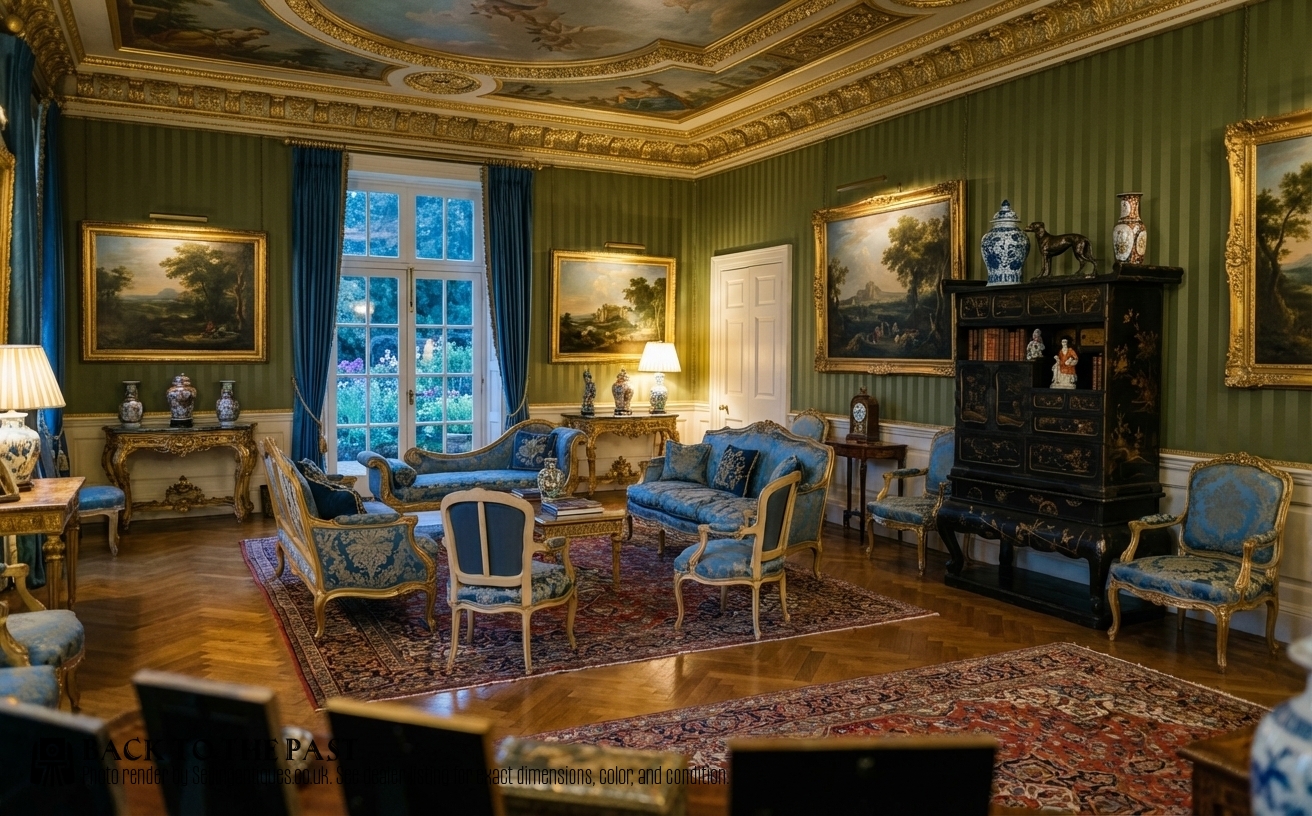
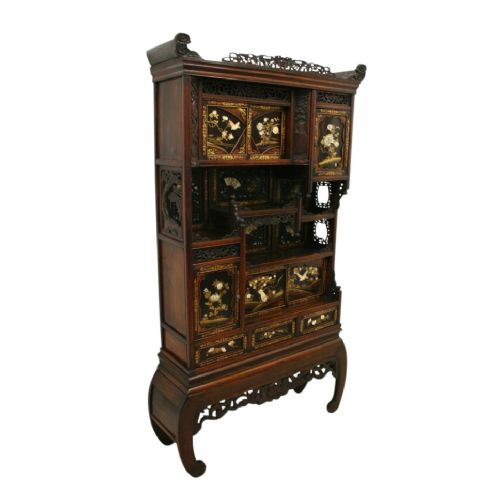
Late C19th Japanese Meiji Period Lacquer Shodana Cabinet-on-stand ., 19th Century
Priced at £2,250 from M Lees and Sons
The 2026 retail price guide for Antique Shodana Cabinets is drawn from a proprietary archive of over 1.1 million retail prices indexed by Sellingantiques since 2003. This guide relies exclusively on their own internal data; no external sources or auction records are used.
Analysing nearly 25 years of UK antique market history alongside current retail values, the data indicates that typical UK retail prices for Antique Shodana Cabinets range between £1,600 and £7,600. Entry-level prices generally fall under £1,600 and premium examples upwards of £7,600.
Staggered, asymmetrical shelves define the structure. They break the visual space into varying heights and widths.
Slide the panels to find hidden storage compartments, running smoothly in wooden tracks carved directly into the frame.
Pierced galleries framing the open sections. These are regularly carved with floral or geometric motifs.
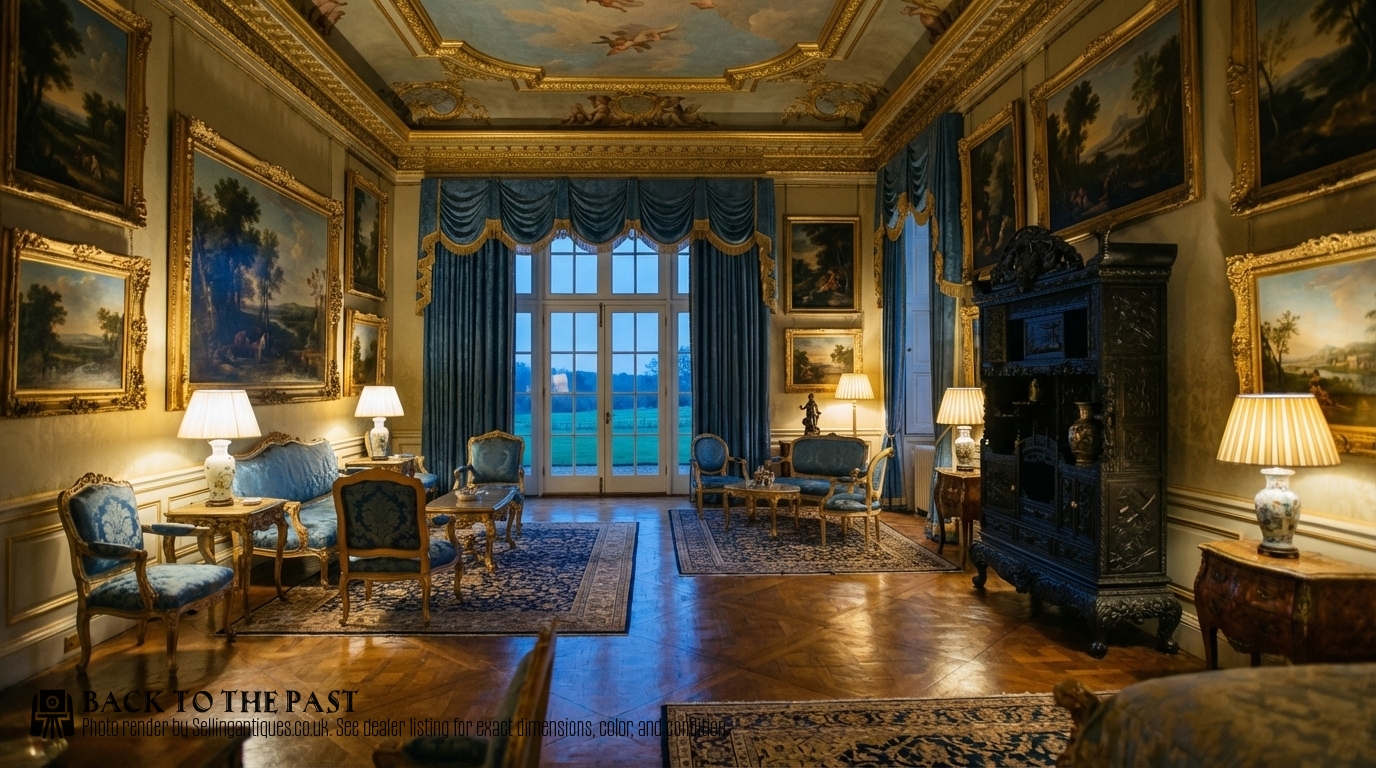
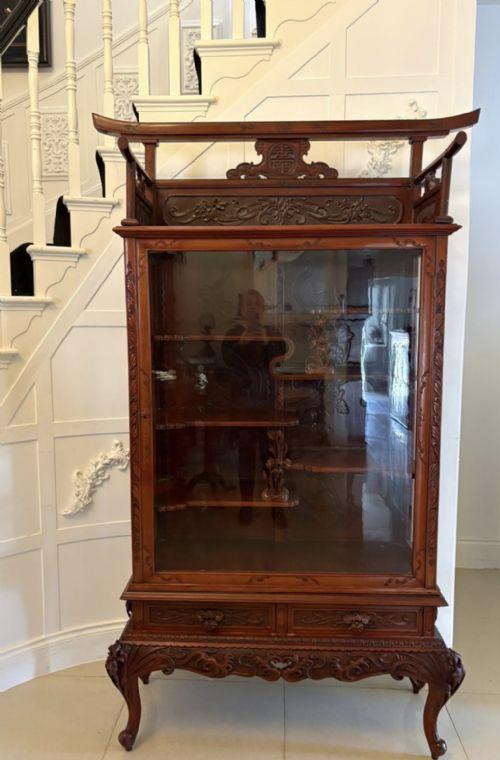
Early C20th Japanese Taisho Era Carved and Ebonised ‘Shodana’ or Display Cabinet on Stand ., 1910
Priced at £1,600 from M Lees and Sons
Early frames rely on concealed mortise and tenon joints secured with wooden pegs.
Carvers employed varying depths of relief to create pierced friezes that catch the light.
Notice the metalwork. Fittings shifted over time from plain structural hinges to engraved decorative mounts.
"The staggered shelf design forces the eye to wander, preventing a viewer from taking in the display all at once."
"Find the secret compartments. Some internal drawers contain hidden catches requiring you to press a specific spot."
"Carved panels read as a sequential narrative when viewed from right to left across the frontage."
Based on almost 25 years of Sellingantiques UK antique market data, Antique Shodana Cabinets appeared 89 times (out of 1,100,000 antiques) which gives it a rarity score of 98/100.
This score measures scarcity within the Sellingantiques archive only and is not a survey of the entire antiques market, so these statistics may not be indicative of the general availability of Antique Shodana Cabinets elsewhere.
Dust the surface gently with a soft dry brush. Avoid damp cloths, as moisture can seep under the shell and bone segments, causing the ancient glues to soften.
If dirt has built up around the mounts, a dry cotton bud lifts it away without risking the surrounding lacquer. Never use commercial spray polishes on these surfaces.
Wood movement over a century often pinches the runners. Check the tracks for trapped grit or old wax first.
If the channel is clean, rubbing a block of plain paraffin wax along the wooden runner sometimes provides enough slip to free the door. Do not force them, as the thin panels split easily.
Japanese collectors used the staggered sections for incense burners, small bronzes, and seasonal flower arrangements.
The asymmetric design isolates each object. A small ceramic piece on a lower shelf balances a taller scroll or vase on the opposite side.
Plain timber is standard. Most antique Shodana cabinets were designed to stand flat against a wall in a room.
The backs usually show unfinished boards, often with visible saw marks or signs of hand planing. A finished back suggests the piece was altered later to act as a room divider.
Please note: This Antique Shodana Cabinets guide and its associated pricing data are provided for general informational purposes only. It does not constitute formal financial, investment, or appraisal advice and should not be relied upon as the sole basis for any commercial activity, purchasing, or sales decisions. Sellingantiques.co.uk accepts no liability for any actions taken in reliance on this information. Always consult with a qualified professional or independent appraiser.
