



A 2026 Guide by Sellingantiques
Shopkeepers commissioned these units during the late nineteenth century to organise expanding stock ranges. They kept thousands of tiny items accessible while protecting them from dust.
Look at the drawer fronts on early versions. Some hide the contents completely, relying on paper labels rather than glass panels to tell the assistant what sits inside.
Most antique haberdashery cabinets date from the mid-nineteenth to the mid-twentieth century. The earliest examples often sat against the wall behind the serving counter.
Floor-standing models from the twentieth century aren't as tall. They were built lower, allowing customers to lean on the top surface while picking out their ribbons.
Dudley & Co of London dominated the early twentieth-century trade. Their brass maker's plates frequently turn up nailed to the bottom rails of surviving examples.
Frederick Sage & Company supplied high-end retail furniture. They exported large shop fittings worldwide, including vast haberdashery units for department stores.
Regional joinery firms built most of the plainer provincial units. They left no trade labels, relying on standard pattern books to supply local drapers.
The 2026 retail price guide for Antique Haberdashery Cabinets is drawn from a proprietary archive of over 1.1 million retail prices indexed by Sellingantiques since 2003. This guide relies exclusively on their own internal data; no external sources or auction records are used.
Analysing nearly 25 years of UK antique market history alongside current retail values, the data indicates that typical UK retail prices for Antique Haberdashery Cabinets range between £900 and £3,300. Entry-level prices generally fall under £900 and premium examples upwards of £3,300.
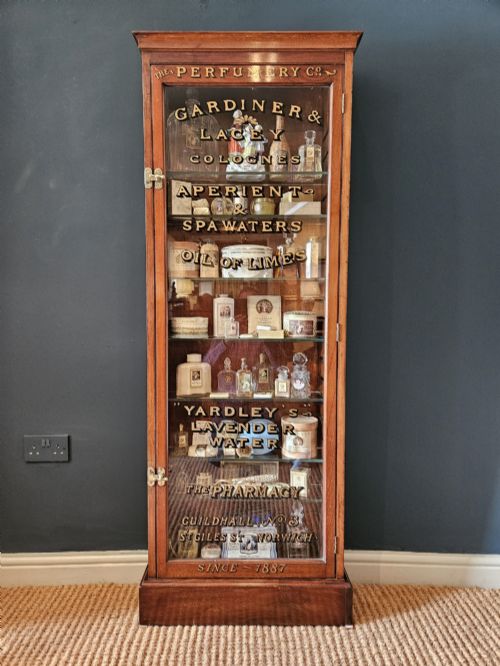
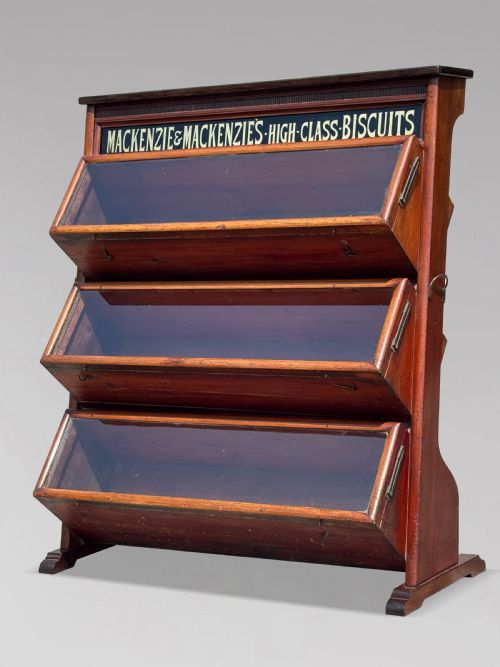
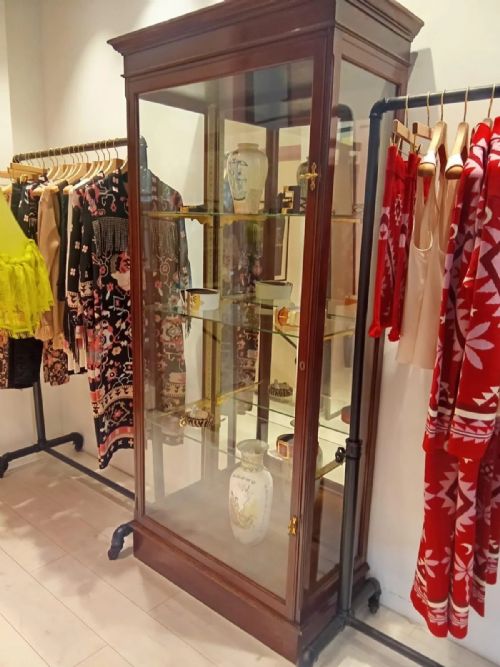
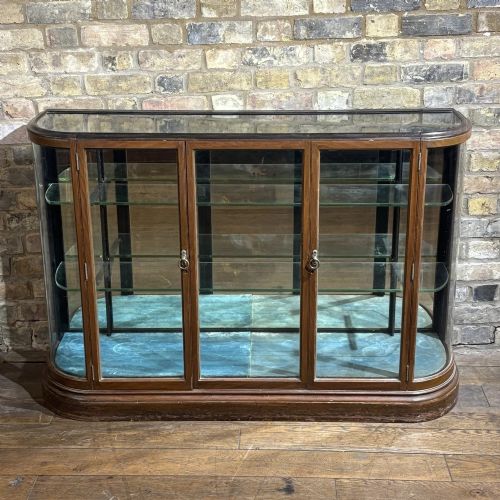
Glass drawer fronts define the classic antique haberdashery cabinet. They let light in and showed off the colourful shop stock.
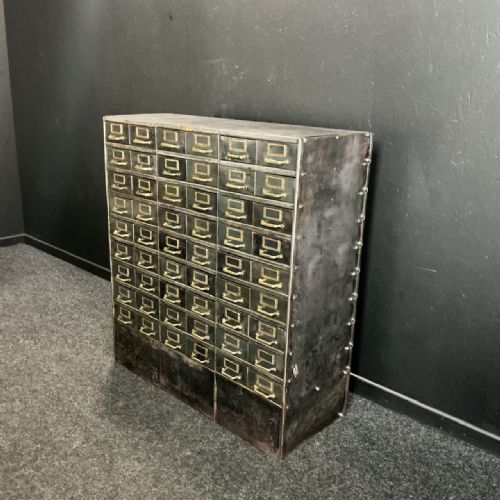
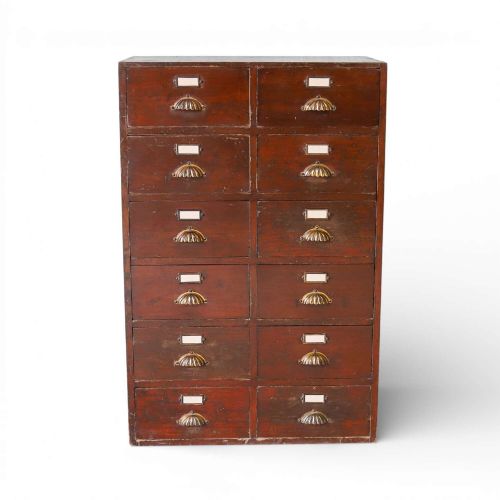
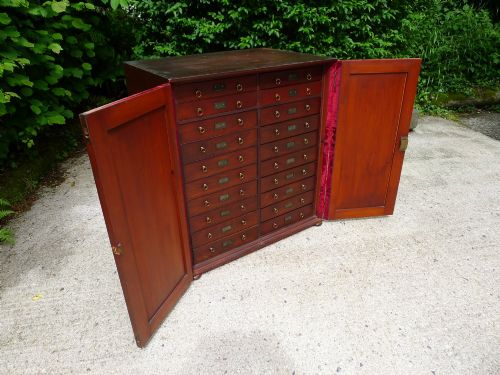
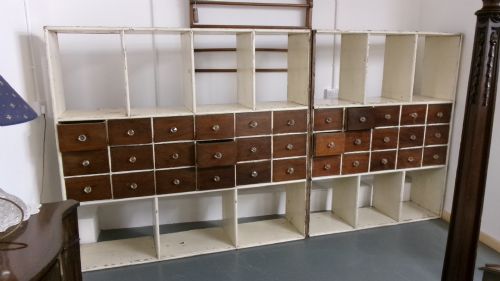
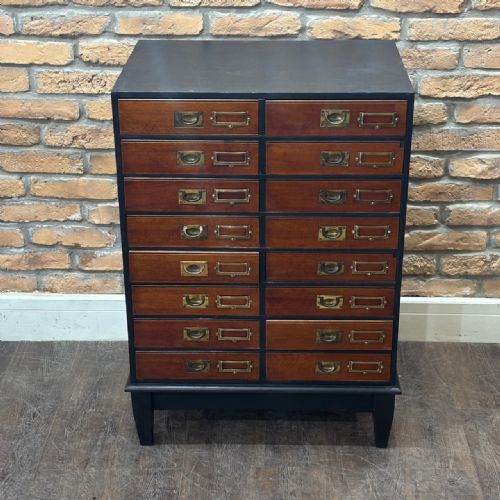
Banks of identical shallow drawers fill the main body. Some units have two columns, while others stretch to six or more across the width.
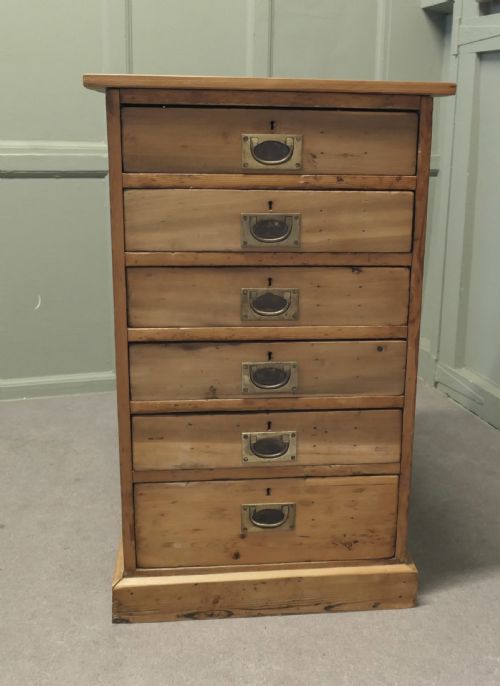
Notice the handles. Standard fittings are metal cup pulls or flat brass drop handles, fixed centrally on each narrow drawer to allow a quick, one-handed pull.
Early examples feature hand-cut dovetails on every single drawer. A cabinet with sixty drawers required serious bench time from an experienced joiner.
Machine-cut joints start appearing by the Edwardian period. Factories adopted routers to cut uniform pins and tails, speeding up the assembly of the massive drawer banks.
Slide a drawer out and inspect the back edge. Later units often use simple rebate joints rather than dovetails to secure the rear panel.
"Many were built in modular sections. Shopkeepers could order an initial block of drawers and buy matching units to stack alongside as their business grew."
"The shallow depth of the drawers is highly specific. It matches the exact diameter of standard thread spools, stopping them from rolling over and tangling."
"Hidden rule scales exist on some counters. Makers sometimes inlaid brass measuring guides right into the top edge to help staff cut ribbons quickly."
Based on almost 25 years of Sellingantiques UK antique market data, Antique Haberdashery Cabinets appeared 617 times (out of 1,100,000 antiques) which gives it a rarity score of 88/100.
This score measures scarcity within the Sellingantiques archive only and is not a survey of the entire antiques market, so these statistics may not be indicative of the general availability of Antique Haberdashery Cabinets elsewhere.
Most antique haberdashery cabinets have fixed internal dividers. The makers pinned them in place to hold specific stock.
Removing them usually damages the wood.
These drawers were designed for ribbons and cottons. The bottoms are thin timber or plywood, tacked gently into the frame.
They will bow under the weight of heavy cutlery. You can line the bottoms with thicker board to spread the load, but the thin wooden runners might still struggle.
A simple mix of water and white vinegar works well. Spray it onto a cloth rather than directly onto the drawer front to protect the surrounding timber.
Be gentle around the internal glazing beads. The old putty holding the glass in place is often brittle and flakes away if you press too hard.
Shop counters took a daily beating from coins, scissors, and heavy bolts of cloth. Those marks are the honest history of the piece.
Sanding it back erases that character and usually leaves the top looking far too new. A good clean and a coat of hard wax polish will protect the surface.
Please note: This Antique Haberdashery Cabinets guide and its associated pricing data are provided for general informational purposes only. It does not constitute formal financial, investment, or appraisal advice and should not be relied upon as the sole basis for any commercial activity, purchasing, or sales decisions. Sellingantiques.co.uk accepts no liability for any actions taken in reliance on this information. Always consult with a qualified professional or independent appraiser.
