
Regency Boxes
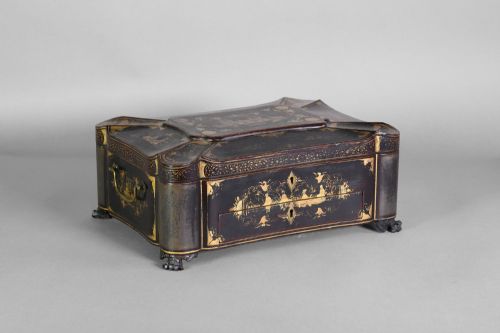
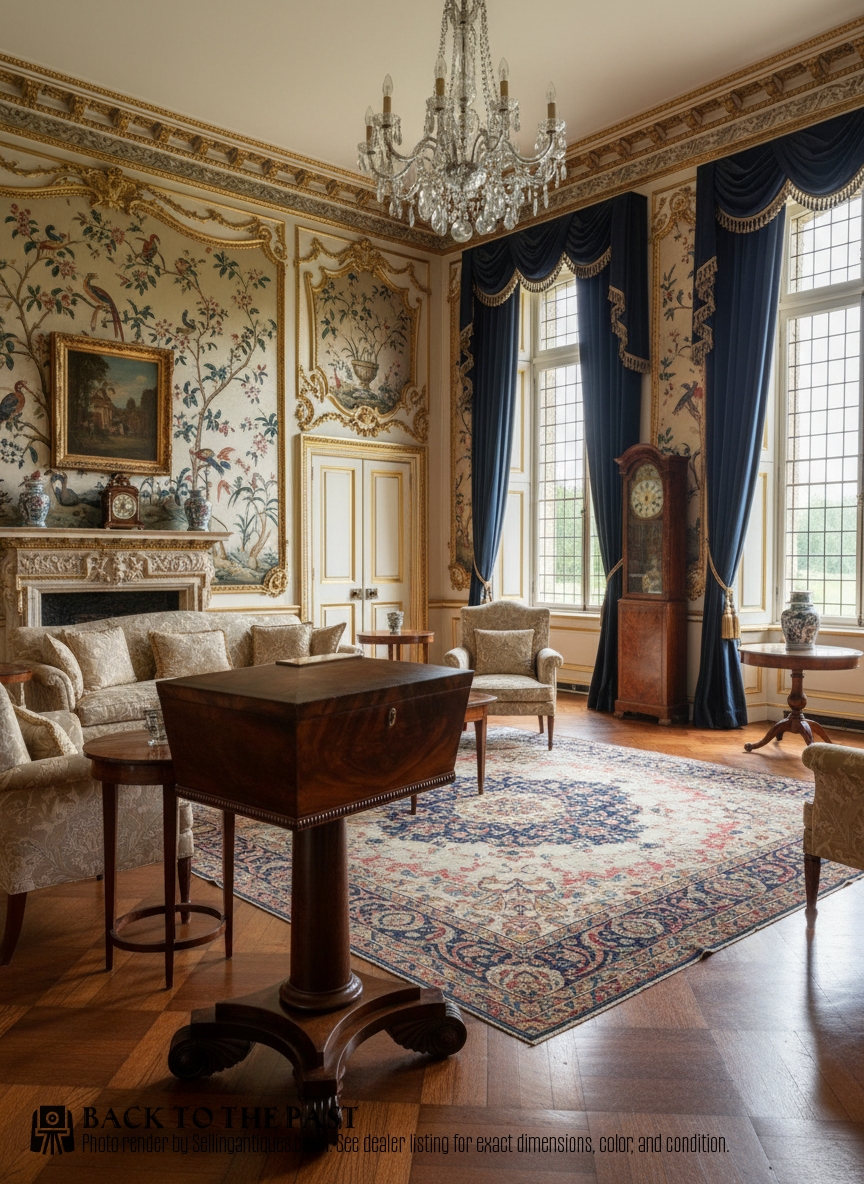
Small English lidded boxes of roughly 1800 to 1840, made to hold tea, writing kit, sewing tools and jewellery, and veneered in rosewood, mahogany and satinwood.
Regency Boxes
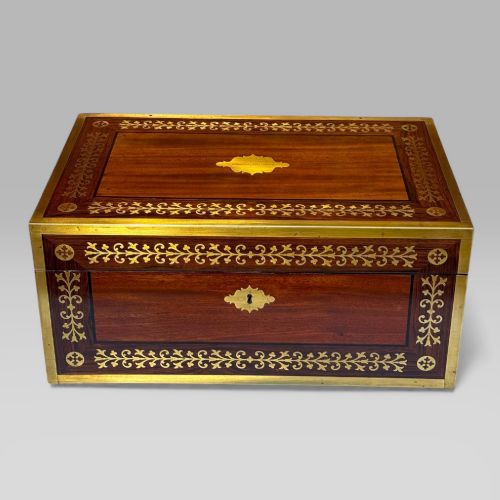
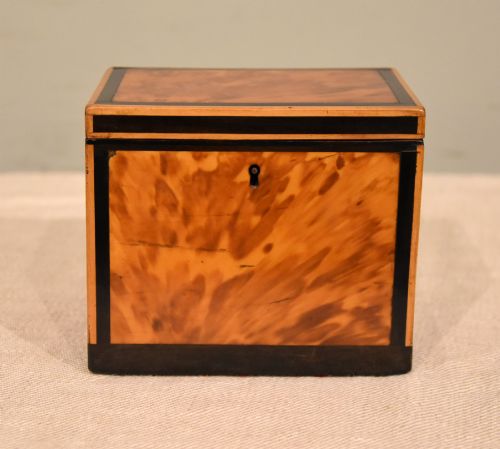
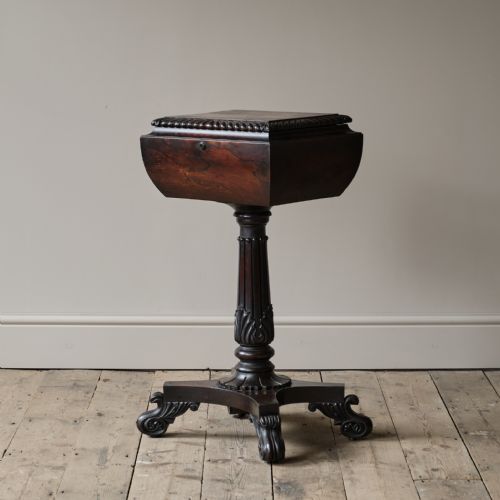
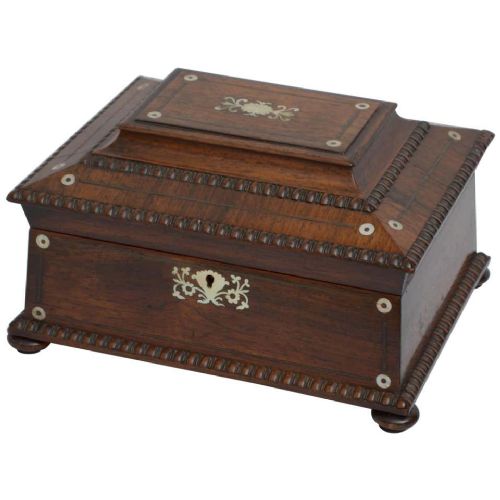
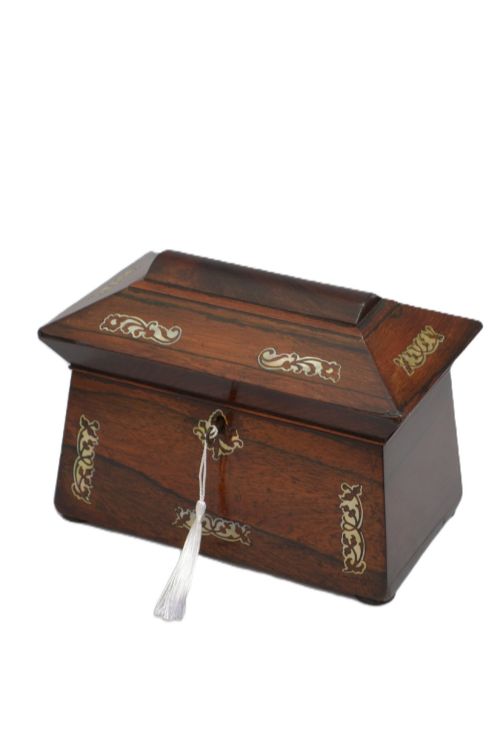
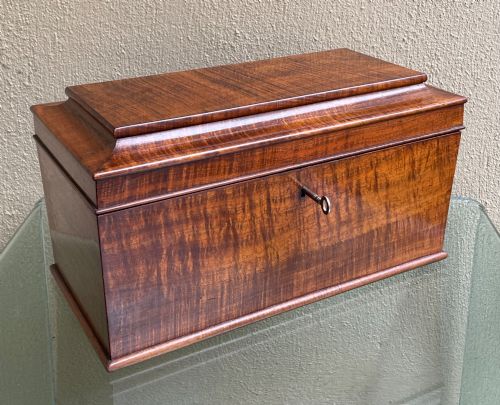
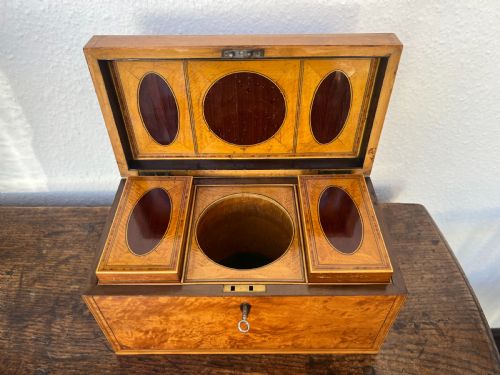
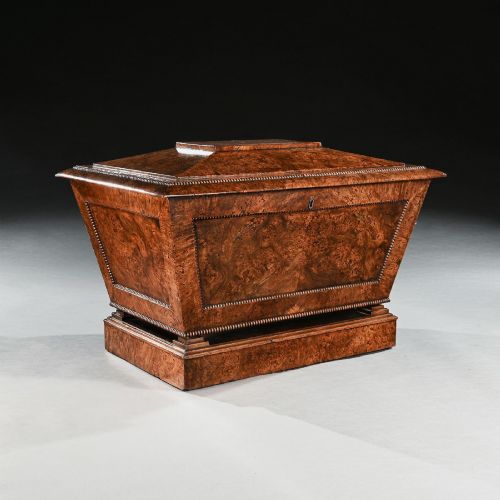
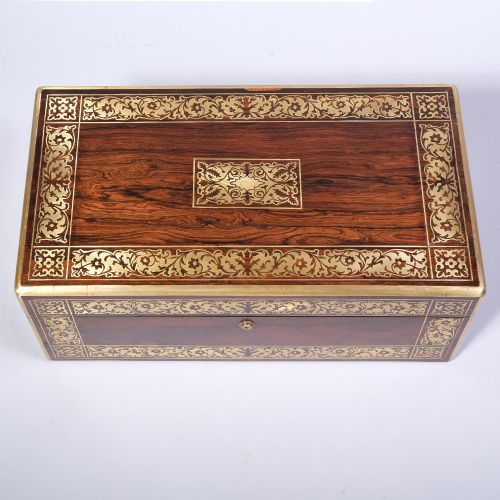
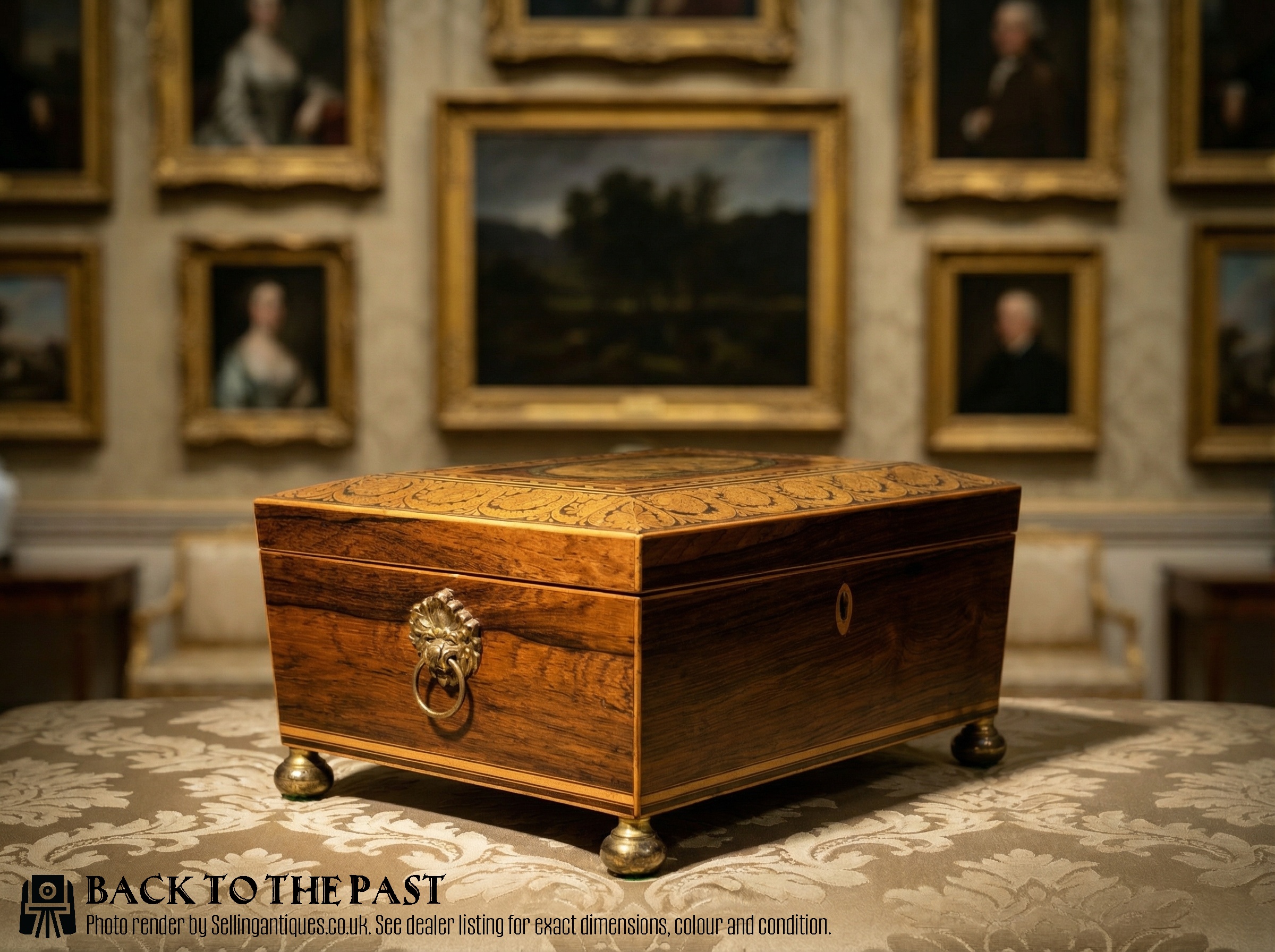
Tea caddies dominate. "Tea caddy" appears in 181 of 544 titles on Sellingantiques, and rosewood in 168, so the rosewood caddy is the signature object of the group. The usual description is a plain or brass-inlaid rosewood box, rectangular or sarcophagus-shaped, with a fitted interior of lidded compartments and often a mixing bowl. Teapoys, which raise the same caddy on a pillar-and-tripod stand, run to 28 titles and take the form up to furniture scale.
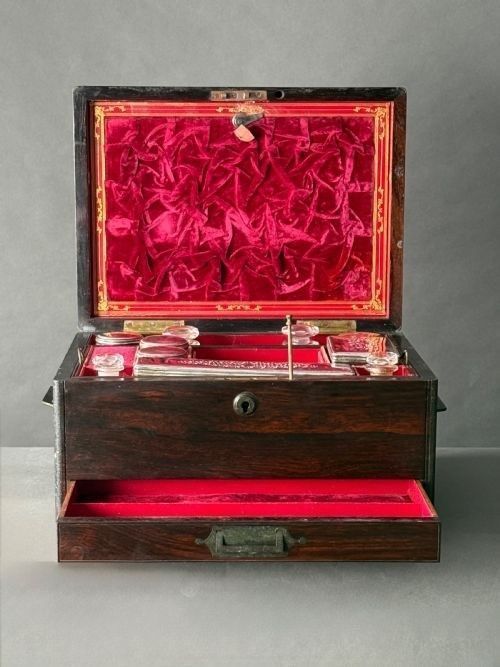
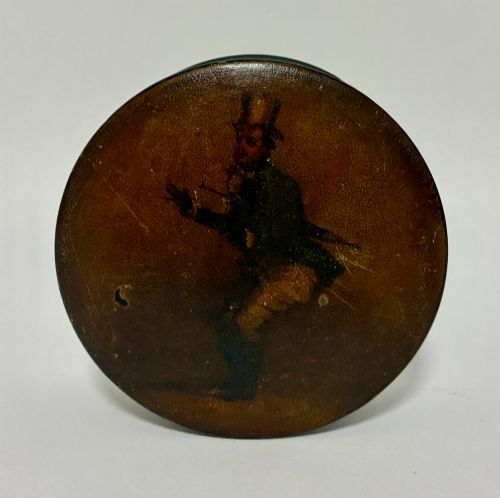
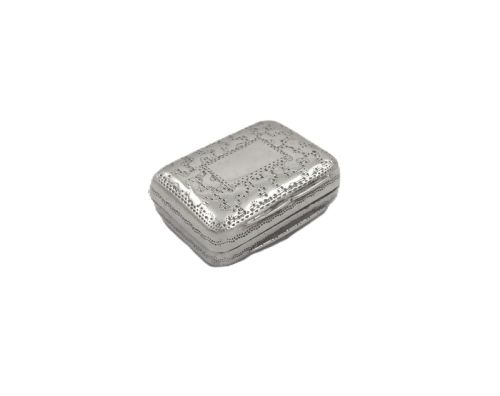
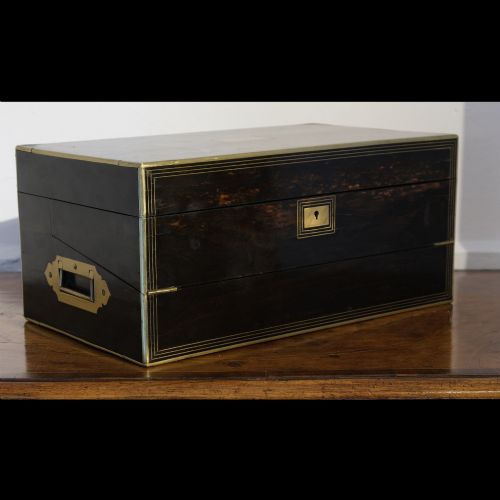
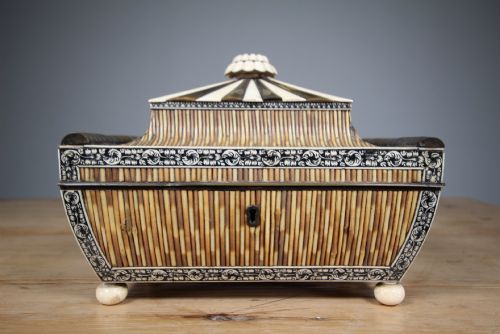
After caddies come the writing boxes and slopes, roughly one in eight listings, with lap desks, letter boxes, correspondence and campaign cases among them. Sewing and work boxes make up about one in ten, jewellery, trinket and keepsake boxes about the same. The remaining fifth is thinly spread across snuff boxes, penwork, tortoiseshell, painted work, games and card boxes, decanter cases and apothecary cases.
Materials are the constant. Rosewood and mahogany carry the bulk, satinwood follows, and cut brass inlay turns up in 75 titles, with line and shell inlay in more again. Sarcophagus outlines and bombé or domed lids recur, and the timber list runs well beyond the staples into coromandel, calamander, amboyna, kingwood, tulipwood, partridge wood, pollard oak and burr yew.
Read "Regency" as a style bracket rather than the strict 1811 to 1820 regency. Dealers used it as a period label in 330 listings, with 19th Century, 1800s and Georgian behind it; only 62 listings carry a clean year, and those run from the 1750s to 1880. Titles lean on c1820 and "early 19th", and George IV and William IV both appear.
The Range
Material sets the floor and the ceiling. Tortoiseshell caddies, at 15 titles, reach the very top of the sampled range, with octagonal and bow-fronted examples and a pair of miniatures far above everything else. Figured burrs, amboyna, kingwood, partridge wood and goncalo alves fill the middle and upper stretch. Plain mahogany and a paper-covered sewing box sit at the bottom.
Hand skill lifts a piece. Penwork, with 18 titles, is the one decorative technique that reliably carries a box into the upper half of the range, and hand-painted, chinoiserie, japanned, gesso, marquetry and parquetry work all sit above their undecorated equivalents. One penwork box records the Brighton Chain Pier.
Then form and completeness. Teapoys on stands and double caddies with sugar bowls sit above single tabletop caddies, and brass-bound campaign work, officers' and military boxes hold the upper half consistently. Titles shout about interiors for a reason: original mixing bowl, cut glass bowl, silk lining, secret drawers and compartments are all advertised in the heading itself.
Regency Boxes Retail Price Guide 2026
Typical UK retail prices for regency boxes, calculated from the Sellingantiques database of over a million retail prices indexed since 2003. This retail price guide relies exclusively on Sellingantiques data; no external sources or auction records are used, so the figures do not describe the wider market.
About fifty-six Regency boxes are listed on Sellingantiques each year, and 148 different dealers have handled them.

Gillows of Lancaster
The Regency Boxes Glossary
- Tea caddy
- A lockable box for loose tea, often holding one or two lidded interior canisters, and sometimes a bowl between them.
- Sarcophagus form
- Tapering, coffin-outlined body with a stepped or ridged lid, named in 28 titles and one of the two commonest caddy shapes.
- Writing slope
- A box opening to a sloped writing surface, usually leather covered, with inkwells; 42 titles use the term.
- Brass inlaid
- Sheet brass let into the veneer as lines or foliate scrolls, a Regency staple; brass bound instead means strapping to the edges and corners, typical of campaign and travelling boxes.
- Teapoy
- A caddy raised on its own pillar-and-tripod stand, sold as furniture rather than as a tabletop box.
- Penwork
- Black ink decoration drawn over a pale ground, often chinoiserie subjects, found on caddies and work boxes alike.
Regency Boxes: Frequently Asked Questions
What is the most common Regency box?
A tea caddy in rosewood. One in three titles on Sellingantiques is a tea caddy and roughly one in three names rosewood, and the two overlap constantly.
The usual pattern is a rectangular or sarcophagus body, plain or with cut brass inlay, opening to lidded compartments for tea.
Does Regency mean 1811 to 1820 here?
Not as dealers use it. The label covers a style bracket of roughly 1800 to 1840, spanning George III, George IV and William IV.
Of 544 listings, 330 are dated simply "Regency", and the clean years that do appear stretch from the 1750s to 1880.
What is a teapoy?
A tea caddy mounted on its own pillar-and-tripod stand, so it stands on the floor rather than sitting on a table.
Teapoys appear in 28 titles, exactly level with sarcophagus caddies, and they sit above single tabletop caddies in the range.
Which timbers turn up besides rosewood?
Mahogany is second at 80 titles and satinwood follows at 20. Burr yew, burr elm, burr walnut and burr maple recur through the middle of the range.
The exotic tail is long: coromandel, calamander, amboyna, kingwood, tulipwood, padouk, partridge wood, goncalo alves, pollard oak, satin birch, burr mulberry and laburnum, most of them appearing only once or twice.
Are there boxes other than caddies?
Yes. Writing boxes and slopes account for about one in eight listings, sewing and work boxes about one in ten, and jewellery, trinket and keepsake boxes about the same.
The rest is scattered across snuff boxes, games and card boxes, decanter and cellarette cases, apothecary cases and painted work.
Why do listings mention secret compartments?
Because it is a recognised selling feature. Secret drawers and hidden compartments are advertised in the title itself often enough to count as standard vocabulary for writing slopes and work boxes.
Interiors generally carry weight in this category. Original mixing bowls, cut glass bowls, sugar bowls and silk linings all get named in headings.