


Antique Decorative Boxes
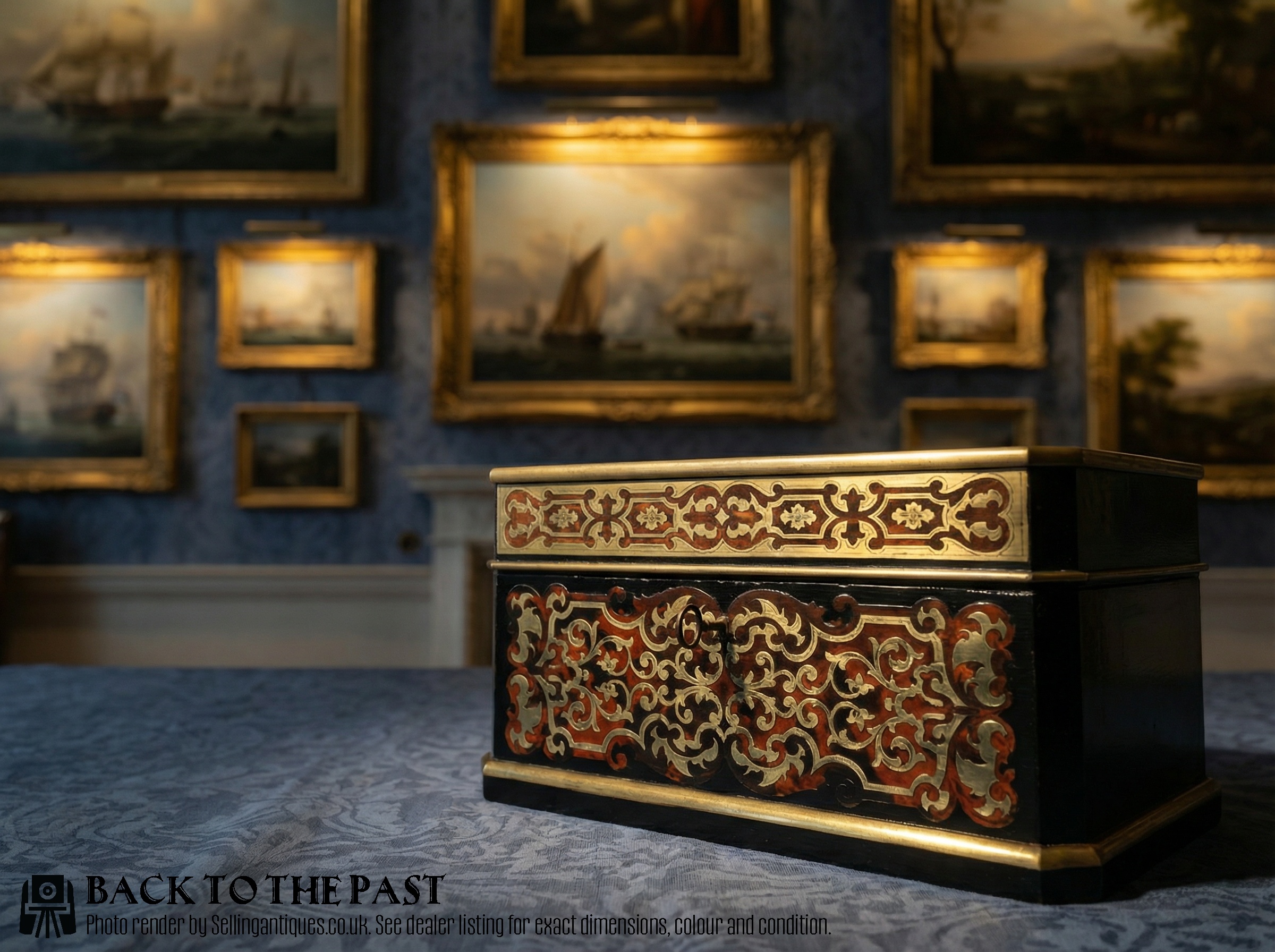
Small lidded containers made to sit out on a table, built to hold things that once cost money: tea, jewels, snuff, sewing kit and writing materials.

Antique Decorative Boxes
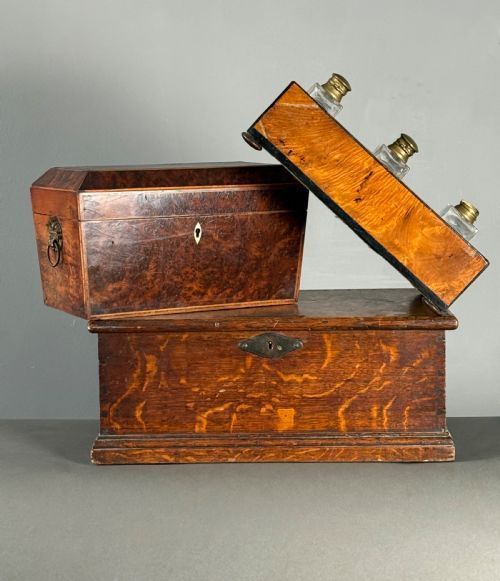
The heading covers lidded containers in wood, metal, lacquer, papier mâché, leather and shell, mostly small enough for a table top and sold on looks rather than use. Tea caddies dominate: the word tea appears in 54 of 268 titles, caddy in 49. After that come caskets, jewellery, trinket and keepsake boxes, then table, desk and writing boxes.
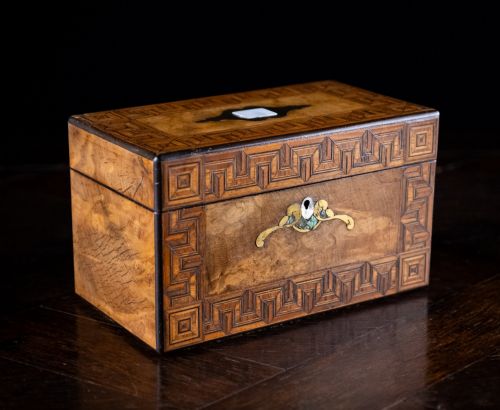
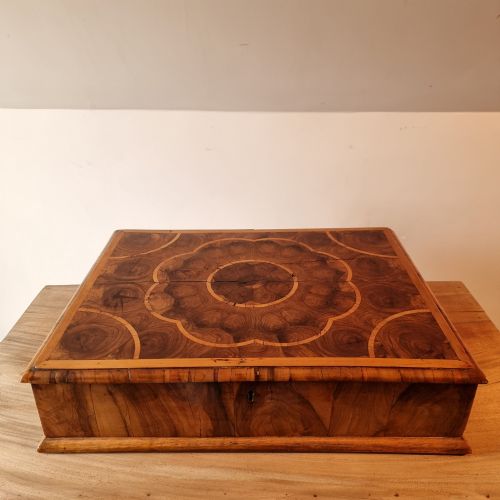
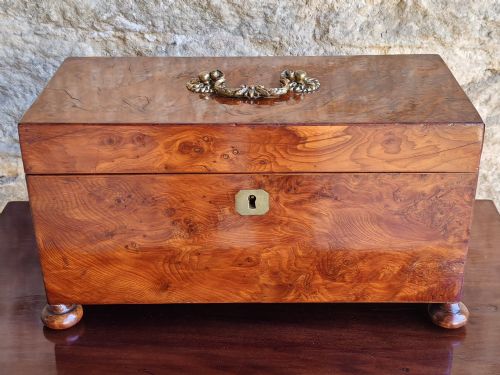
The piece you're most likely to meet is a 19th-century inlaid hardwood box of table size. Rosewood leads the timbers, with walnut, mahogany and burr veneers behind it, and inlaid is the single commonest descriptive word in the category at 34 titles. Sarcophagus and navette caddies, domed tops, hexagons and double-compartment interiors all turn up throughout.
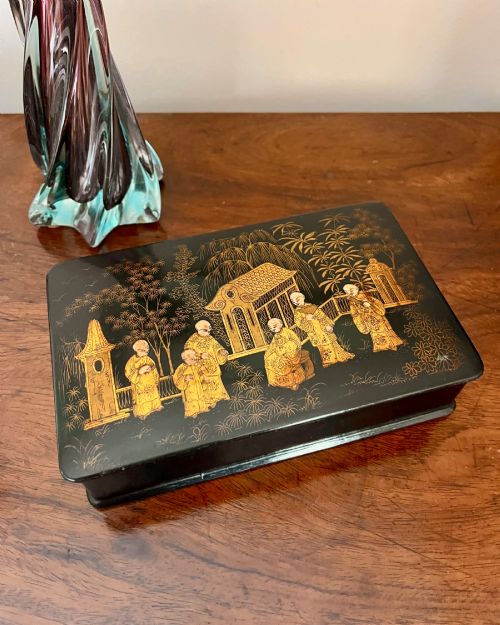
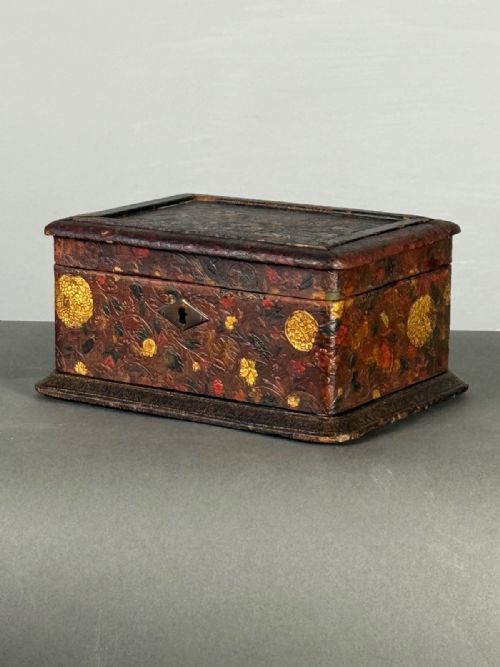
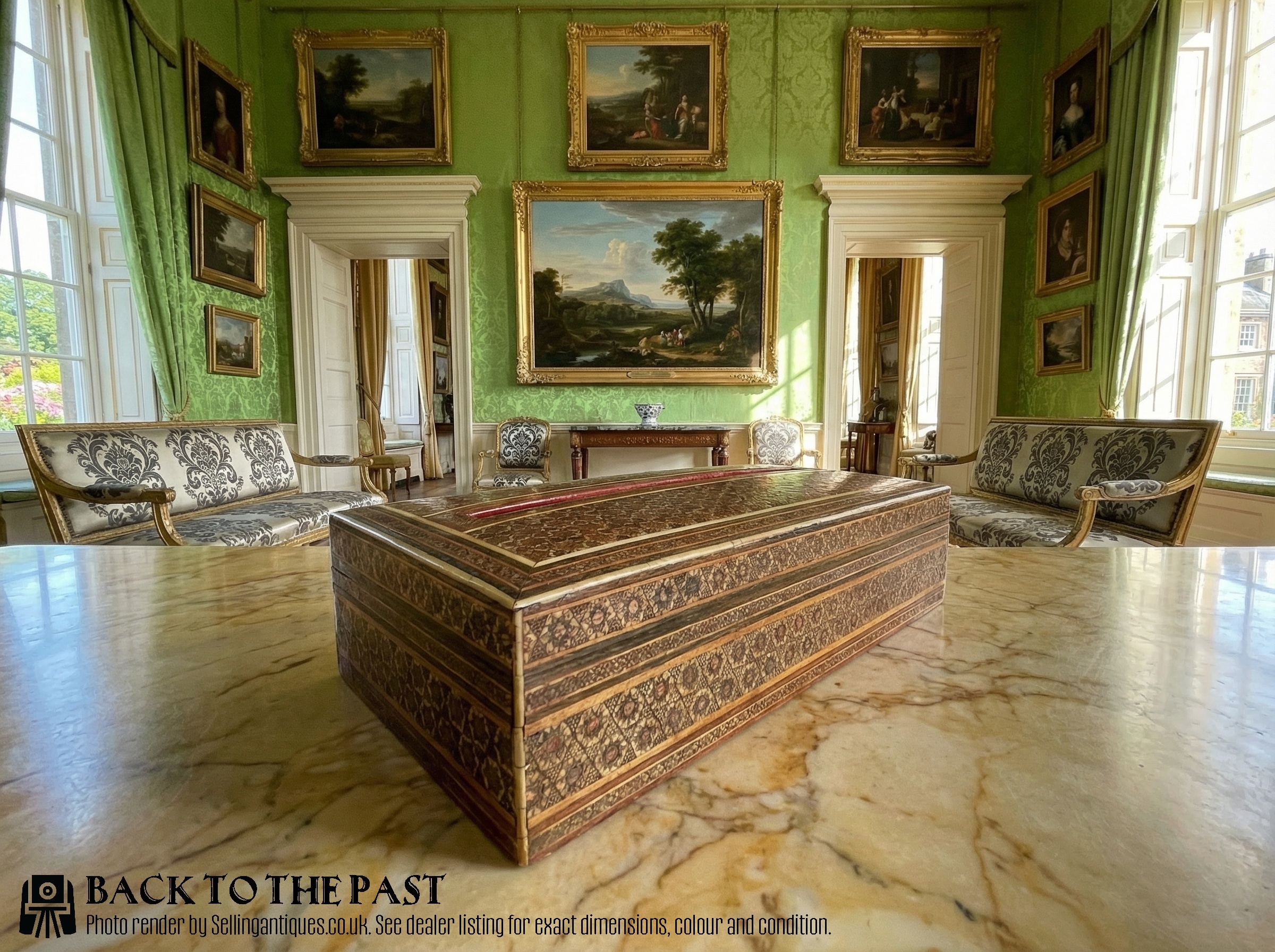
Boxes for costly household goods became a distinct trade in Europe from the 18th century, when the value of the contents justified good veneers, inlay and a lock. By the 19th they were made in quantity for a middle-class market, and in India, China and Japan for export. That export work shows up on Sellingantiques as Kashmiri, Sadeli mosaic, Vizagapatam, Burmese, cinnabar, Shibayama, cloisonné and Persian Khatamkari pieces.
Dating is loose. Era labels outnumber years: 19th Century on 59 listings, Victorian on 54, then Regency, Georgian and 18th Century. Only 83 listings carry a clean year, and those run from 1750 to 1950 with clusters in the 1800s, 1860s, 1880s, 1900s and 1920s. Titles labelled Victorian sometimes describe a piece as c.1830 or c.1920, so read the two big labels as bands.
The Range
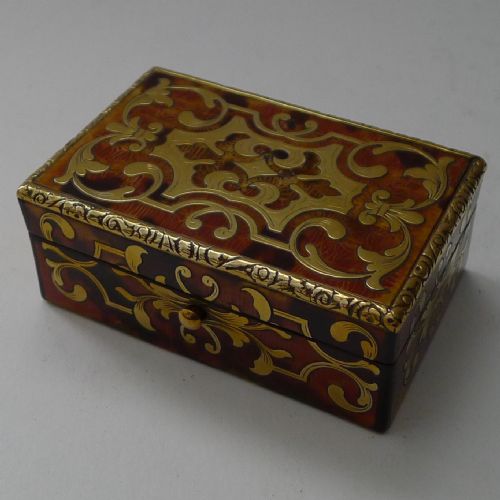
Material sets the ceiling. The highest-priced boxes sampled are tortoiseshell caddies, a Beijing enamel snuff box, a Russian silver-gilt and enamel box and a silver Renaissance Revival table box. Plain treen, painted tin and small trinket boxes sit at the other end of the same heading.
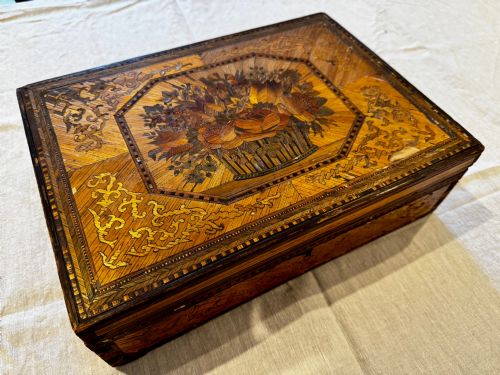
Surface technique does the next most work. Penwork is the scarcest of the named decorative styles at eight titles and sits consistently high, on caddies and games boxes alike. Tunbridge ware, at ten titles, spreads right across the range. Marquetry and inlay lift a box above a plain veneered one, and burr, amboyna, kingwood, satinwood, thuya and laburnum oyster all sample above mahogany and plain rosewood.
Then there's what survives inside. Titles advertise it in as many words: complete, fitted interior, with three metal canisters, with original glass bowl and mixing stick, key and sugar dish. Pairs and sets push up too, and the top of the sampled range is a pair of miniature tortoiseshell caddies rather than a single large box.
Antique Decorative Boxes Retail Price Guide 2026
Typical UK retail prices for decorative boxes, calculated from the Sellingantiques database of over a million retail prices indexed since 2003. This retail price guide relies exclusively on Sellingantiques data; no external sources or auction records are used, so the figures do not describe the wider market.
Decorative boxes have been listed on Sellingantiques since 2008.
The Antique Decorative Boxes Glossary
- Tea caddy
- A lidded box for storing tea leaves, often lockable, sometimes fitted with inner canisters or a mixing bowl. Named in 48 titles.
- Table box
- General term for a decorative lidded box meant to sit out on furniture, used in 18 titles where no more specific function is claimed.
- Casket
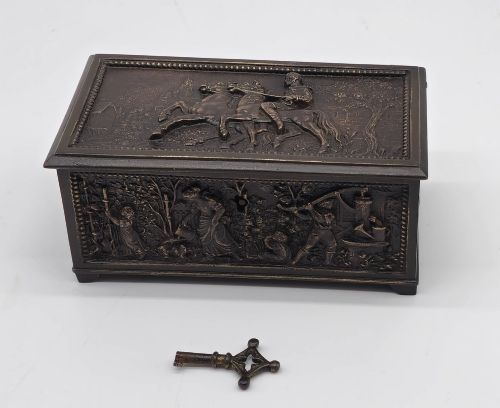
- A box of ornamental rather than useful character, usually lidded and often metal or heavily decorated. Sixteen titles use the word.
- Sarcophagus
- A caddy or box with sloping tapered sides and a stepped lid, borrowed from the classical tomb shape.
- Burr
- Figured veneer cut from a wart-like growth on the tree. Burr walnut, burr yew and burr maple all appear across twelve titles.
- Sadeli
- Anglo-Indian geometric micro-mosaic of wood, bone and metal rods, associated with Vizagapatam and Bombay work.
Antique Decorative Boxes: Frequently Asked Questions
What sort of box turns up most often?
Tea caddies. The word caddy appears in 49 of 268 titles and tea in 54, which makes it the largest identifiable form in the category by a clear margin.
Behind it sit generic table boxes, caskets, and jewellery, trinket and keepsake boxes, which together account for roughly another two-fifths of what has been listed.
Which woods do these boxes use?
Rosewood is the commonest named timber at 24 titles, then walnut, burr veneers and mahogany. Coromandel, the dense black-and-brown striped hardwood, appears on eight.
Beyond those, the archive carries amboyna, kingwood, satinwood, thuya, padouk, laburnum oyster and Gonçalo Alves, usually on smaller pieces where a striking veneer does the decorating.
Are there named makers in this category?
No. The category is described by material, form and decoration rather than by workshop, and no maker registers as a category-wide presence.
What does get named instead is origin: English on 19 titles and French on 18, with single appearances for Swedish, Dutch, Russian, Persian, Afghan, Qajar Iranian, Burmese and Scottish work.
How old are the oldest examples?
The dated field runs from 1750 to 1950. The earliest clean years attach to a George II brass-mounted padouk tea caddy of about 1760, an English lead tobacco keeper of about 1750, and two tortoiseshell caddies also given as 1750.
A few pieces go further back on the strength of their titles alone: a 17th-century olive wood lace box, a 17th-century floral marquetry box and a 17th-century Afghan box.
What counts as a fitted interior?
Anything the box was built to carry that's still with it. Caddies come with inner metal canisters, a glass mixing bowl, a mixing stick, a sugar dish or a key.
Sewing, writing and games boxes carry their own fittings. Listings tend to spell it out in the title, with words like complete or fitted interior doing the selling.
Do unusual or novelty boxes appear?
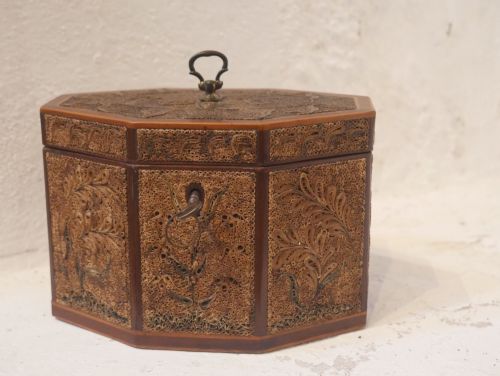
Regularly enough to count as a minor theme. Book-shaped boxes recur, including a pair of stacking books, three fake books and a leather faux-book casket, plus a biscuit tin made to imitate carved Indian hardwood.
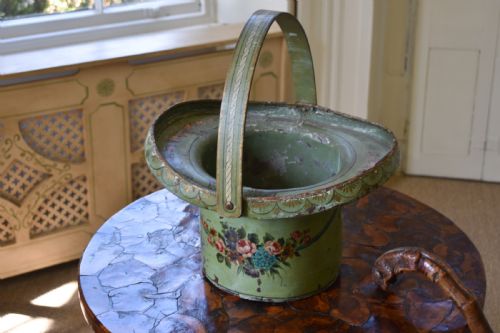
Other oddities have included a carved coconut shell, a porcupine quill box, a four-tier treen spice tower and a painted waste paper bin sold as a tea canister.