
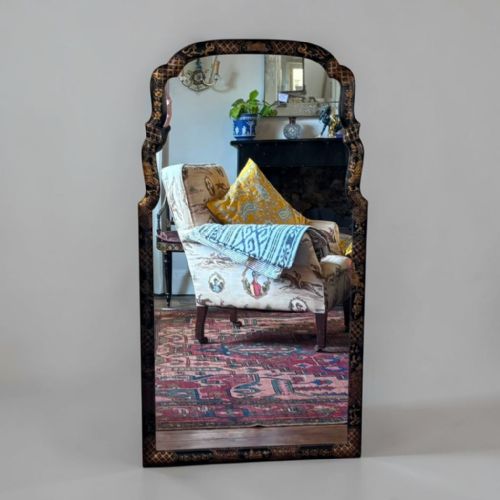
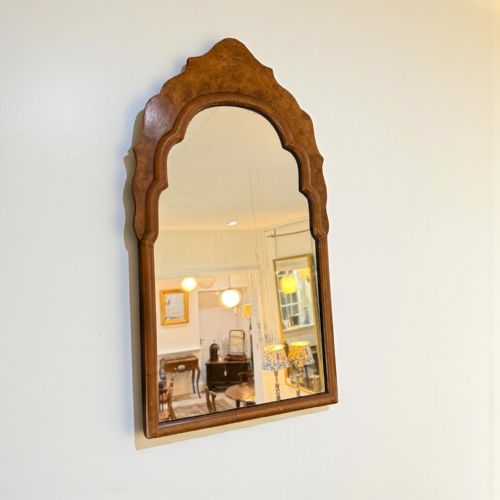
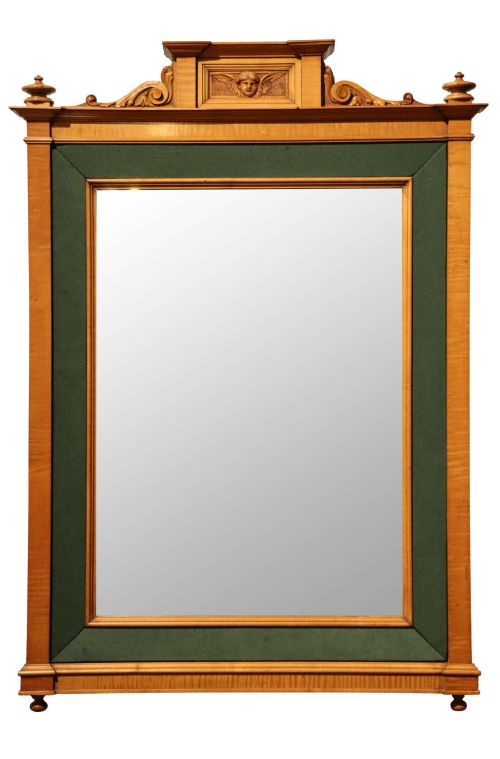
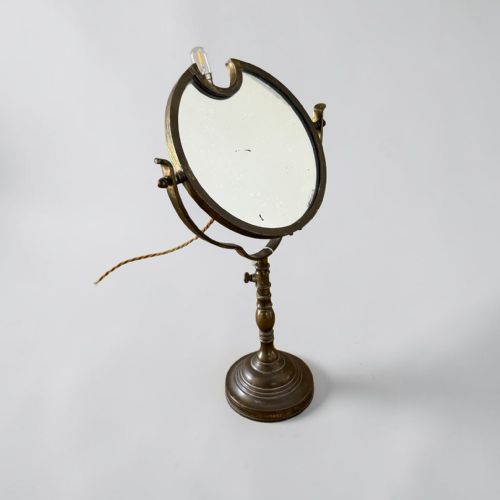
Edwardian Mirrors
Framed looking-glasses catalogued as Edwardian: mirrors made to hang on a wall or over a fireplace, or to stand on the floor or a dressing table.

Edwardian Mirrors
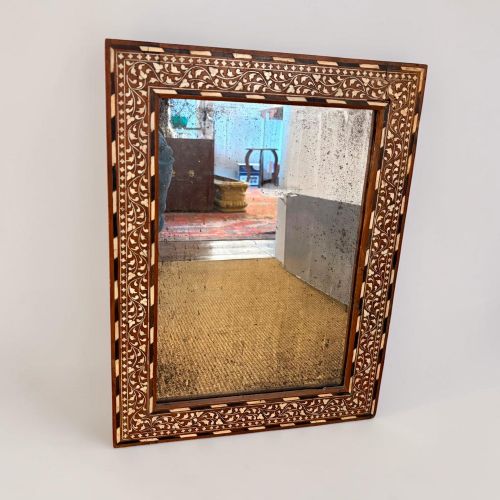
The default piece in this group is a wall-hung mirror in a wooden frame, oval more often than not. Mahogany appears in 209 titles, oval in 174, wall in 190, and inlay is a constant note, so "Edwardian mahogany and inlaid oval wall mirror" describes a large share of what comes up.
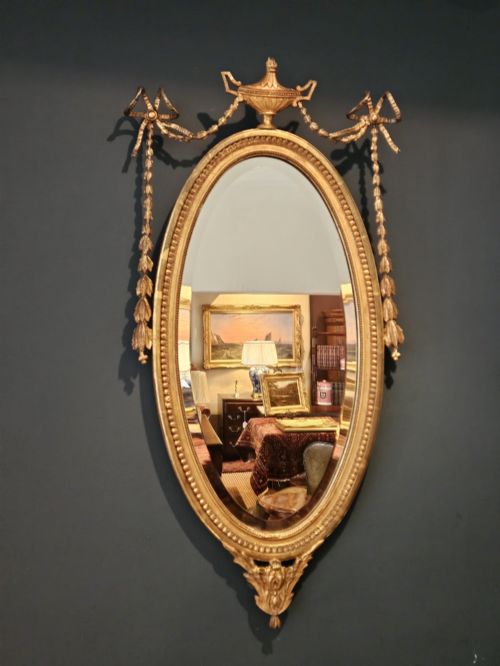
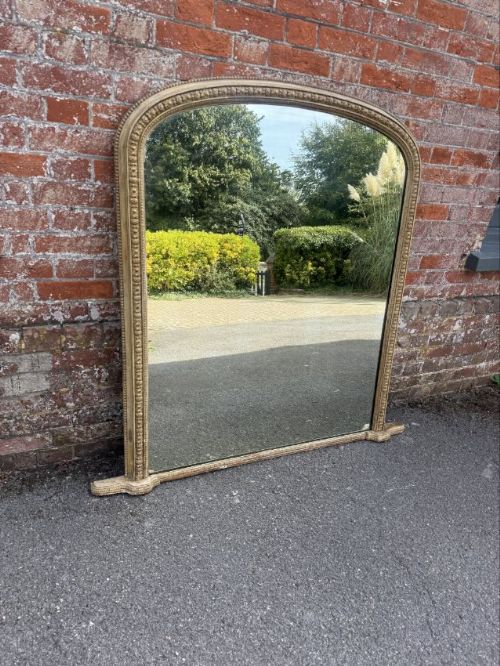
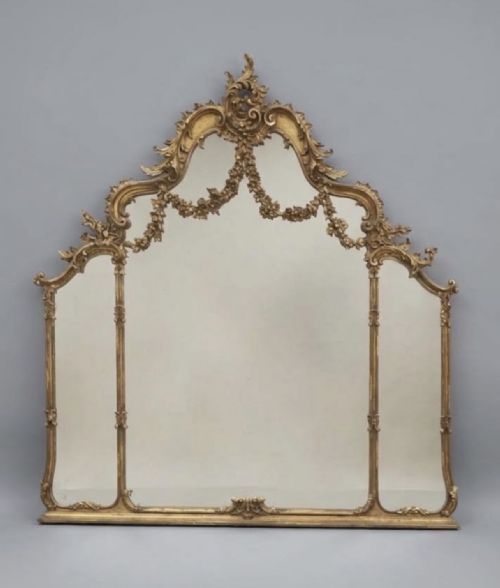
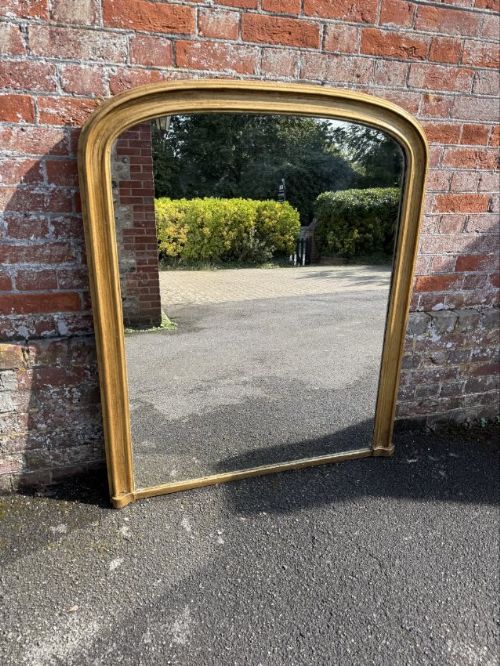
Alongside the wooden frames sits a parallel population of gilt and gilt-gesso work, much of it overmantles made to sit above a chimney-breast. Note the two spellings: overmantle runs to 96 titles and overmantel to 22, and searching only one of them misses a chunk of the group.
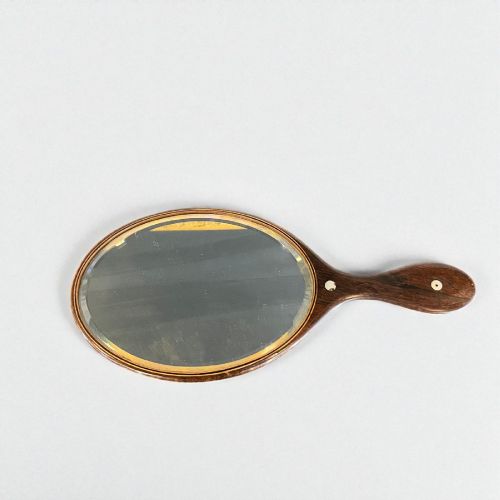
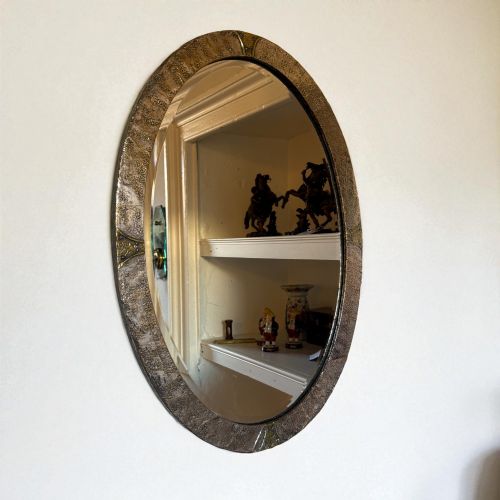
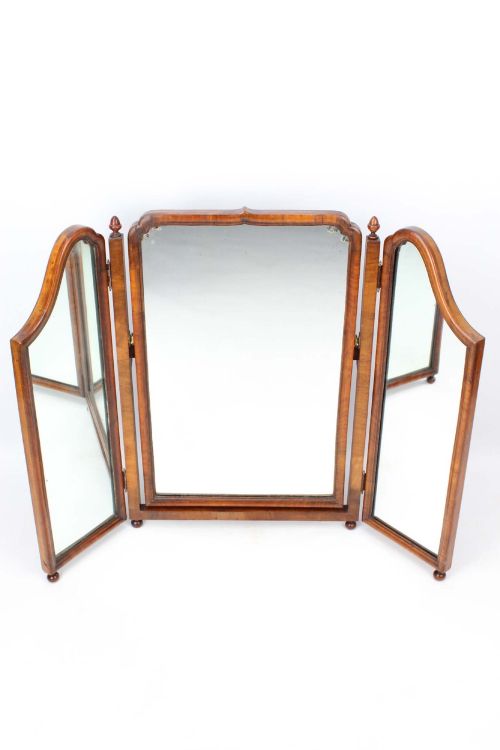
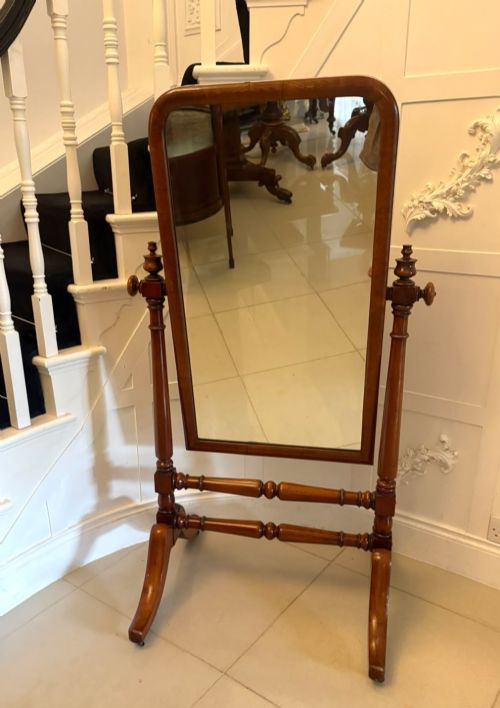
Then there are the standing mirrors. Cheval mirrors, swinging between two uprights on feet, account for 140 titles, with smaller dressing-table, toilet and swing mirrors behind them. A small, distinct slice is Arts and Crafts, framed in beaten or repoussé copper and brass rather than timber.
Edwardian works as a style bracket more than a reign. The dated field says Edwardian for 348 listings, while the pieces that carry a clean year run from 1800 to 1930, and Victorian, 19th Century, Regency and 1920s all turn up in the titles. Around 88 come up on Sellingantiques in a year, handled by 174 different dealers.
What Sets Them Apart
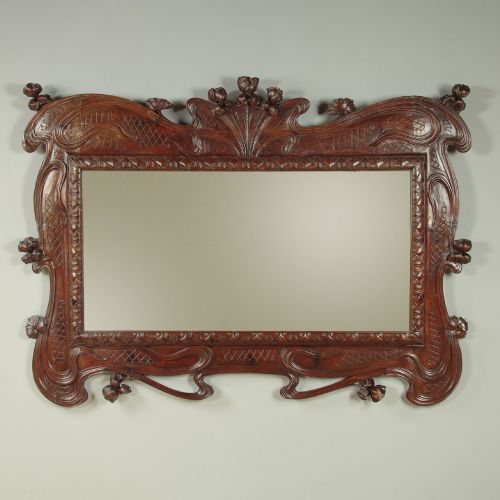
The frame does most of the work. Carved wood and gesso, giltwood and water gilding sit at the top of the range, and the highest-priced pieces in the archive are repeatedly large gilded and painted overmantles. A plain moulded frame in oak or beech sits at the other end.
Timber and inlay separate the middle. Satinwood, burr and figured walnut, rosewood, kingwood and marquetry push a mirror upward; plain unadorned wood keeps it down. Scale pulls the same way, with large appearing in 156 titles against small in only 18, and the biggest measured pieces running past six feet.
Pairs sell above singles, and named revival styles or trade forms sit above a generic wall mirror. Chinoiserie appears in 33 titles, and the commercial fringe is real: shop, outfitters, tailors, haberdashery, chemist and fairground mirrors all turn up.
Edwardian Mirrors Retail Price Guide 2026
Typical UK retail prices for edwardian mirrors, calculated from the Sellingantiques database of over a million retail prices indexed since 2003. This retail price guide relies exclusively on Sellingantiques data; no external sources or auction records are used, so the figures do not describe the wider market.
Around eighty-eight Edwardian mirrors are listed on Sellingantiques each year, and 174 different dealers have handled them.

The Edwardian Mirrors Glossary
- Cheval
- A tall mirror swinging between two uprights on feet, standing free on the floor. It runs to 140 titles, often in mahogany.
- Overmantle
- A wide mirror made to sit above a fireplace. Dealers spell it overmantle or overmantel, and both spellings are common in the titles.
- Bevelled plate
- Glass with a ground and polished angled border round the edge. Titles shorten it to bevel or bevel-edge.
- Gesso
- Moulded plaster and size laid over wood, then gilded or painted. It appears in 44 titles, usually paired with carved wood.
- Pier glass
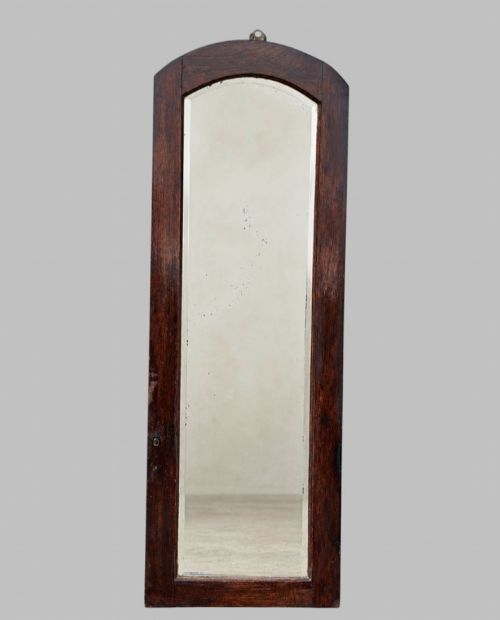
- A tall narrow mirror made for the wall pier between two windows. Sixteen titles use the term.
- Convex
- An outward-curving circular plate that gives a wide-angle reflection, sometimes found as a pair.
Edwardian Mirrors: Frequently Asked Questions
Are all these mirrors actually from the Edwardian period?
Not strictly. Edwardian is the dated field on 348 listings, but of the 882 in the archive only 375 carry a clean year, and those years run from 1800 to 1930.
Titles say the same thing. Victorian appears in 60, 19th Century in 51, Regency in 19 and 20th Century in 19, so the heading covers a style and a loose bracket as much as a reign.
What shape is most common?
Oval, by a distance. It appears in 174 titles, and oval mahogany wall mirrors with inlay are close to the category's standard piece.
The samples also throw up heart-shaped, horseshoe, shield, octagonal, clover-leaf, porthole and hour-glass frames, each turning up only once or twice.
Which woods are used for the frames?
Mahogany leads with 209 titles, then oak at 96 and walnut at 56. Inlay is a recurring note, named in 83 titles and often combined with mahogany.
At the upper end dealers name satinwood, burr and figured walnut, rosewood, kingwood and marquetry. Plain oak and beech frames sit lower.
What is a cheval mirror?
A tall mirror hung between two uprights on feet so it tilts, standing free on the floor rather than hanging. It has been a bedroom fixture since the early nineteenth century.
Cheval accounts for 140 titles, roughly one in seven of the group, and mahogany cheval alone for 45.
Do gilt mirrors turn up as often as wooden ones?
They form a large parallel group. Gilt appears in 190 titles, giltwood in 32 and gesso in 44, with many titles pairing carved wood and gesso.
Much of that gilt work is overmantles, and the top of the range is held by large gilded and painted examples.
Were shop and commercial mirrors made too?
Yes, and they are a genuine sub-population rather than a curiosity. Shop appears in 18 titles.
Outfitters, tailors, haberdashery, department store and chemist mirrors all turn up, along with billiard and fairground examples. A gentleman's outfitters mirror measured 6ft 5in.