

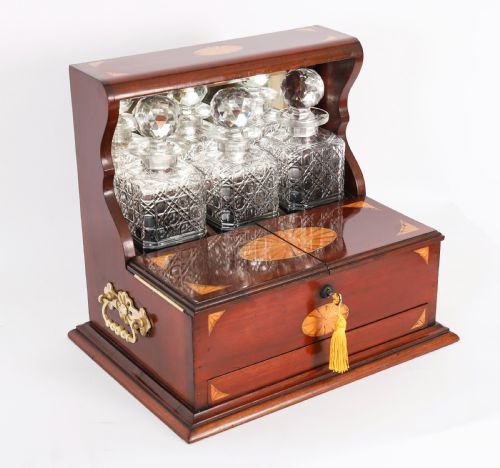


A 2026 Guide by Sellingantiques
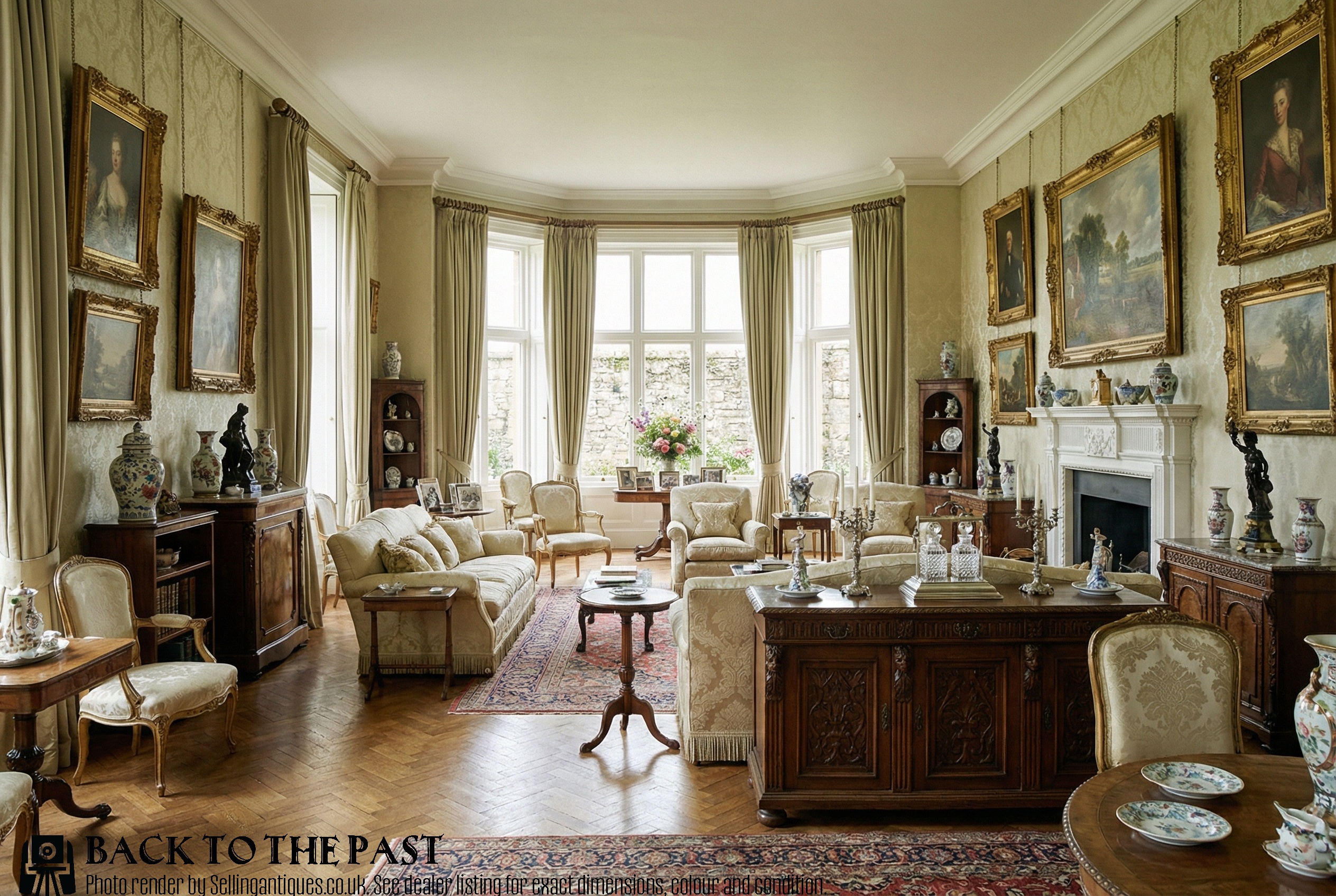
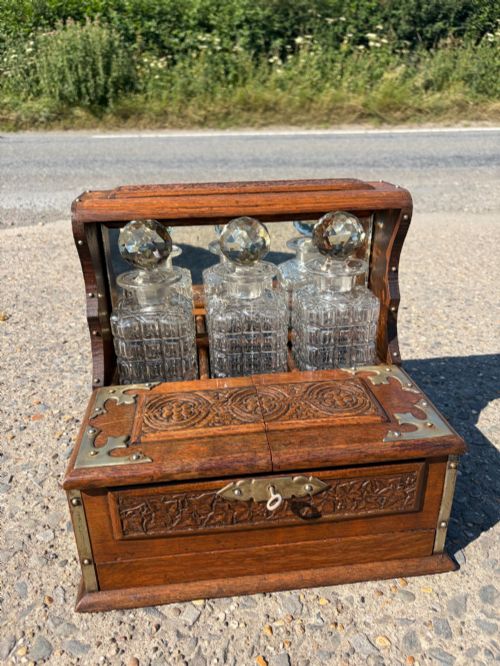
Fine Quality Antique Silver Plated Two Bottle Tantalus, 1920
Priced at £695 from Rebecca Sarah Antiques
George Betjemann patented the first locking antique tantalus mechanism in London around 1881.
They emerged during the late Victorian period primarily to stop household servants from siphoning off spirits while the family slept.
The name comes from the Greek myth of Tantalus, who was tempted by water he could never drink.
Edwardian households often kept them stored in the billiard room or library.
Production slowed after the First World War when domestic service declined and locking up alcohol became less necessary.
George Betjemann and Sons are the most famous names, stamping their brass hardware with the patent details.
Mappin and Webb retailed thousands of these, usually supplying their own silver-plated frames and heavy cut glass.
William Hutton and Sons produced heavy oak examples with robust nickel or electroplated mounts during the early twentieth century.
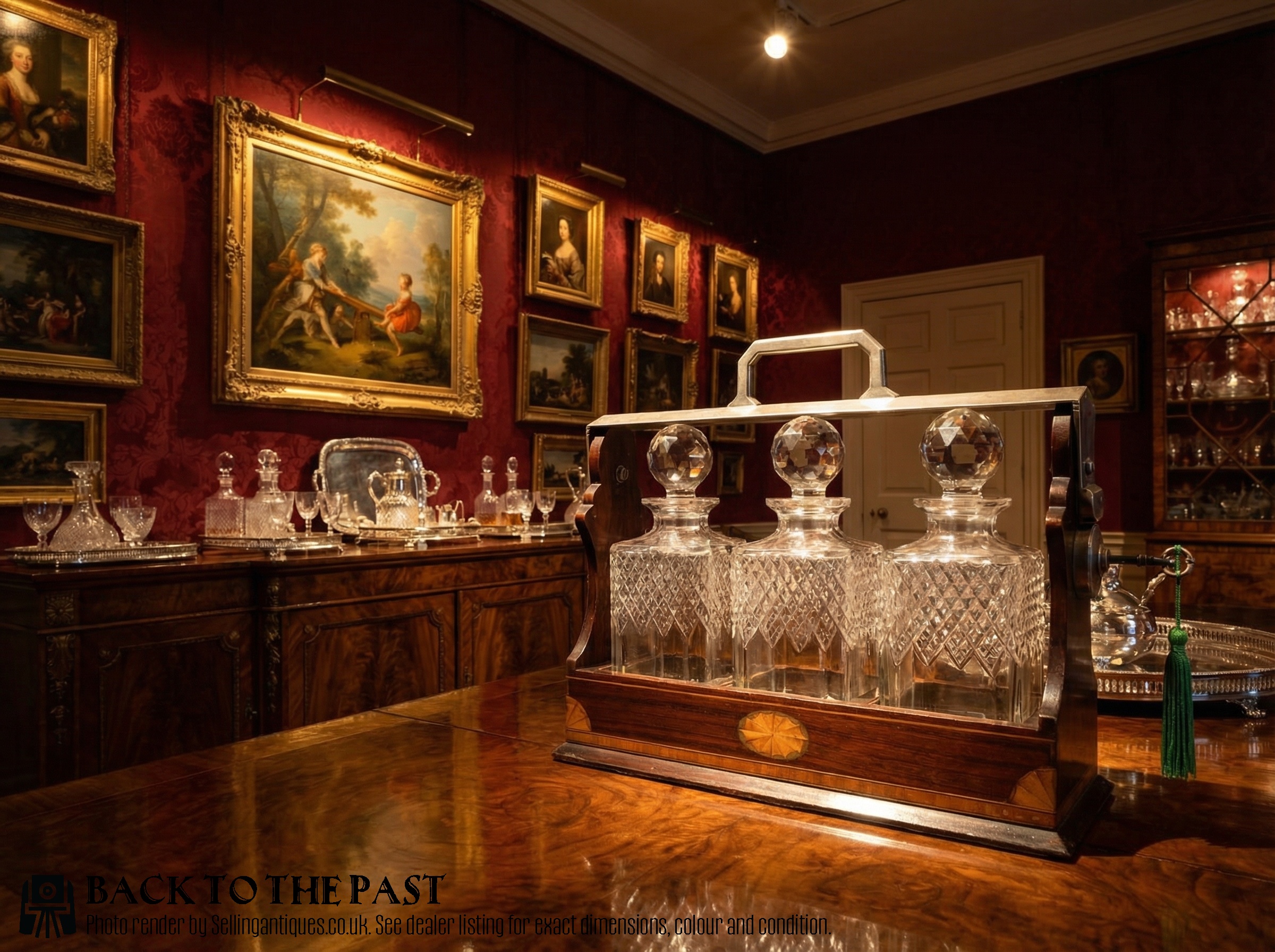
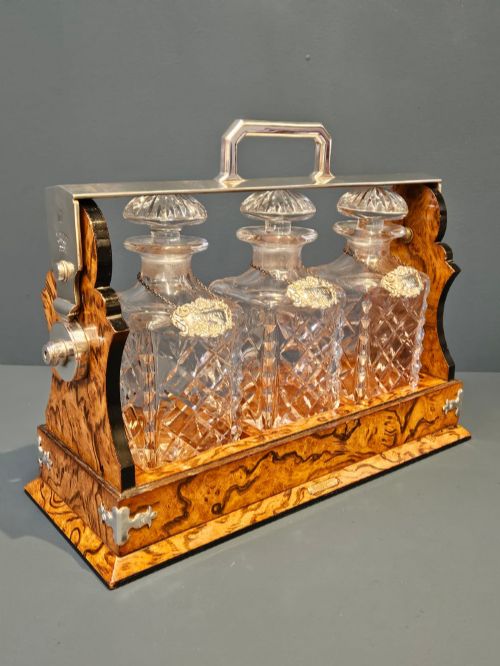
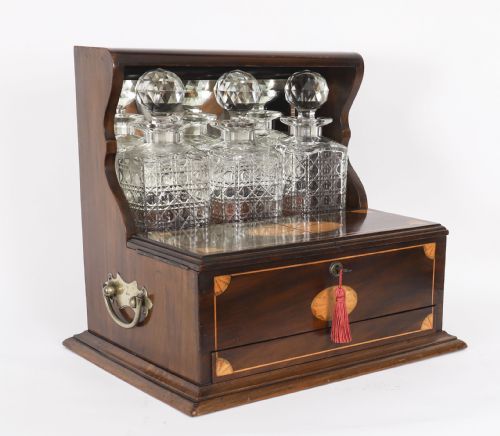
Antique Inlaid Walnut Three Cut Crystal Decanter Tantalus C1870 19th C, 1870
Priced at £975 from Regent Antiques
The 2026 retail price guide for Antique Tantalus is drawn from a proprietary archive of over 1.1 million retail prices indexed by Sellingantiques since 2003. This guide relies exclusively on their own internal data; no external sources or auction records are used.
Analysing nearly 25 years of UK antique market history alongside current retail values, the data indicates that typical UK retail prices for Antique Tantalus range between £400 and £1,700. Entry-level prices generally fall under £400 and premium examples upwards of £1,700.
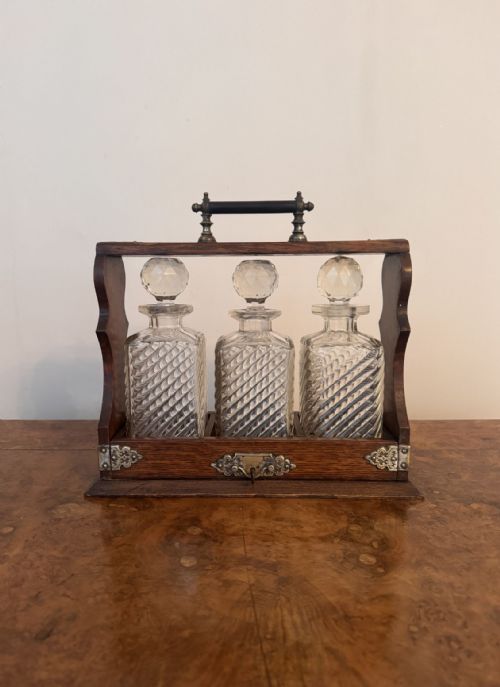
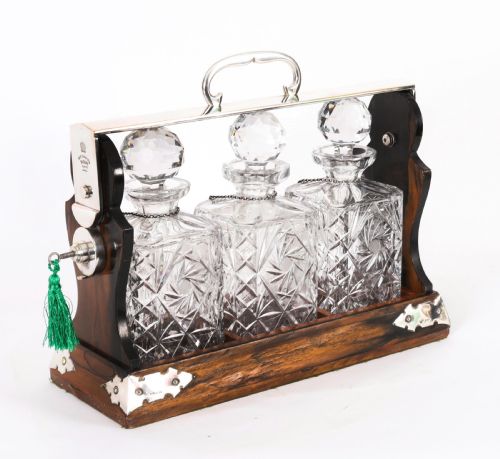
A central carrying handle that doubles as the locking mechanism holding the decanters in place.
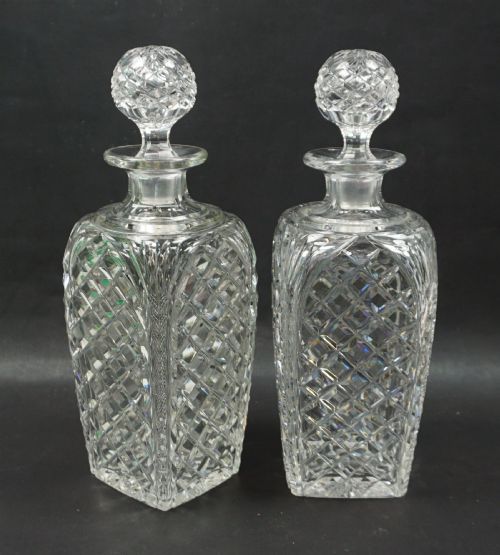
Hobnail cut bases on the square decanters sit neatly into partitioned wooden compartments.
Some incorporate a hidden games compendium or cigar drawer in the lower section, released by a concealed button.
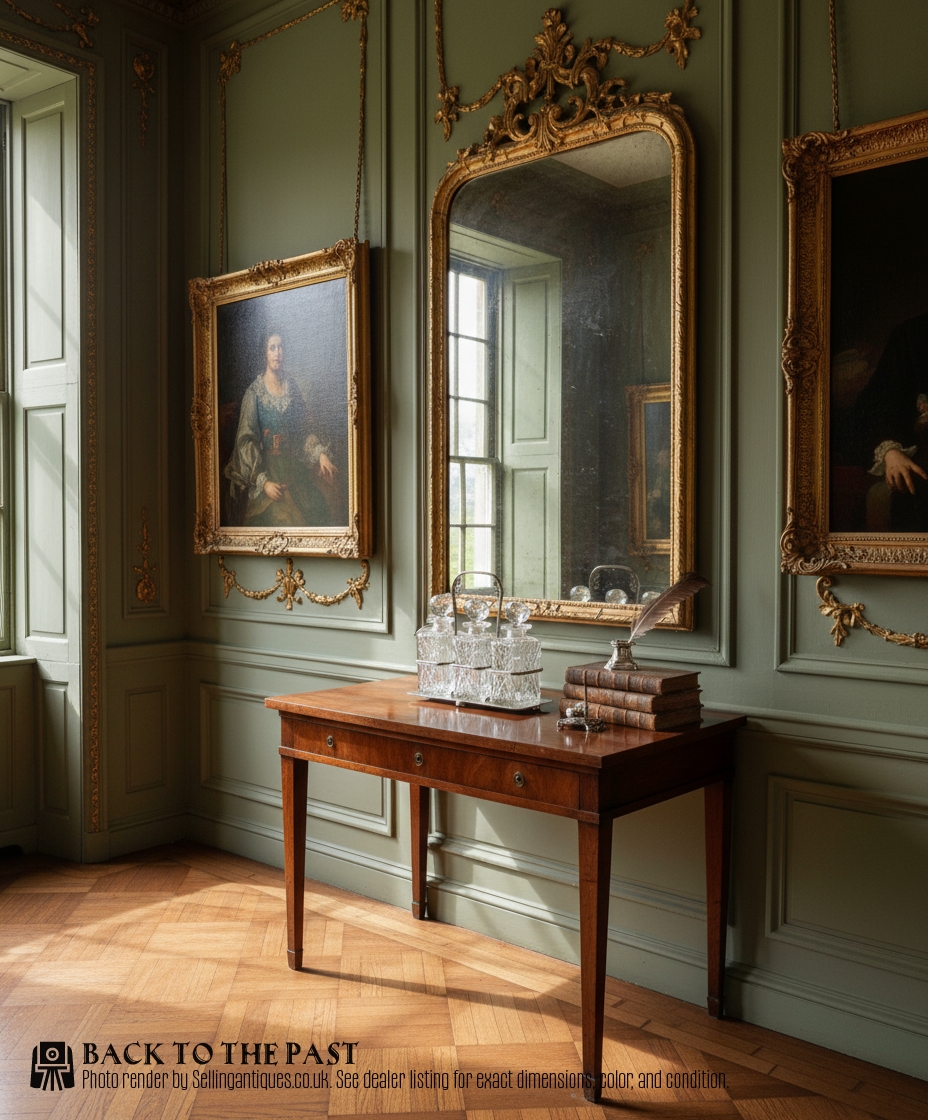
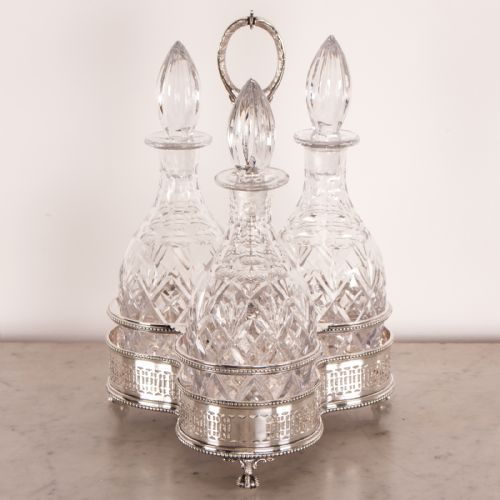
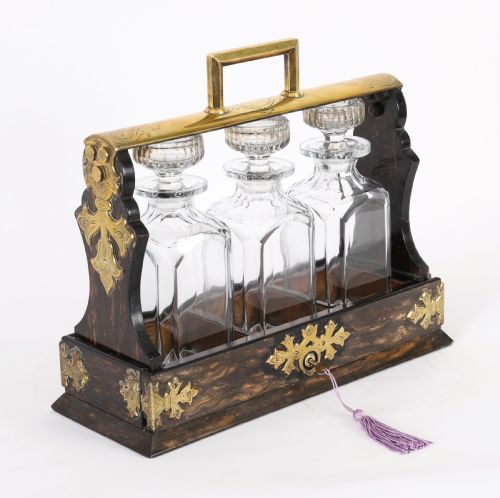
Antique Victorian Quality Silver Plated Tantalus, 1880
Priced at £795 from London City Antiques
Early Betjemann mechanisms rely on precision-milled brass catches that snap shut with a firm click.
Cabinet makers joined the wooden base sections using small dovetails, often concealed beneath decorative metal corner mounts.
Plated handles require silver soldering to withstand the weight of three full glass bottles being carried across a room.
"The three-bottle configuration suited the standard Victorian drinking habits of serving brandy, whiskey, and rum."
"Betjemann's original patent was so successful that they licenced the locking mechanism to rival silversmiths across Britain."
"Many surviving decanters hold more liquid than modern standard spirit bottles."
Based on almost 25 years of Sellingantiques UK antique market data, Antique Tantalus appeared 996 times (out of 1,100,000 antiques) which gives it a rarity score of 82/100.
This score measures scarcity within the Sellingantiques archive only and is not a survey of the entire antiques market, so these statistics may not be indicative of the general availability of Antique Tantalus elsewhere.
Antique tantaluses use simple lever locks, mostly made by generic Victorian hardware suppliers. A local locksmith can usually cut a replacement barrel key if you take the whole frame to them.
Some dealers keep a box of spare antique keys. You can try a few until one turns the mechanism.
Cloudy decanters usually suffer from water bloom rather than dirt. It happens when liquid sits inside for years, etching the inner surface of the lead crystal.
You can try swirling a mixture of coarse salt and a dash of white vinegar around the inside. This mild abrasive action often lifts light staining without scratching the glass.
If the glass is chemically etched by old alcohol, the cloudiness is permanent. Specialist glass restorers can polish the inside, but this involves risky machinery.
Yes, modern alcohol stores well in old glass. The lead content in antique crystal doesn't pose a risk if you decant the spirits just before serving.
It isn't sensible to leave port or whiskey sitting in lead crystal for months on end.
The handle mechanism attaches to the base via metal rods running down the sides of the wooden frame. Over time, the internal screws securing these rods can work loose.
Turn the frame over and peel back the baize slightly. You'll often find access holes for the main securing bolts. A slight turn with a flathead screwdriver usually tightens the whole structure.
Please note: This Antique Tantalus guide and its associated pricing data are provided for general informational purposes only. It does not constitute formal financial, investment, or appraisal advice and should not be relied upon as the sole basis for any commercial activity, purchasing, or sales decisions. Sellingantiques.co.uk accepts no liability for any actions taken in reliance on this information. Always consult with a qualified professional or independent appraiser.
