



A 2026 Guide by Sellingantiques
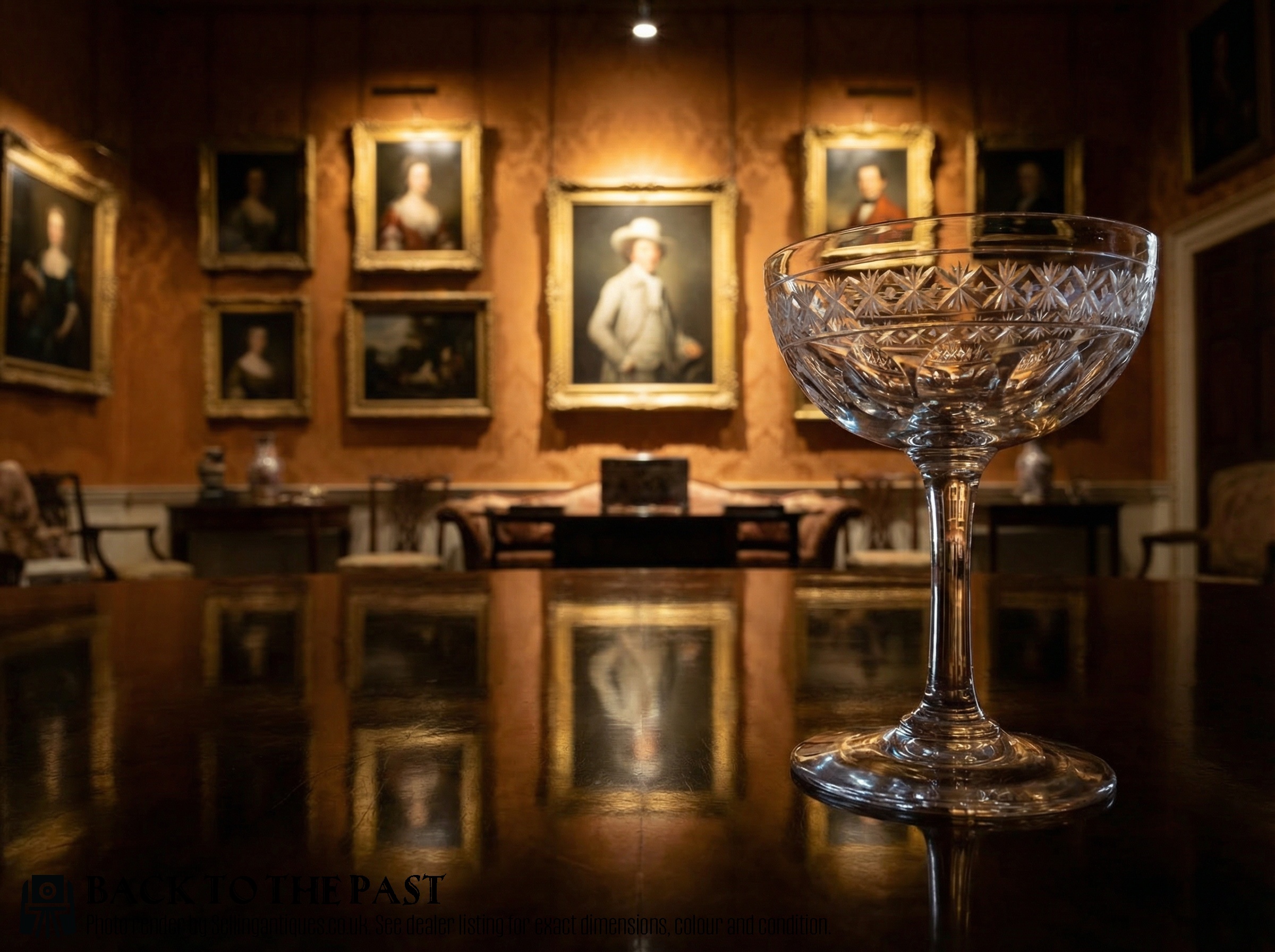
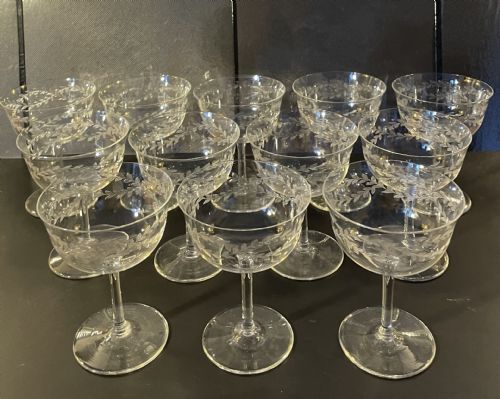
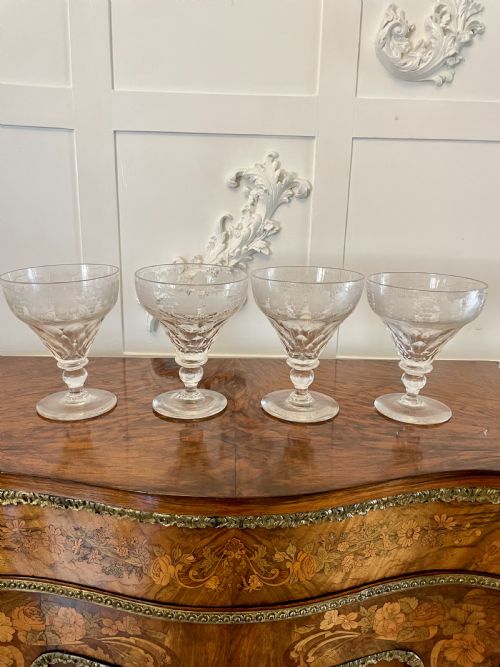
Fine Quality Set of 16 Etched Crystal Champagne Glasses / Coupes, Edwardian
Priced at £1,550 from A Brookes
First seen in England during the mid-seventeenth century, well before the familiar flute took over.
Look at the shape of early examples. Sometimes they held sweet desserts instead of wine, functioning as small footed bowls.
French courts adopted these glasses by the eighteenth century. The wider surface area suited their sweeter sparkling vintages well.
Heavily tied to Edwardian dining and the cocktail culture of the nineteen twenties.
The eventual shift towards drier wine profiles pushed drinkers away from the shallow design. People wanted to preserve the bubbles for longer.
Baccarat produced heavy cut-crystal versions throughout the late nineteenth and early twentieth centuries.
English factories like Thomas Webb & Sons turned out finely engraved pieces during the late Victorian period.
Unmarked regional glasshouses supplied the vast majority of antique champagne coupes to the general trade. Most sets lack a maker's mark.
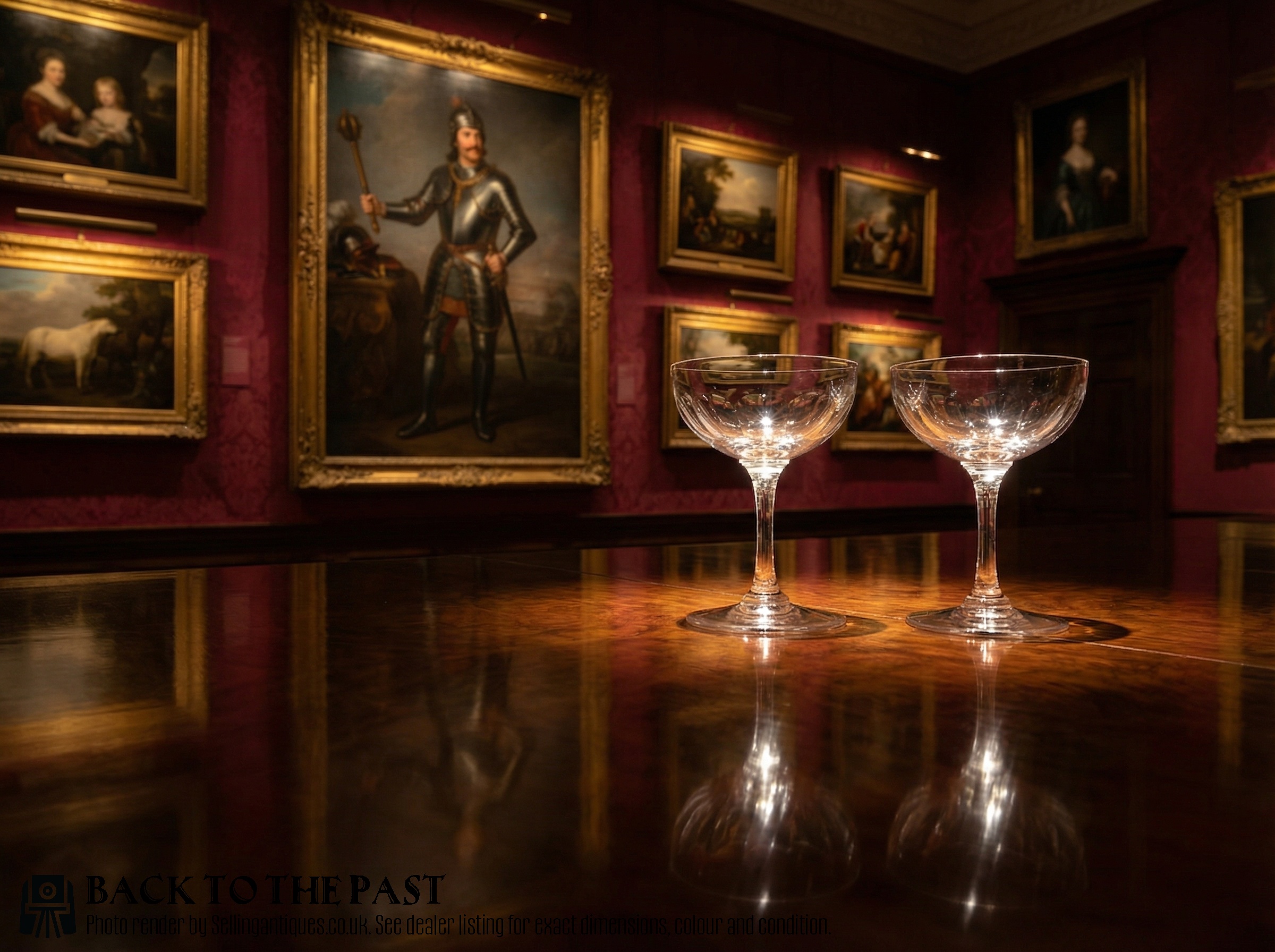
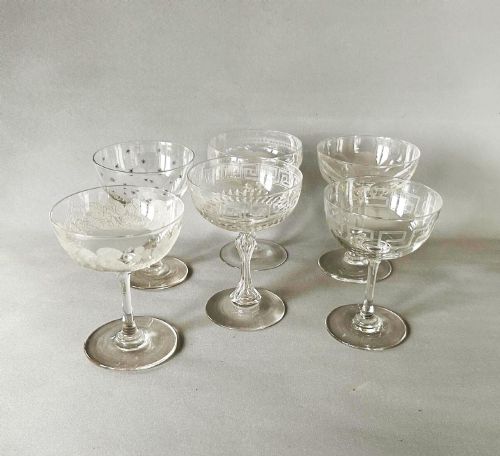
A Fine Pair of Victorian Cut Glass Champagne Bowls, 1880
Priced at £135 from Jeff Sims Antiques
The 2026 retail price guide for Antique Champagne Coupes is drawn from a proprietary archive of over 1.1 million retail prices indexed by Sellingantiques since 2003. This guide relies exclusively on their own internal data; no external sources or auction records are used.
Analysing nearly 25 years of UK antique market history alongside current retail values, the data indicates that typical UK retail prices for Antique Champagne Coupes range between £100 and £400. Entry-level prices generally fall under £100 and premium examples upwards of £400.
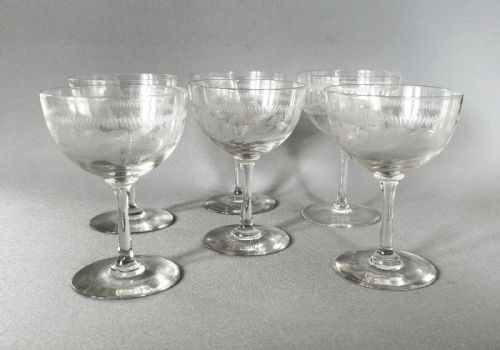
The primary characteristic is the wide, shallow bowl. It holds a relatively small volume of liquid compared to modern glasses.
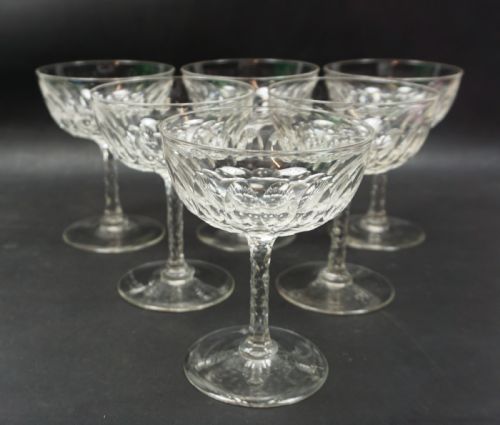
Stems vary drastically. Some are plain drawn pillars while others feature complex faceted knops or hollow air-twist spirals.
Look at the foot diameter. It often mirrors or slightly exceeds the width of the rim, keeping the glass stable on a tray.
Glassblowers shaped the bowl and stem from separate gathers of molten glass before fusing them together on the workbench.
Wheel engraving cuts into the surface. Craftsmen held the piece against a spinning copper wheel to create frosted matte patterns.
Optic moulds give some antique champagne coupes a subtle ribbed effect inside the bowl.
"The wide surface area allows the drink to aerate quickly. This brings out the rich aromas of older vintages."
"Many nineteenth-century hostesses stacked them into tall towers for visual impact at large banquets."
"Bartenders find the shape very practical for shaken cocktails. The design holds strained drinks easily."
Based on almost 25 years of Sellingantiques UK antique market data, Antique Champagne Coupes appeared 269 times (out of 1,100,000 antiques) which gives it a rarity score of 95/100.
This score measures scarcity within the Sellingantiques archive only and is not a survey of the entire antiques market, so these statistics may not be indicative of the general availability of Antique Champagne Coupes elsewhere.
Wash them by hand in warm soapy water. A soft sponge clears away most residue without risking the surface.
Never put them in a modern dishwasher. The high heat and harsh chemicals will etch the glass over time, leaving a cloudy finish you cannot remove.
Earlier sparkling wines were much sweeter than modern varieties. The wide bowl allowed the carbonation to dissipate quickly, which softened the heavy yeast and sugar notes on the palate.
Drinking habits were also different. People drank smaller servings at a faster pace during toasts, meaning the liquid rarely sat long enough to go flat.
Yes. The shape works well for drinks served up without ice.
The wide rim allows the alcohol fumes to disperse, making them a staple in many modern bars.
Minor variations in height and thickness are standard for hand-blown glass. Craftsmen relied on their eyes and hands rather than automated machinery.
The amount of glass gathered on the pipe dictated the final thickness. Two gathers of slightly different sizes meant the resulting bowls would not match.
Even pieces from high-end factories show slight discrepancies. This variation sets manual production apart from modern factory-moulded uniformity.
Please note: This Antique Champagne Coupes guide and its associated pricing data are provided for general informational purposes only. It does not constitute formal financial, investment, or appraisal advice and should not be relied upon as the sole basis for any commercial activity, purchasing, or sales decisions. Sellingantiques.co.uk accepts no liability for any actions taken in reliance on this information. Always consult with a qualified professional or independent appraiser.
