


A 2026 Guide by Sellingantiques

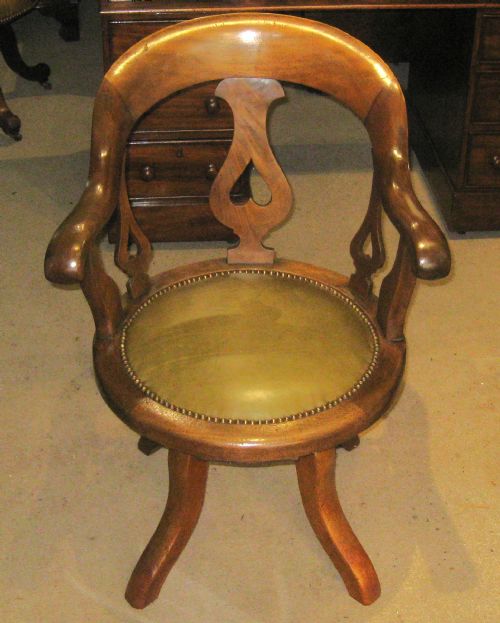
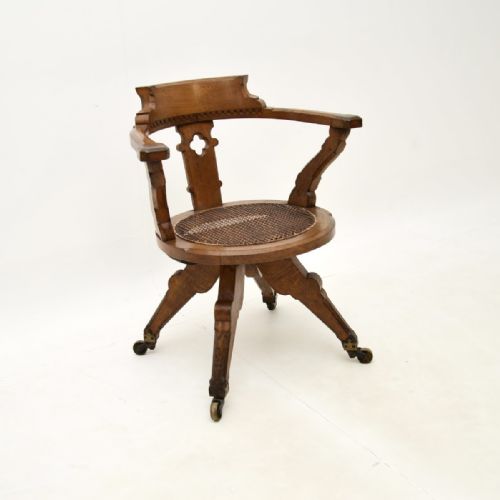
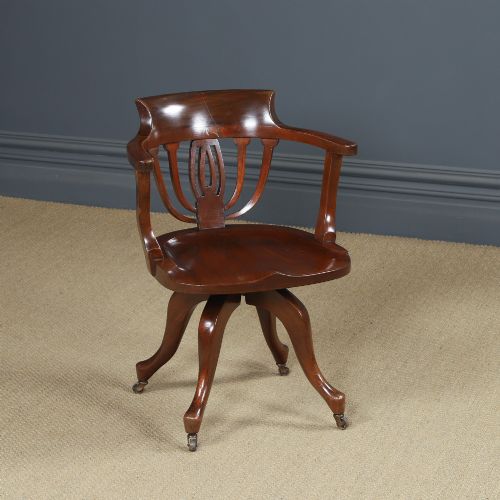
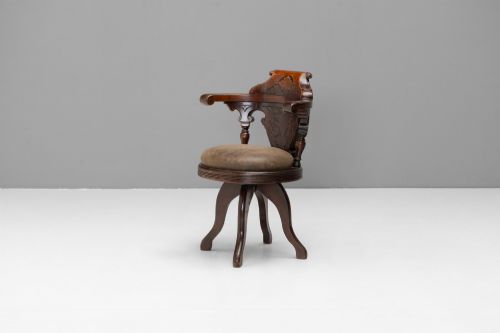
Arts and Crafts Desk or Office Chair by Kendrick & Jefferson, 1920
Priced at £865 from Elmgarden
Thomas Jefferson famously adapted a Windsor chair with a central iron pivot. Early versions appeared in the late eighteenth century.
Rapid expansion of commercial clerical work drove massive demand. Growing offices needed seating that kept workers mobile at their desks.
Transitioning from simple wooden screws to cast iron spring mechanisms changed how they functioned. This shift occurred gradually through the mid-nineteenth century.
Check the Edwardian office catalogues. Antique swivel chairs were standard stock, supplied in thousands to banks and administrative buildings.
Domestic examples rarely featured in standard drawing room layouts. You'll usually find them restricted to the library.
Peter Derby produced thousands of office chairs in Massachusetts during the late nineteenth century. Their stamped marks sometimes survive underneath.
The firm of Heywood Brothers turned out large volumes of bentwood and spindle-back varieties before merging with Wakefield.
English makers like William Angus & Co supplied London offices. They often imported American mechanisms to fit onto local frames.
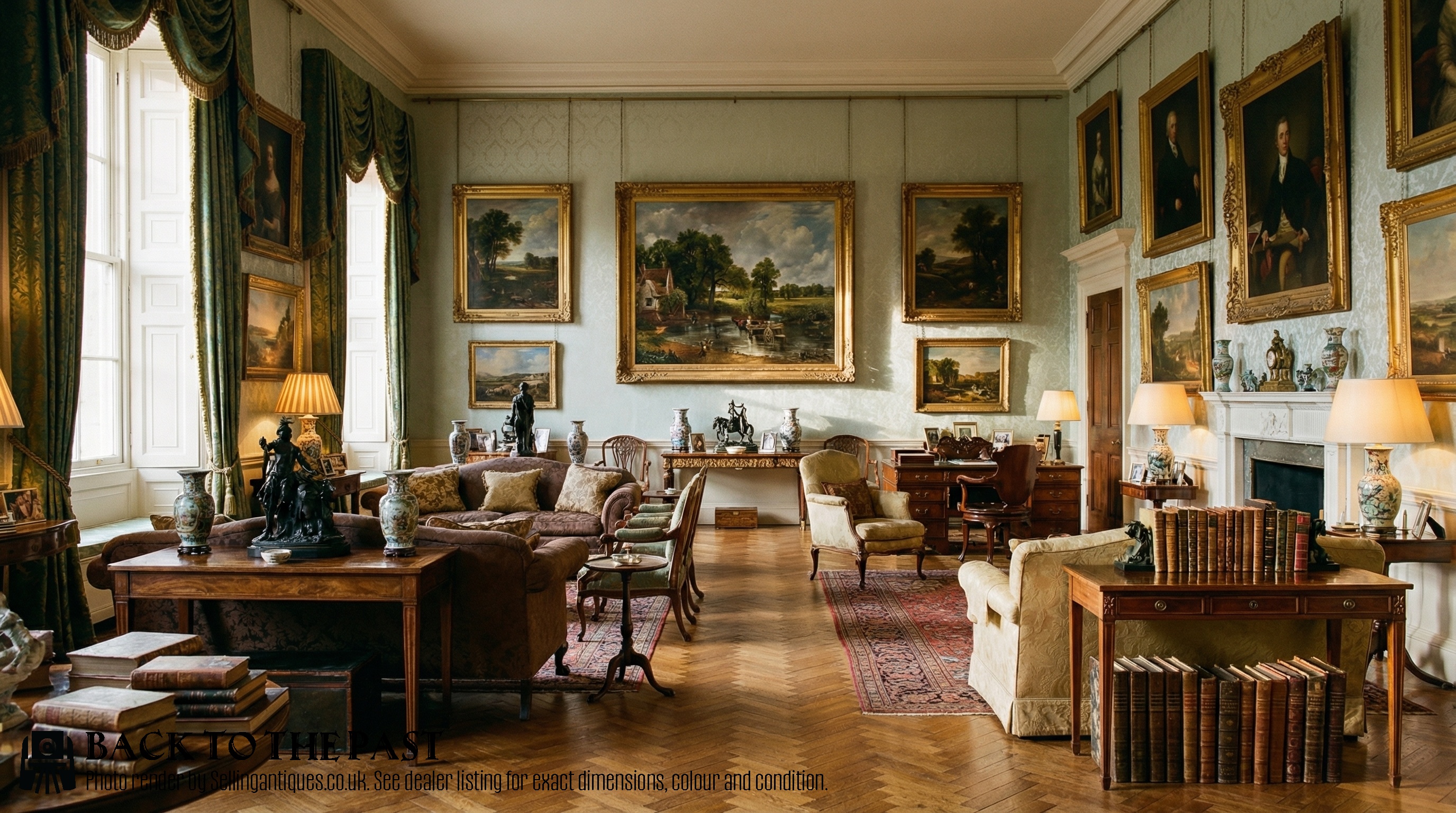
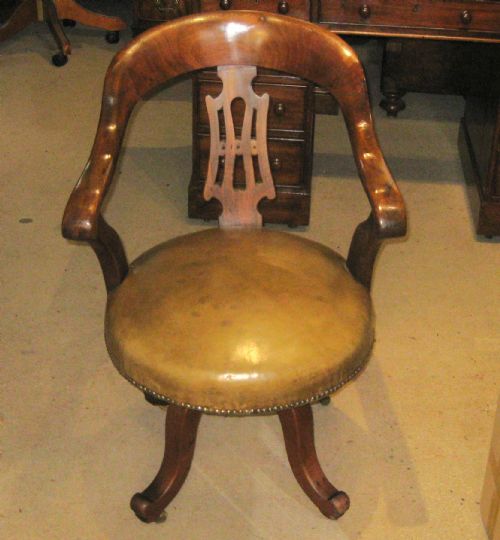
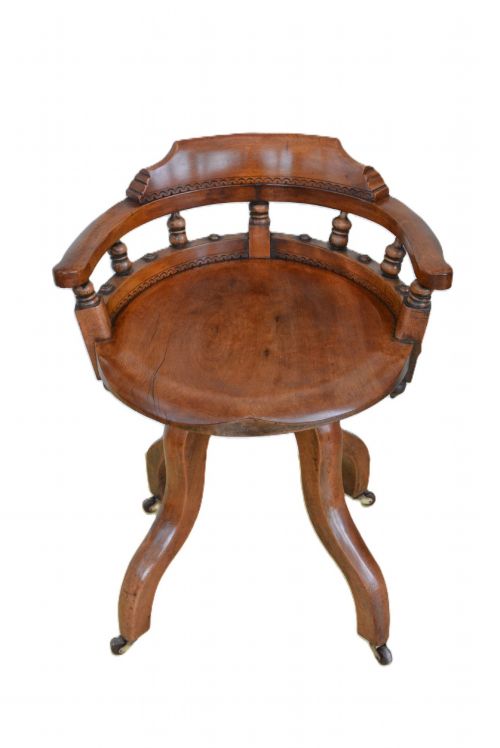
Late Nineteenth Century Revolving Desk Chair., 1890
Priced at £595 from Ropeworks Antiques
The 2026 retail price guide for Antique Swivel Chairs is drawn from a proprietary archive of over 1.1 million retail prices indexed by Sellingantiques since 2003. This guide relies exclusively on their own internal data; no external sources or auction records are used.
Analysing nearly 25 years of UK antique market history alongside current retail values, the data indicates that typical UK retail prices for Antique Swivel Chairs range between £400 and £1,200. Entry-level prices generally fall under £400 and premium examples upwards of £1,200.
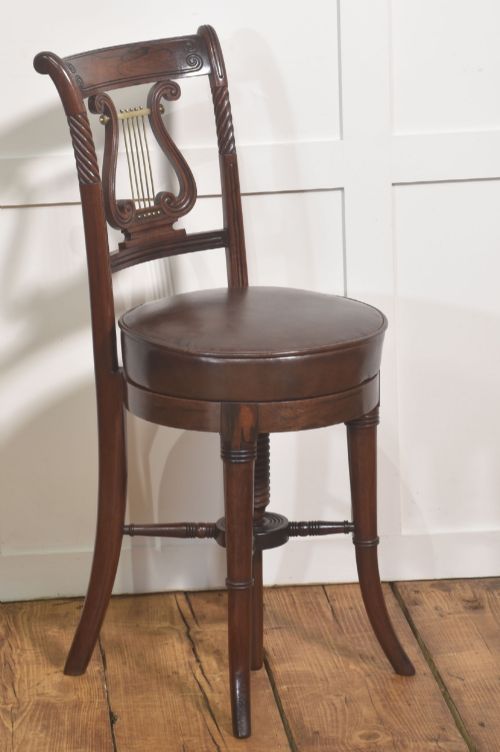
A central threaded spindle remains the defining element of any antique swivel chair. It controls both the rotation and the height adjustment.
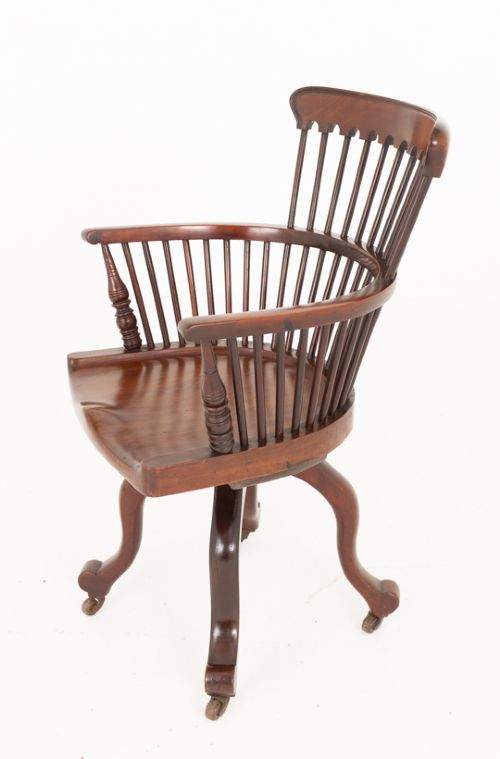
Base supports usually feature four splayed legs extending from a central hub.
Take note of the contoured wooden saddle seats on uncovered examples. Factory makers shaped this solid timber deeply to make long shifts bearable.
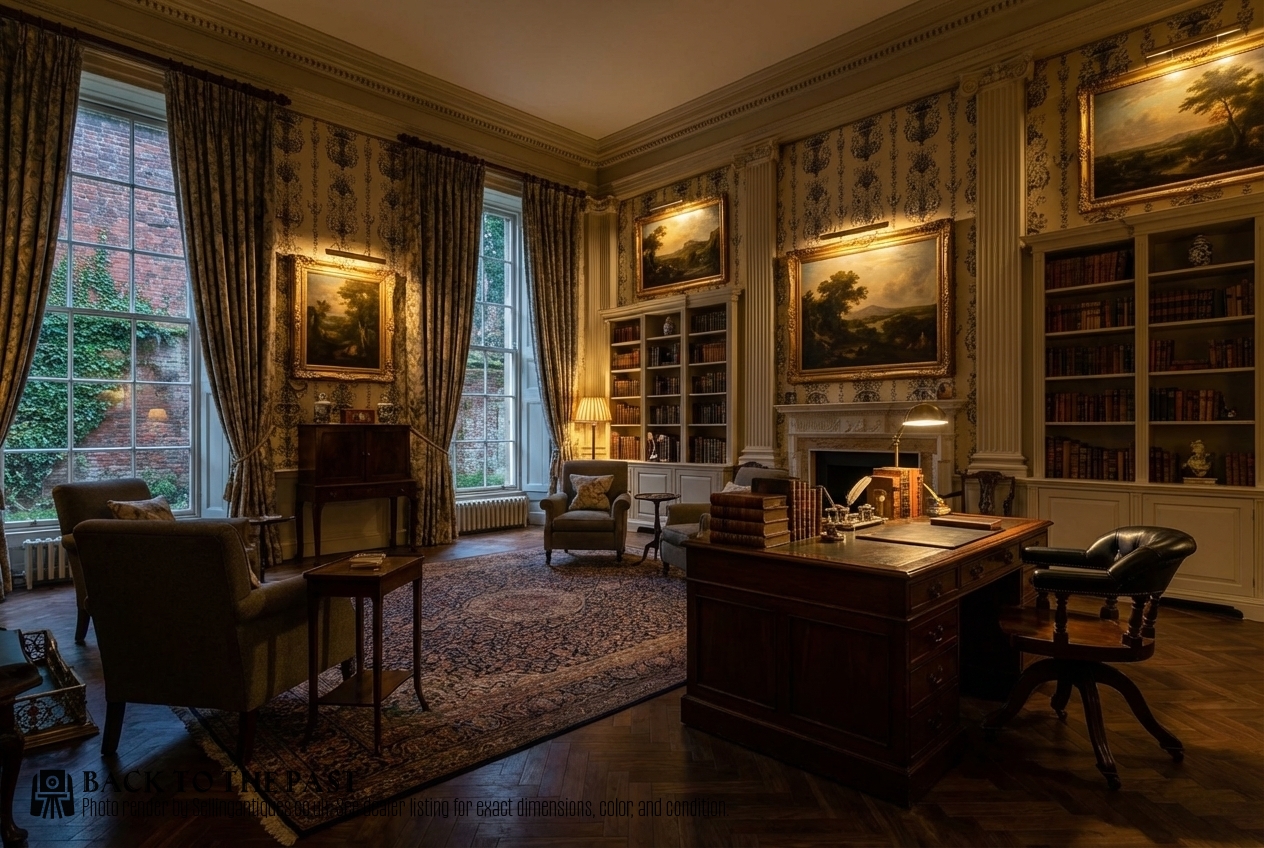
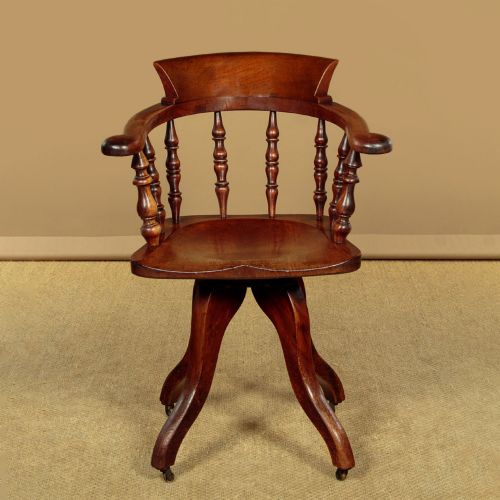
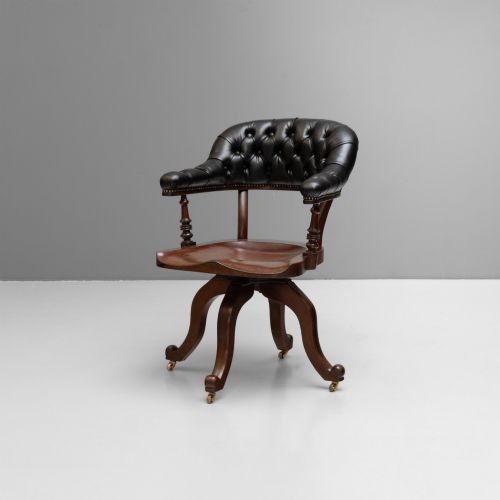
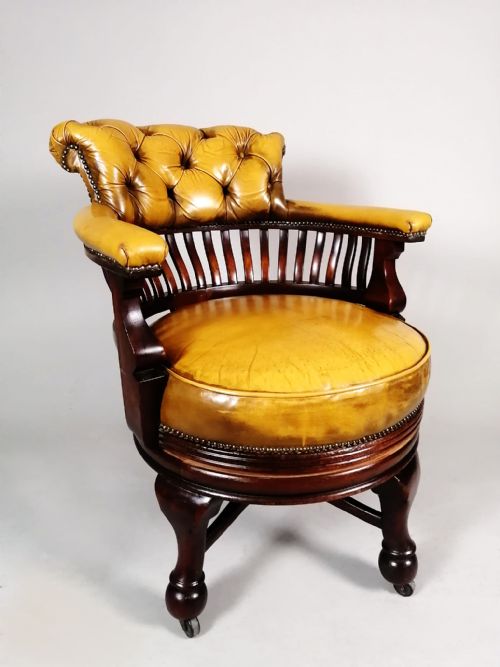
A Superbly Comfortable 19th Century Swivelling Desk Chair, Edwardian
Priced at £1,000 from Elmgarden
Early antique swivel chairs relied on simple wooden screw threads. Makers carved these directly into thick timber uprights.
Industrialisation brought heavy sand-cast iron mechanisms. Foundries poured molten iron into moulds to create durable tilt brackets.
Steam bending changed the backrest shapes. Factories subjected ash and elm to high heat before clamping them round curved formers.
"Many early mechanisms feature a hidden tension knob. You can tighten or loosen this to adjust the recline resistance."
"Charles Darwin adapted his own armchair with castors to reach his specimens faster. This predates many commercial office designs."
"Some Victorian models include small ventilation holes drilled through the solid timber seats. This kept workers cool during summer months."
Based on almost 25 years of Sellingantiques UK antique market data, Antique Swivel Chairs appeared 977 times (out of 1,100,000 antiques) which gives it a rarity score of 82/100.
This score measures scarcity within the Sellingantiques archive only and is not a survey of the entire antiques market, so these statistics may not be indicative of the general availability of Antique Swivel Chairs elsewhere.
Most squeaks originate where the threaded spindle meets the metal base casting. The dry friction of metal on metal over decades causes the noise. It happens whenever you shift your weight.
Apply a dry lubricant like graphite powder or a specialist PTFE spray directly to the threads. Wet oils attract office dust and grit, which eventually grind down the iron components over time.
Yes, replacing castors is a straightforward job. Original porcelain or brass castors often wear down or lose their pins after a century of use.
Just ensure the new castor stems match the diameter of the existing holes in the legs. Forcing a wider stem will split the antique timber.
The thread has likely seized due to a build-up of old grease, dust, and rust in the mechanism. When people force the rotation, the central pin spins inside its collar rather than tracking down the thread.
You need to lift the seat entirely out of the base, which sometimes requires significant upward pressure. Once separated, clean the threads thoroughly with a wire brush and white spirit before testing the rotation again.
Surface rust on these thick cast iron springs is rarely a structural concern. Victorian foundries built these heavy components to withstand daily wear in commercial offices.
Applying a light machine oil helps protect the surface from further moisture, but it will not repair existing corrosion. A stiff wire brush will remove the loose flakes of rust and give you a clearer view of the metal beneath.
If you see a deep crack running through the coil, stop using the tilt function. A metal fabricator can sometimes weld a repair, though a replacement spring is the safer option.
Please note: This Antique Swivel Chairs guide and its associated pricing data are provided for general informational purposes only. It does not constitute formal financial, investment, or appraisal advice and should not be relied upon as the sole basis for any commercial activity, purchasing, or sales decisions. Sellingantiques.co.uk accepts no liability for any actions taken in reliance on this information. Always consult with a qualified professional or independent appraiser.
