

Antique Salon Chairs
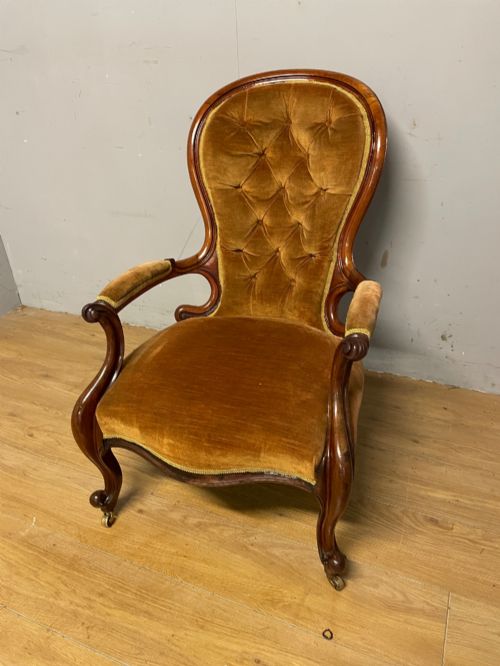
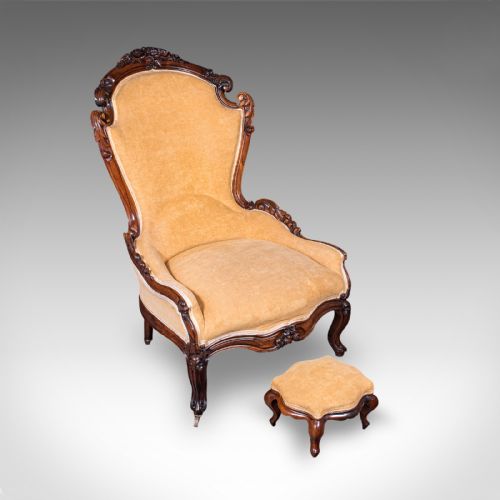
A salon chair is a light framed occasional chair for the reception room, upholstered on a show-wood frame and made to be moved about and grouped for conversation.
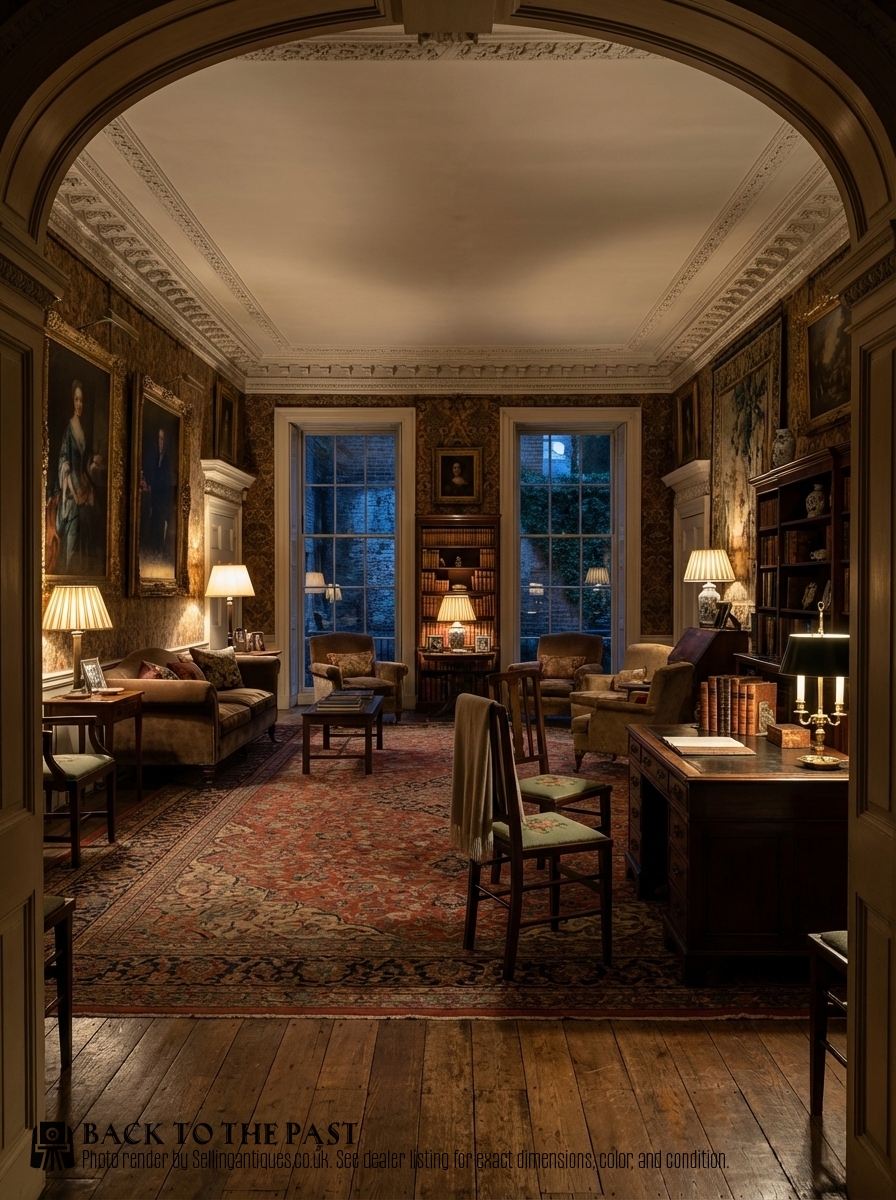
Antique Salon Chairs
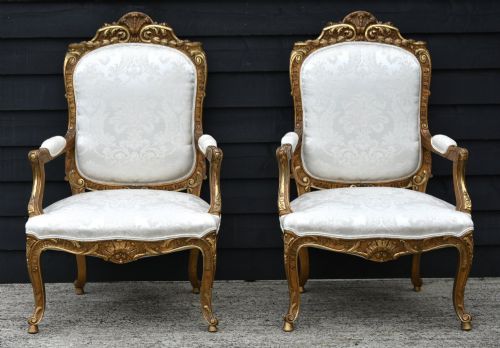
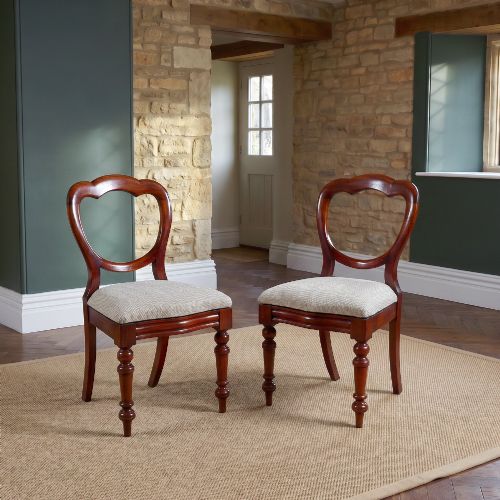
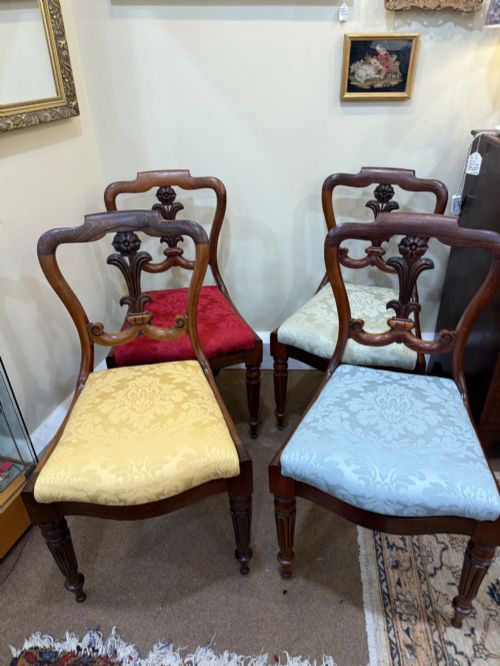
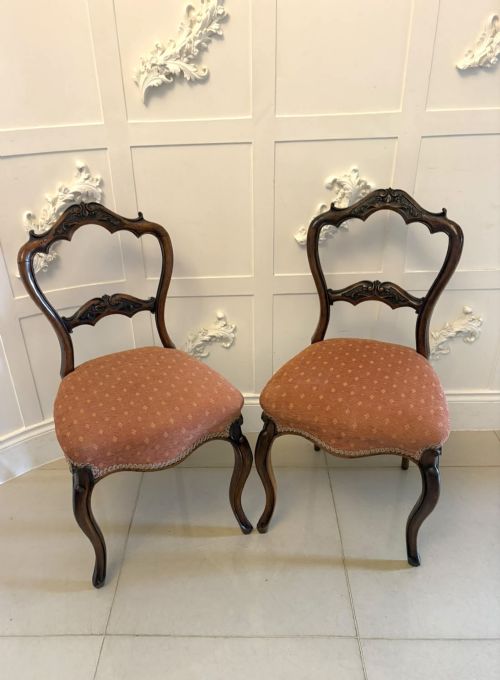
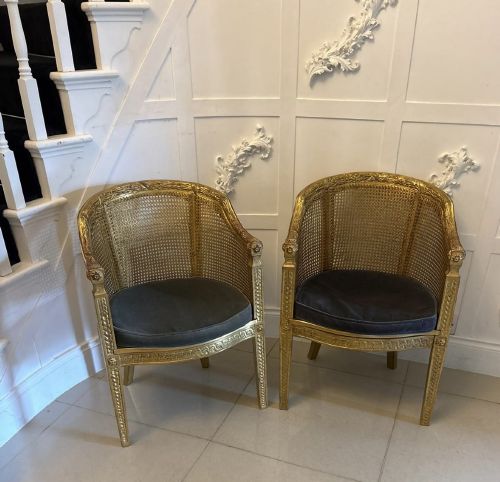
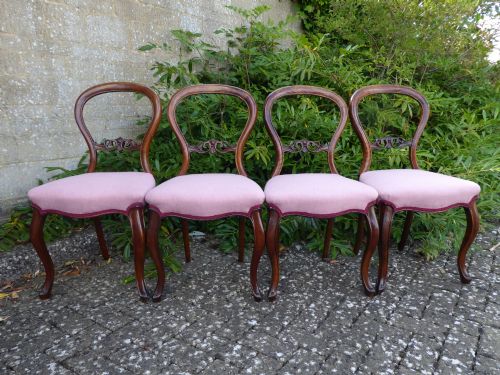
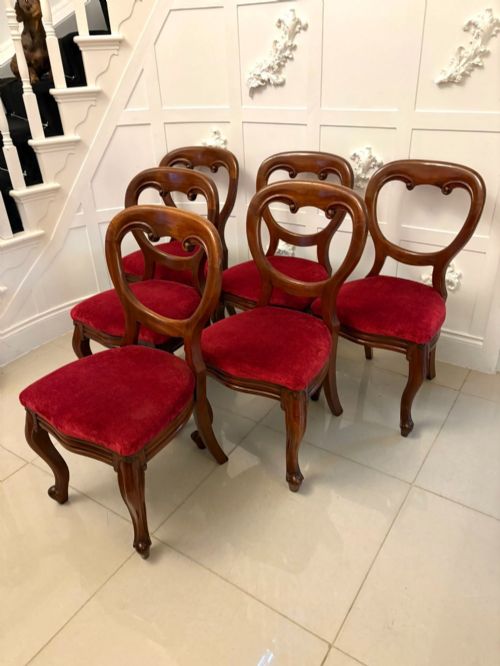
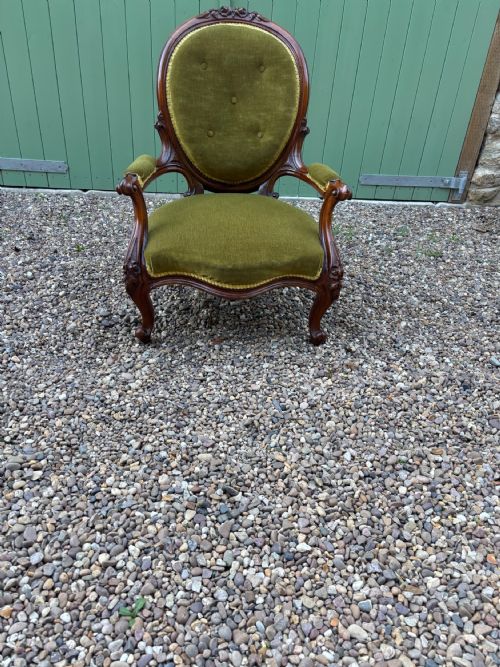
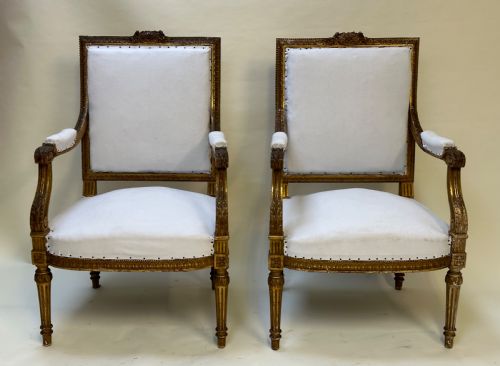
Single side chairs, open armchairs and matched pairs, usually with a carved or inlaid exposed wooden frame and a stuffed seat and back. The heading also takes in a good deal of adjacent seating: balloon-back and other dining chairs, nursing and bedroom chairs, tub and bergère chairs, fireside and ladies' and gentleman's chairs, and now and then a whole suite or a settee.
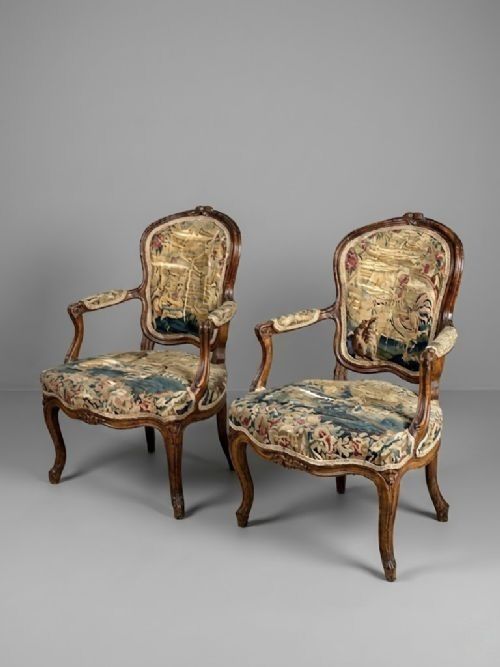
The pair is the defining unit. 'Pair' appears in nearly half of all titles on Sellingantiques, and single chairs are outnumbered by matched pairs roughly two to one. That fits how they were sold in the first place, when a drawing room or salon was furnished with matching sets of side chairs and open armchairs.
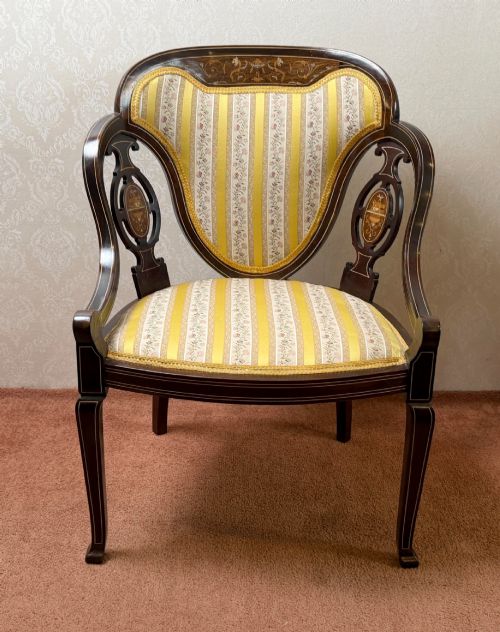
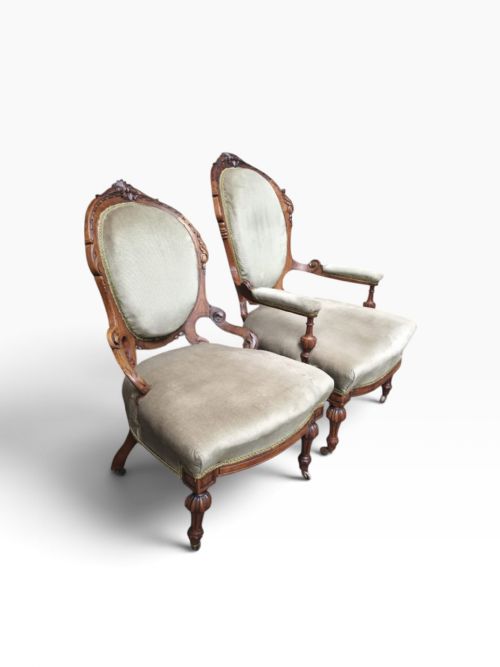
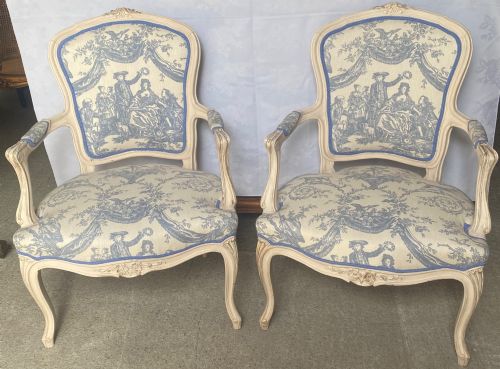
The commonest single thing to meet is a 19th-century French or Victorian walnut salon chair, or a pair of open armchairs. French labelling runs through a third of titles, Victorian just under a third, with walnut, mahogany and rosewood the usual timbers and a smaller gilded and painted contingent behind them. Edwardian inlaid mahogany makes up about one in ten, often described as revival or Art Nouveau work.
Dating tends to be loose rather than precise. The dated field runs 1750 to 1960, but the largest single bucket is '19th Century', followed by 'Victorian' and '1900s', so a good share of the dated material gives only a century or a reign. Where decades are named they cluster mid-to-late Victorian and Edwardian. Eighteenth-century, Georgian and Regency entries turn up, but they are a small minority.

Where The Range Sits
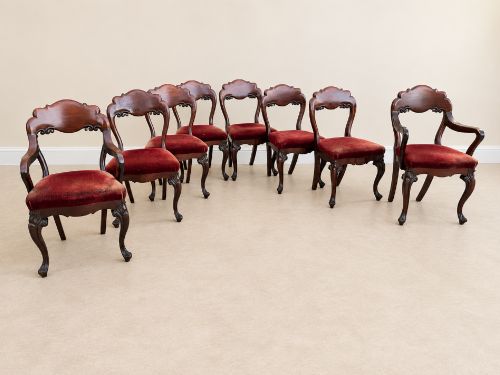
Numbers do most of the work. Singles and pairs fill the lower and middle of the range, while sets of six, eight, nine, ten and a set of twelve oak-framed chairs sit at the upper end. Complete salon and drawing-room suites turn up occasionally rather than routinely, in configurations from three pieces to eight, one of them a seven-piece cameo-back drawing room suite.
After that it is the frame. Carving, gilding, giltwood, gilt gesso and parcel gilt concentrate in the higher-priced material, and walnut, rosewood and marquetry or inlay carry the middle and upper range. Stained or plain mahogany frames and later painted chairs sit lower down.
Earliness and origin push the rest. Eighteenth-century, Georgian and Regency-labelled chairs cluster at the top, while 1900s and Edwardian inlaid pieces sit below them. The very highest prices go to 18th-century giltwood and mahogany armchairs and to French Restauration gilded fauteuils with a palace provenance; the handful of listings citing a country house or an attributed cabinetmaker sit in the same territory.
Antique Salon Chairs Retail Price Guide 2026
Typical UK retail prices for salon chairs, calculated from the Sellingantiques database of over a million retail prices indexed since 2003. This retail price guide relies exclusively on Sellingantiques data; no external sources or auction records are used, so the figures do not describe the wider market.
Dates given for salon chairs on Sellingantiques run from 1750 to 1960. The oldest is a pair labelled 1750.

The Antique Salon Chairs Glossary
- Show frame
- The polished visible timber around the upholstery, also called show wood. Carving and inlay on it are what listings describe first.
- Side chair
- A chair without arms. 'Side' appears in forty titles, 'side chairs' in twenty-eight.
- Open armchair
- An armchair with unupholstered, exposed arm supports. The French term for the same thing is fauteuil, used across the French-labelled listings.
- Balloon back
- A rounded, waisted back, named in twenty-three titles and usually attached to dining and side chairs rather than armchairs.
- Spoonback
- A back curved in section to fit the sitter, recurring through the Victorian walnut listings alongside button back, where the upholstery is drawn into buttons.
- Bergère
- A deep enclosed armchair, here often with split-cane panels. A tub chair, by contrast, has a continuous curved back and arms.
Antique Salon Chairs: Frequently Asked Questions
How many salon chairs come up for sale each year?
Around sixty-eight salon chairs and pairs come to market on Sellingantiques in a year, and 162 different dealers have listed them. That makes it one of the most widely stocked seating categories on the site.
The spread of dealers matters more than the total. It means the field is broad rather than dominated by a handful of specialists.
Are they usually sold as pairs or singles?
Pairs. 'Pair' appears in nearly half of all titles, and single chairs are outnumbered by matched pairs roughly two to one.
Larger groups exist above that. Sets of six, eight, nine and ten recur, and the largest group recorded is a set of twelve oak-framed chairs.
What woods were used for the frames?
Walnut leads, named in about a quarter of titles, with mahogany next and rosewood behind it. Oak turns up in the larger sets.
Gilded and painted frames form a smaller group, including giltwood, gilt gesso, parcel gilt and silver gilt. Papier mâché and japanned frames, mother-of-pearl inlay and bone inlay each appear once, at the decorative fringe.
Which periods do these chairs come from?
The dated field spans 1750 to 1960. Decades where they are given cluster in the 1850s and 1860s, the 1880s and 1890s, and the 1910s and 1920s.
Much of the labelling is broader than that, giving only '19th Century', 'Victorian', 'Edwardian' or '1900s'. A handful of dates fall between the 1930s and 1960.
Do any unusual origins turn up in this category?
A few, each as a single occurrence: a set attributed as Scandinavian or possibly Russian, a Belgian pair, Piedmontese and Barocchetto Italian armchairs, a Swedish satin birch pair and a Franco-Chinese pair.
Brass-framed chairs are the other oddity, appearing only a few times against an overwhelmingly timber-framed field, including a 1920s solid brass example and a pair described as Italian.
Were salon chairs ever made for children?
Rarely. Two examples appear across the whole archive: a child's inlaid Art Nouveau chair, and a pair of gilded and painted children's salon chairs.
Everything else in the category is adult seating.