


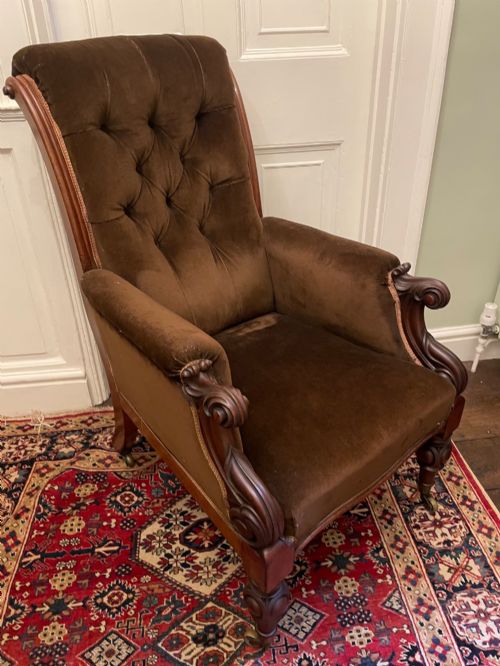
Antique Library Chairs
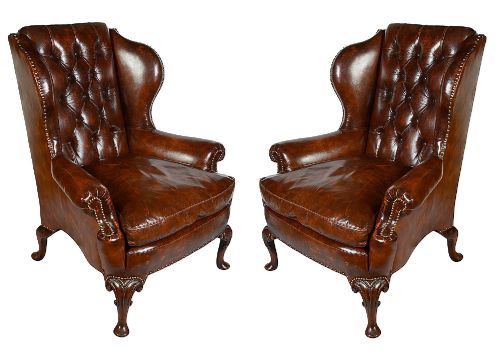
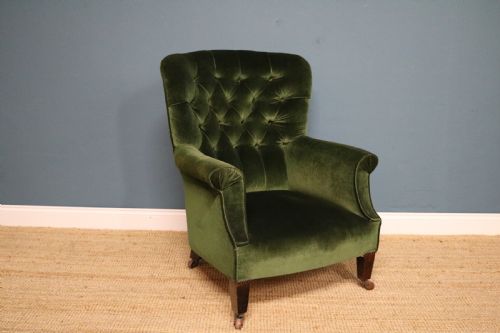
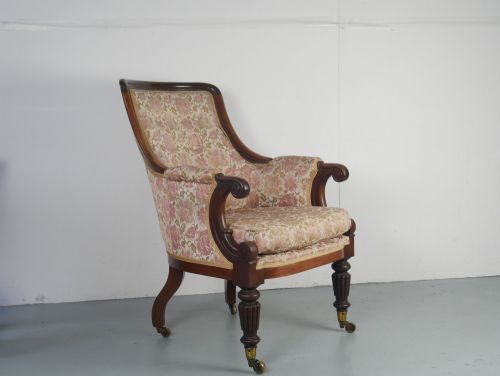
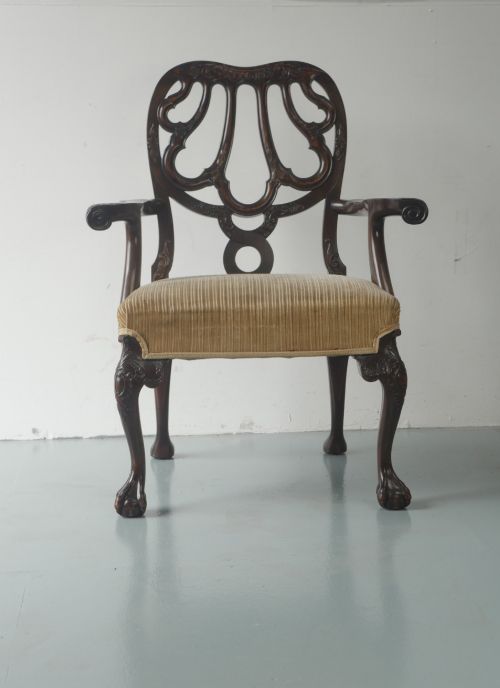
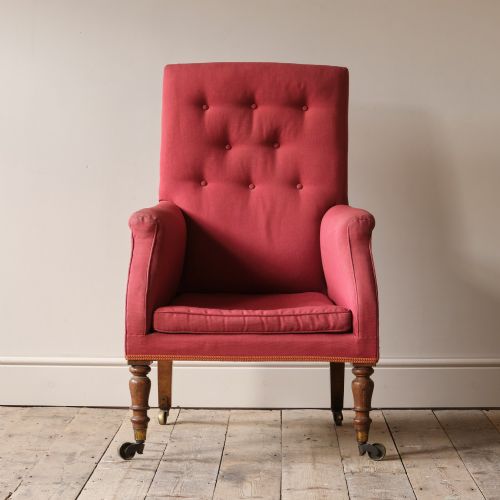
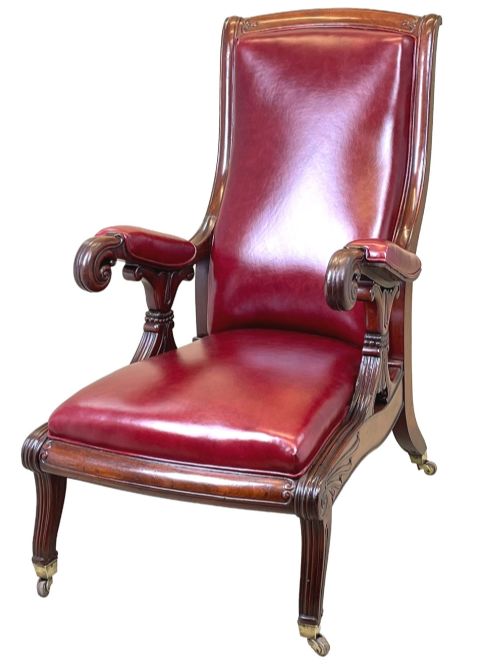
A library chair is an open-arm or deep upholstered armchair made for reading and desk work, the sort of seat a 19th-century library or study needed.

Antique Library Chairs
The form grew out of the country-house and town-house library, once those rooms became places for reading and writing. Makers wanted a chair deep enough to sit in for an hour and light enough to pull up to a desk. From the later 18th century they produced open-arm, tub, bergere and metamorphic versions of the idea.
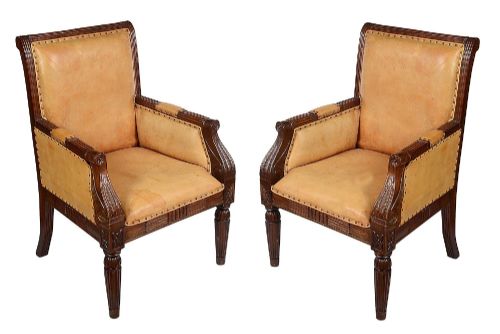
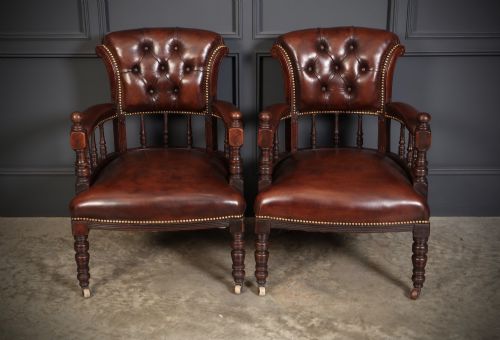
What you will meet most often on Sellingantiques is a single 19th-century mahogany-framed armchair, upholstered, frequently in leather. Mahogany is named in 586 of 1,648 titles, leather in 354, and "armchair" in 511. The period fields are led by 19th Century and Victorian, with Regency and Georgian close behind.
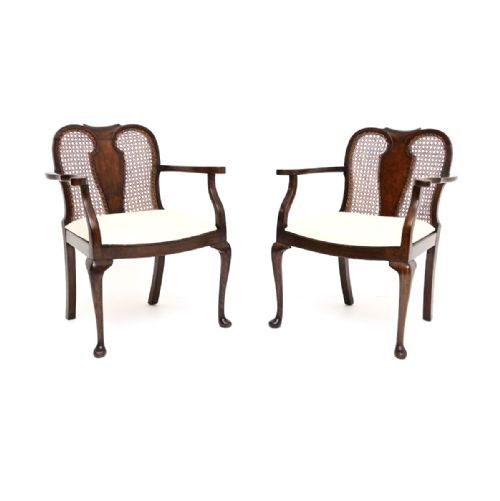
Dealers use the heading broadly. Desk chair appears in 221 titles and office chair in 54, and the two labels are used interchangeably with library chair. Alongside them sit bergeres, tub chairs, Gainsborough types and open-arm elbow chairs, all filed under the same heading.
Two smaller seams are worth knowing. Metamorphic chairs, which convert into a set of library steps, run to 69 titles and are often catalogued as steps and side chair together. Revolving, swivel and captain's desk chairs turn up throughout the desk end of the category, with an early-20th-century tail of oak and leather examples.
What Moves The Price
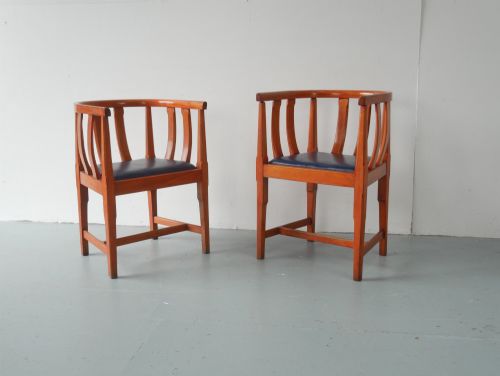
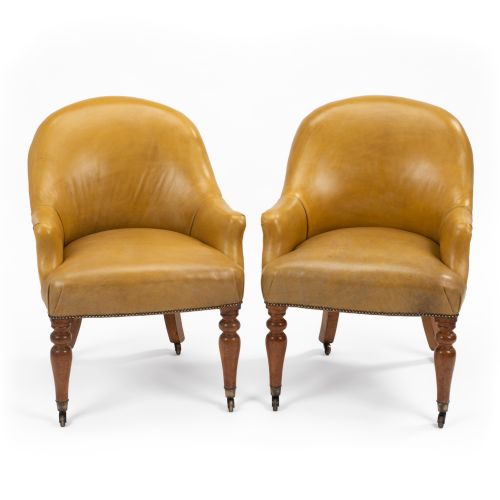
Number counts for more than anything else. Pairs are in 336 titles, one in five, and the archive stretches to sets of four, six, eight and ten, the largest sampled group being ten. Matched pairs and sets with Regency or Georgian dates hold the top of the range; single Victorian and Edwardian oak or mahogany desk chairs sit at the bottom.
Timber sorts the rest. Mahogany dominates the category, and mahogany, rosewood and walnut cluster in the higher sampled titles, while oak and beech make up the broader base. Scale pulls in the same direction: "large" is in 82 titles, and the dearer sampled entries reach for "enormous", "very large" and "generous proportions".
Mechanism and special form lift a chair too. Metamorphic examples and the 32 titles describing reclining or sliding action sit well up the range, as do chairs carrying a maker's name or an attribution rather than none at all.
Antique Library Chairs Retail Price Guide 2026
Typical UK retail prices for library chairs, calculated from the Sellingantiques database of over a million retail prices indexed since 2003. This retail price guide relies exclusively on Sellingantiques data; no external sources or auction records are used, so the figures do not describe the wider market.
Gillows of Lancaster is the maker name that turns up from the most dealers on Sellingantiques, appearing from ten of them.
Gillows of Lancaster
The Antique Library Chairs Glossary
- Show frame
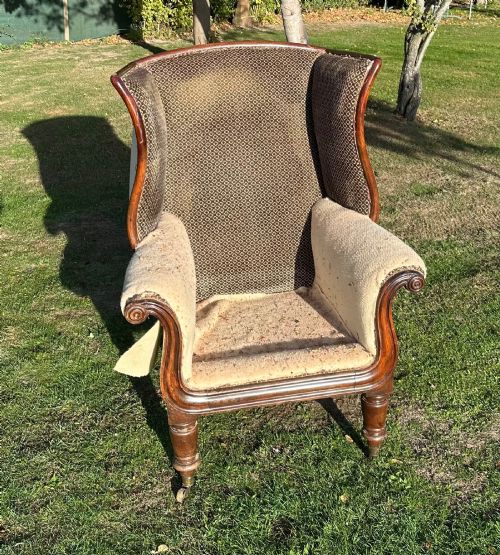
- Polished timber frame left visible around the upholstery, as in a mahogany show frame library armchair.
- Open armchair
- A chair with exposed arms and no upholstered wings or sides. Ninety-four titles use the word open.
- Bergere
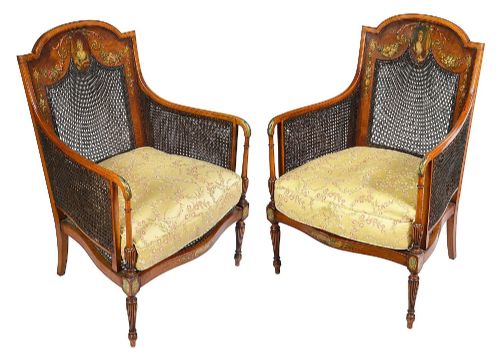
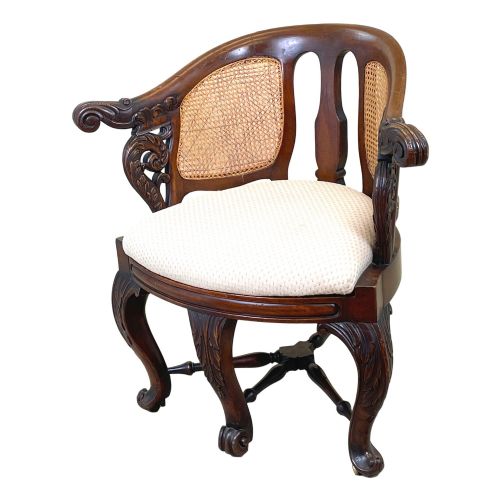
- An armchair with enclosed sides, often caned across the back and sides. It accounts for 106 titles, many of them mahogany.
- Metamorphic
- A chair that converts into a set of library steps for reaching high shelves. Sixty-nine titles, usually paired with the word steps.
- Gainsborough chair
- An open-arm upholstered chair with padded arm rests set back from the front legs. Sixty-two titles.
- Curricle
- A bow-backed Regency armchair form, named in a couple of sampled titles alongside spoon back and smokers bow.
Antique Library Chairs: Frequently Asked Questions
What is the difference between a library and desk chair?
In these listings, very little. Desk chair appears in 221 titles and office chair in 54, and dealers use both labels for the same open-arm and upholstered forms.
Titles like "19th century mahogany desk or library chair" show the overlap plainly. Read the description and the photographs for the form rather than relying on the label.
Which wood is most common?
Mahogany, by a wide margin. It is named in 586 of 1,648 titles, with oak at 189, walnut at 134 and rosewood at 59.
Other timbers surface only once or twice across the samples, among them ebony, yew, elm, ash, birds-eye maple, teak and pollard oak.
How old are most of these chairs?
The dated field runs from 1750 to 1930, but only 582 listings carry a clean year. The rest sit under style labels: 19th Century for 489, Victorian for 184, Regency for 158, Georgian for 61.
Where decades are given they cluster mid to late 19th century, with the 1880s and 1850s strongest. There is a real early-20th-century tail as well, taking in Edwardian examples and 1930s oak and leather armchairs.
Do library chairs come in pairs?
Often. Pair appears in 336 titles, one in five, and sets of four, six, eight and ten have all passed through.
Those matched groups, particularly with Regency or Georgian dates, hold the top of the range.
What is a metamorphic library chair?
A chair built to convert into a set of library steps, so one piece of furniture serves as seat and ladder. Sixty-nine titles use the term.
Several are catalogued simply as library steps and side chair. They form a small but steady seam within the category, and they sit well up the range.
Are named makers common in this category?
No. Gillows is the only name to clear three dealers, appearing from ten dealers across twelve mentions.
Even then it often reads as "attributed to" or "in the manner of" rather than a stamped or labelled piece. The great majority of library chairs are sold on form, timber and date alone.