
Antique Button Back Chairs
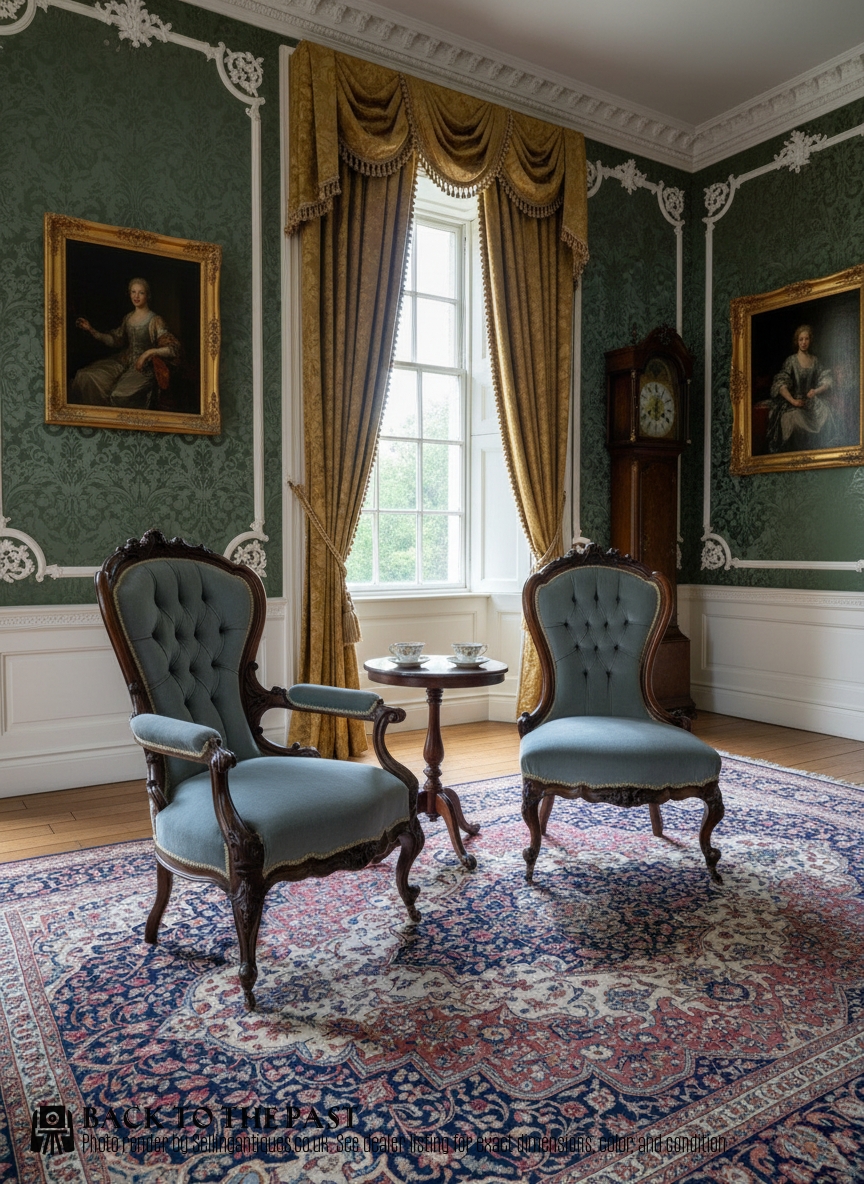
A chair whose stuffed back is drawn down by a grid of covered buttons, made for Victorian drawing rooms, bedrooms and libraries.
Antique Button Back Chairs
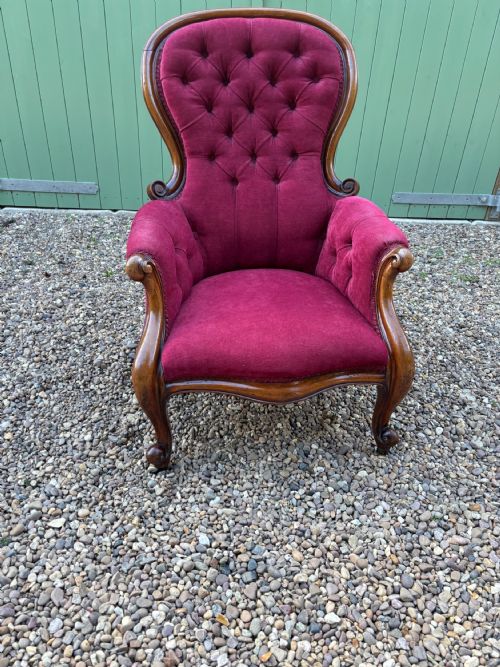
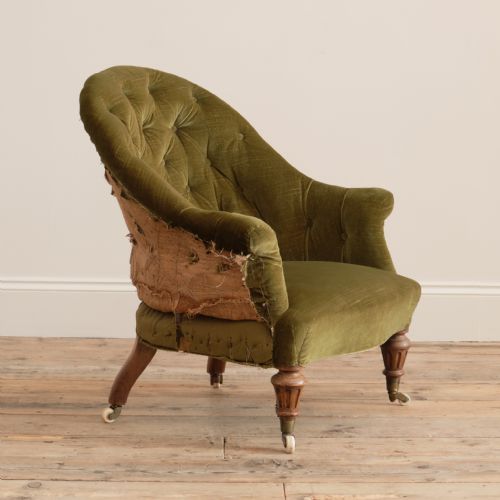
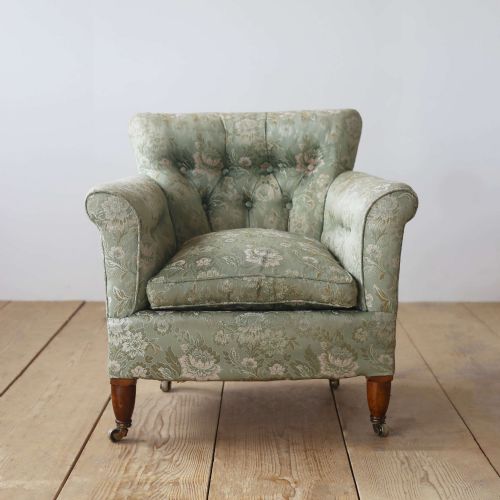
Buttoning came in as an upholstery technique in the early to mid 19th century, once coil springs and thicker stuffing let a back be shaped and held by ties finished with covered buttons. It kept the stuffing in place and gave the rounded, quilted profile that Victorian seating is known for. Shallow buttoning is described as button back, heavier work as deep buttoned.
Single armchairs dominate. Across 1,098 listings the word armchair appears in almost half of all titles, and Victorian and 19th Century between them account for well over half the dated entries. Frame timber is named in a minority of titles, mahogany and walnut most often, with rosewood and oak behind them. Covers split between leather and textile.
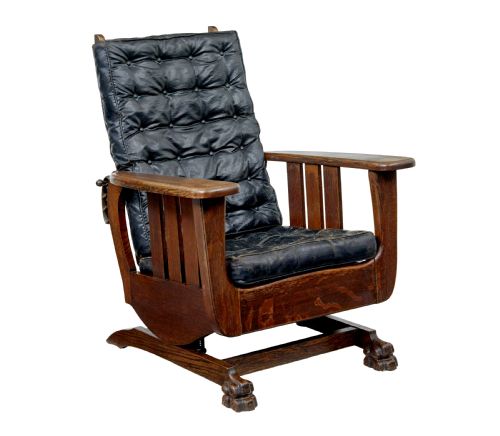
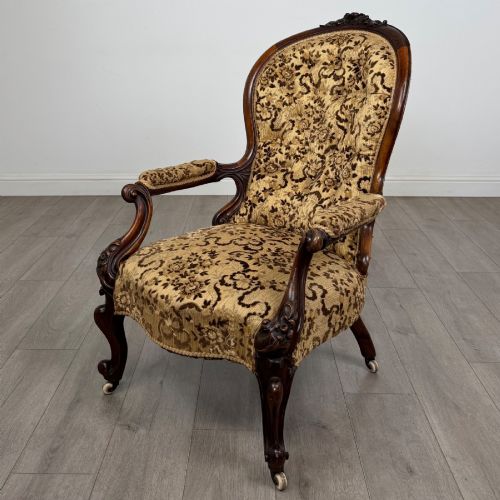
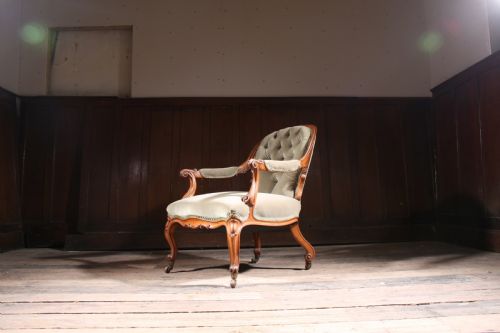
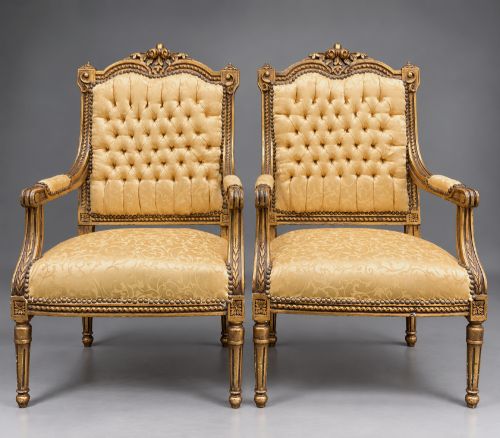
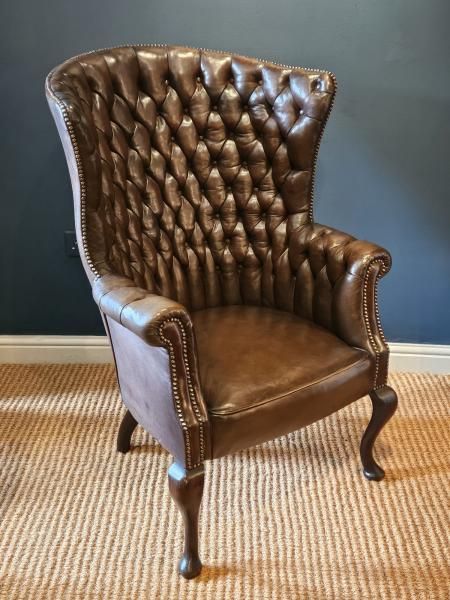
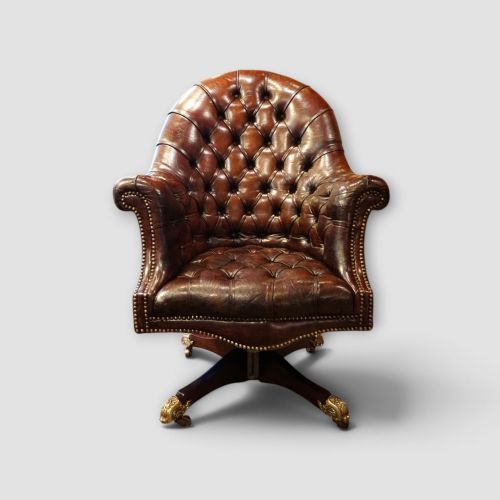
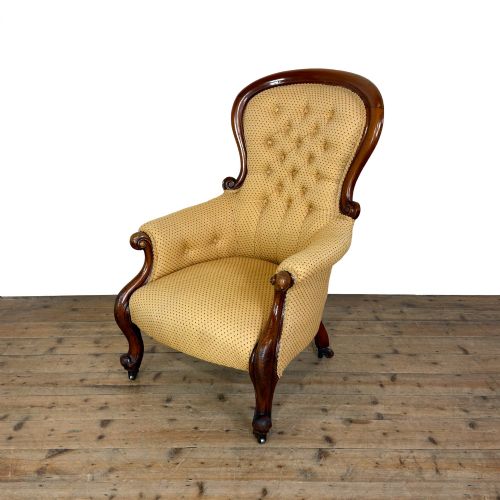
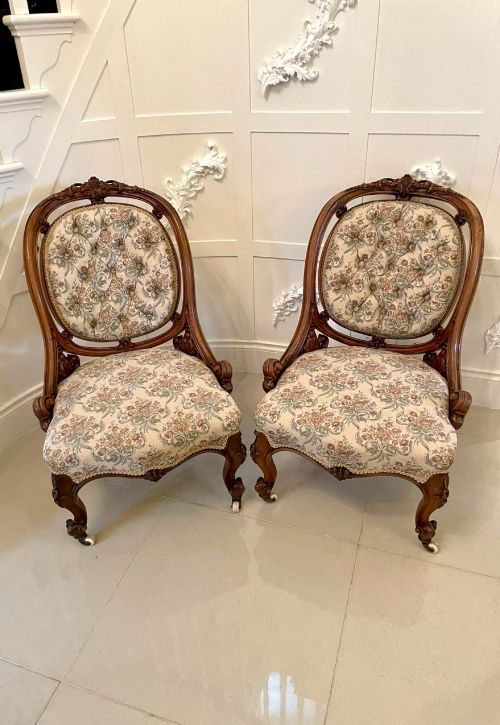
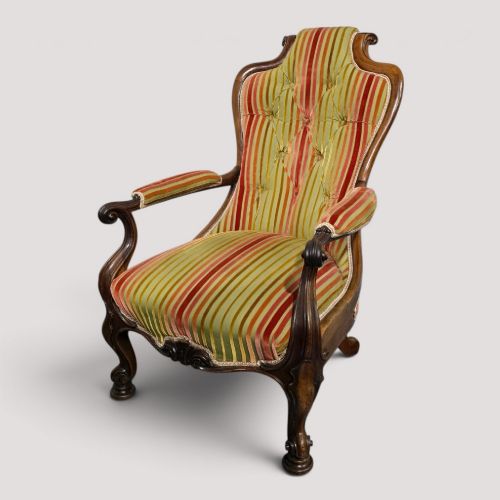
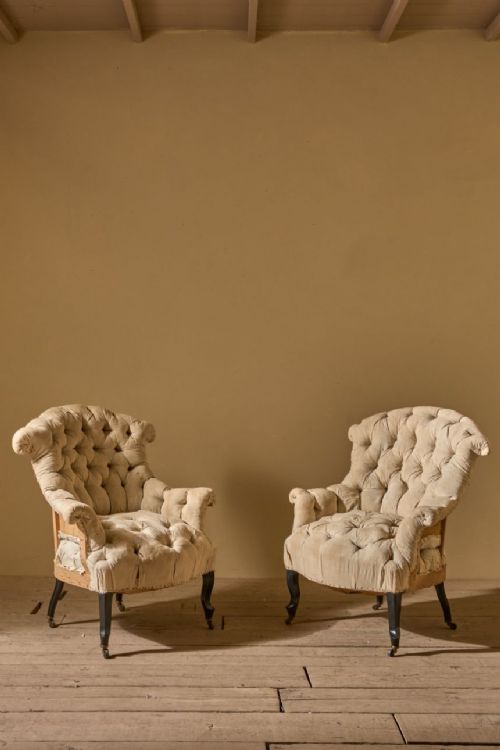
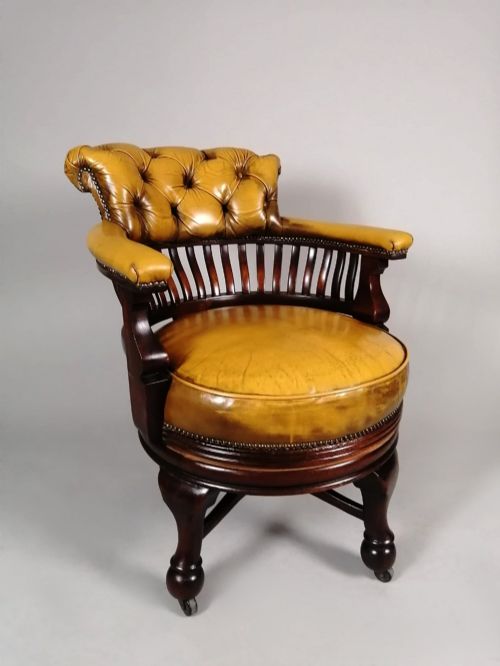
The largest group is Victorian show-wood chairs: spoon and scroll backs on carved walnut or mahogany frames, plus the low nursing, bedroom and slipper chairs that turn up throughout. Deep-buttoned leather wing, club and library chairs form a second group running from the later 19th century into the 1920s and 1930s. A distinct French pocket sits under the Napoleon III label, with fishtail, shield, curve and square back shapes recorded.
Pairs are the main alternative to the single, at 189 titles. Around 121 of these chairs are listed a year on Sellingantiques, offered by 197 different dealers, which makes it one of the broadest-based chair categories on the site. Only 315 listings carry a clean year, so period labels are best read as approximate.
Where The Range Splits
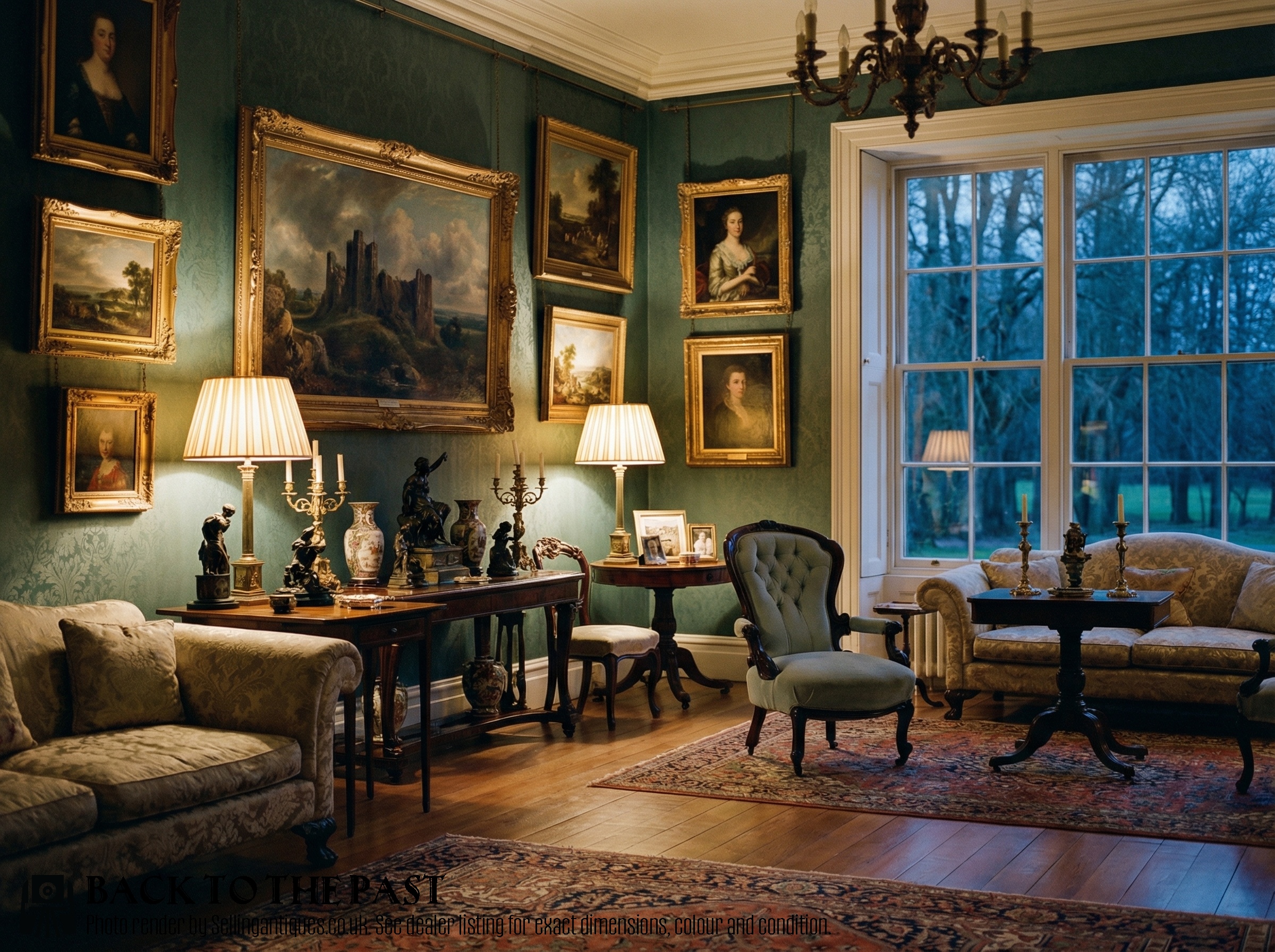
The bottom of the range is the anonymous single: a Victorian button back armchair with no timber named in the title, or a small nursing, bedroom or children's chair. The top is held by pairs, by named workshops, and by Regency library armchairs. Two chairs together sit markedly higher than the same chair on its own, and buttoned chairs came into houses two at a time far more often than the single-chair listings suggest.
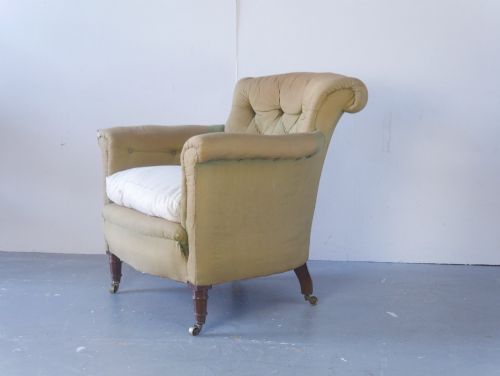
Cover and buttoning move the price in the same direction. Leather appears in 256 titles, and buttoned leather wing and library chairs sit high in the sampled order, while plain upholstered and velvet examples sit lower. Deep buttoning, recorded in 66 titles, recurs on the larger chairs; simple shallow button backs are the commonest and the cheapest form.
Frame and scale do the rest. Carved walnut and rosewood show-wood runs through the middle and upper part of the range, and titles that name no timber at all cluster at the bottom. Generous proportions and country house proportions are recurring notes on the higher-placed chairs.
Antique Button Back Chairs Retail Price Guide 2026
Typical UK retail prices for button back chairs, calculated from the Sellingantiques database of over a million retail prices indexed since 2003. This retail price guide relies exclusively on Sellingantiques data; no external sources or auction records are used, so the figures do not describe the wider market.
Iron-framed button-backs are a steady small seam on Sellingantiques - 29 titles, mostly nursing and occasional chairs.
Howard & Sons·Gillows·Cornelius V Smith
The Antique Button Back Chairs Glossary
- Button back
- A back drawn down by covered buttons, and the feature that defines the whole category.
- Deep buttoned
- Buttoning that pulls well into thick stuffing, giving pronounced diamond folds. It appears in 66 titles, mostly on larger wing and library chairs.
- Show wood
- The polished timber left visible around the upholstery, on the arms, back frame and legs.
- Nursing chair
- A low-seated chair, armless or with small arms, recorded in 58 titles. Slipper chair, a low armless chair for dressing, accounts for another 27.
- Spoon back
- A back shaped in profile to fit the sitter, common on Victorian show-wood chairs. Scroll back is used the same way.
- Iron framed
- Built on an iron rather than an all-timber carcase, a Victorian trade practice that survives mostly in smaller nursing and occasional chairs.
Antique Button Back Chairs: Frequently Asked Questions
What is the difference between button back and deep buttoned?
Button back describes a back drawn down by covered buttons with shallow stuffing behind them, so the surface is only lightly dimpled.
Deep buttoned means the ties pull well into thick stuffing, and the folds between the buttons stand out as pronounced diamonds. The term appears in 66 titles, concentrated on the bigger wing, club and library chairs.
Which period do most of these chairs come from?
The dated field runs from 1800 to 1950, but the two biggest entries are the loose labels 19th Century and Victorian, which together cover well over half of it.
Decade-level dates cluster in the 1880s, 1850s and 1860s, with a modest 20th-century tail in the 1910s, 1920s and 1930s. Regency appears 28 times, mostly on library chairs.
Are button back chairs sold in pairs?
Singles dominate the listings, with armchair in almost half of all titles. Pairs are the main alternative, at 189 titles.
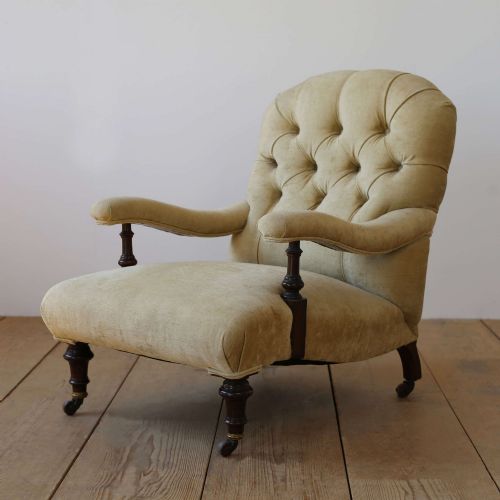
Pairs of Napoleon III salon chairs and Howard-type open armchairs sit markedly higher in the range than the equivalent single chair.
What does Napoleon III mean on a chair?
It is the French Second Empire period label, used on buttoned salon chairs. The term appears in 62 titles, alongside french in 57.
These come as singles and pairs, and the back shapes are recorded as fishtail, shield, curve, spoon and square. The fishtail form turns up nowhere else in the category.
Is leather the usual cover?
No. Leather is named in fewer than a quarter of titles, so textile and unnamed covers make up the rest, with upholstered and velvet used in the remainder.
Leather is more common at the larger end, on wing, club and library chairs, and those titles sit higher in the sampled order than plain textile examples.
Which maker names come up most?
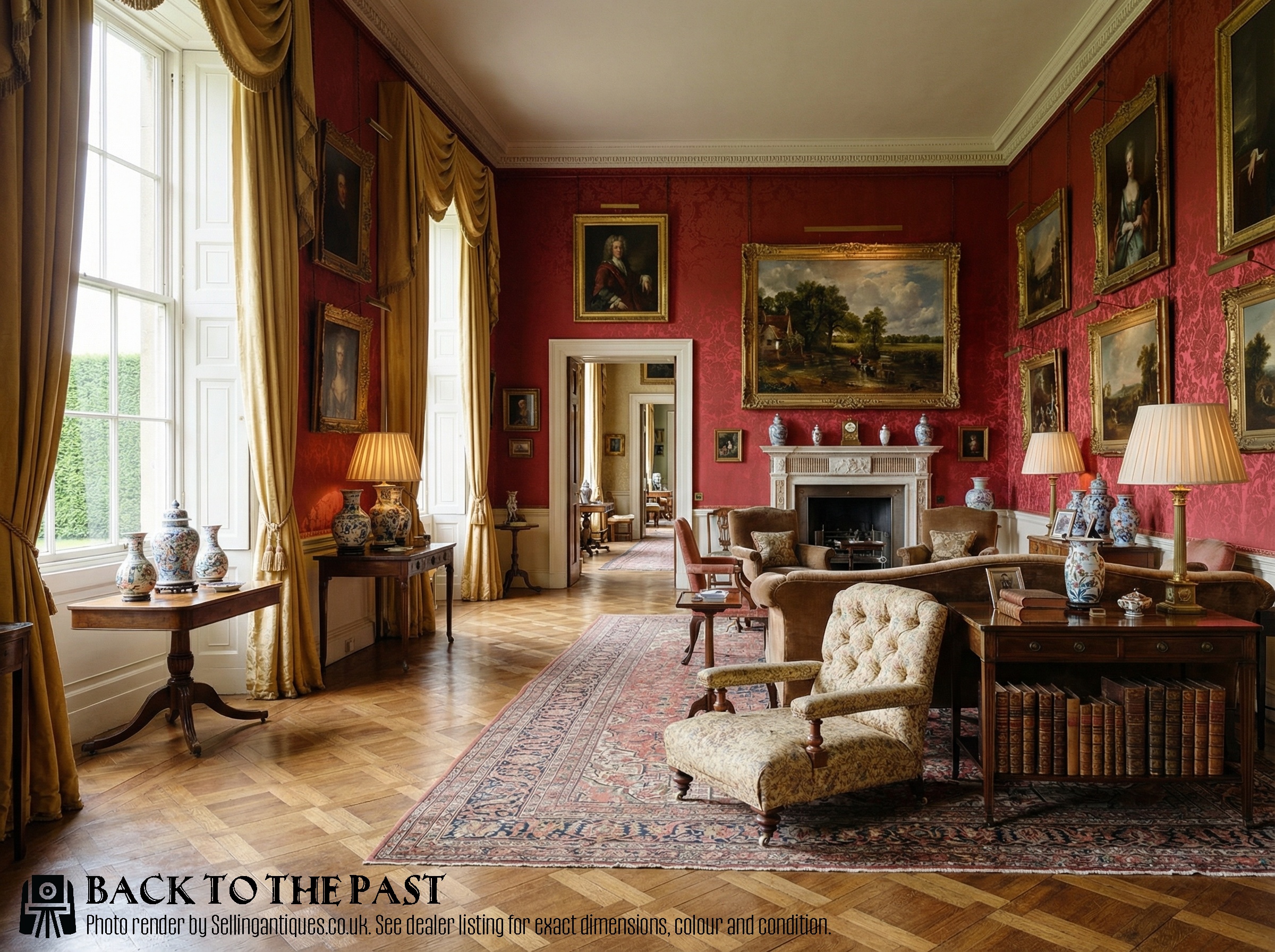
Howard & Sons is the name recorded most often, in 61 titles, and it carries a vocabulary of its own: Howard style, in the manner of, and Woodstock. Many of those are style descriptions rather than firm attributions.
Gillows appears as an attribution, and Cornelius V Smith turns up from a handful of dealers. Beyond those, the great bulk of the category is unattributed.