
Antique Walnut Boxes
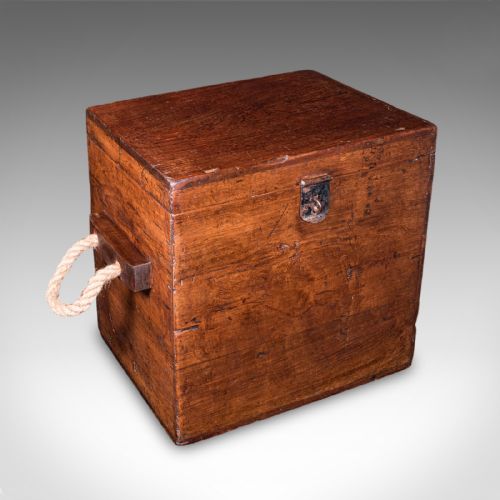
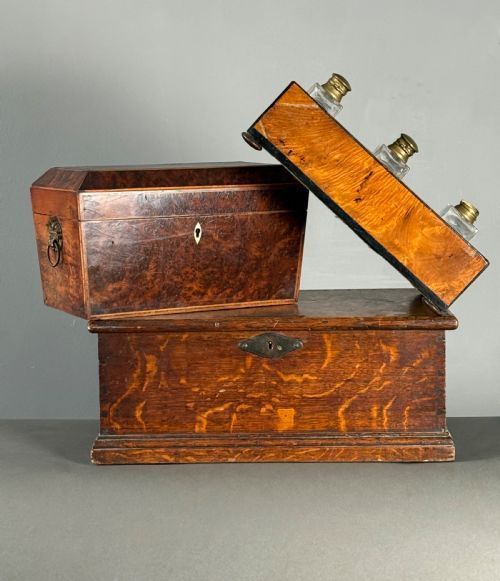
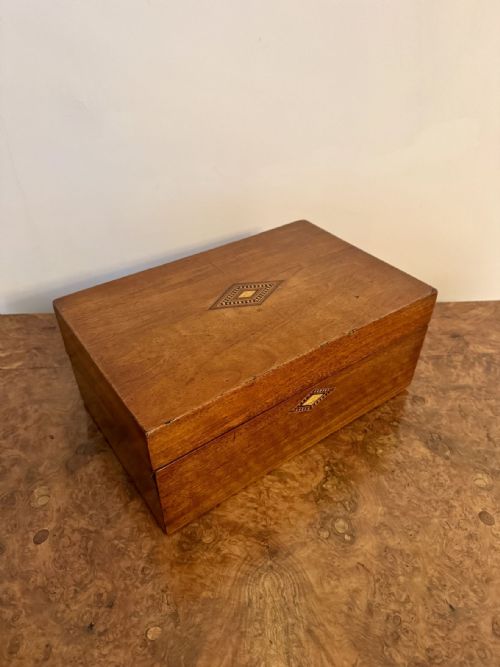
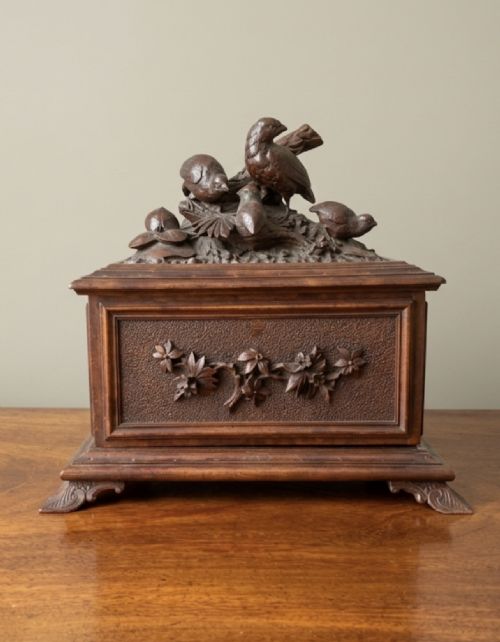
A lidded box veneered in walnut, made for a job about the house: writing, jewellery, tea, sewing or general table storage.
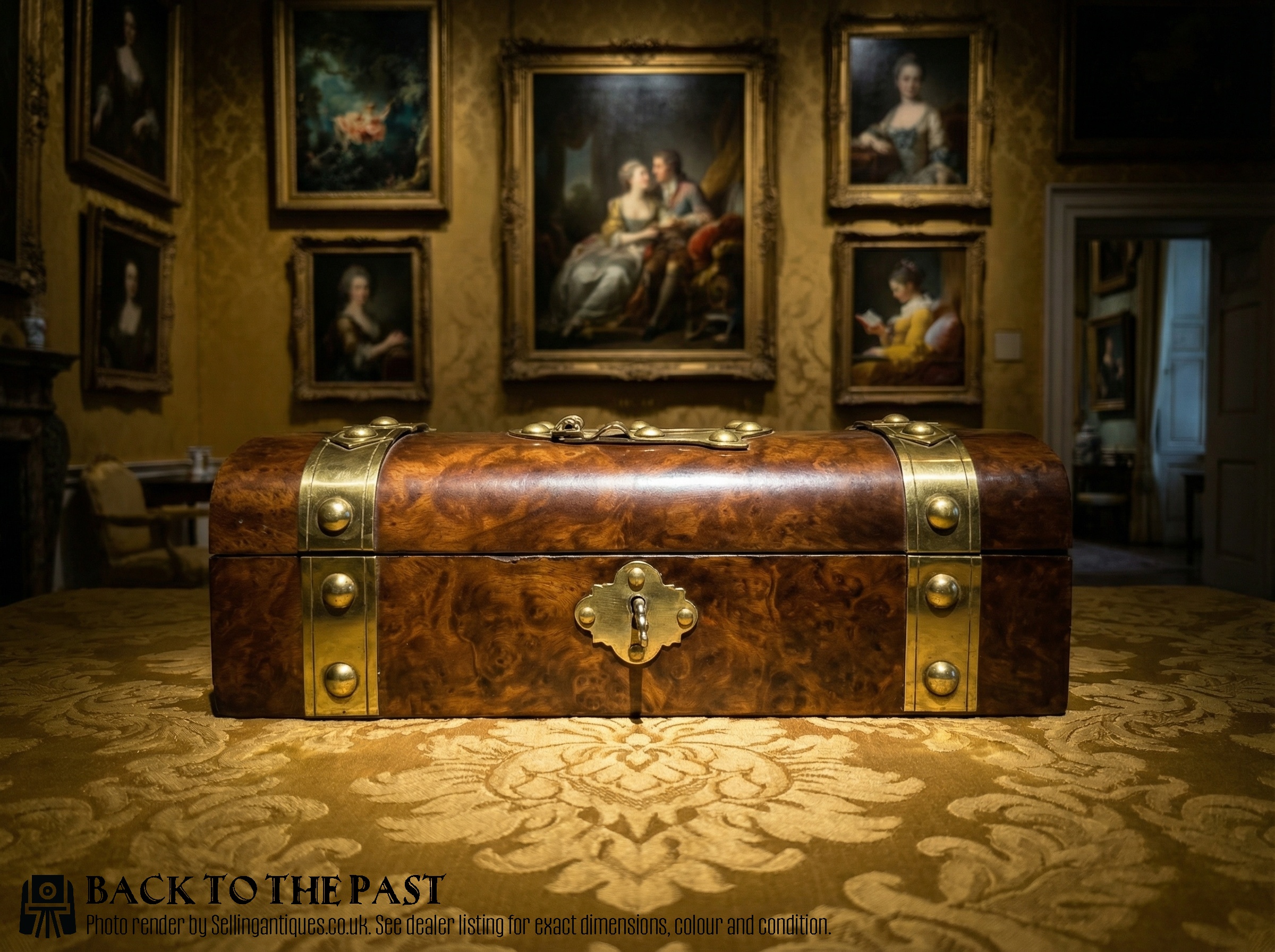
Antique Walnut Boxes
Walnut has been used for box-making in Britain and Europe since at least the seventeenth century, first in the solid and later as a veneer laid over a cheaper carcase. The portable box for writing, tea, needlework or jewellery became a standard household object, and figured and burr cuts were prized for the pattern of the grain.
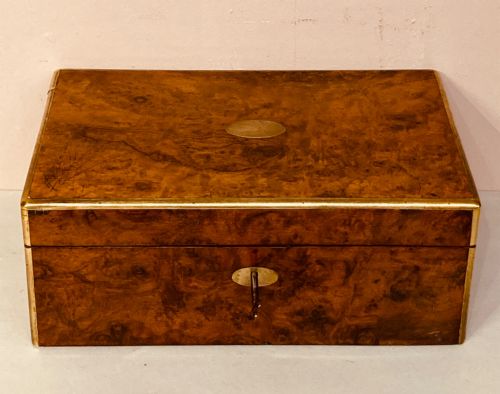
Two words carry most of the titles on Sellingantiques: 'burr' and 'victorian', each in around four in ten, and 106 titles carry both. So the piece you are most likely to meet is a Victorian table-top box in burr or figured walnut, made for a named purpose, often brass bound and often fitted inside with trays, canisters or drawers.
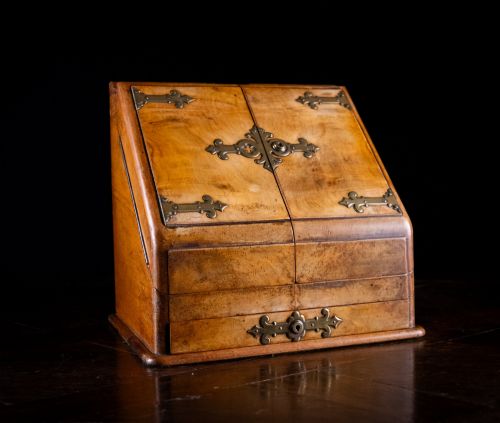
Writing leads the named uses by a wide margin. Writing slopes, writing boxes and stationery cabinets make up roughly a third of the category, and 31 titles advertise secret drawers. Jewellery, trinket, vanity and dressing forms follow at about a fifth to a quarter, tea caddies at just under a tenth, then plain table boxes, work and sewing boxes, games and smokers' boxes.
Dating is loose. Only 316 of 964 listings give a clean year; the rest use era labels, and 'Victorian' alone accounts for 487, which is a sixty-odd-year window rather than a date. Where decades are named they cluster on 1860 to 1890. Georgian and eighteenth-century pieces are a small minority, and twentieth-century ones thinner still.

Where The Range Splits
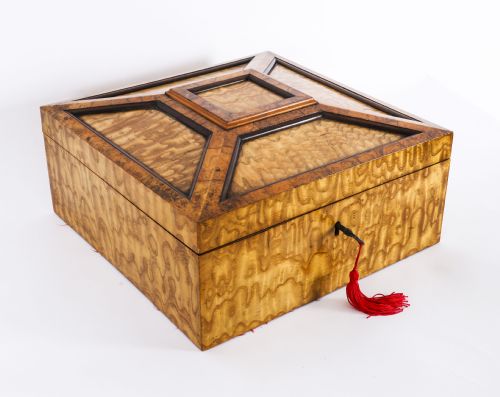
The cut of the veneer does more than anything else to place a box. Dealers routinely lead with it rather than the form, opening a title with the burr or the figure and only then saying what the box was for. Dense swirling burr and strongly figured walnut sit at the top; plain walnut sits at the bottom.
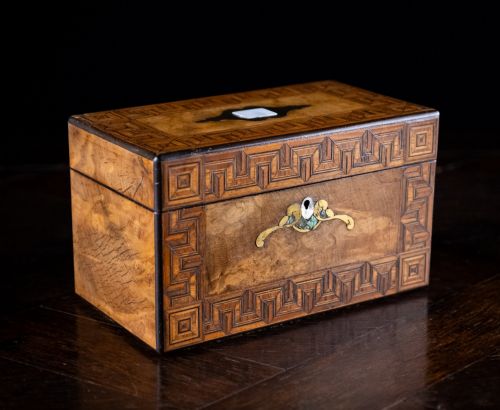
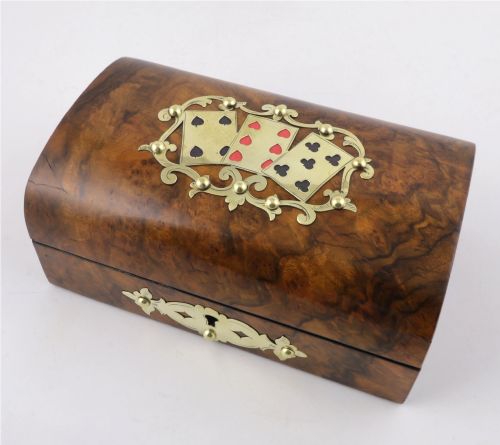
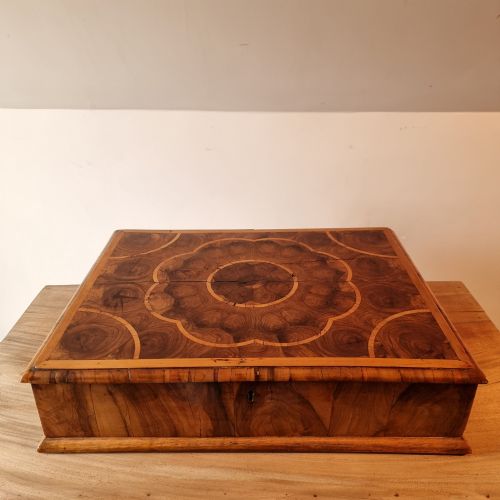
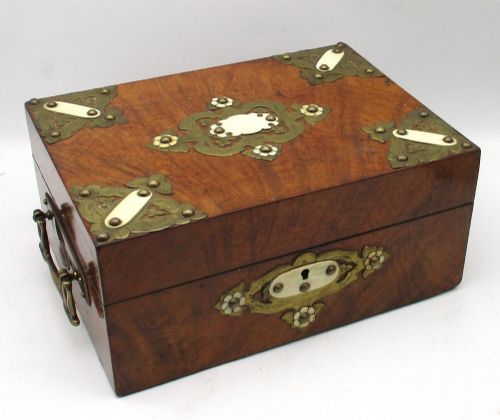
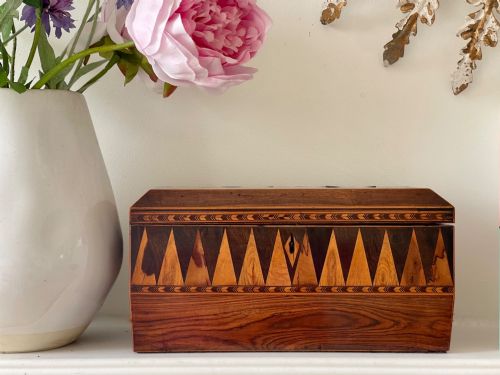
After that it's what has been added. Brass is the only other material named in bulk, and brass binding, cut-brass overlay and gilded or ormolu mounts push a box upward. So does inlay: Tunbridge ware banding, parquetry, marquetry, mother-of-pearl, and at the upper end porcelain plaques and pietra dura panels set into the lid.
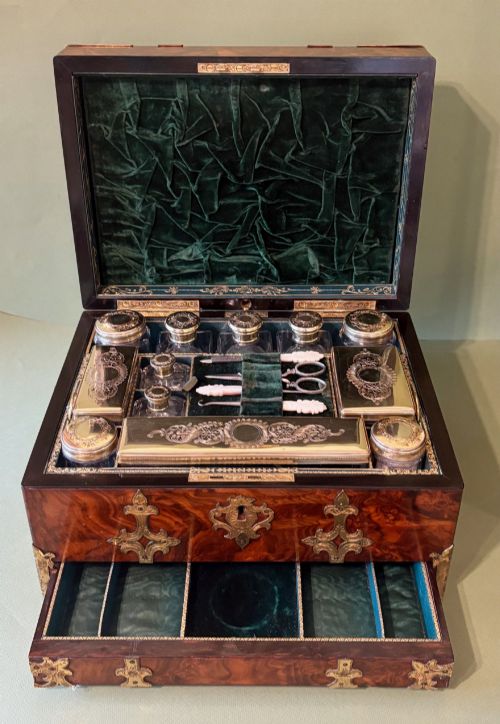
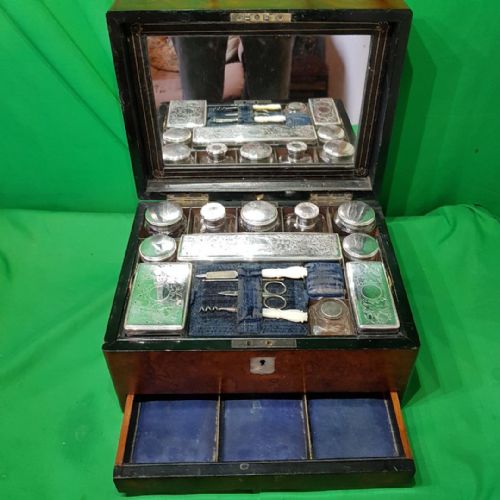
Then the inside. An empty box sits low; a fully fitted one sits high. Dressing cases with hallmarked silver-topped bottles, games compendiums with their contents, desk sets and slopes with secret drawers hold the upper ground, along with music boxes. Snuff boxes, trinket boxes and small plain table boxes gather at the other end, and a named patent lock is cited as a distinguishing feature where one is present.
Antique Walnut Boxes Retail Price Guide 2026
Typical UK retail prices for walnut boxes, calculated from the Sellingantiques database of over a million retail prices indexed since 2003. This retail price guide relies exclusively on Sellingantiques data; no external sources or auction records are used, so the figures do not describe the wider market.
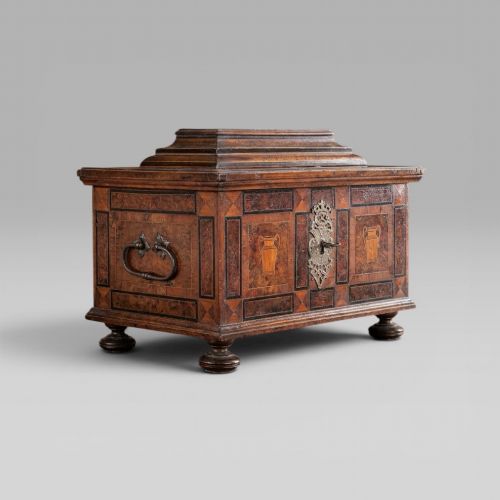
The oldest walnut boxes on Sellingantiques include a seventeenth century dome-topped strong box and a late seventeenth century Continental burr casket.
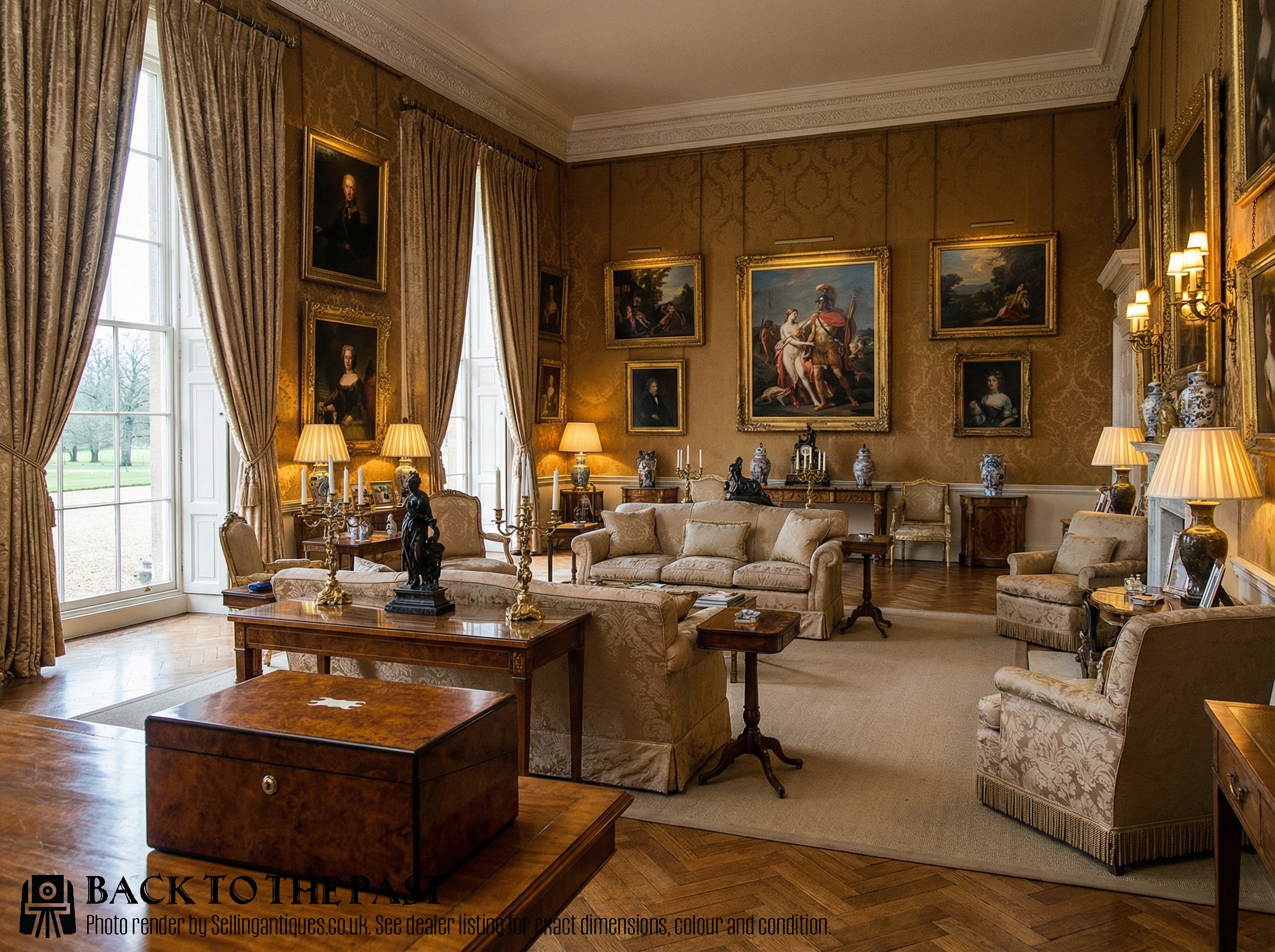
The Antique Walnut Boxes Glossary
- Burr walnut
- Veneer cut from a knotty growth on the tree, giving dense swirling figure. It appears in around four in ten titles, more than any other descriptor.
- Figured walnut
- Veneer chosen for pronounced grain pattern, and the second commonest descriptor after burr.
- Writing slope
- A box whose hinged lid opens to a sloping writing surface. Slopes account for about a fifth of titles.
- Brass bound
- Brass strips or corner pieces let into the edges of the box. 'Brass mounted' covers applied brass rather than let-in binding.
- Tunbridge ware
- Mosaic banding built from tiny wood sticks, used here as a border on caddies, work boxes, table boxes and slopes alike.
- Parquetry
- Geometric veneer inlay, as against marquetry, which is pictorial or floral. Both turn up, parquetry a little more often.
Antique Walnut Boxes: Frequently Asked Questions
What were walnut boxes used for?
For domestic jobs at table or desk. Writing is the commonest named purpose by a wide margin, then jewellery, then tea, with sewing, games, stationery and general storage behind them.
A good number are simply titled as table boxes, with no fitting named and no single use attached.
Are these boxes solid walnut or veneered?
The titles describe the surface, not the construction. Burr and figured walnut are veneers, cut for their pattern and laid over a carcase, and those two words dominate the category.
What lies underneath isn't something the listings on Sellingantiques set out, so the wood named is the wood you can see.
How old is a Victorian walnut box likely to be?
Treat 'Victorian' as a sixty-odd-year window rather than a year. It's the label on 487 of the dated entries, with a further 86 given only as '19th Century'.
Where dealers do name a decade, the cluster falls between 1860 and 1890. The field as a whole runs from 1750 to 1940.
What does brass bound mean on a box?
Brass strips or corner pieces let into the edges, which both protect the corners and draw a line round the box.
Brass is named in 148 titles, and brass bound accounts for half of those. The rest are brass mounted, brass inlaid or cut-brass overlaid.
Do walnut writing slopes really have secret drawers?
Some do, and 31 titles say so outright. They're concealed drawers inside the slope, usually behind or beneath the writing surface.
Slopes without them are far more common, and many listings describe only the sloping writing face and the compartments beside it.
Which walnut boxes are unusual on Sellingantiques?
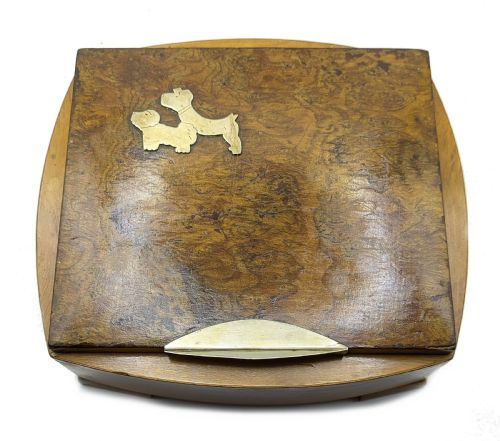
Anything outside the domestic table box. The archive holds a hanging candle box, a treen string holder, a novelty Scottie dog cigarette box, a secret safe disguised as a book and a butler's carry tray.
Origins outside England are uncommon too. Kashmiri Anglo-Indian, Spanish, Dutch, Italian, Scottish and Irish examples turn up once or twice each across the whole run.