


A 2026 Guide by Sellingantiques
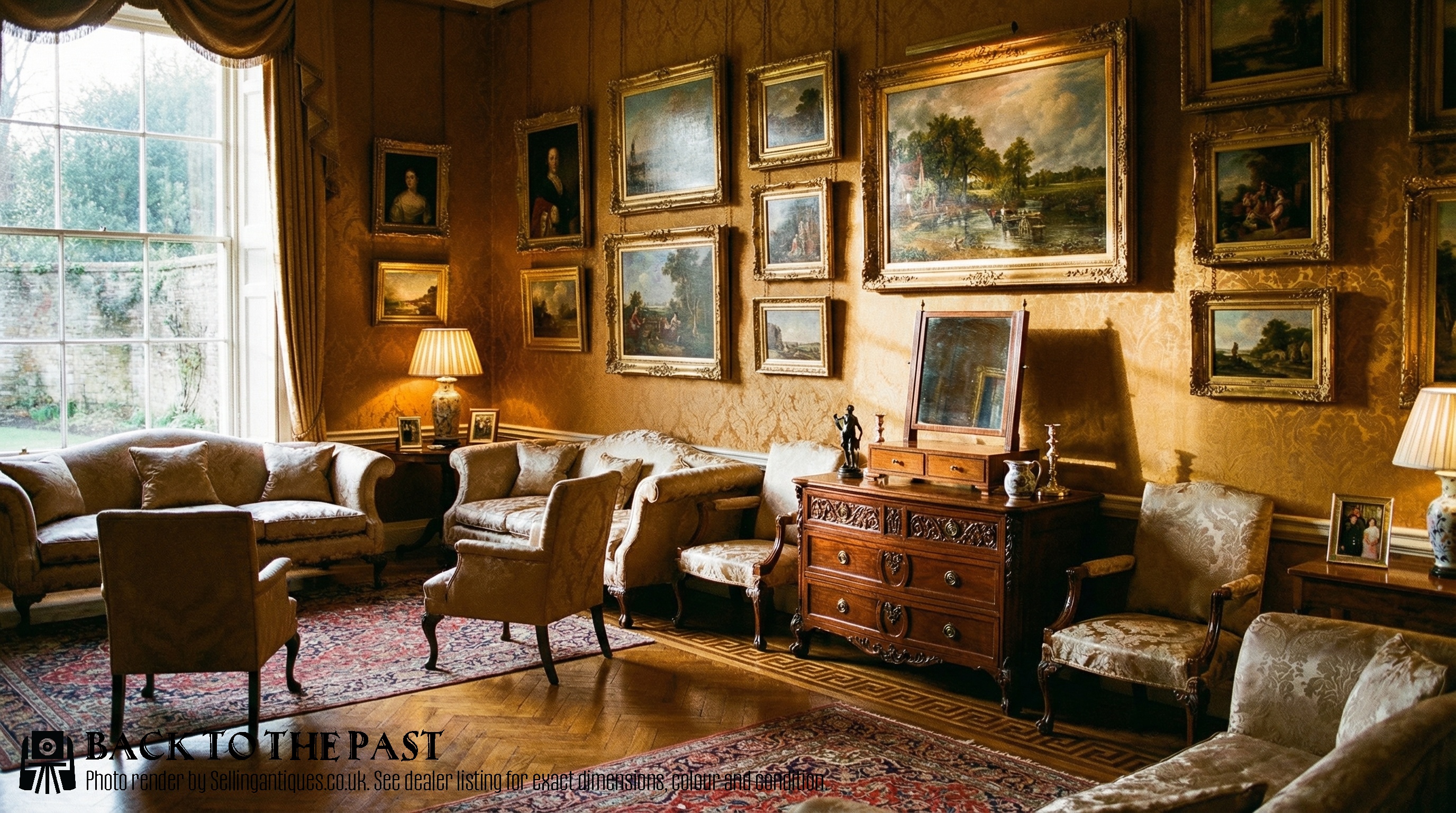
Antique Early 19th Century Georgian Mahogany Dressing Table Mirror – Fine Quality, 19th Century
Priced at £556 from Prior and Willis
During the eighteenth century, glass production shifted from blown cylinders to cast plates. This allowed larger continuous reflective surfaces in antique Georgian mirrors.
Look at the early architectural frames. William Kent popularised heavy pediments and gilded details in the 1730s.
Pier glasses hung between tall sash windows. They bounced daylight back into the drawing room and often featured tall, narrow proportions.
Later neo-classical designs embraced lighter forms. Oval and shield shapes became more common towards the end of the period.
Thomas Chippendale supplied grand pier glasses for aristocratic houses. His published patterns show elaborate rococo frames with asymmetrical foliage.
John Linnell produced highly carved giltwood examples in the mid-eighteenth century. Surviving bills link his workshop to several known mirrors.
Regional carvers made the vast majority of antique Georgian mirrors. Most left their work unsigned and remain anonymous today.
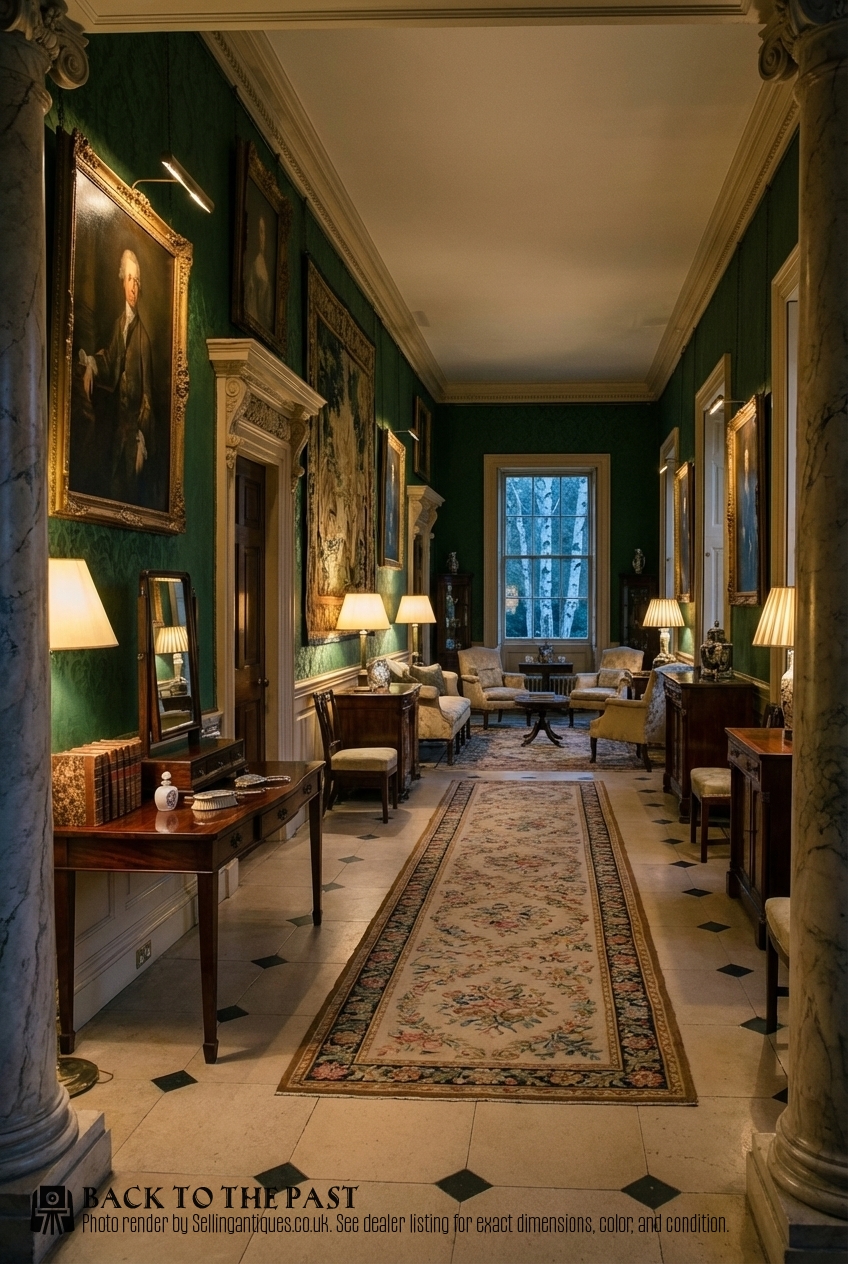
Georgian Mahogany Table Mirror with Drawers, 18th Century
Priced at £295 from Abersoch Antiques
The 2026 retail price guide for Antique Georgian Mirrors is drawn from a proprietary archive of over 1.1 million retail prices indexed by Sellingantiques since 2003. This guide relies exclusively on their own internal data; no external sources or auction records are used.
Analysing nearly 25 years of UK antique market history alongside current retail values, the data indicates that typical UK retail prices for Antique Georgian Mirrors range between £400 and £3,800. Entry-level prices generally fall under £400 and premium examples upwards of £3,800.
Bevelled edges frequently border the central plate. These shallow angles were ground by hand using sand and water.
Check the cresting. Carved ho-ho birds, eagles, or shells often sit right at the top of an antique Georgian mirror.
Fret-cut mahogany frames feature flat outlines. Some incorporate a carved gilt inner slip right next to the glass.
Joiners cut the basic frame from softwoods using mortise and tenon joints. These hidden junctions bore the heavy weight of the cast glass plate.
Carving happened before gilding. A specialist craftsman worked the rough pine with gouges to form crisp floral swags and architectural mouldings.
Notice the glass itself. Making a large Georgian plate required pouring molten glass onto a flat sand table and grinding it smooth.
"The dark glass flatters a room. The soft grey reflection from early silvering techniques makes candlelight look warmer than modern mirrors do."
"Small divided plates were an ingenious design choice. Joining two smaller pieces of glass together kept costs down while creating an impressive surface."
"Craftsmen used different colours of clay bole under the gold leaf. Red or yellow base layers give the overlying gilding a richer tone."
Based on almost 25 years of Sellingantiques UK antique market data, Antique Georgian Mirrors appeared 2279 times (out of 1,100,000 antiques) which gives it a rarity score of 63/100.
This score measures scarcity within the Sellingantiques archive only and is not a survey of the entire antiques market, so these statistics may not be indicative of the general availability of Antique Georgian Mirrors elsewhere.
Early glassworks struggled to cast tall plates. A mirror needing height used two stacked pieces of glass.
The horizontal seam sits just above the middle. A small brass clip or carved wooden strip hides the join.
Cast glass from the eighteenth century has significant thickness. A large pier glass carries heavy timber backboards to support that weight safely.
You need proper fixings to hang them. A solid masonry wall or structural timber stud takes the load much better than modern plasterboard.
Builders designed Georgian rooms with specific mirror placements in mind. Pier glasses hung between windows to catch the light, while horizontal overmantel mirrors sat directly above the fireplace surround.
They were often tilted slightly forward. This downward angle allowed them to reflect the room rather than just the empty ceiling.
Cabinet makers rarely wasted effort on surfaces nobody saw. The backboards on an antique Georgian mirror consist of rough-sawn pine or deal, often bearing original tool marks from a hand plane.
They protect the fragile silvering from damp walls. Some retain layers of old paper pasted across the gaps to keep dust out.
Please note: This Antique Georgian Mirrors guide and its associated pricing data are provided for general informational purposes only. It does not constitute formal financial, investment, or appraisal advice and should not be relied upon as the sole basis for any commercial activity, purchasing, or sales decisions. Sellingantiques.co.uk accepts no liability for any actions taken in reliance on this information. Always consult with a qualified professional or independent appraiser.
