
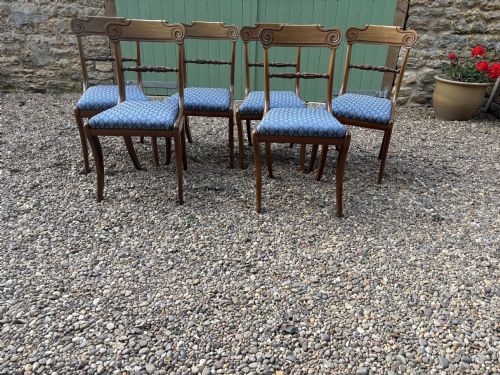
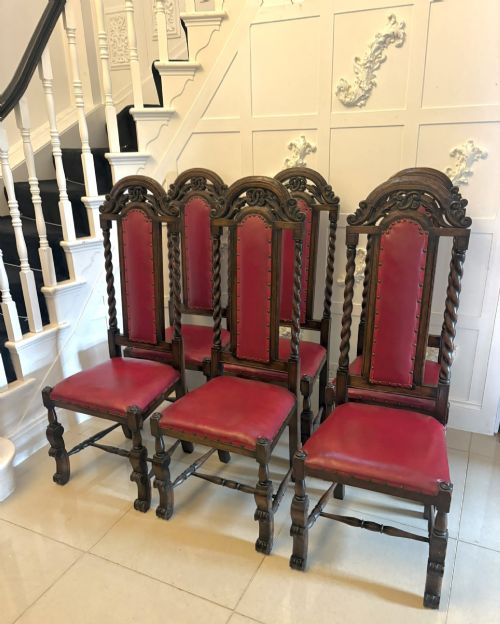
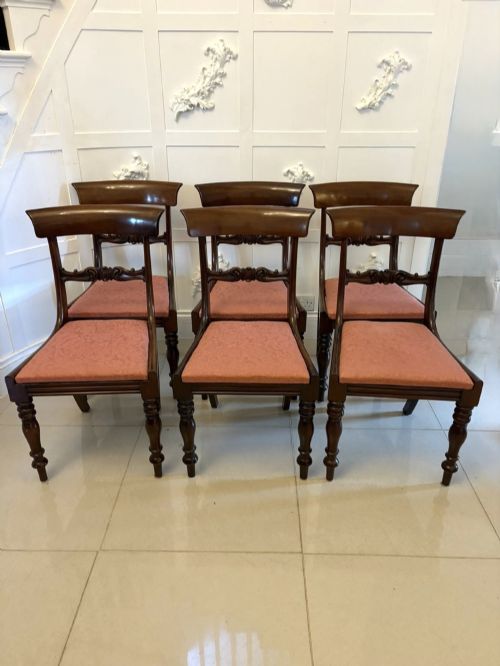
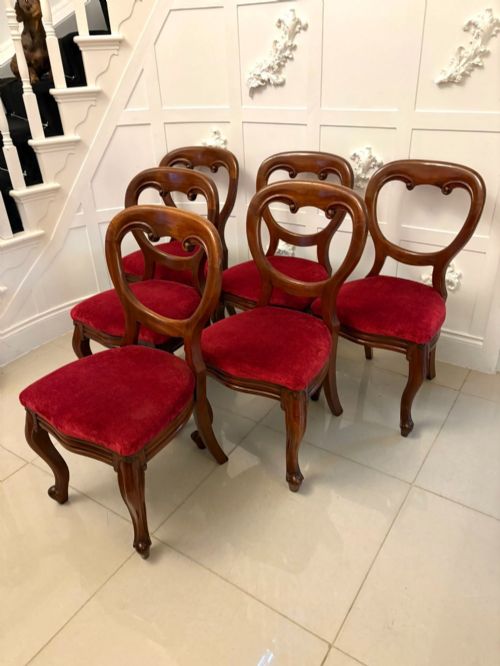
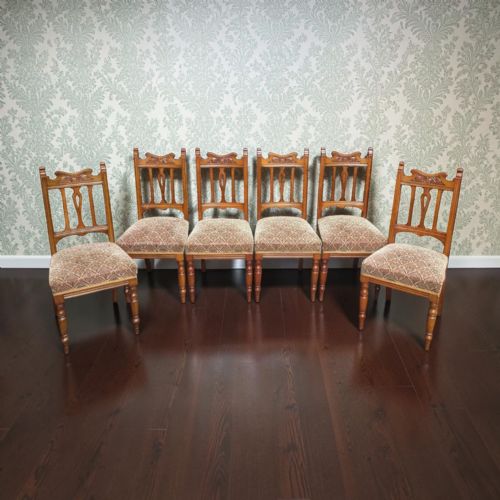
Set of 6 Chairs
A set of six antique chairs is, on Sellingantiques, almost always six matching single dining chairs sold as a group, made for a table in a dining room.
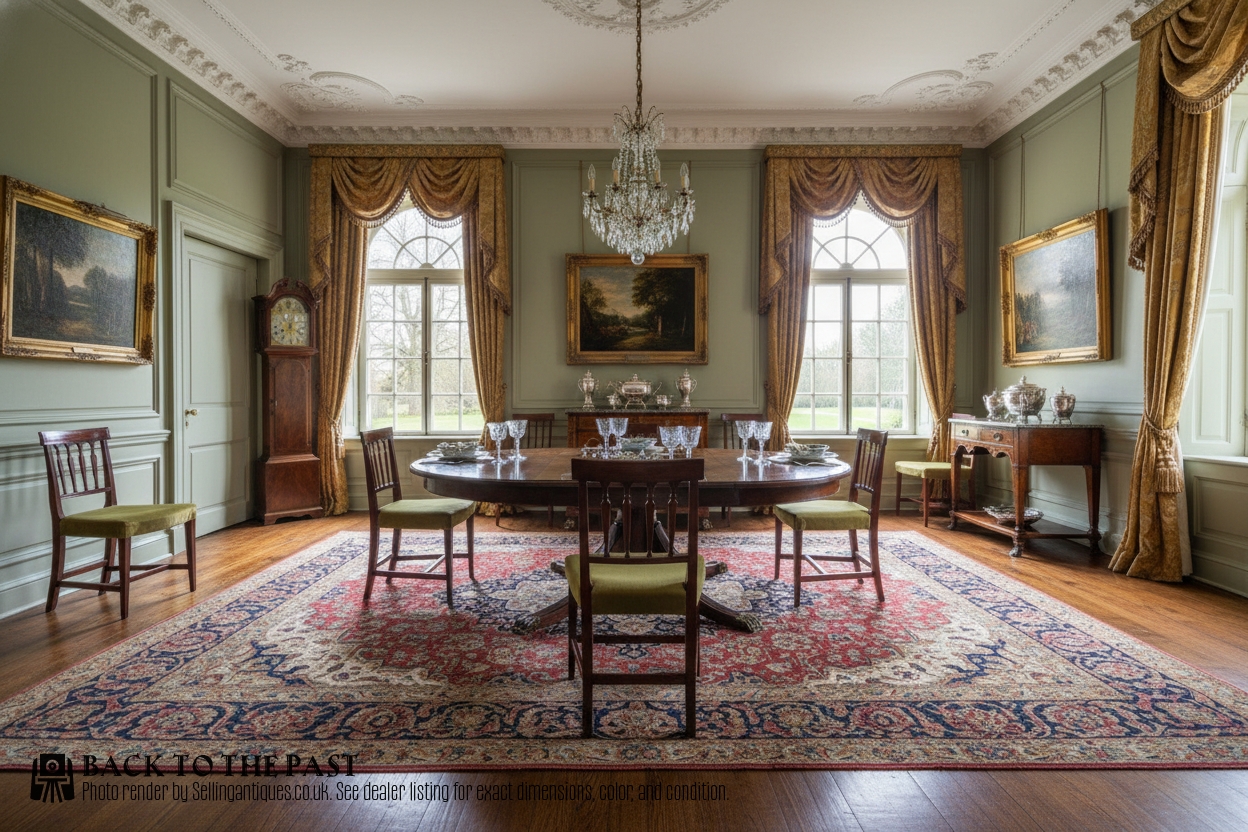
Set of 6 Chairs
The titles are short and formulaic: set of six, then a period, then a timber, then "dining chairs". Of 1,318 listings, 1,013 name them as dining chairs, and mahogany is the timber named most often. Many titles say nothing more than period, timber and form.
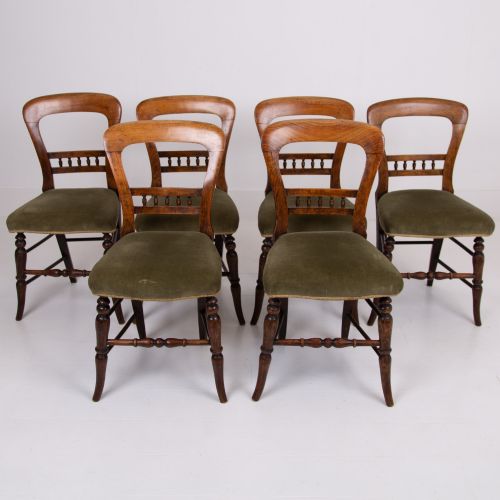
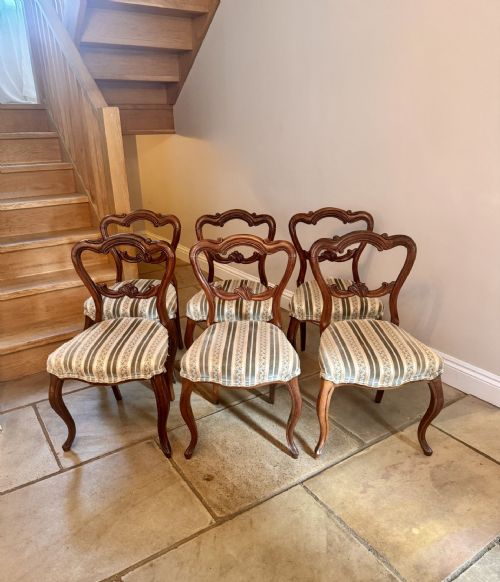
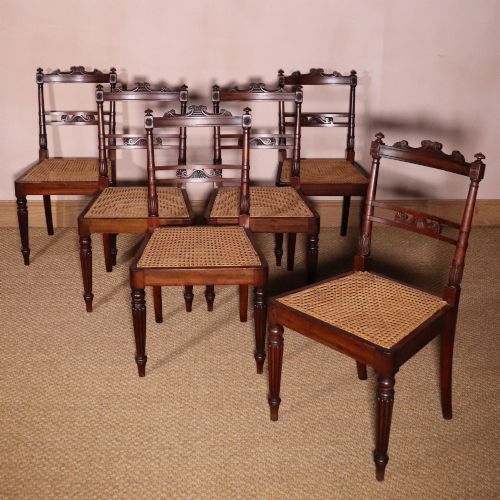
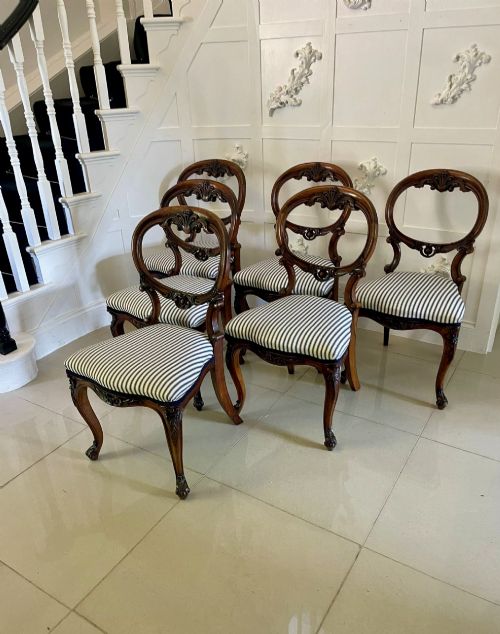
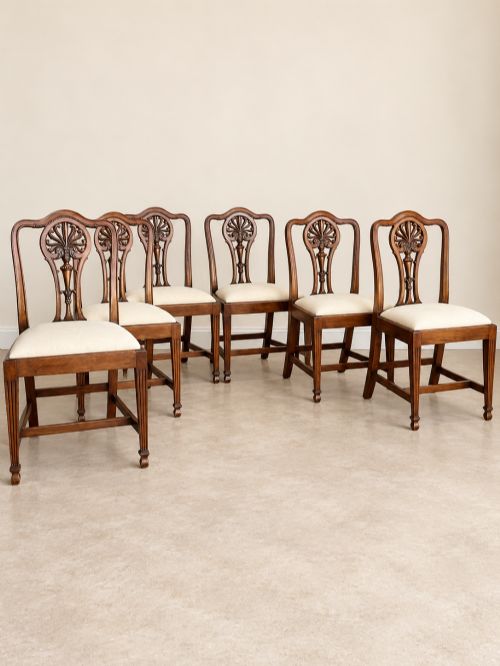
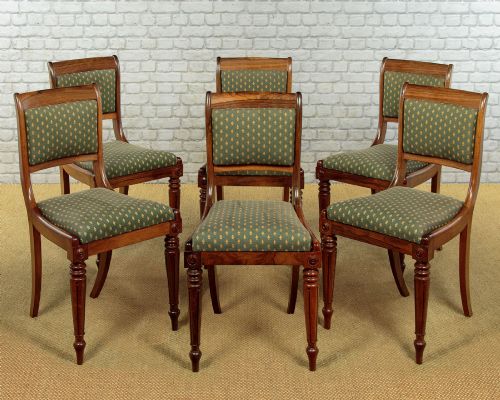
The version you're most likely to meet is a set of six mahogany dining chairs of 19th-century date. The period field is led by 19th Century, Victorian and Regency, and where a back shape is named it tends to be a balloon back or a bar back. Rosewood and walnut sit alongside mahogany in the formal end of the field.
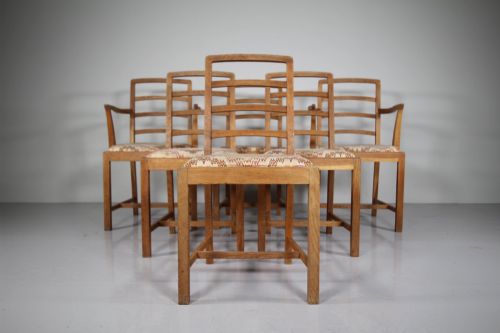
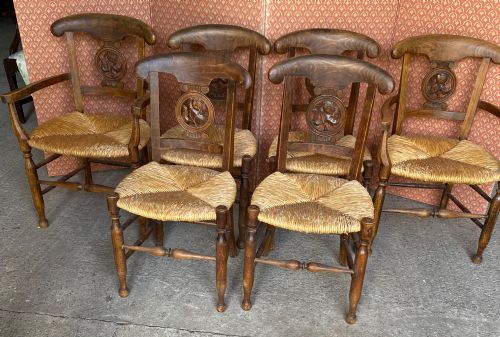
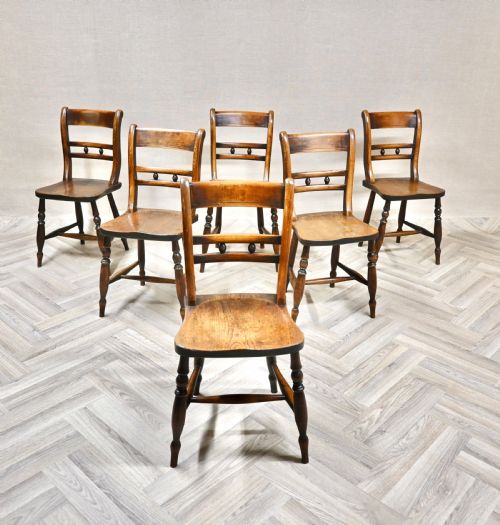
Matching runs of single chairs came in with the separate dining room and the long table, and were made in quantity through the 19th century, usually as singles with one or two elbow chairs. Six is the commonest surviving domestic run. Around a quarter of listings are the country version instead: oak, elm and ash kitchen and farmhouse sets, ladderbacks and spindlebacks, rush seats, and regional names such as Welsh oak, Lancashire spindleback and Somerset ladderback.
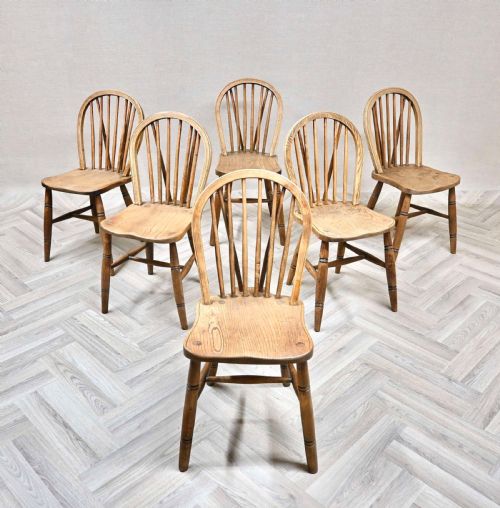
Beyond those two blocks sit Windsor and wheelback sets in elm and yew, and a fifth of the archive is revival work of the 1900s to 1930s, sold as Queen Anne style, Jacobean or Louis XV Style. The edges of the category throw up chapel and school chairs, captain's chairs, masonic chairs, garden chairs in cast iron, bentwood bistro sets and the odd six-piece salon suite.
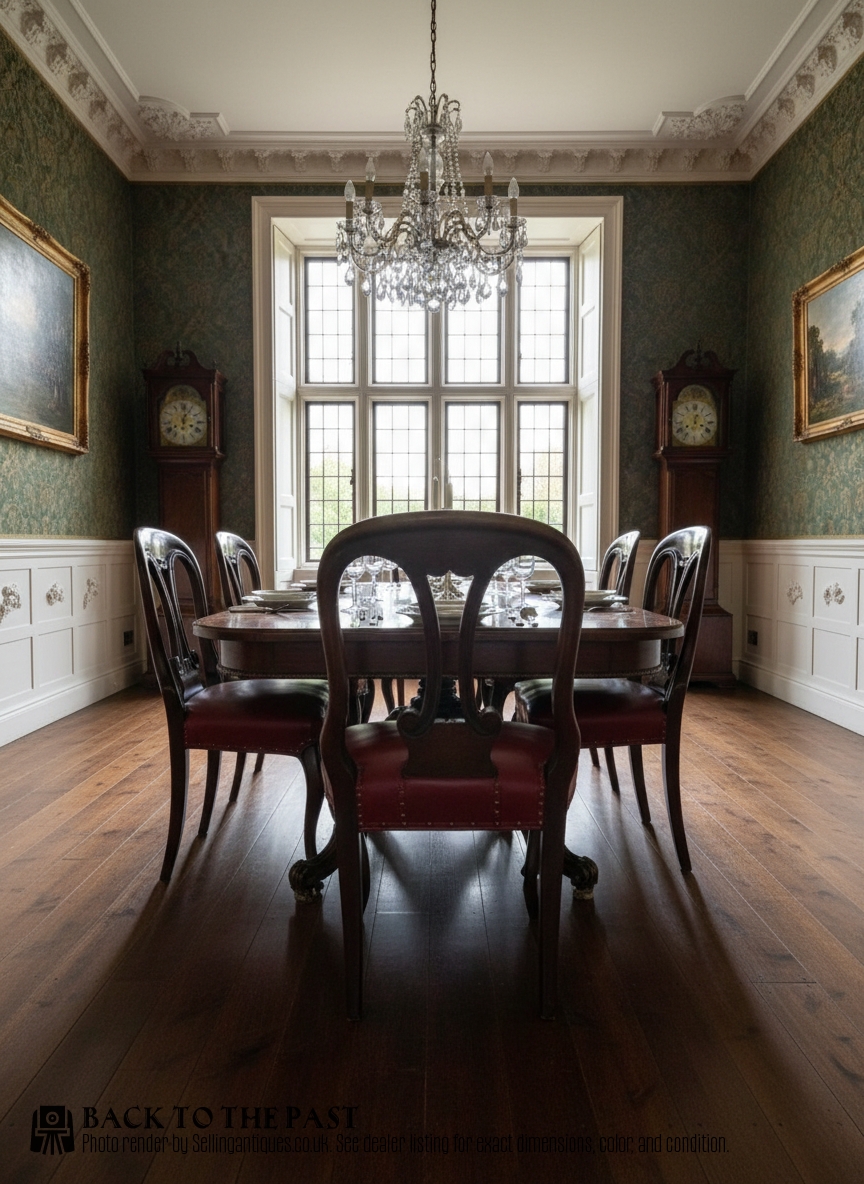
Where The Range Splits
Timber does most of the work. Yew carries sets to the top, usually on low-back and armchair Windsors with crinoline stretchers, and carved rosewood and burr walnut sit up there with it. Beech, pine and mixed beech-and-elm sets, along with titles that name no timber at all, sit at the bottom.
The second question is whether the six were ever a set. Dealers use the vocabulary openly in the titles: "true set" for six made together, against "harlequin", "matched", "similar" and the occasional "5 plus 1". A true set stands above an assembled one of the same type and timber.
After that it's period against revival, and decoration. A dated Georgian, Regency or William IV set ranks above a 1920s set made in the style of an earlier one, and carving lifts things: carved appears in 58 titles, with brass inlay, inlaid mahogany and painted and parcel-gilt work at the upper end. Simulated rosewood graining on beech and cane sits lower down.
Set of 6 Chairs Retail Price Guide 2026
Typical UK retail prices for set of 6 chairs, calculated from the Sellingantiques database of over a million retail prices indexed since 2003. This retail price guide relies exclusively on Sellingantiques data; no external sources or auction records are used, so the figures do not describe the wider market.
Gillows is the maker's name that turns up from the most dealers on Sellingantiques in this category.
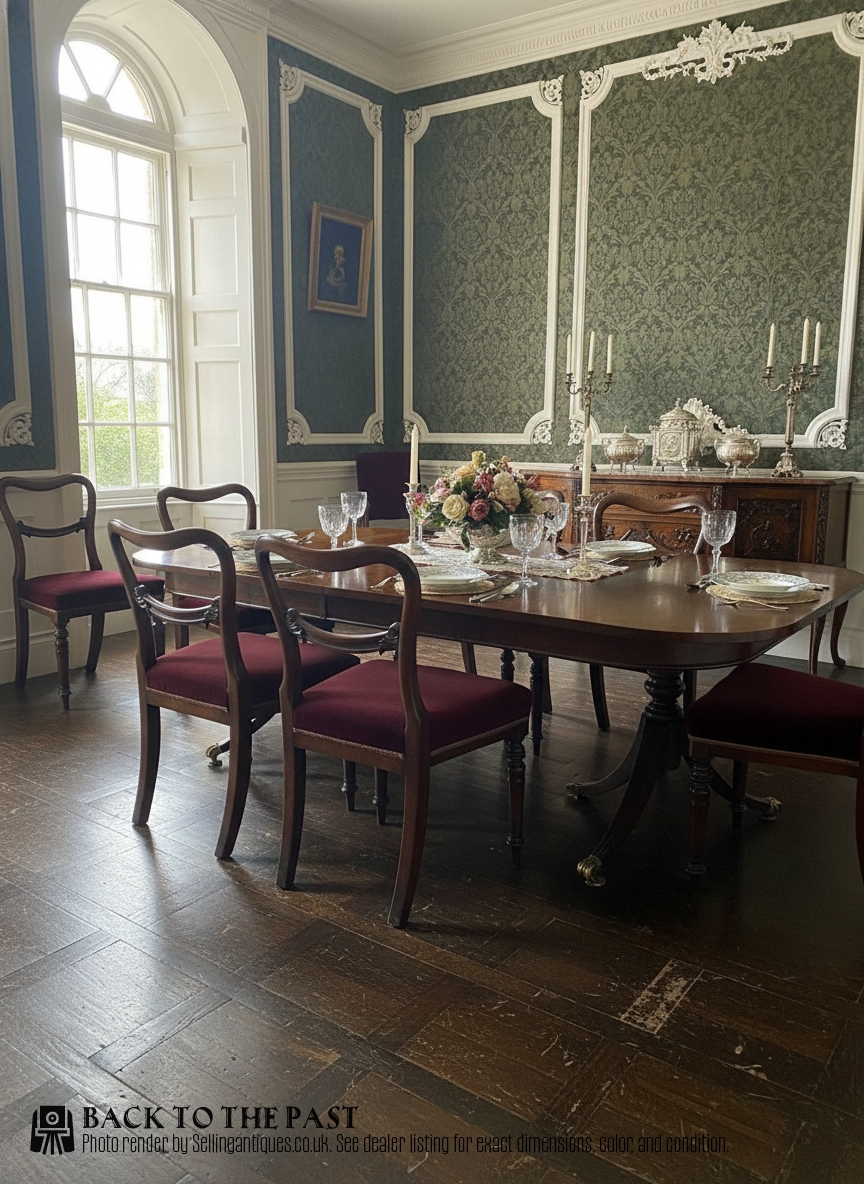
Gillows
The Set of 6 Chairs Glossary
- Single or side chair
- A chair without arms. A set of six is normally six singles, all of one design.
- Carver or elbow chair
- The armed chair of a suite. A handful of sets here are described as six plus carvers, or "4+2".
- Balloon back
- Rounded, waisted back typical of Victorian dining chairs, and the back form named most often, in 56 titles.
- Bar back
- A back with a horizontal top rail running across the uprights. Named in 23 titles, sometimes with an Essex or East Anglian tag.
- Windsor
- A chair with a solid shaped seat into which the legs and back sticks are socketed. In 49 titles, with wheelback, comb back, low back and smokers bow variants.
- Harlequin set
- Six chairs of the same type but not all from one original set. Sits alongside "matched", "similar" and "true set" in the titles here.
Set of 6 Chairs: Frequently Asked Questions
How many sets of six come up each year?
Around 122 sets of six reach the market on Sellingantiques in a year, listed by 197 different dealers over the archive as a whole.
That's one of the broadest dealer bases of any single furniture format on the site, which is why the same title wording turns up from very different stock.
What does a harlequin set mean?
It means six chairs of the same type that didn't all start life together. Dealers put the word in the title rather than leaving it out.
The opposite term is "true set", used for six made as one. "Matched", "similar" and the occasional "5 plus 1" fall in between, and all of them appear across this archive.
Which timber is most common?
Mahogany, by a wide margin. It appears in 444 of the 1,318 listings, and "mahogany dining" alone accounts for 275 titles.
Oak follows at 222, then walnut, rosewood, elm and ash. Beech, pine and unspecified timbers sit at the bottom of the range, yew at the very top.
Why are so many sets dated only to a century?
Only 567 of the listings carry a clean year. The largest single period entry is the deliberately vague "19th Century", at 264 listings.
After that come Victorian, Regency and Georgian, which are reigns rather than dates. So a large part of the archive is placed by period label alone.
Are these sets always English?
The field is overwhelmingly labelled English or French. Non-British origins are the rarest thing in it.
Single Italian, Dutch marquetry, Anglo-Dutch, Portuguese, Swedish, Viennese, Anglo-Indian and American painted Windsor sets have all passed through, but one or two of each rather than a segment.
Do sets of six come with carvers?
Only a handful of titles say so. Where they do, the wording is "including two carvers" or "4+2".
Six singles of one design is the standard unit. A few titles quietly admit to less: "Set of 6 (5 plus 1)" turns up, as does a Regency set of eight sold as six singles and two carvers.