


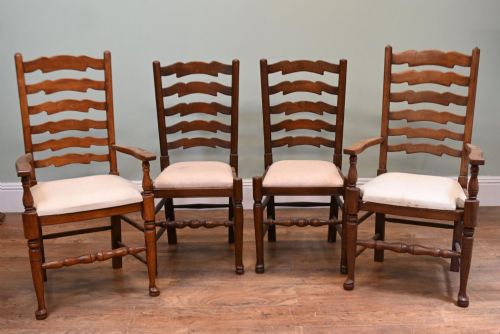
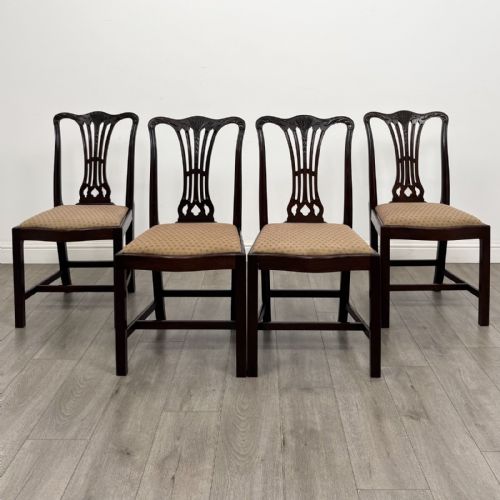
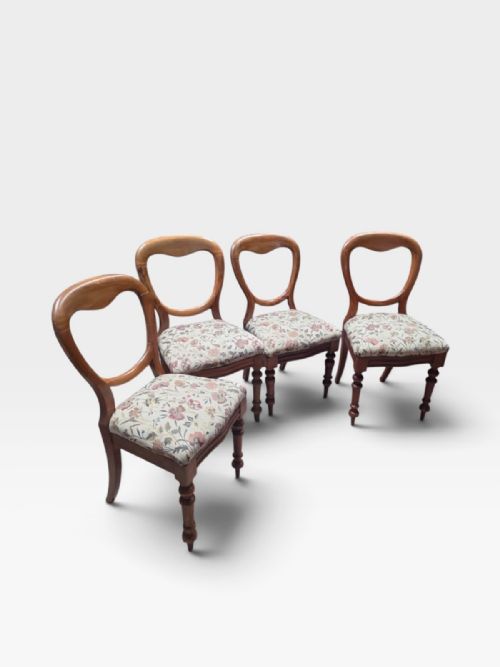
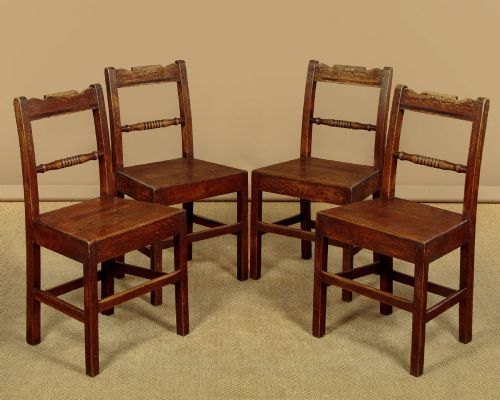
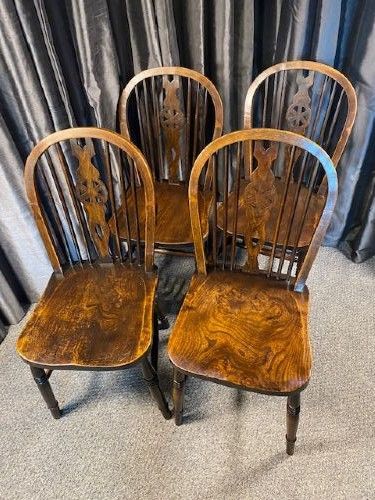
Set of 4 Chairs
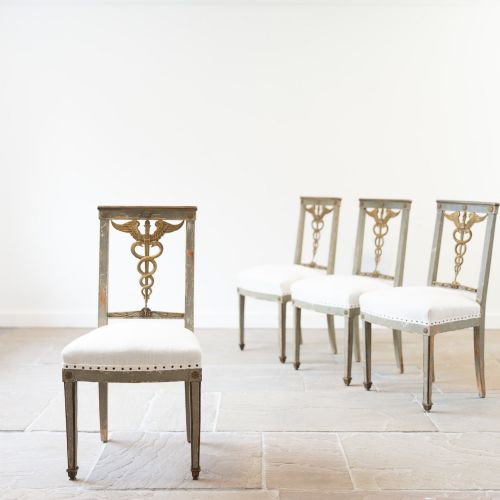
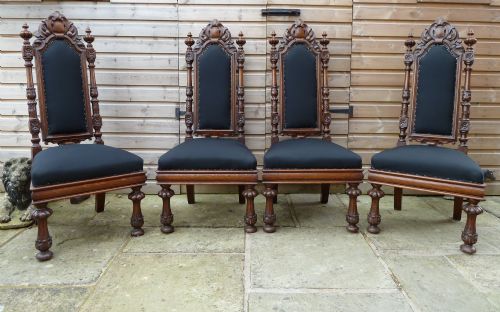
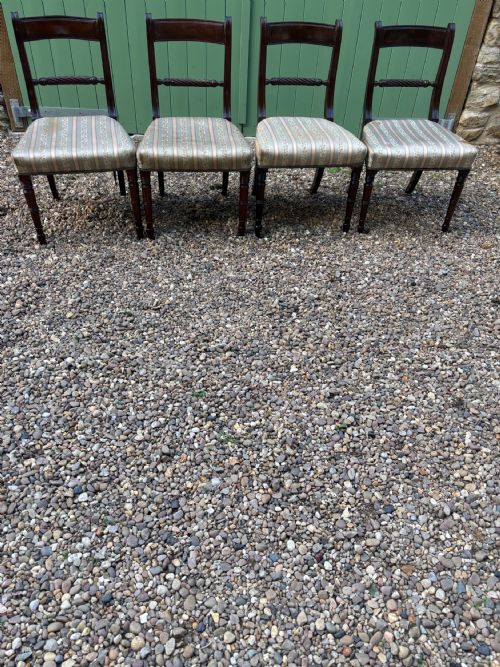
A set of four antique chairs is a lot of four sold together, almost always dining or kitchen seating rather than upholstered furniture.
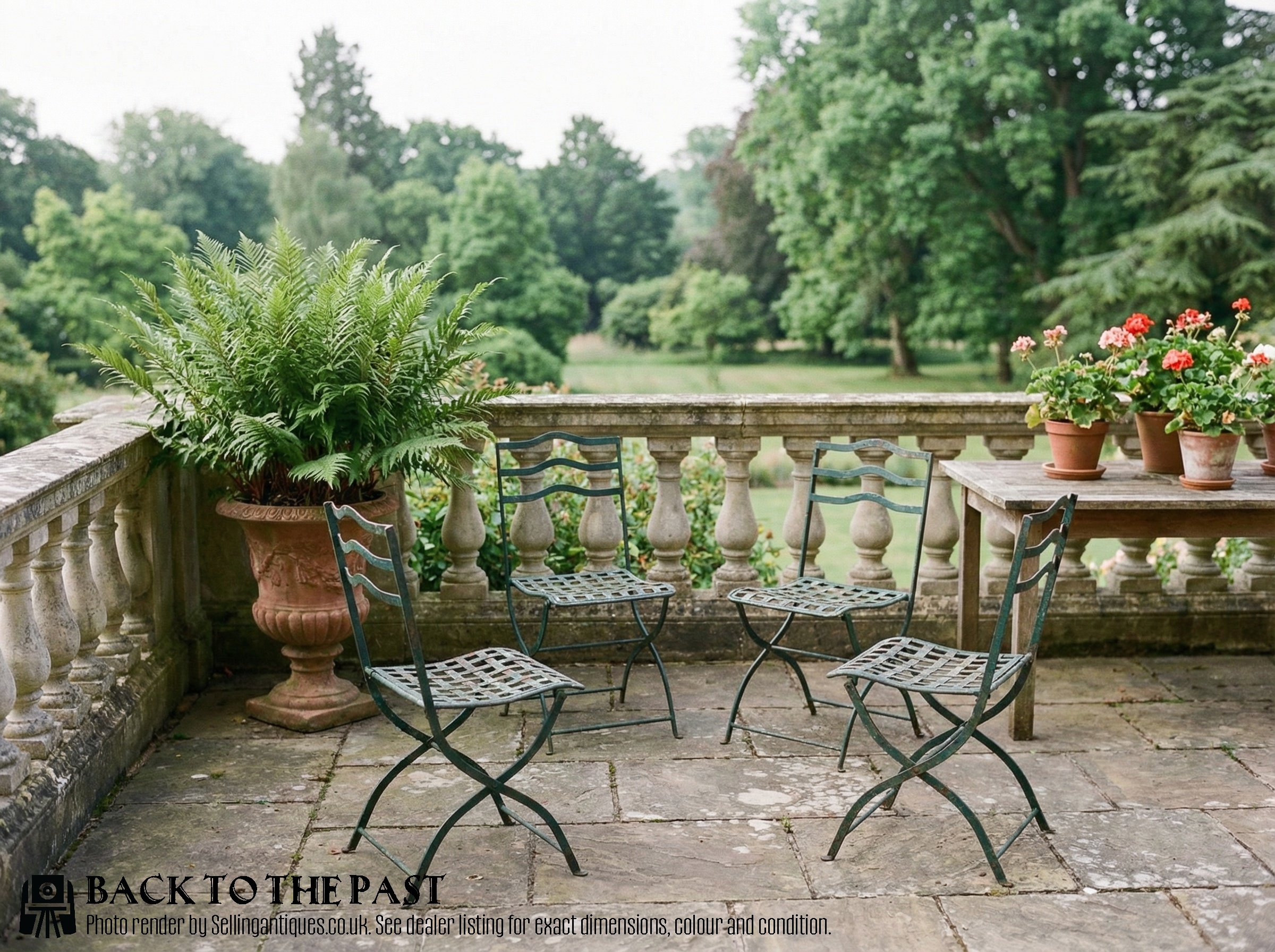
Set of 4 Chairs
The word "chairs" turns up in 838 of the 892 titles on Sellingantiques, "dining" in 497. So the thing you'll meet first is a set of four single chairs, armless, made for a table. Armchairs account for 46 titles, a clear minority.
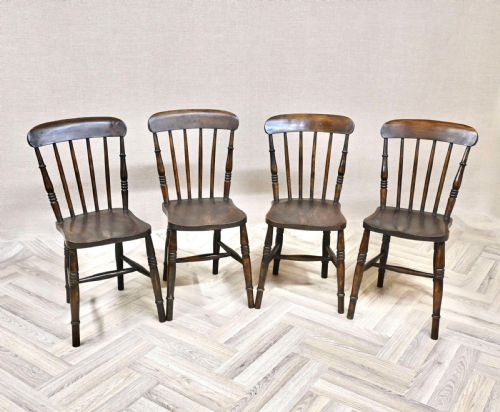
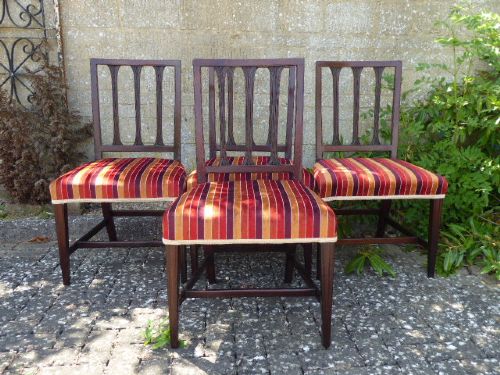
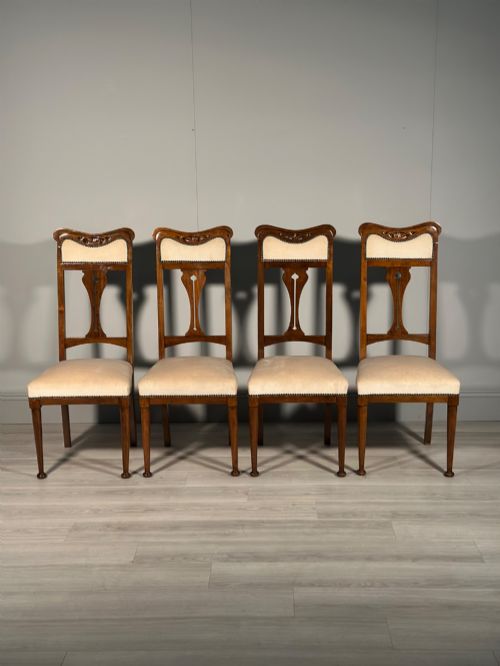
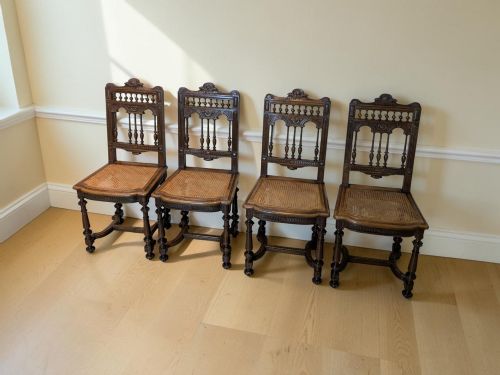
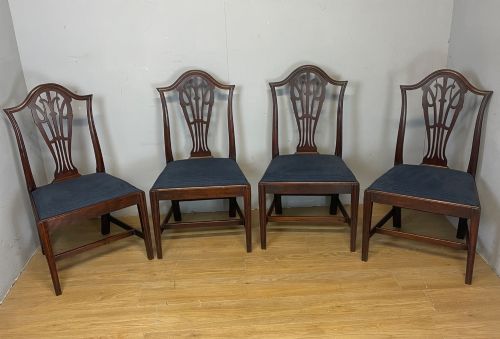
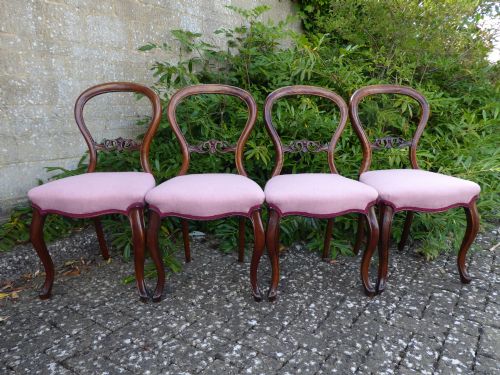
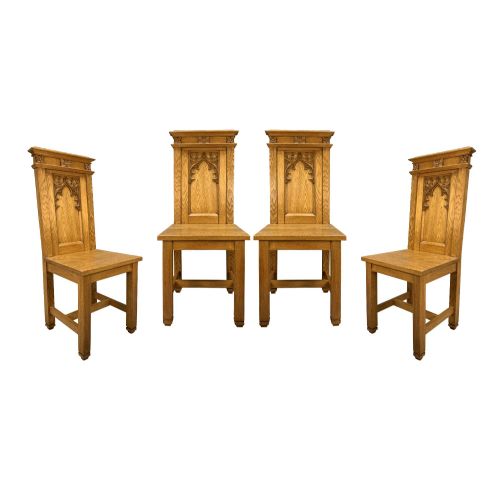
Two physical populations run through the category. On one side, polished cabinet-made chairs in mahogany, walnut or rosewood: balloon backs, bar backs, shield and splat backs, salon chairs. On the other, country seating in oak, elm, ash and beech: Windsors, hoop and lath backs, spindle backs, penny-seat kitchen and farmhouse chairs. Mahogany appears in 222 titles, oak in 140.
Dates run from 1715 to 1940, though only 363 listings carry a clean year. The rest use period words, and the commonest of those is the deliberately vague "19th Century", used 189 times, followed by "Victorian". Read both as approximate. Decade labels from the 1900s, 1920s and 1930s form a substantial early twentieth-century tail.
Matched sets of dining chairs became standard British household furniture from the eighteenth century, as separate dining rooms and formal dining took hold. Country and kitchen chairs were made across the same period by regional turners and chairmakers, for everyday use rather than for the dining room. Cast-iron garden chairs, chapel chairs, station chairs and children's chairs each appear a handful of times.
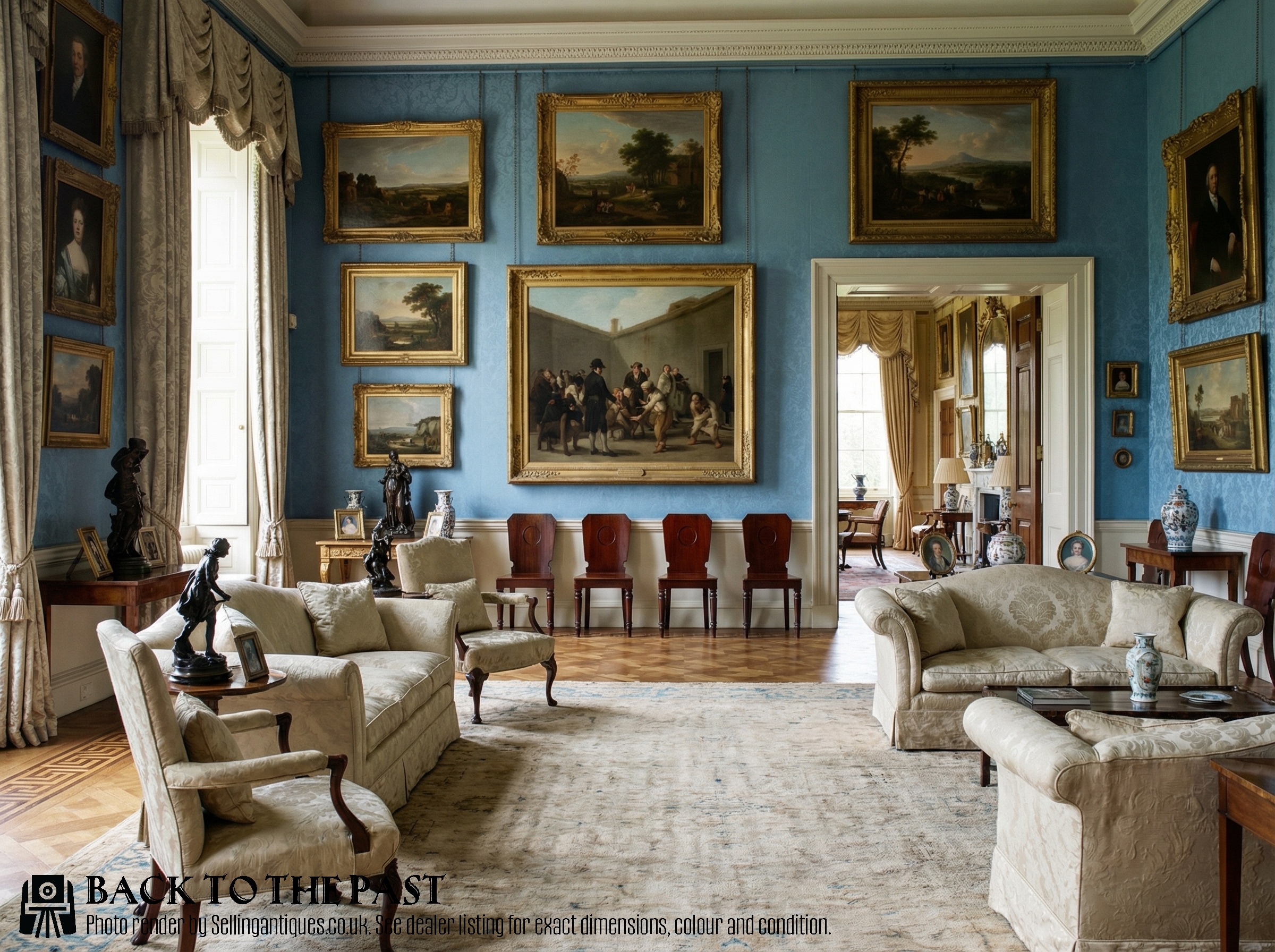
Where The Range Splits
Timber does most of the work. Rosewood, walnut, satinwood and figured mahogany sit toward the top of the sampled range; beech, pine and mixed elm and ash sit at the bottom, along with sets simply called "wooden". Mahogany runs the whole length, so the word alone tells you less than it looks.
Decoration lifts a set from the middle. Carving appears in 41 titles and inlay in 35, and the upper sampled range repeats marquetry, brass inlay, gilt and ormolu. Painted and grained work is a separate thread: faux bamboo and simulated rosewood are cheaper timbers dressed as dearer ones.
Two things beyond the wood matter. Four armchairs, rather than four singles, cluster well above the run of the category. And integrity counts: a set made as one sits above a harlequin four. Dealers name it because it matters, with 25 titles saying harlequin outright and others saying mix and match, matched or similar. Named Georgian and Regency work, and the thin seventeenth and eighteenth-century tail, push upward too.
Set of 4 Chairs Retail Price Guide 2026
Typical UK retail prices for set of 4 chairs, calculated from the Sellingantiques database of over a million retail prices indexed since 2003. This retail price guide relies exclusively on Sellingantiques data; no external sources or auction records are used, so the figures do not describe the wider market.
A set assembled from near matches is called harlequin, after the patchwork costume. Twenty-five sets have carried the word in their titles.
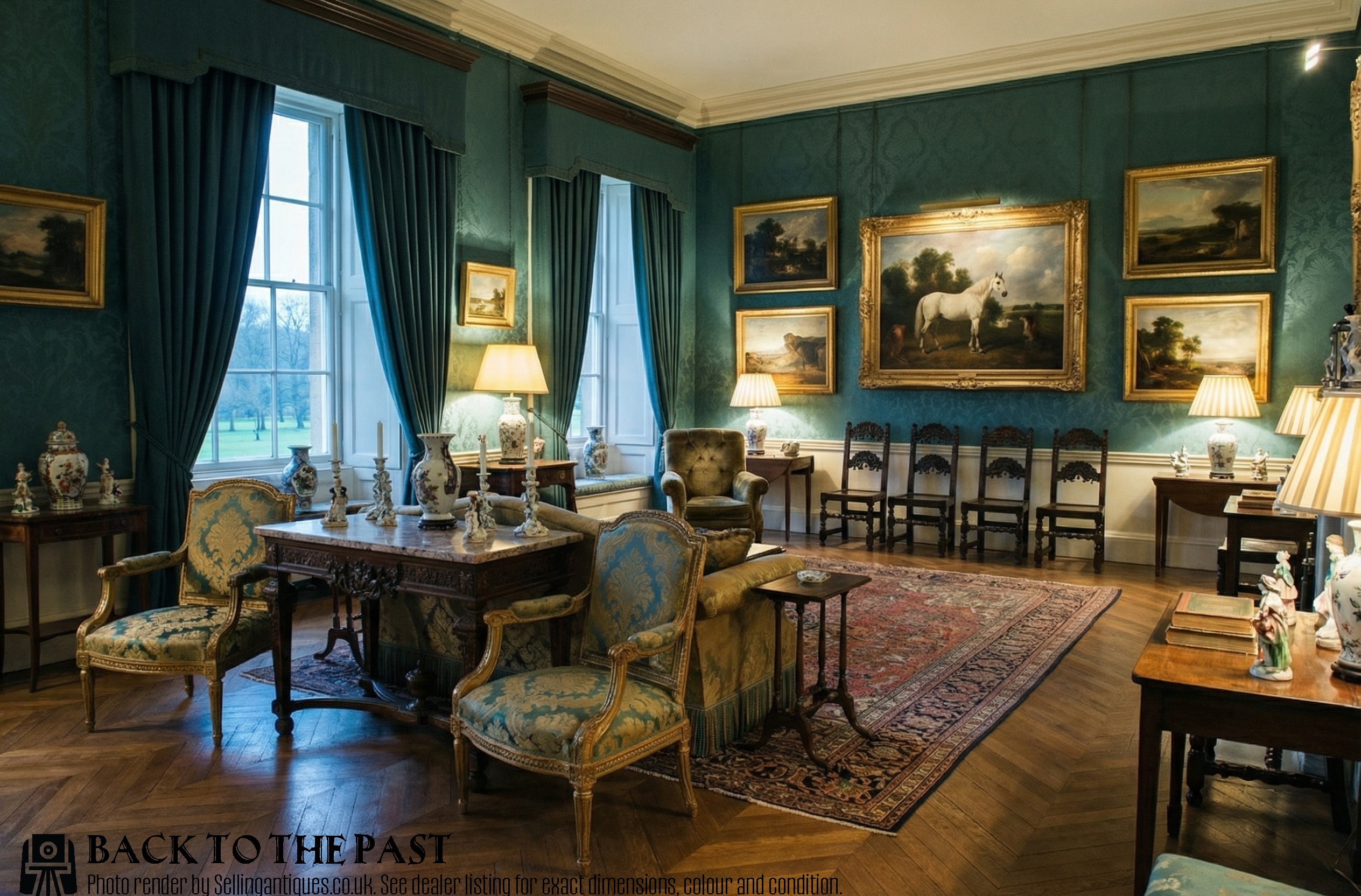
The Set of 4 Chairs Glossary
- Single chair
- A chair without arms, which is what a set of four usually means. "Side chair" says the same thing and appears in 27 titles.
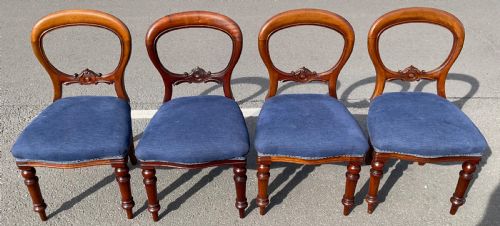
- Balloon back
- Rounded, waisted back rail typical of mid-Victorian dining and bedroom chairs. At 30 titles, it's the only named back pattern to reach that figure.
- Harlequin set
- Four chairs of the same type but not made as one set. Twenty-five titles use the word; others say mix and match, matched, or simply similar.
- Splat
- The vertical central panel of a chair back. Vase splat, shield back and slat back all appear in titles as variations on the same part.
- Windsor
- Stick-built country chair with a solid seat and turned legs socketed into it, named in 33 titles. Yew Windsors are the scarcest timber in the samples.
- Penny seat
- A country chair seat with a small circular depression in it. "Penny chairs" recur throughout the country and kitchen listings.
Set of 4 Chairs: Frequently Asked Questions
What wood are these sets usually made from?
Mahogany leads, named in 222 of the 892 titles, then oak at 140, walnut at 87 and rosewood at 53. Elm, ash, beech and pine fill out the country end.
Yew turns up only in a few Windsor armchair and stick-back entries. It's the scarcest timber named in the samples.
Are sets of four always dining chairs?
Mostly they are. "Dining" appears in 497 titles and the exact phrase "dining chairs" in 475, so a little over half the archive says so outright.
The rest covers kitchen and farmhouse seating, salon chairs, hall chairs, smoker's bows and library armchairs. Cast-iron garden chairs, chapel chairs, station chairs, ship's armchairs, children's chairs and counter stools each appear only a handful of times.
How old are most of them?
The bulk is nineteenth century. "19th Century" and "Victorian" together cover about a third of all listings, and both are approximate labels rather than precise ones.
After that comes a substantial early twentieth-century tail, with 1920s, 1900s and 1930s all well represented. Regency, Georgian and Edwardian each hold their own share.
The dated field runs from 1715 to 1940. Seventeenth and pre-1700 entries exist but are a thin tail.
Does harlequin mean the chairs don't match?
It means four chairs of the same type that weren't made as one set. They'll be close in pattern and timber without being identical.
Dealers declare it openly: 25 titles say harlequin, and others use mix and match, matched or similar. A set made as one commands more than an assembled four.
Which back patterns come up most?
The balloon back is the one to know, named in 30 titles. It's a rounded, waisted top rail, mid-Victorian in feel.
Bar backs follow at 18. Shield backs, slat backs, spindle backs, lath backs, hoop backs and fiddle backs each turn up in single figures.
How many sets of four come up each year?
Around 95 a year on Sellingantiques, listed by 167 different dealers over the archive as a whole.
No single specialist owns the category. It's spread across the trade, which is part of why the range of type and timber is so wide.