

Antique Side Chairs
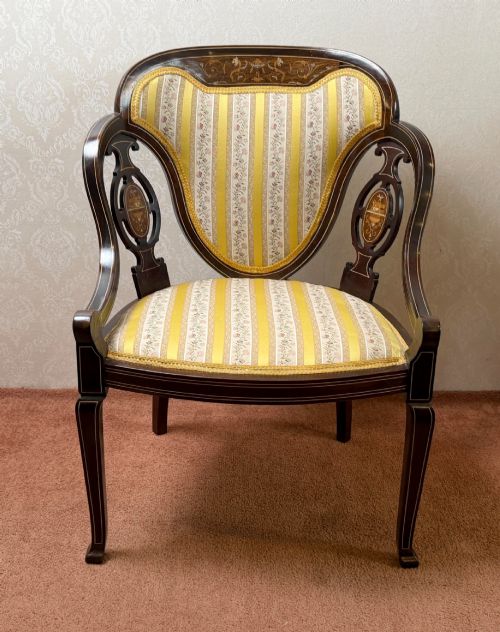
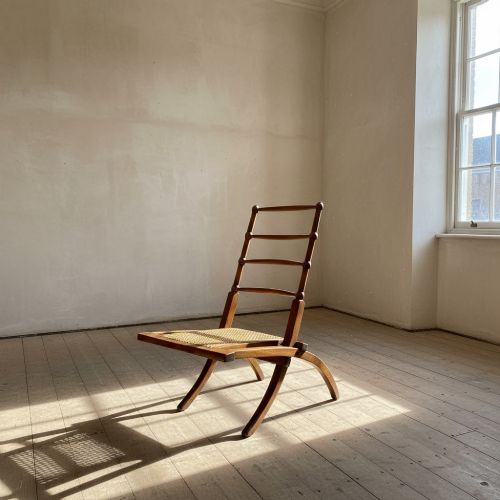
A side chair is a single seat without arms, made to stand back against a wall and be brought forward for dining, writing or sitting in a hall or bedroom.
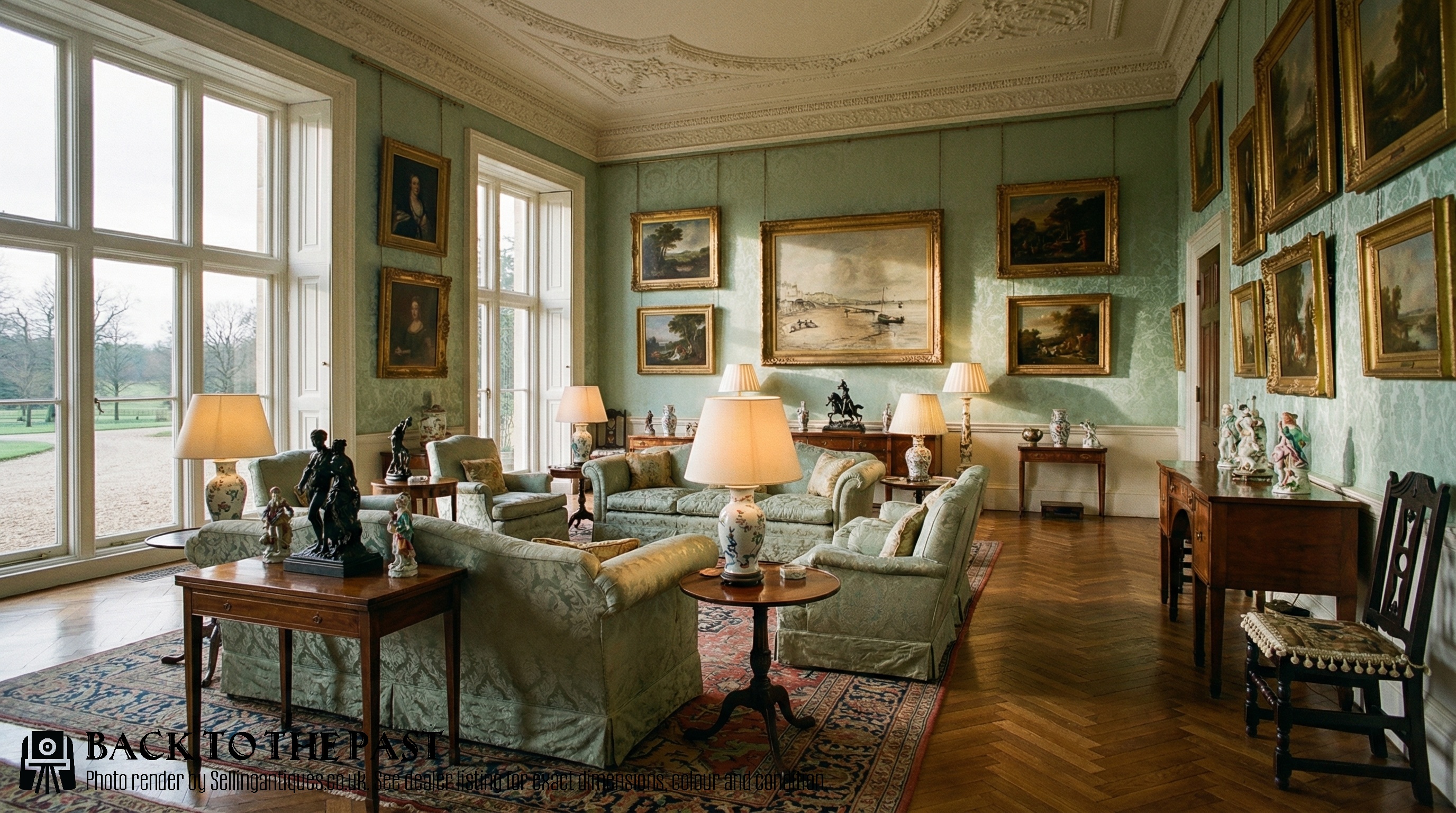
Antique Side Chairs
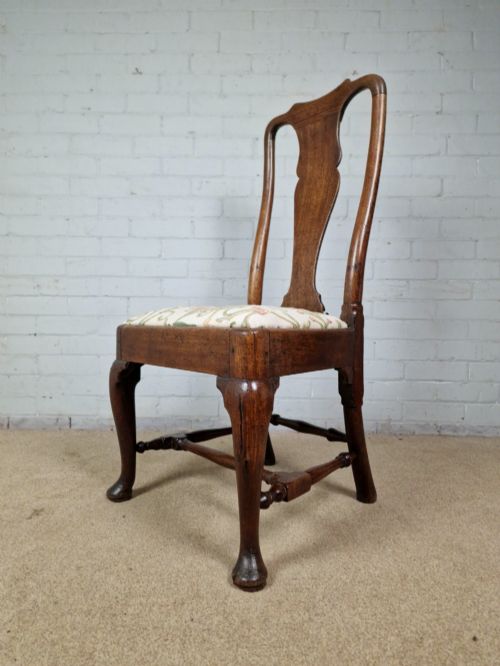
The form settled into European houses from the seventeenth century, and by the eighteenth was made both in matching sets for the dining room and as single decorative chairs for halls and bedrooms. Listings still split along those lines, described first by timber and then by reign.
The chair you'll meet most often is a 19th-century English mahogany one, sold as a pair or a set. "Chairs" plural appears in 1,865 of 2,664 titles, "pair" in 950, and "dining chairs" in 692. Mahogany leads the timbers, with walnut, oak and rosewood behind it; Victorian leads the period labels, then Regency, Georgian and plain 19th century.
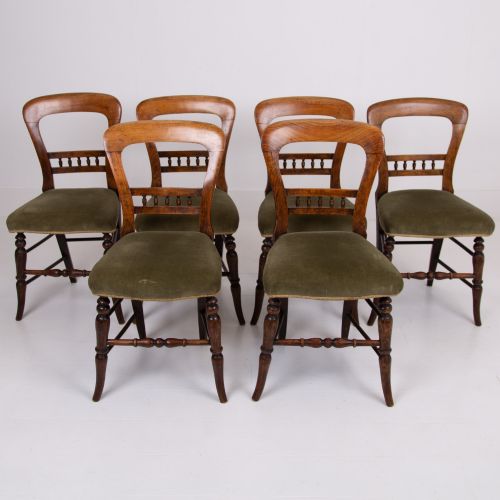
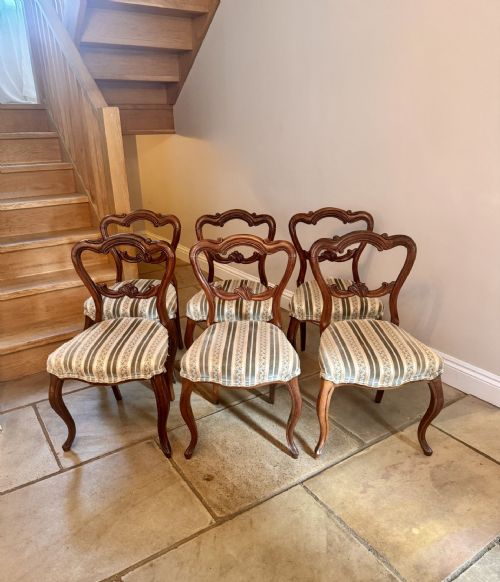
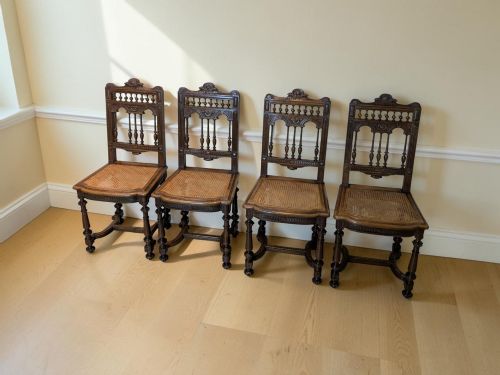
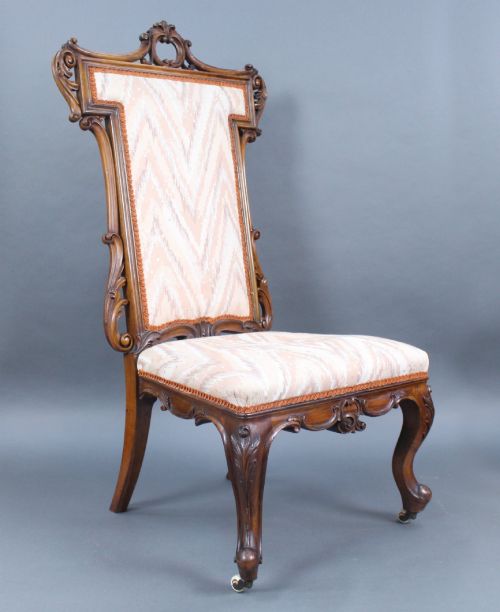
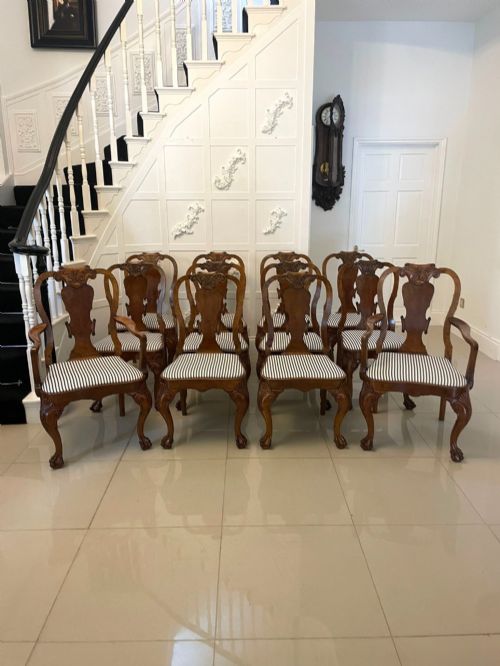
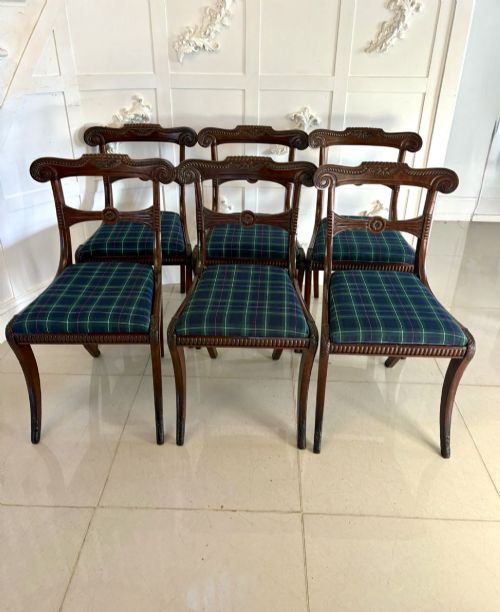
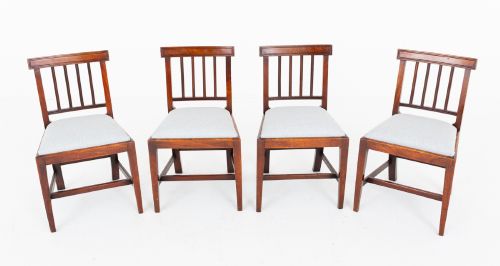
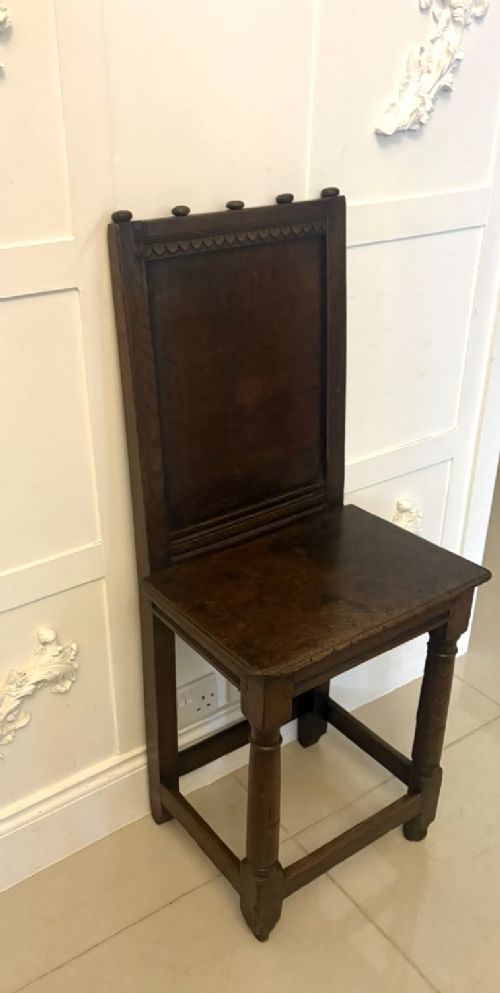
Dining sets in fours, sixes and eights make up the bulk of current stock. Hall chairs form the next clear group, hard-seated, often carved, in oak or mahogany, sold singly or in pairs. Bedroom, nursing, salon, desk, dressing table, prie dieu and slipper chairs run as a small steady band alongside them.
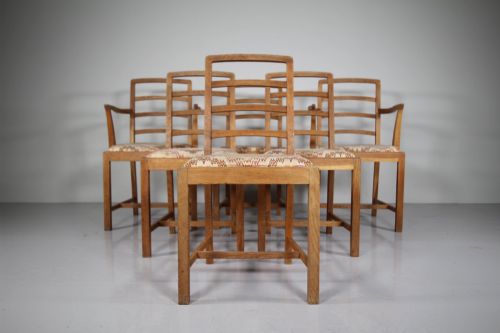
Two further branches turn up throughout. Country and vernacular chairs in elm and ash, with rush seats, ladderbacks and spindlebacks, carry named regional types such as Ormskirk, Dales and Thames Valley. Revival and style-name sets, dated to the 1900s and 1920s, borrow eighteenth-century patterns, and balloon back and gothic forms sit among them.
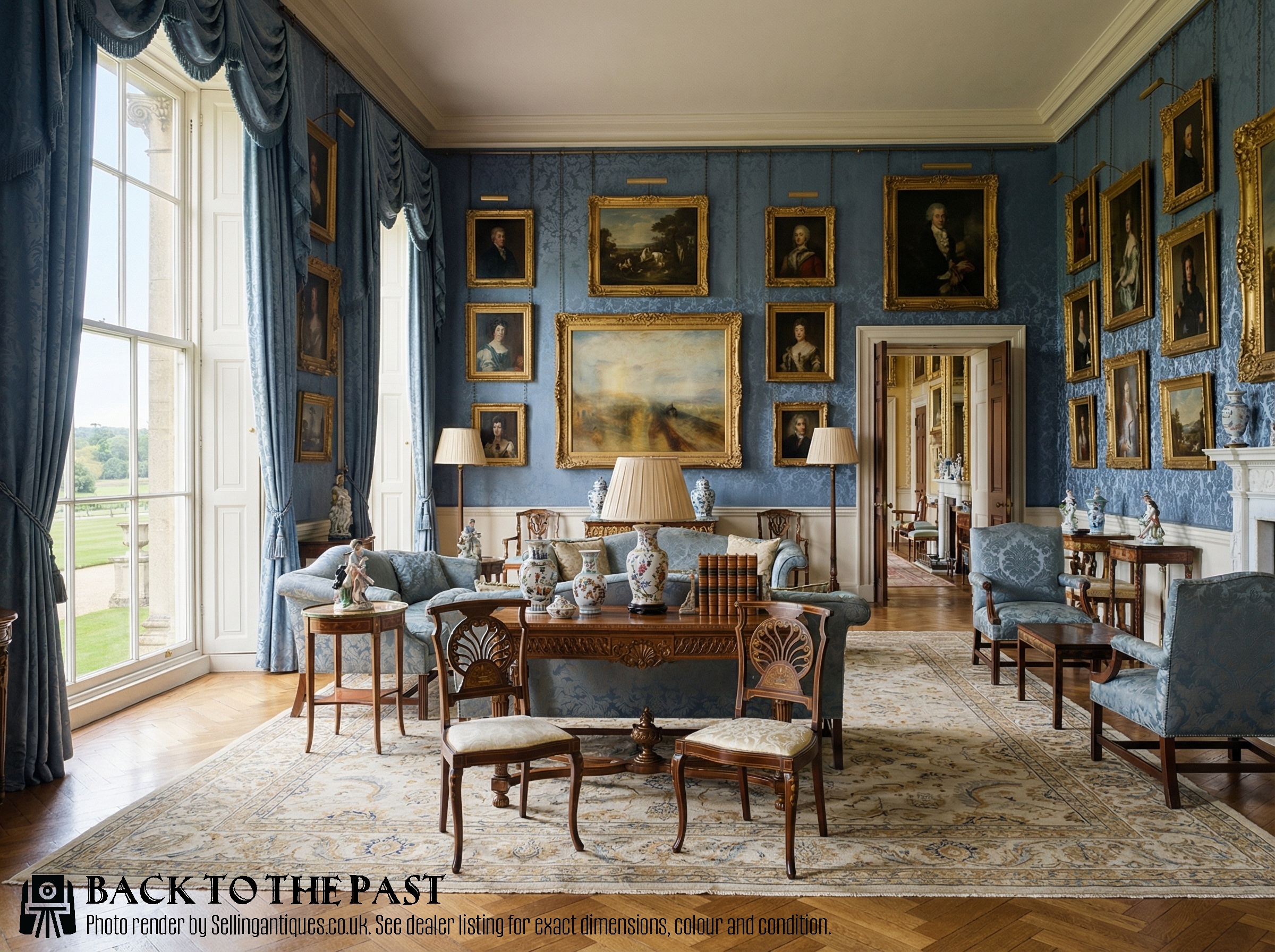
Where The Range Sits
Set size does more work than anything else. Singles and pairs occupy the lower reaches, fours and sixes the middle ground, and sets of ten, twelve, fourteen and sixteen cluster at the top. The archive's outlier is a matching suite of forty-two giltwood chairs.
Timber and decoration then sort the rest. Beech, elm and pine sit at the cheaper end; Cuban and figured mahogany, rosewood, burr walnut, calamander, satinwood, coromandel and giltwood at the other. Carving appears in 282 titles and inlay in 89, and the phrases "heavily carved" and "finely carved" gather around the dearer entries, along with marquetry, mother-of-pearl and parcel-gilt work.
Age pulls in the same direction as a named workshop. Seventeenth and early eighteenth-century oak and walnut chairs, and Chippendale-period examples, reach the higher figures, while style and revival sets of 1900 to 1930 sit mid-range despite matching them for size. A workshop name in the title lifts a chair above its unattributed equivalent.
Antique Side Chairs Retail Price Guide 2026
Typical UK retail prices for side chairs, calculated from the Sellingantiques database of over a million retail prices indexed since 2003. This retail price guide relies exclusively on Sellingantiques data; no external sources or auction records are used, so the figures do not describe the wider market.
19th Century is the period label used most on Sellingantiques for side chairs, with Victorian next and 18th Century third.
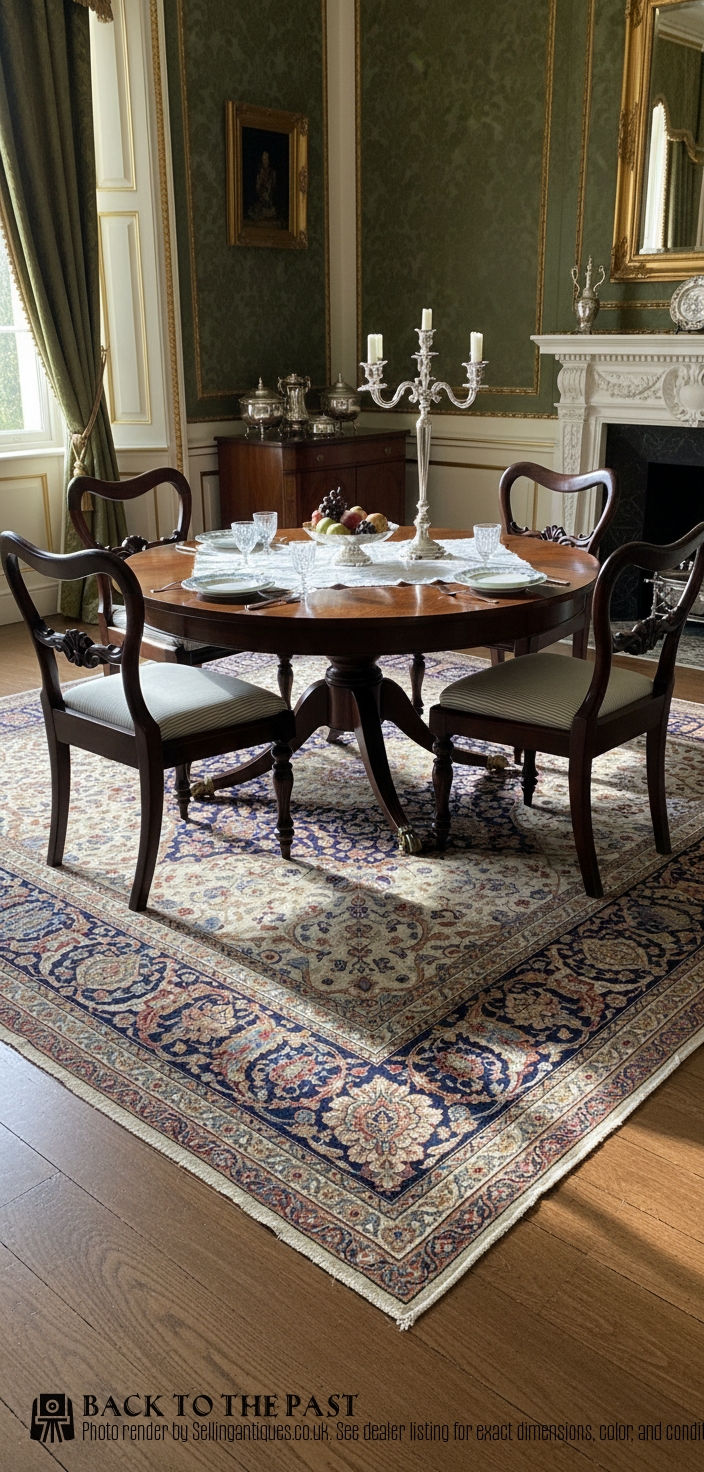
Gillows
The Antique Side Chairs Glossary
- Side chair
- A single chair without arms, as opposed to an elbow chair or carver.
- Single
- Dealer shorthand for the armless chair within a set, distinguishing it from the carvers.
- Carver
- The armchair in a dining set. Sets are often written up as "6 + 2" or "10 + 2".
- Balloon back
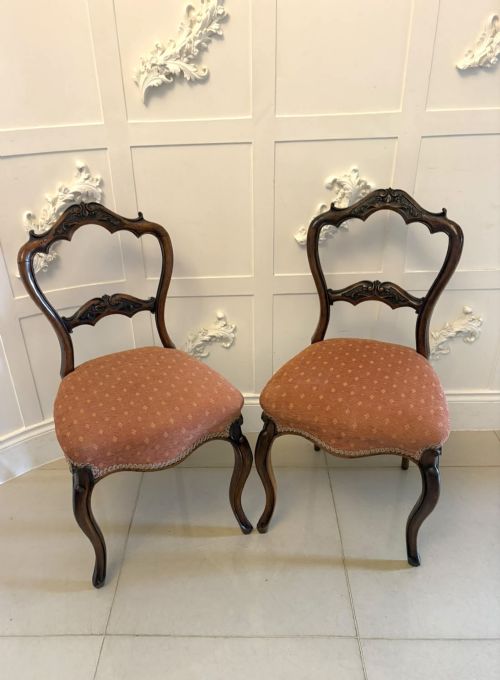
- A rounded, waisted Victorian back shape, used in 60 titles.
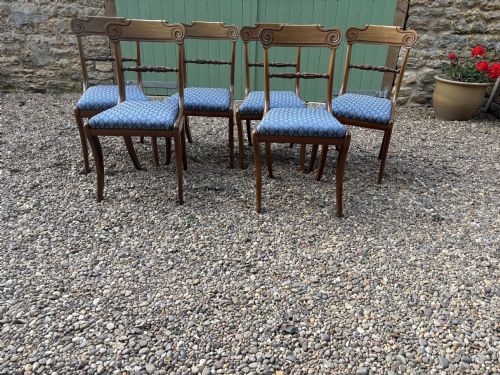
- Sabre leg
- The outward-curving Regency leg, found on bar-back and klismos dining chairs.
- Harlequin set
- A set assembled from chairs matching in style but not exactly in make.
Antique Side Chairs: Frequently Asked Questions
How many side chairs are listed each year?
Around 279 side chairs and sets appear on Sellingantiques in a year, and 311 different dealers have handled them. That is one of the widest dealer spreads in any category on the site.
Because so many dealers stock them, the mix stays broad rather than settling into one look or one price band.
What set sizes turn up?
Fours and sixes are the ordinary units, with eights close behind. Six appears in 171 titles, four in 142 and eight in 82.
Above that, the archive has produced tens, twelves, fourteens, fifteens and sixteens, and at the very top a matching suite of forty-two giltwood chairs. Singles and pairs are just as much part of the category, and 950 titles say "pair".
Are these all English?
English chairs dominate, and Scotland is unusually well represented for a region, with Edinburgh-attributed chairs, Northern Isles joined chairs and Scottish hall chairs recurring.
Beyond that the origins wander. Dutch and Italian marquetry and walnut, Portuguese rosewood, Spanish, Swedish, Swiss Alpine escabelles, Tyrolean folk chairs, Chinese Qing hardwood, Burmese padouk and Anglo-Indian teak all appear, most only once or twice.
What dates do dealers give?
The dated field runs from 1700 to 1960, with 907 listings carrying a clean year. Much of the dating is broad: 19th Century accounts for 522 entries and 18th Century for 220.
Reign labels are applied loosely alongside decade buckets. The samples include a chair called Victorian with c.1840 in the title, and a George III mahogany hall chair also given as c.1840.
Which timbers are most common?
Mahogany leads with 791 titles, then walnut at 351, oak at 328 and rosewood at 169. Mahogany and dining appear together in 238 titles.
Country chairs bring in elm and ash, and simulated finishes turn up too, most often paint imitating rosewood or bamboo on Regency chairs.
Do unusual one-off chairs come up?
They do. Metamorphic library steps that convert to a side chair, a Black Forest carved bear hall chair, a pair of solid brass chairs and a papier mâché chair inlaid with mother of pearl have each surfaced once.
Welsh and Scottish spinning chairs are in the same bracket. The earliest things recorded are a set of farthingale chairs given as c.1640-60 and a Carolean caned walnut pair of c.1670-90.