



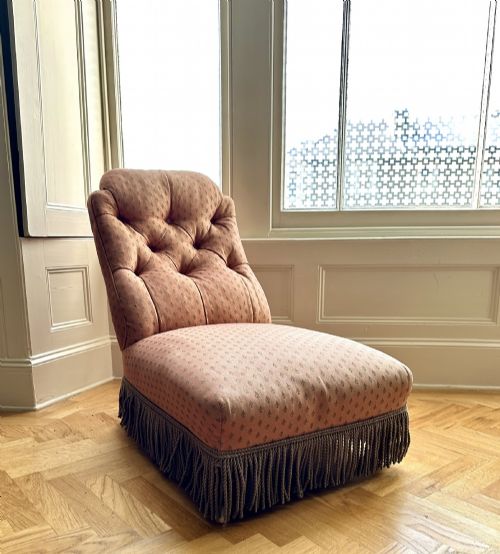
A 2026 Guide by Sellingantiques
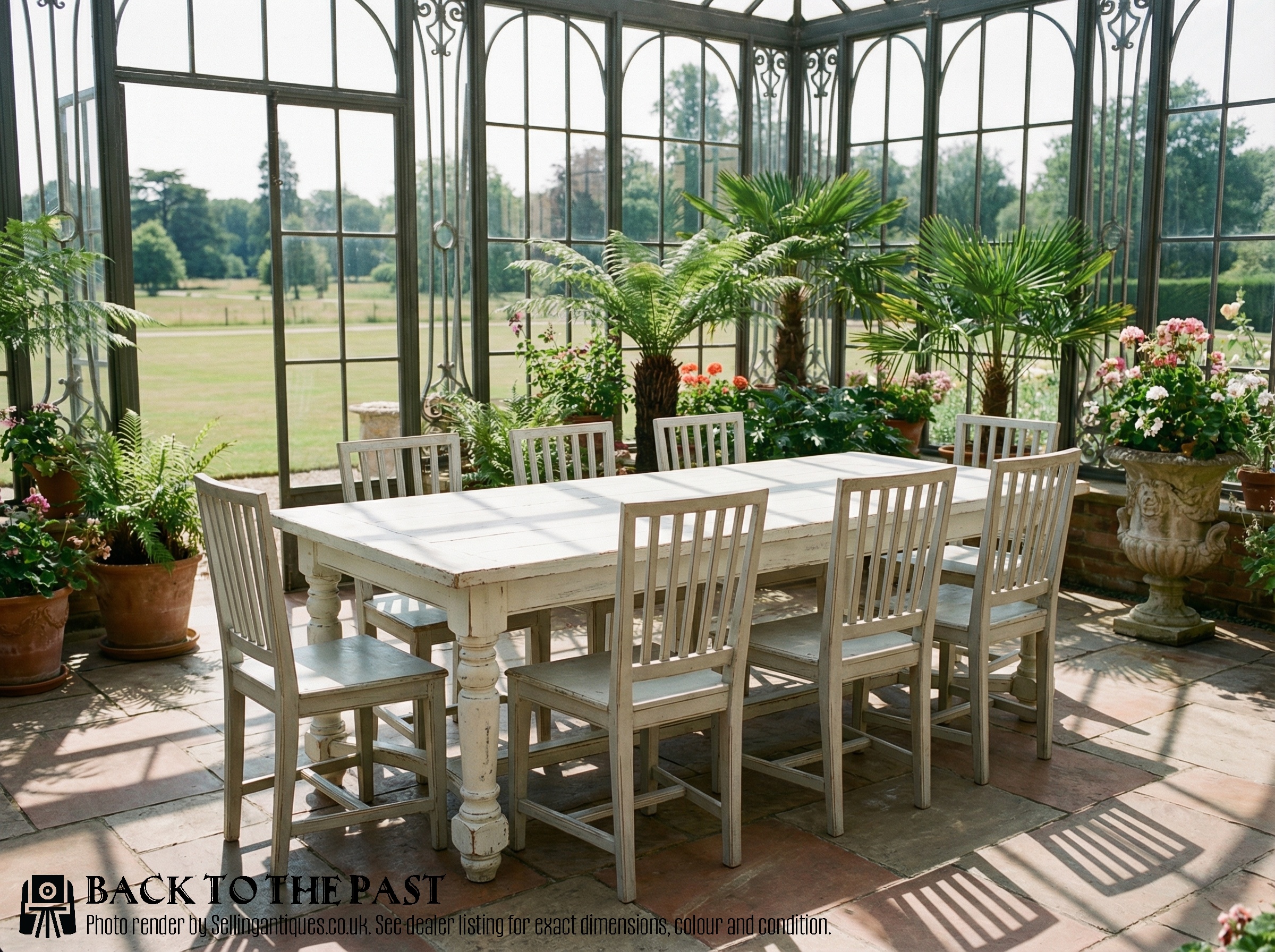
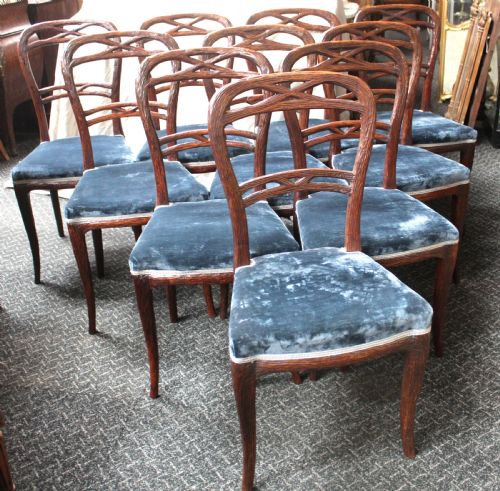
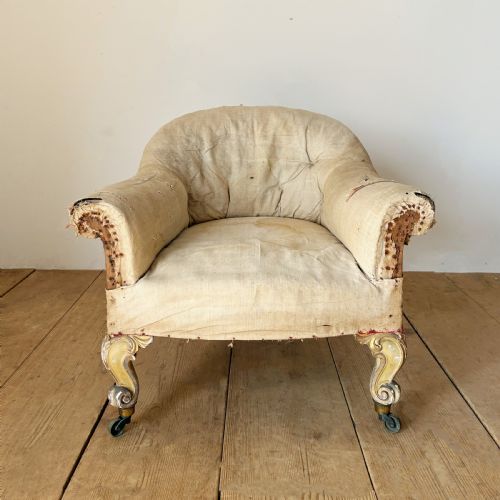
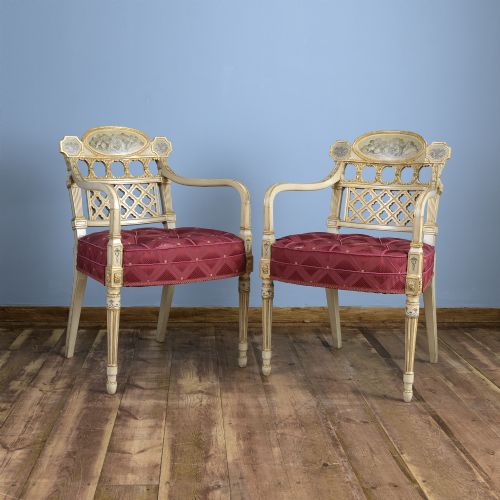
Set of Eight French Grey Painted Dinning Chairs, 1930
Priced at £1,850 from Burgett Langfield Decorative Antiques
Look at the early Louis XIV pieces. Stiff backs forced sitters to stay upright during formal assemblies.
Designers adapted shapes as clothing changed. Wide paniers worn by women meant chair arms had to be set further back on the seat rails.
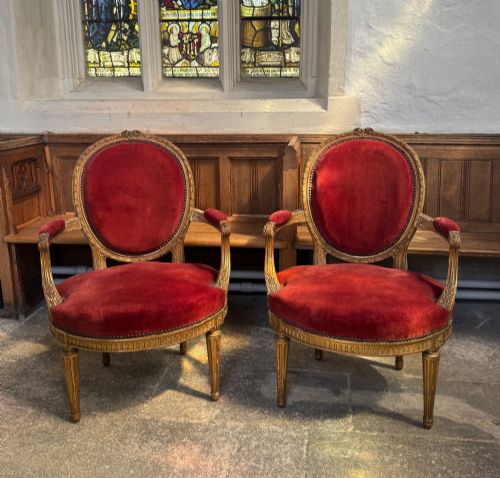
By the mid-eighteenth century, Antique French Chairs became lighter. Salons demanded movable furniture for intimate card games and private gossip.
Revolutionary politics stripped away aristocratic curves. The Empire period brought strict lines and military motifs back into fashion.
Georges Jacob supplied vast quantities of seating from 1765 until the early nineteenth century. His workshop transitioned seamlessly from Louis XVI to Empire styles.
Jean-Baptiste Tilliard ran a major workshop between 1717 and 1766. His stamped frames often feature robust heart-shaped cartouches on the seat rails.
Remember that provincial craftsmen rarely stamped their work. The strict guild rules requiring a maker's mark applied primarily to the Paris trade.
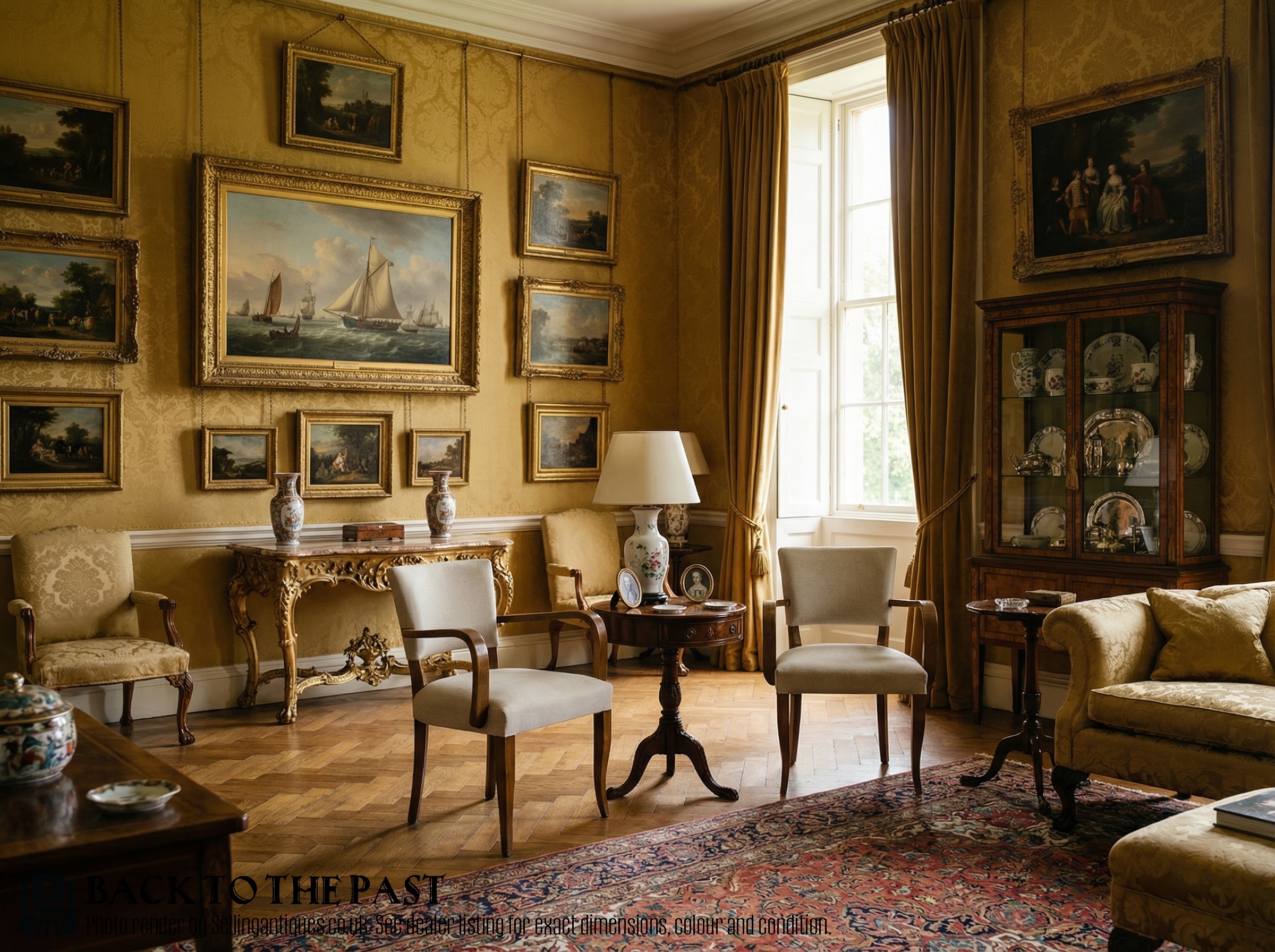
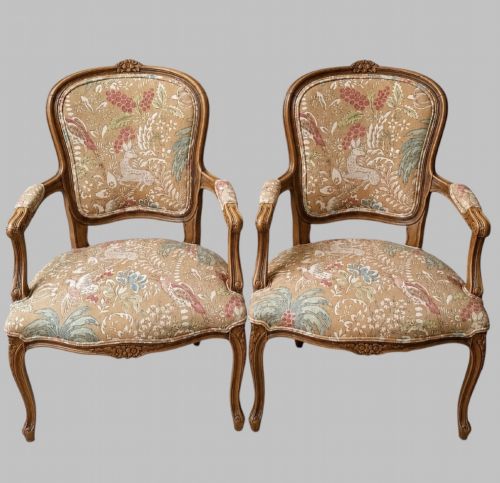
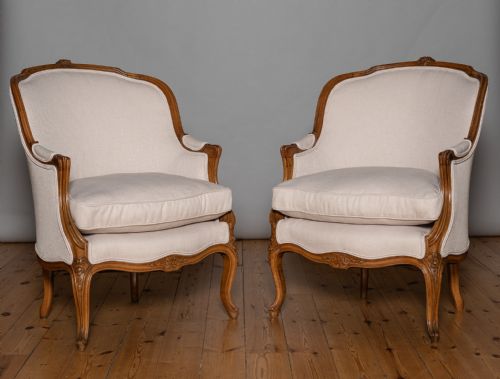
A Pair of French Bridge Chairs, 1920
Priced at £450 from The Antique Partnership
The 2026 retail price guide for Antique French Chairs is drawn from a proprietary archive of over 1.1 million retail prices indexed by Sellingantiques since 2003. This guide relies exclusively on their own internal data; no external sources or auction records are used.
Analysing nearly 25 years of UK antique market history alongside current retail values, the data indicates that typical UK retail prices for Antique French Chairs range between £600 and £2,200. Entry-level prices generally fall under £600 and premium examples upwards of £2,200.
Cabriole legs define the Louis XV era. The sweeping curve ends in a scrolled foot or simple peg.
Notice the carved floral crests. Small roses or marguerites often centre the top rail of provincial seating.
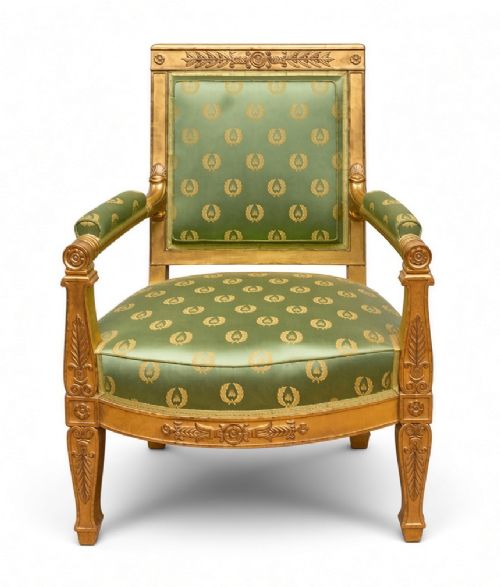
Fluted straight legs arrived with the Neoclassical taste. Rosettes usually cap the top blocks where the legs meet the seat frame.
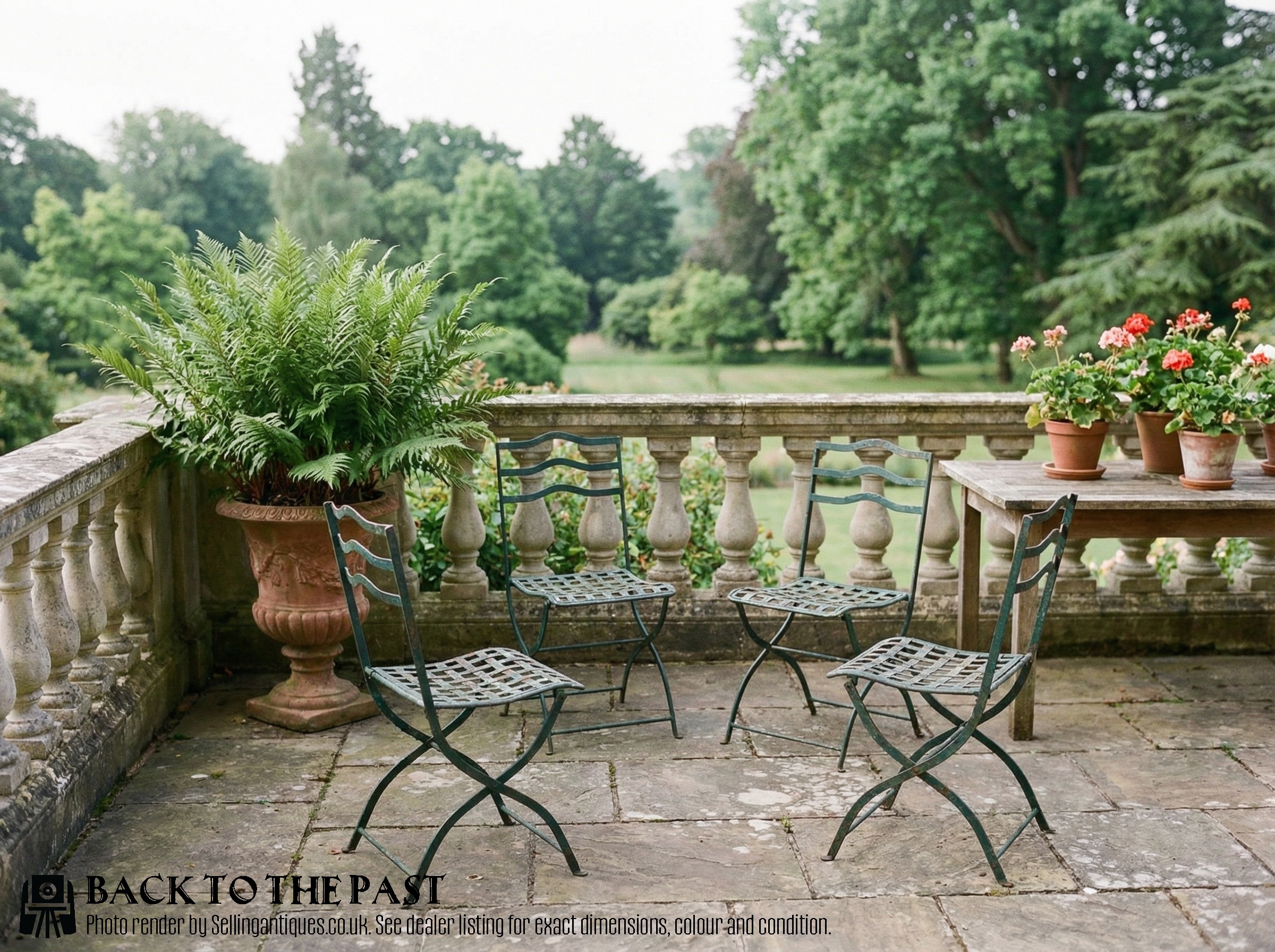
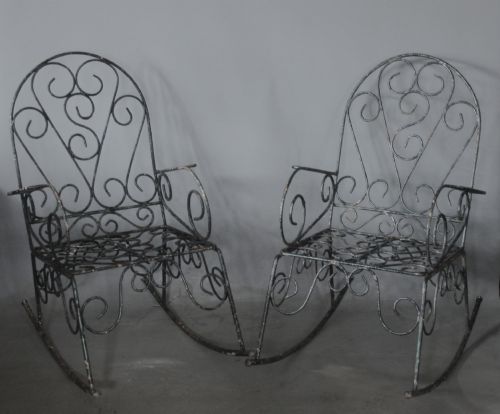
A Set of Four French Folding Iron Garden Chairs, 1920
Priced at £225 from The Antique Partnership
Pegged mortise and tenon joints hold the seat frames together. Craftsmen drove wooden dowels through the joined timbers to lock them tight.
Turn a chair upside down. You will often see tool marks from the adze used to rough out the unseen inner rails.
Carvers worked after the basic frame was assembled. They shaped the mouldings directly into the assembled joints to ensure unbroken lines.
"Some early frames were designed specifically to be moved out of the way. Their flat backs allowed them to line up neatly against wall panelling."
"Master carvers often had signatures hidden in their floral work. A specific petal shape or leaf vein can identify a particular workshop's hand."
"Seat cushions were sometimes reversible. They featured summer silk on one side and winter wool on the reverse."
Based on almost 25 years of Sellingantiques UK antique market data, Antique French Chairs appeared 7566 times (out of 1,100,000 antiques) which gives it a rarity score of 22/100.
This score measures scarcity within the Sellingantiques archive only and is not a survey of the entire antiques market, so these statistics may not be indicative of the general availability of Antique French Chairs elsewhere.
Dust it lightly with a soft, dry squirrel-hair brush. Never use damp cloths on water gilding.
Water dissolves the underlying gesso layer instantly. Once that washes away, you lose the gold leaf and expose the bare wood beneath.
Most modern tables are built higher than eighteenth-century dining tables. Those older chairs were proportioned for the furniture of their own time.
It is also common for the legs to have lost height over the decades. Continued dragging across uneven floors grinds away the bottom of the feet.
Sometimes a previous owner deliberately cut the legs down. They did this to turn outdated dining seating into lower bedroom or fireside chairs.
Linen or wool suits the rustic nature of provincial walnut frames. They match the muted tones of the timber and wear well over time.
Heavy silks or imported damasks look wrong on simple country pieces. Save those formal fabrics for gilded or painted Paris frames.
A skilled upholsterer can remove the old tapestry top cover carefully before working on the foundations. They fold it back to access the deteriorated stuffing underneath.
That dry grass is likely old horsehair or coir that has broken down. The upholsterer builds a new foundation of webbing, springs, and fresh hair.
Once the seat is firm again, they reattach your original tapestry. This preserves the visual history while making the piece usable.
Please note: This Antique French Chairs guide and its associated pricing data are provided for general informational purposes only. It does not constitute formal financial, investment, or appraisal advice and should not be relied upon as the sole basis for any commercial activity, purchasing, or sales decisions. Sellingantiques.co.uk accepts no liability for any actions taken in reliance on this information. Always consult with a qualified professional or independent appraiser.
