
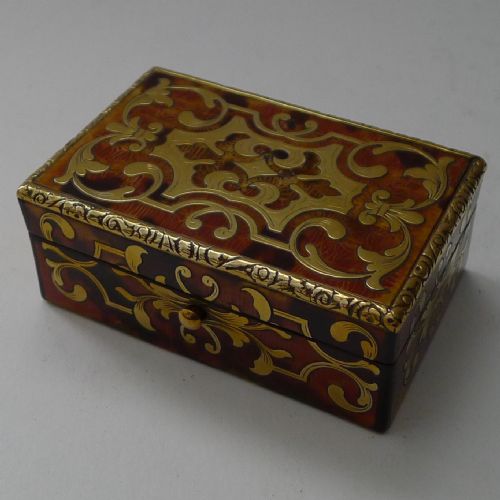


A 2026 Guide by Sellingantiques

Tortoise Shell Ladies Table Top Sewing Box, 1800
Priced at £2,495 from Sovereign Antiques Of Nuneaton
Heavy imports during the seventeenth century. Trade routes from the East Indies brought raw shells to European craftsmen.
Demand peaked during the late Georgian and Regency periods. You see many antique tortoiseshell boxes dating to this era, mostly fitted inside as tea caddies for wealthy households.
Look closely at the early Victorian examples. They often feature elaborate silver or mother-of-pearl inlay rather than plain polished shell.
Changing fashions eventually saw other materials replace it. Wood veneers and papier-mâché grew popular for domestic boxes.
Identifying an individual maker is rare. Most were retail stock, sold without workshop stamps through high-end jewellers.
Lund of Cornhill produced fitted vanity cases during the mid-nineteenth century. Some bear their stamped brass retail plate on the inner rim.
Turn it over and look for a paper label from Thomas Lund. They operated a prominent workshop and retail business in London supplying quality tortoiseshell wares to affluent buyers.
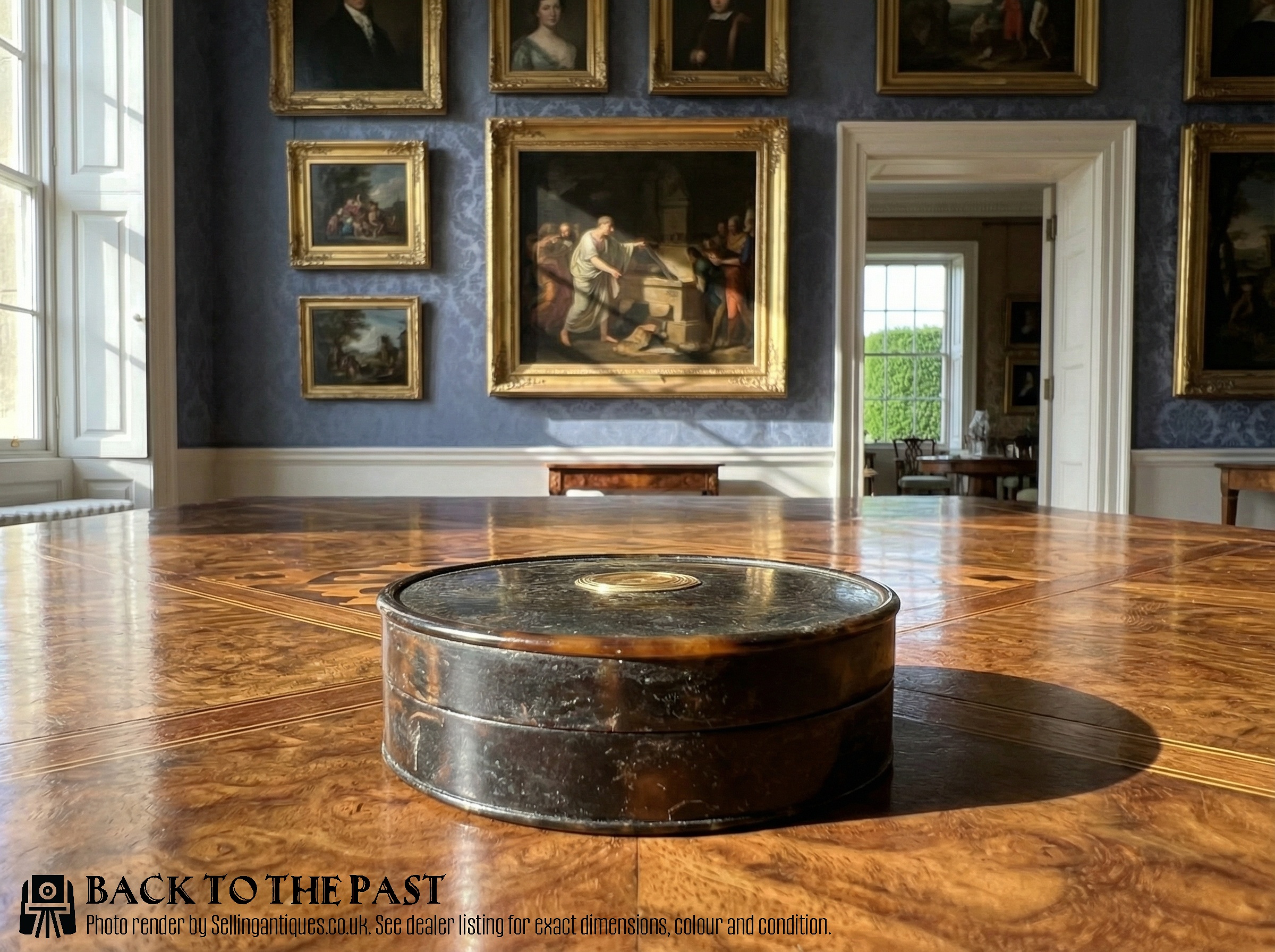
Georgian Tortoiseshell & Gold Snuff Box, Georgian
Priced at £170 from William Rand Antiques
The 2026 retail price guide for Antique Tortoiseshell Boxes is drawn from a proprietary archive of over 1.1 million retail prices indexed by Sellingantiques since 2003. This guide relies exclusively on their own internal data; no external sources or auction records are used.
Analysing nearly 25 years of UK antique market history alongside current retail values, the data indicates that typical UK retail prices for Antique Tortoiseshell Boxes range between £200 and £1,700. Entry-level prices generally fall under £200 and premium examples upwards of £1,700.
Silver stringing is common on the better antique tortoiseshell boxes. Narrow bands of metal separate the shell panels and protect the vulnerable edges.
Small feet often support the base. These can be brass balls, flattened buns, or carved ivory, lifting the delicate veneer away from damp surfaces.
Check the hinges. They're usually precision-made brass fittings, sometimes silver-plated, secured with tiny pins rather than modern screws.
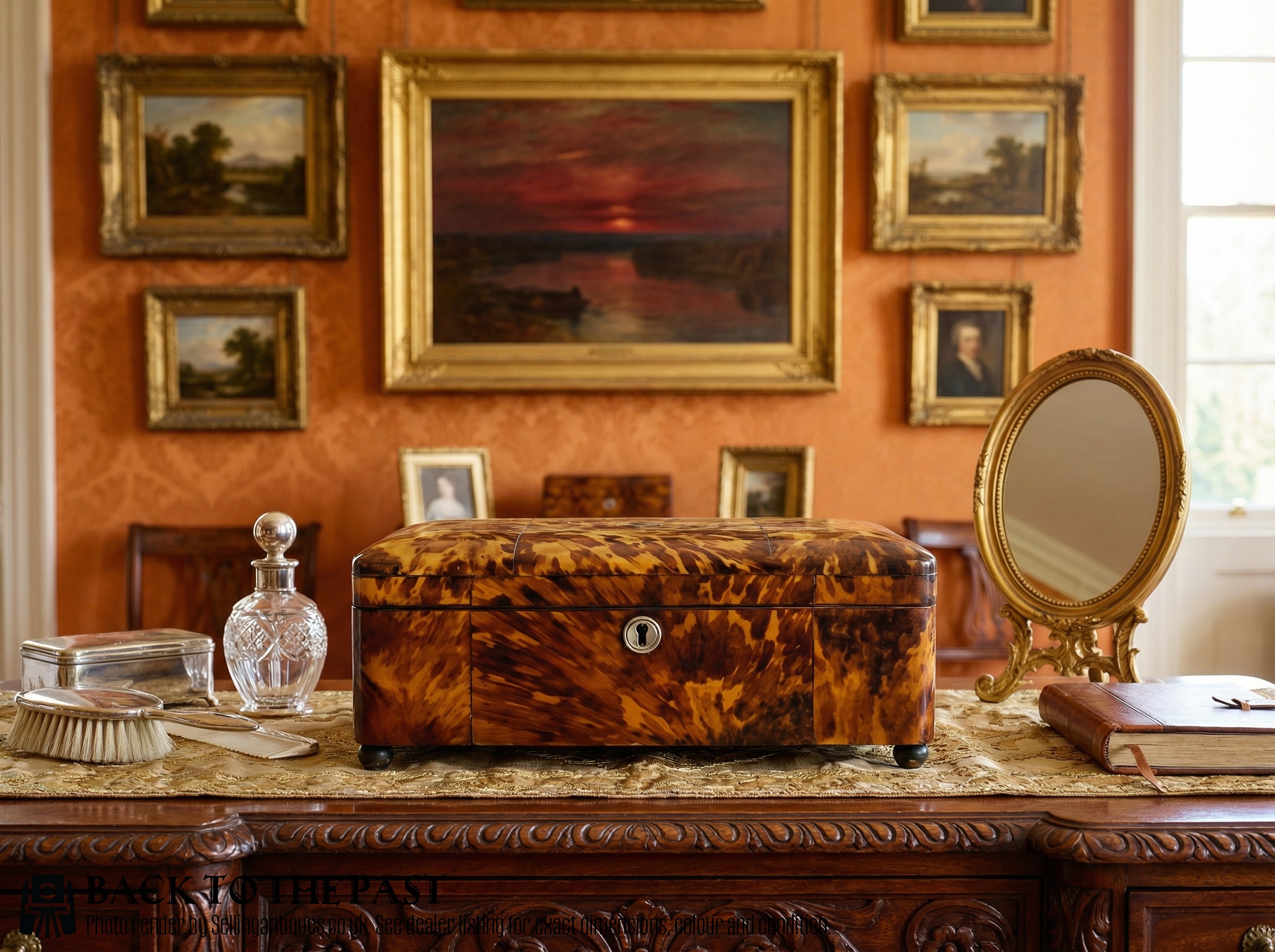
Tortoise Shell Ladies Table Top Jewellery Box, 1800
Priced at £2,450 from Sovereign Antiques Of Nuneaton
Softened in boiling saltwater. This allowed craftsmen to press the material flat or bend it over curved wooden structures.
Traditional animal glues held everything together. The shell had to be clamped tightly to the carcase for weeks while the adhesive cured in the workshop.
Notice the seams. Makers butt-joined the panels and matched the mottling across these joints to create the illusion of a single continuous surface.
"The foil backing alters the colour. Craftsmen sometimes used vermilion-tinted paper to give the shell a rich, glowing red undertone."
"No wasted offcuts. Workshops fused the small shell scraps together under high pressure to form thicker blocks for turning or carving."
"Pressing the material improved its clarity. Heating and flattening the curved scales enhanced the contrast between the dark mottling and the translucent blonde sections, making the pattern pop."
Based on almost 25 years of Sellingantiques UK antique market data, Antique Tortoiseshell Boxes appeared 1041 times (out of 1,100,000 antiques) which gives it a rarity score of 81/100.
This score measures scarcity within the Sellingantiques archive only and is not a survey of the entire antiques market, so these statistics may not be indicative of the general availability of Antique Tortoiseshell Boxes elsewhere.
Dust it gently with a soft, dry microfibre cloth. Avoid using water or liquid polishes, as moisture can seep into the seams and weaken the animal glue holding the veneer in place.
If the surface looks dull, a very light application of microcrystalline wax restores the shine. Buff it off immediately with a clean cotton cloth. Never use household chemical cleaners on the shell.
It's best to leave the original interior lining alone. That flaky material is likely lead foil, which makers used to keep the tea leaves dry and fresh. Scraping it out destroys part of the box's history.
If the powder is a nuisance, you can seal it carefully. Some collectors brush a very thin layer of archival conservation adhesive over the degrading foil to consolidate it. You might prefer to simply leave the caddy empty and display it closed.
Fluctuations in humidity and temperature do the most damage. The wooden carcase expands and shrinks at a different rate to the shell veneer covering it.
Over time, this constant movement puts the tortoiseshell under tension. It eventually splits along the grain or pulls away from the wood.
The shell itself isn't dyed. Hawksbill turtle shell is naturally translucent in the lighter areas. Makers exploited this by placing coloured material between the wood and the veneer during construction.
They often used gold leaf, silver foil, or paper painted with red pigment. Light passes through the blonde parts of the shell and reflects off the backing, giving the box that glowing red appearance.
Please note: This Antique Tortoiseshell Boxes guide and its associated pricing data are provided for general informational purposes only. It does not constitute formal financial, investment, or appraisal advice and should not be relied upon as the sole basis for any commercial activity, purchasing, or sales decisions. Sellingantiques.co.uk accepts no liability for any actions taken in reliance on this information. Always consult with a qualified professional or independent appraiser.
