

Antique Stationery Boxes
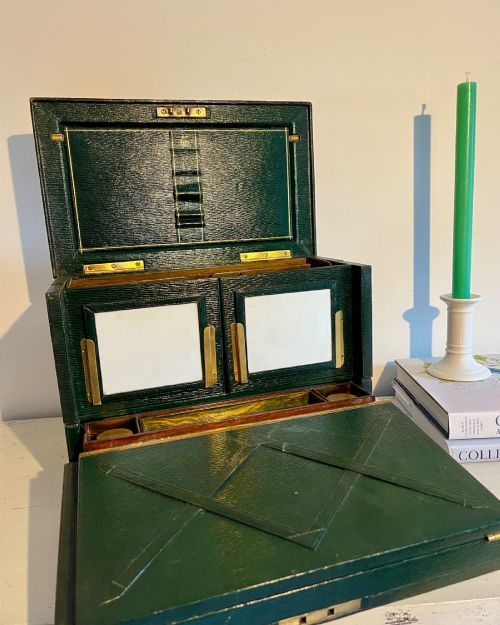
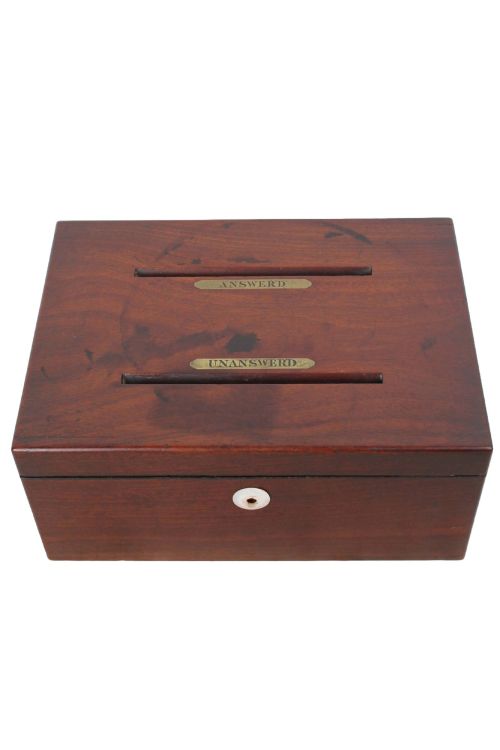
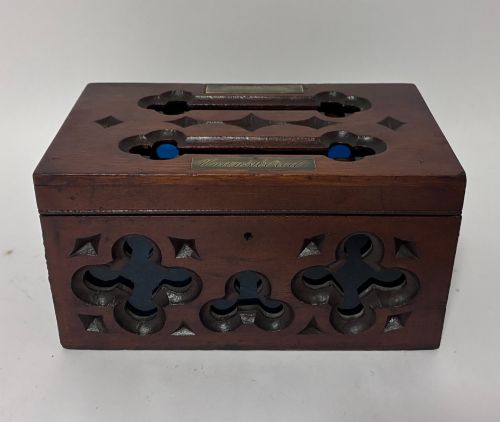
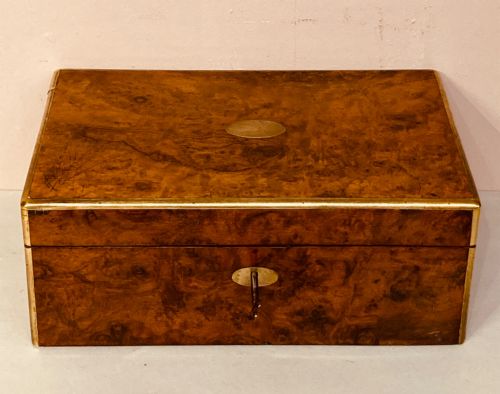
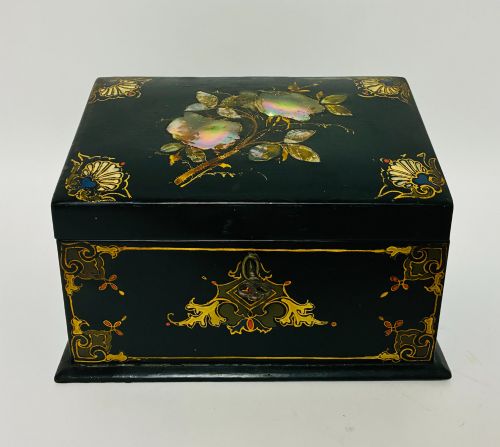
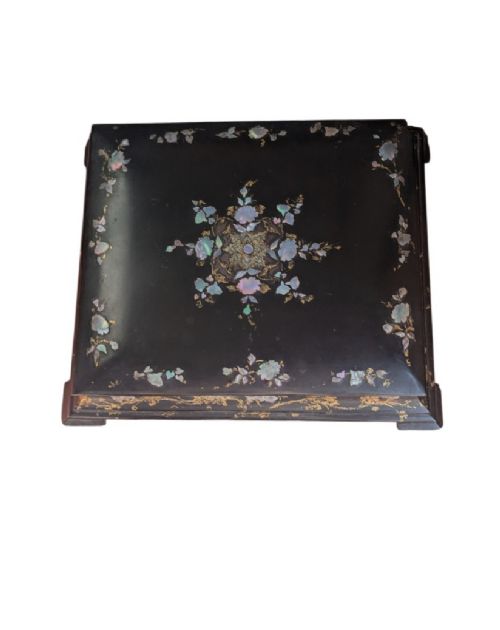
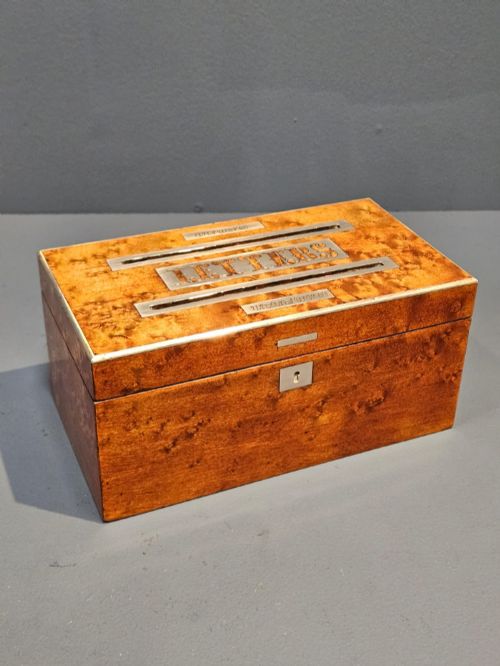
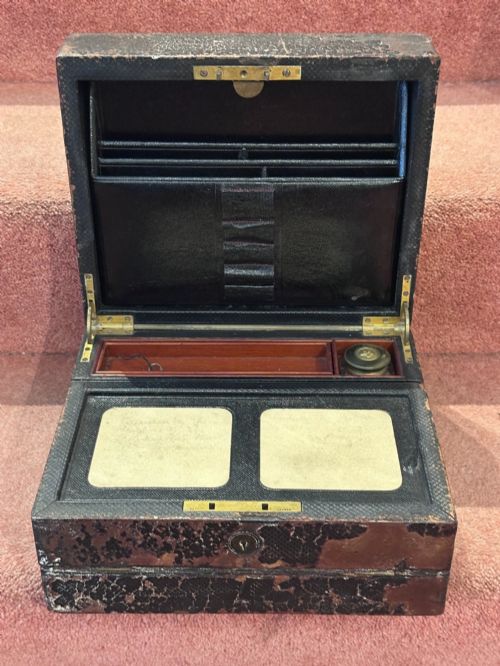
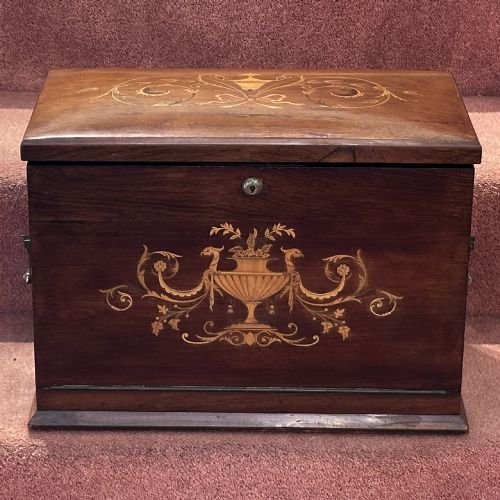
A desk-top box or small cabinet, usually wood, divided inside to hold writing paper, envelopes and letters, with a hinged lid or a front that falls open.
Antique Stationery Boxes
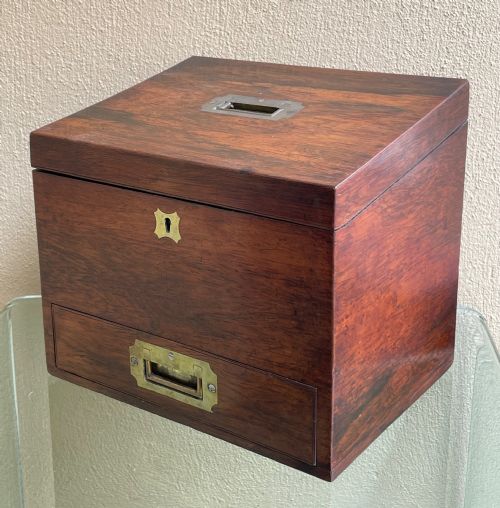
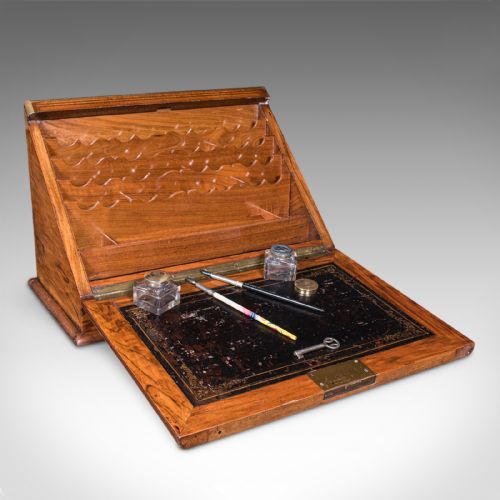
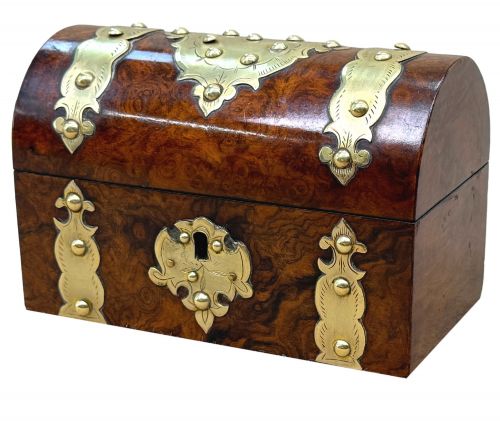
Two overlapping things sit under this heading. One is the lidded stationery box, often dome-topped or fall-fronted, divided inside for paper and envelopes. The other is the sloping-lidded writing box or writing slope, made for writing away from a desk rather than storing post at one.
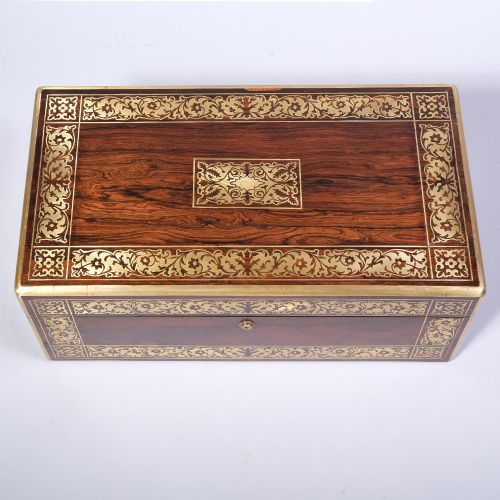
The word box appears in 251 of 381 titles, and Victorian in 145, so the likeliest thing you'll meet is a Victorian desk-top box in walnut or oak. Walnut runs through 96 titles, 45 of those burr walnut; oak through 72. Brass turns up in 58, sometimes as binding round the edges and corners, sometimes as mounts.
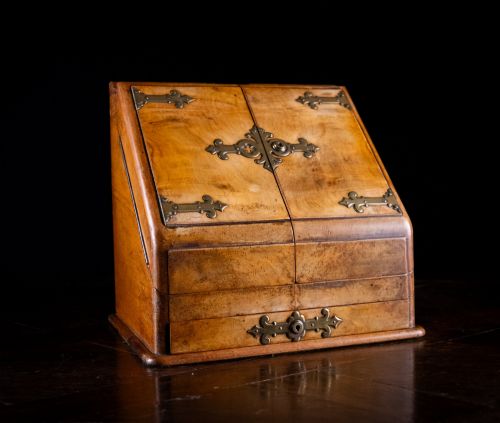
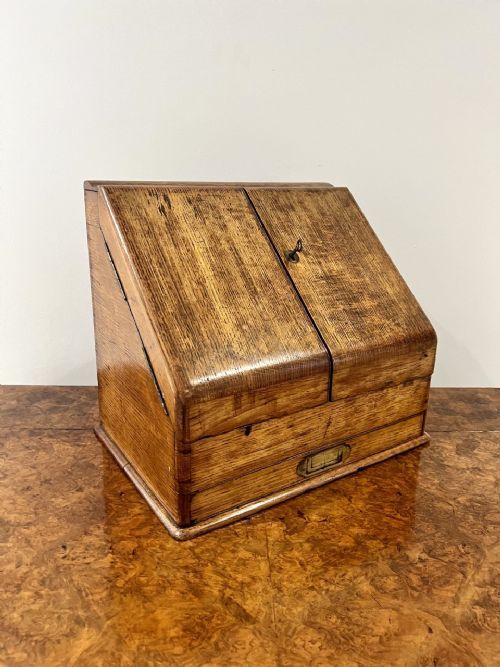
Cabinet appears in 77 titles: a standing desk-top piece with divisions behind a drop front or, on a few oak examples, a tambour shutter. Letter and correspondence boxes make a smaller group, and the form scales up into country house and hotel letter boxes. Colonial and export work is a persistent minority, with Indian, Anglo-Indian, Kashmiri, Ceylonese, Japanese lacquer and Chinese examples.
Dealer dates run 1790 to 1930, though only 146 listings commit to a clean year. The 1860s, 1880s and 1890s are the decades named most; the turn of the century is well represented, the Georgian and Regency end thin. Where a listing says only Victorian or 19th Century, read it as a bracket, not a year.
Range And Grade
Timber does most of the sorting. Plain oak boxes and small desk cabinets sit at the bottom of the range; burr and figured walnut, coromandel and satinwood sit above them, and the single-title woods, amboyna, calamander, burr yew, olivewood, spalted ash, are the outliers at the upper end. Size counts too: large and cabinet-scale pieces read higher than a small desk tidy.
Then what's applied to the surface. Engraved gilt brass mounts, pietra dura panels, hand-painted porcelain and semi-precious inlay cluster near the top of the samples. Above those, the boxes stop being wood at all: tortoiseshell with sterling silver, silver pique and boulle occupy the highest reaches.
Interiors and names lift a piece as well. Secret drawers appear in nine titles, patent locks on three writing slopes, and metamorphic action in the upper samples. A London retailer in the title, or a documented history, also puts a box above the run of the category, though such names come one listing at a time rather than as a recognised group.
Antique Stationery Boxes Retail Price Guide 2026
Typical UK retail prices for stationery boxes, calculated from the Sellingantiques database of over a million retail prices indexed since 2003. This retail price guide relies exclusively on Sellingantiques data; no external sources or auction records are used, so the figures do not describe the wider market.
Stationery boxes have been listed on Sellingantiques since 2008, and more than two hundred have passed through since.
The Antique Stationery Boxes Glossary
- Stationery box
- A desk-top box divided to hold paper, envelopes and letters. Dealers spell it 'stationary' in 25 listings, so both spellings turn up in titles.
- Writing slope
- A box with a sloping hinged lid that opens out to a writing surface. Named in 54 titles, and stronger in current stock than in what has already sold.
- Stationery cabinet
- A desk-top cabinet rather than a lidded box, commonly with a fall or drop front. The word appears in 77 titles.
- Brass bound
- Edges and corners strapped in brass, stated in 17 titles. Campaign boxes, made to travel with an officer, are usually bound this way.
- Burr walnut
- Figured veneer cut from a burr growth on the tree. It's the single most named decorative timber in the category, in 45 titles.
- Tambour
- A flexible slatted shutter that rolls back instead of a hinged front, found on a few of the oak desk-top cabinets.
Antique Stationery Boxes: Frequently Asked Questions
What's the difference between a stationery box and a writing slope?
A stationery box stays on the desk and stores paper, envelopes and post behind a lid or a falling front. A writing slope has a sloping hinged lid that opens to a writing surface, made for writing away from a desk.
Both sit under this heading on Sellingantiques. Writing and slope together account for a large share of titles, and the slopes are more prominent in current stock than in the sold record.
Which woods are most common?
Walnut and oak dominate. Walnut appears in 96 of 381 titles, 45 of those specified as burr walnut, and oak in 72.
After those, coromandel is the most frequent of the darker exotics, with satinwood behind it. Rarer timbers, amboyna, calamander, burr elm, burr yew, olivewood, camphor, appear once each.
How old are most of these boxes?
The dealers' date fields run from 1790 to 1930. Victorian is the single largest label, and the 1860s, 1880s and 1890s are the decades named most often.
Edwardian and 1900s pieces are well represented. Georgian and Regency examples are thin on the ground, and one oak box in the samples is dated to the 17th century, older than anything else in the set.
Do stationery boxes have secret compartments?
Some do. Secret drawers or a secret compartment are named in nine titles, and three writing slopes are described with a patent lock and keys.
It isn't the norm, though. Concealed fittings are a selling point on a minority of listings rather than a standard feature of the form.
Are there non-European stationery boxes?
Yes, a small but steady presence. Nine titles say Indian, and there are Anglo-Indian, Kashmiri, Ceylonese, Chinese and Portuguese examples alongside them.
Japanese Meiji lacquer appears too, including the bunko form, though only a handful of times. The latest dated piece in the samples is a Japanese lacquer box put at 1930.
Why do knife boxes appear in this category?
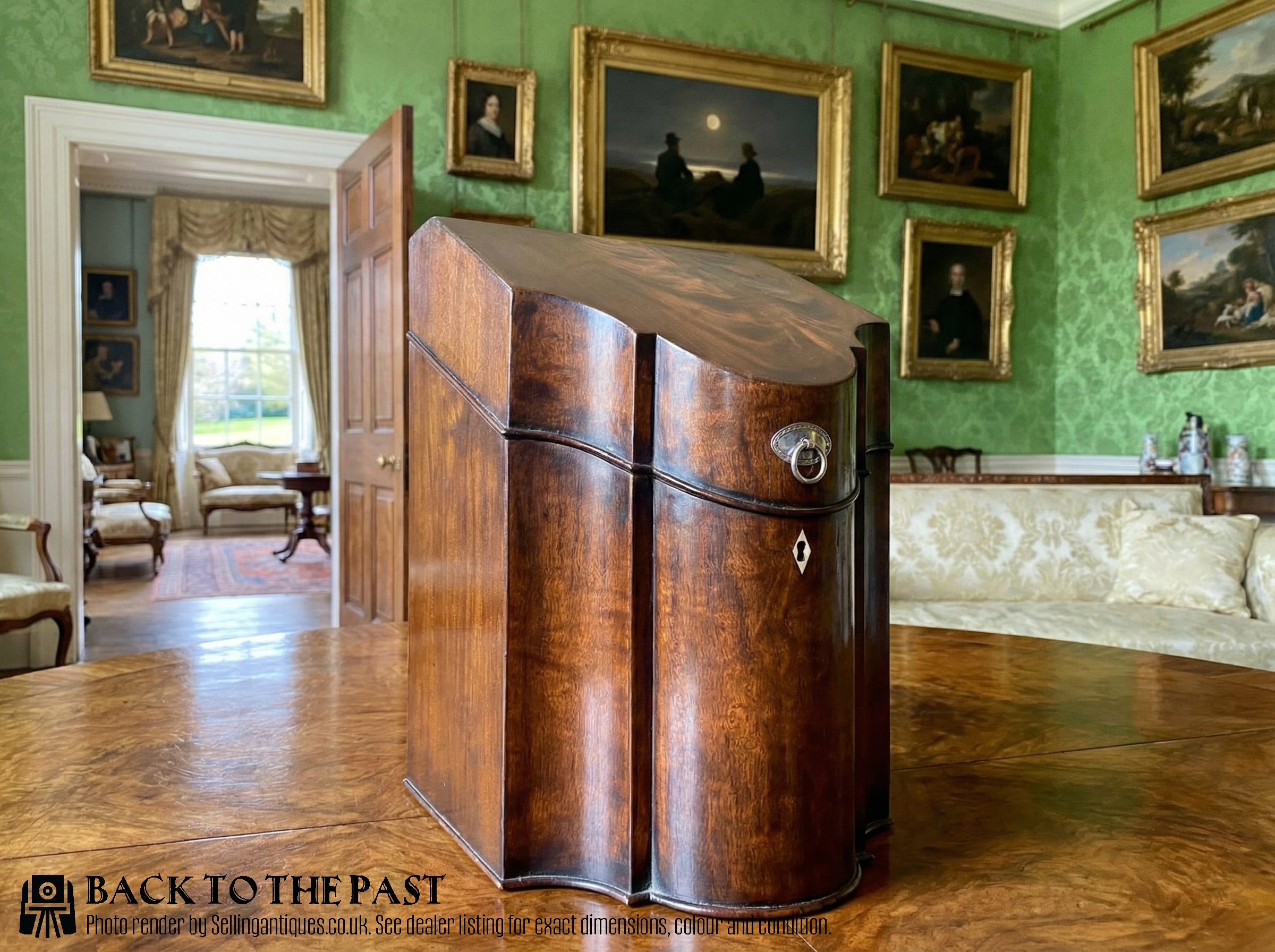
Nine titles mention knife. Several are Georgian mahogany or satinwood cutlery boxes that have been converted to hold stationery instead.
The earliest dated piece in the samples is one of them, a satinwood knife box of about 1790. Dealers describe the conversion in the title rather than presenting the box as original stationery furniture.