
Antique Caskets
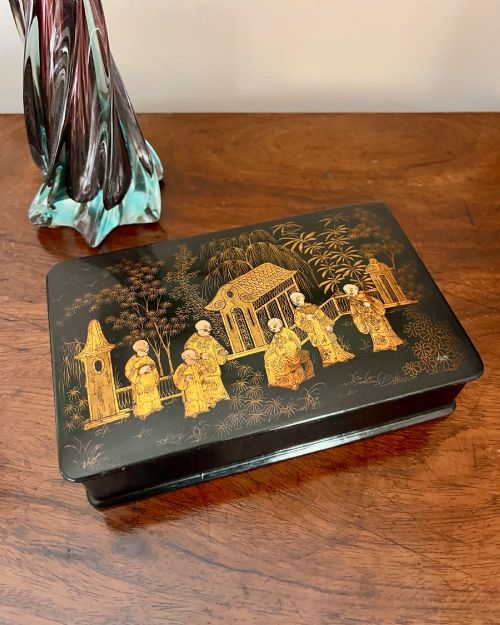
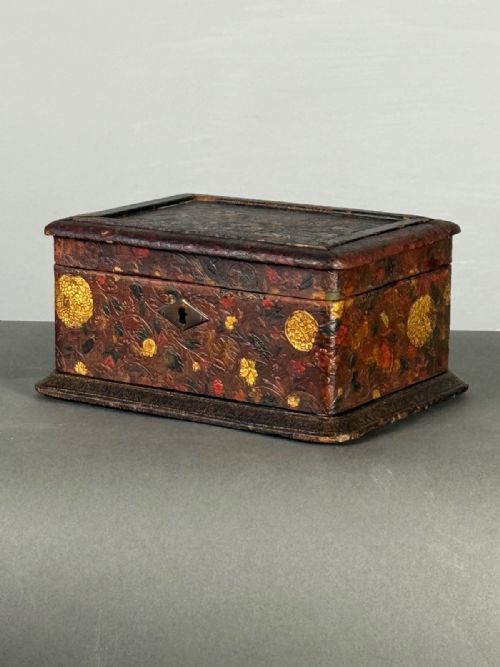
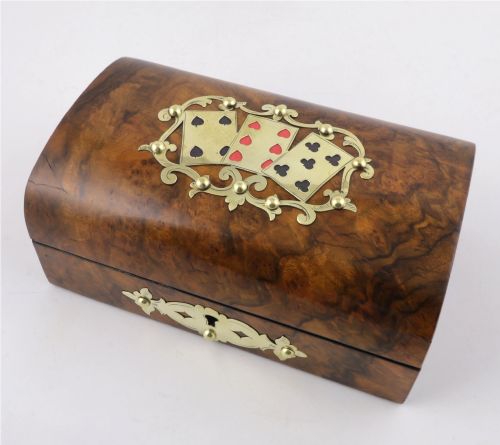
A casket is a small lidded table box, usually lockable and lined or fitted inside, made to hold jewellery, letters, sewing tools, gloves or scent bottles.
Antique Caskets
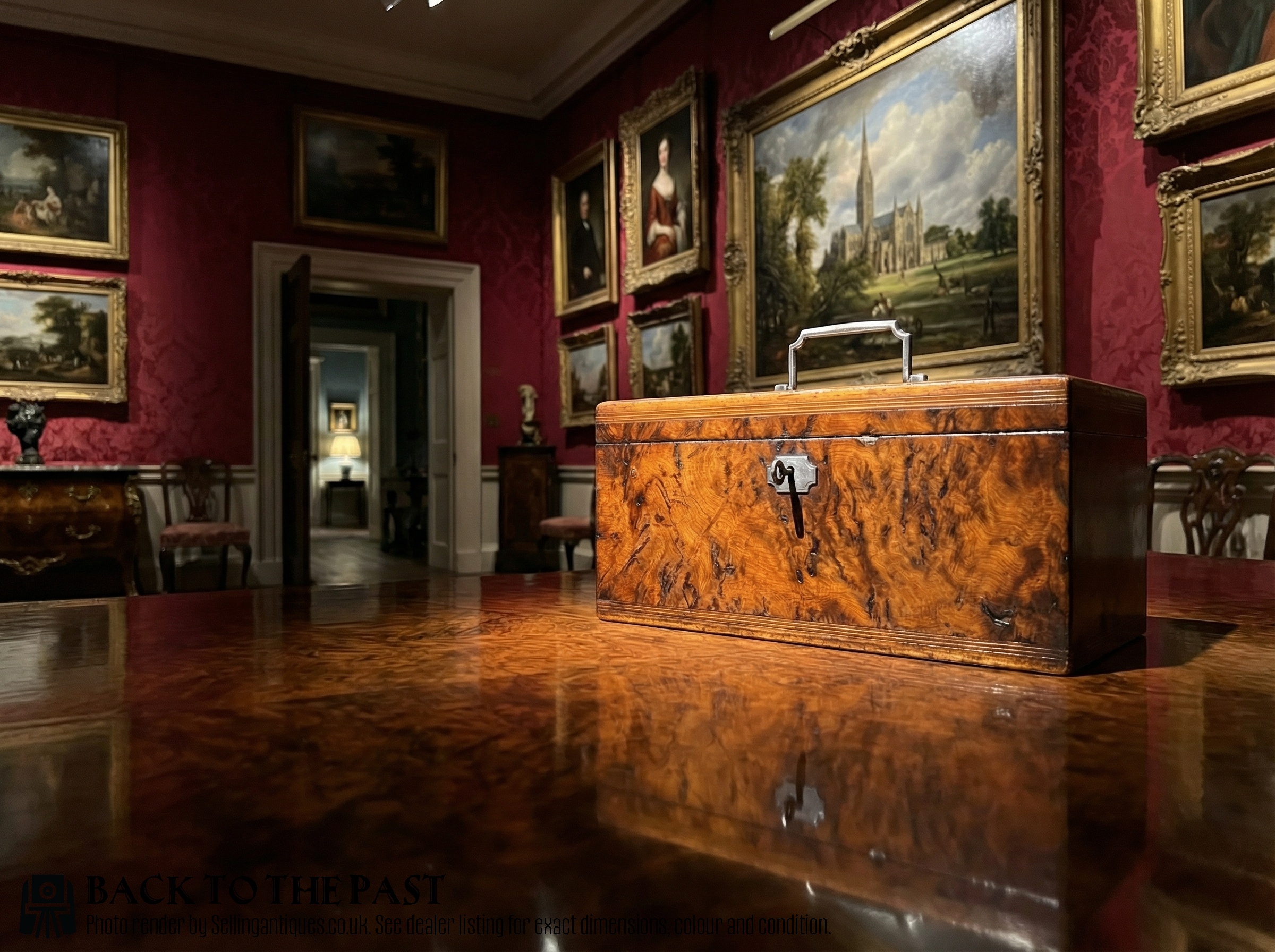
The word is trade shorthand for a decorative lidded box that sits on a table rather than the floor. Small chests of this kind have held valuables, documents and jewels since the Middle Ages, and by the 18th and 19th centuries the form had settled into the domestic box with a lock and a lining.
On Sellingantiques, "casket" and "box" are used for the same objects: box appears in a little over half of all titles, casket in a comparable slice of the rest, and often both together. Treat them as one population described from two angles.
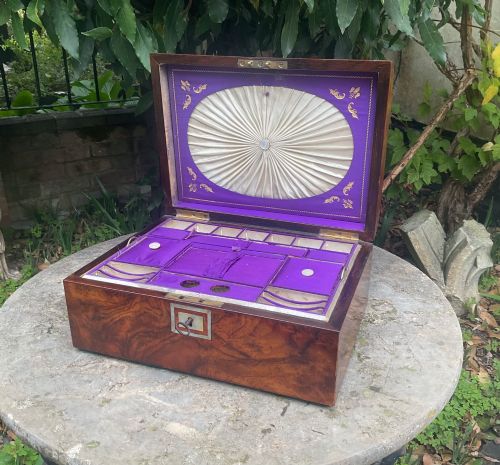
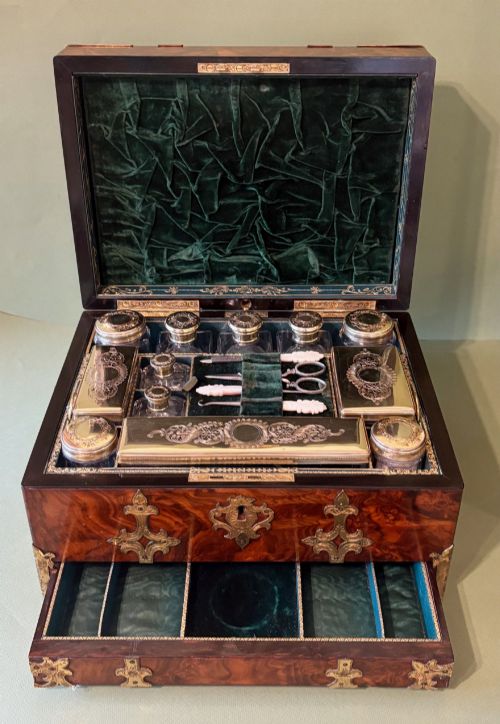
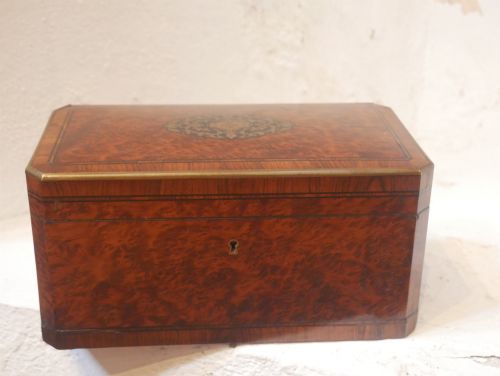
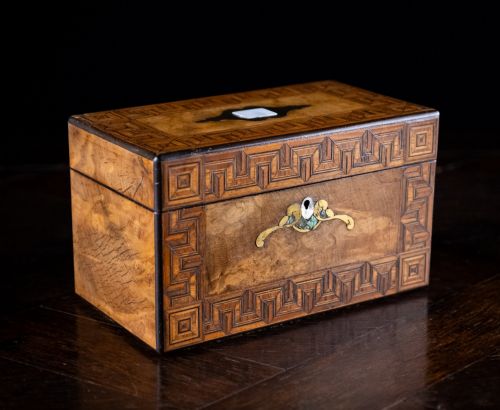
The thing you are most likely to meet is a 19th-century British wooden jewellery or stationery box, veneered in walnut, burr walnut, rosewood or coromandel, sometimes with a domed lid and brass strapping at the corners. Jewellery alone appears in 158 titles. Behind it comes the French gilt-metal casket, glazed with bevelled glass and mounted in ormolu, with 92 titles naming France.
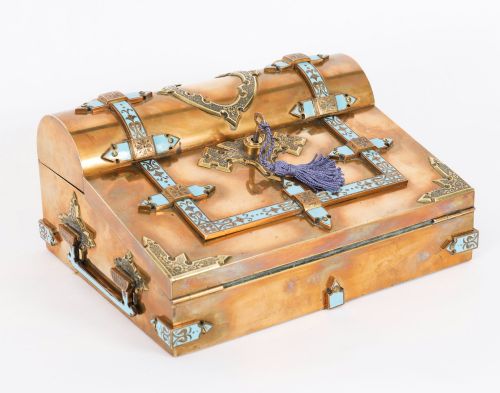
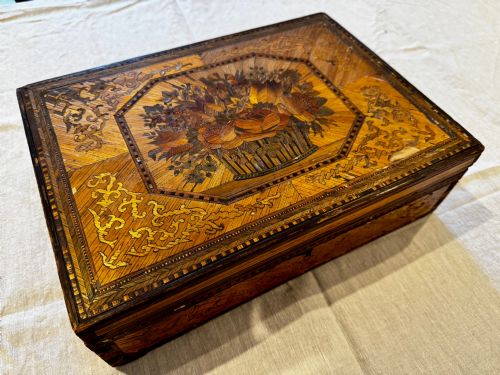
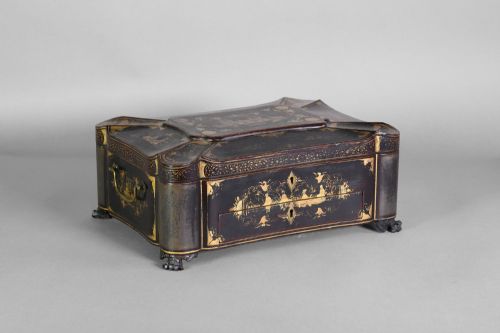
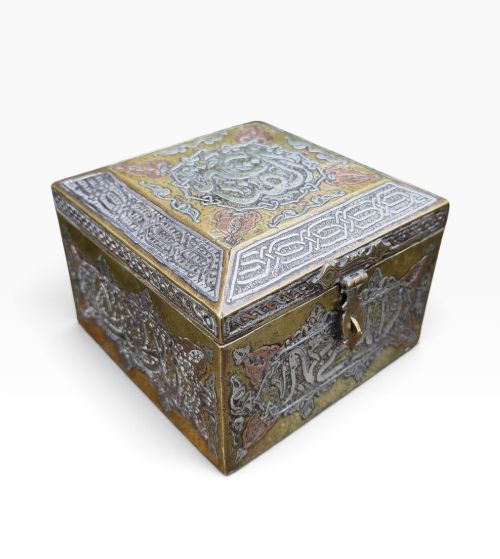
Smaller groups run alongside: porcelain, hardstone and pietra dura panelled boxes; Arts and Crafts, Art Nouveau and Art Deco work in copper, pewter, beaten steel and enamel; and Anglo-Indian, Ceylonese, Kashmiri and Middle Eastern caskets. Pre-1800 examples exist, iron-bound, chip-carved, oak and marquetry, but they are a thin minority.

Where The Range Splits
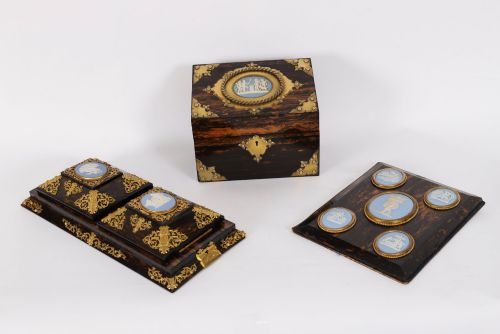
Materials at the surface do most of the work. Ormolu and gilt bronze mounts, silver and silver-gilt, and applied panels of porcelain, hardstone, pietra dura, malachite, agate or champlevé enamel cluster at the upper end. Plain brass and plated fittings sit lower, doing the same job with less.
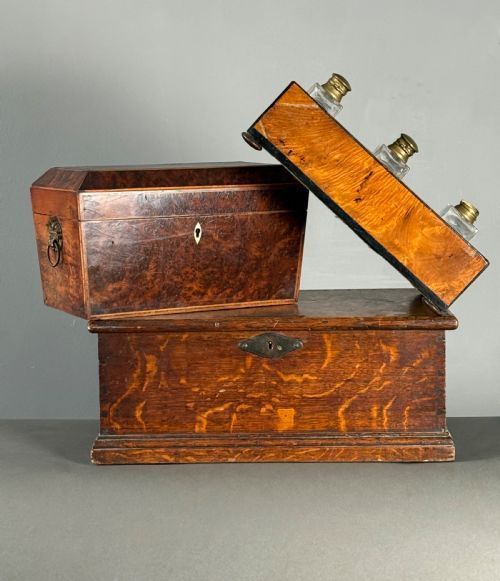
In the wooden group it is the veneer that separates them. Burr walnut and coromandel are the two commonest premium woods on this site, with amboyna, kingwood, satinwood, burr yew and bird's-eye maple turning up in titles. Plain oak, pine and mahogany boxes occupy the other end of the same shelf.
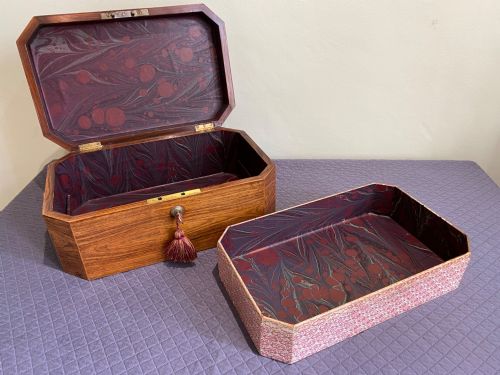
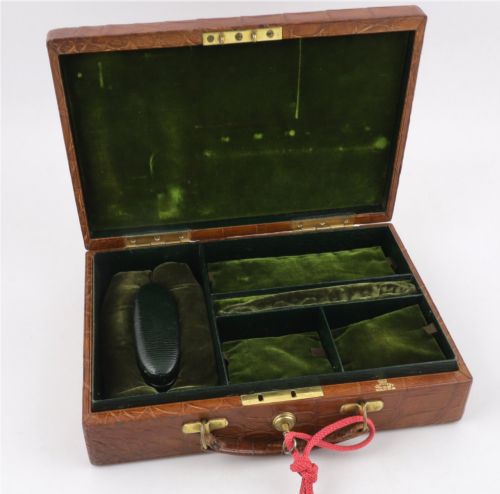
Interiors count as much as lids. Titles that specify a fitted or lined interior, a tray, a key still present, or a complete set of scent bottles are describing something worth more than the same shell emptied out. Above all of it sit the earliest pieces: the 16th and 17th century iron-bound, chip-carved and marquetry caskets, hand-worked throughout, at the extreme top of the range.
Antique Caskets Retail Price Guide 2026
Typical UK retail prices for caskets, calculated from the Sellingantiques database of over a million retail prices indexed since 2003. This retail price guide relies exclusively on Sellingantiques data; no external sources or auction records are used, so the figures do not describe the wider market.
The highest price of the last year on Sellingantiques went to a 19th century French porcelain-mounted champlevé and onyx casket, in April 2026.
The Antique Caskets Glossary
- Casket
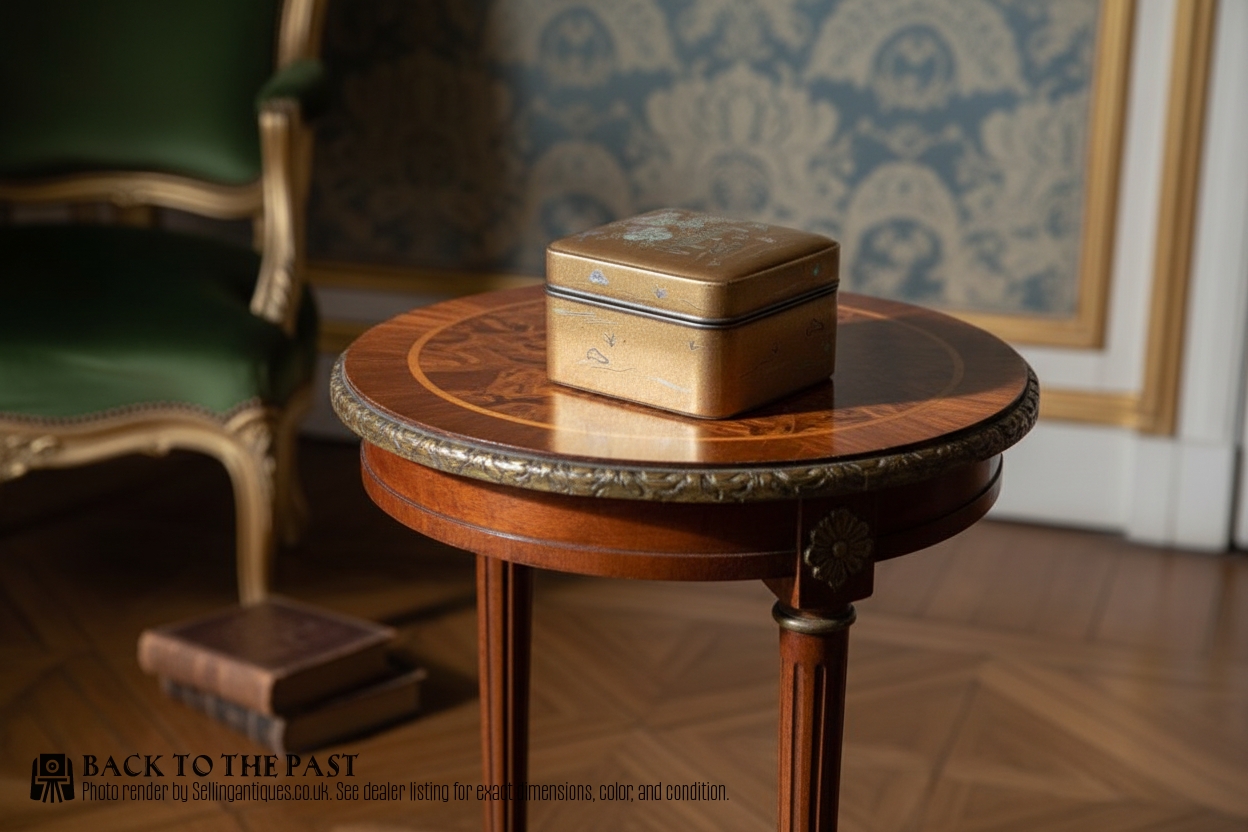
- Trade word for a decorative lidded table box, used interchangeably with "box" in these listings, and usually implying a fitted or lined interior.
- Ormolu
- Gilded bronze or gilt metal, used for mounts and frames. It appears in 38 titles, almost always on French caskets.
- Bevelled glass
- Panels with angled edges, set into gilt-metal frames on French jewellery caskets so the lid and sides show the contents.
- Brass bound
- A wooden box reinforced with applied brass strapping along the edges and corners. Brass turns up in 78 titles.
- Coromandel
- Dark striped tropical hardwood veneer, named in 28 titles, common on stationery and vanity caskets.
- Pietra dura
- Inlaid hardstone panels, usually Florentine, set into the lids of table caskets.
Antique Caskets: Frequently Asked Questions
What is the difference between a casket and a box?
In practice, nothing. The two words are used for the same objects in dealer titles, and both often appear in a single title.
A veneered jewellery box and a jewellery casket are the same form. "Casket" simply carries the sense of a decorative, lockable container rather than a plain one.
Which woods turn up most often?
Walnut leads, with burr walnut close behind, then rosewood and coromandel. Those four cover a large part of the British 19th-century group.
Amboyna, kingwood, satinwood, burr yew and bird's-eye maple appear too, usually on the more elaborate boxes. Oak, pine and mahogany sit at the plainer end.
How old are these usually?
The bulk is 19th century. Around 168 listings say "19th Century" and a further 71 say Victorian, so the stated period is frequently a century or a reign rather than a year.
Where decades are named, they gather in the 1860s, 1880s, 1870s and 1900s, with Regency also well represented. The dated field runs from 1700 to 1950.
Are French caskets common on Sellingantiques?
Yes. France supplies the single most recognisable type, with 92 titles naming it.
The usual form is a gilt-metal frame glazed with bevelled or opaline glass, made as a jewellery casket. Ormolu is named in 38 titles and gilt bronze in a dozen more, and Napoleon III turns up repeatedly as a period label.
Do pre-1800 caskets appear?
They do, but rarely. Titles carry 18th century sixteen times, with a handful given to the 16th and 17th centuries.
What has come through includes a wrought-iron domed casket, an iron-bound casket, a Welsh oak chip-carved box, an olive wood lace box and a Flemish ebony and kingwood table cabinet. Dealers sometimes contradict themselves on dating, labelling an 1820s Regency box as 18th century.
What unusual forms have been recorded?
A box made as two stacking books, a cast-metal box modelled on a 13th-century coffer, and a Black Forest carved monkey tobacco casket.
Others include a painted box in the shape of a country-house facade, a pigeon-shaped lead and brass urn, and a hardstone Chinese head rest with box. Origins seen once or twice run to Afghan, Batavian, Qajar Iranian, Ottoman, Palestinian olivewood and Siamese niello.